Why South Dakota counties and cities haven't used their share of opioid settlement fund money. “You don’t want to be the guy who spends it all on something and then it’s like, ‘No, that was wrong.’”

WATERTOWN, S.D. – South Dakota counties and cities that received the first $9.6 million of national opioid settlement money have spent less than half of it, according to Department of Social Services spending reports through the end of 2025.
While 41 South Dakotans died from opioid overdoses last year – up from 39 in 2024 – some officials from those 53 counties and 13 cities said they haven't yet made plans on how to use the distributions, which began in late 2022.
In 2021, a combined nearly $50 billion in settlements from opioid manufacturers, distributors and pharmaceutical companies began distributing funds to all 50 states, as part of the national settlement agreement.
“You don’t want to be the guy who spends it all on something and then it’s like, ‘No, that was wrong.’” – Tye Vander Vorst, Potter County auditor
South Dakota was allocated just under $99 million to be distributed through 2038. Funding to each state was determined based on a formula including the number of overdose deaths, number of opioids shipped to the state and number of people with opioid use disorder in the state.
The vast majority of South Dakota's settlement funds will come from the distributor settlement, which includes major drug distributors McKesson, Cardinal Health and Amerisource Bergen.
Of South Dakota's funding, 70% is directed to the state through the Department of Social Services. The other 30%, or around $29 million, will be divided among local governments in the state: the 53 counties and 13 towns and cities that signed a memorandum of agreement to spend those dollars on specific approved uses.
That relatively slow spending at the local level contrasts sharply with the state.
In December, some lawmakers expressed concerns that the state was not spending its funding quickly enough. In April, DSS secretary Matt Althoff and Gov. Larry Rhoden announced $7.82 million in grants, leaving the statewide share of unspent disbursements at $2.9 million of its total $23 million.
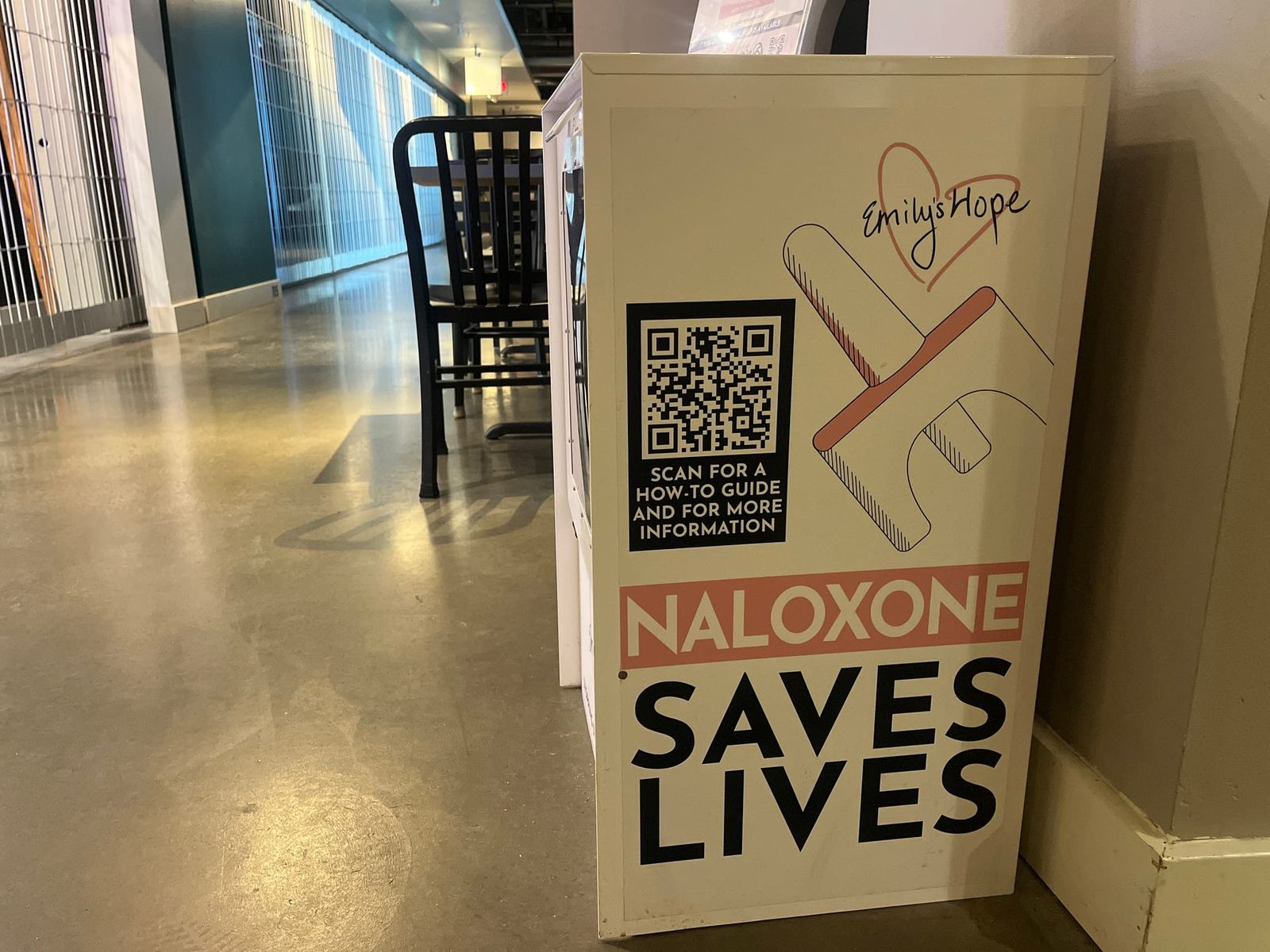
State spending has been varied, with nearly $500,000 spent for naloxone access statewide, $797,000 for a prescription drug monitoring program and the $7.82 million slate of grants provided to organizations across the state, among others.
The national settlement agreement dictates that at least 70% of spending must be directed toward opioid remediation efforts.
 Molly Wetsch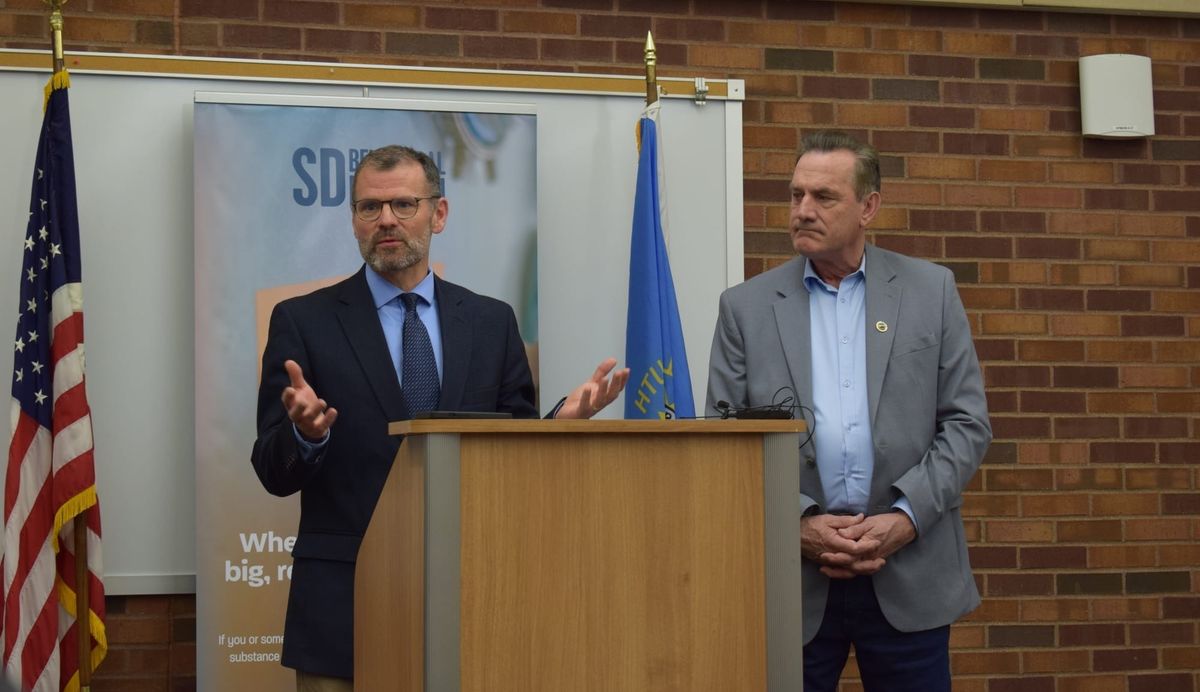
DSS told News Watch that the department does not dictate how or when local governments choose to spend dollars.
“The Department of Social Services (DSS) does not have oversight or regulatory authority over how local governments spend their share of the funds. Use of the local share is governed by the South Dakota Opioid Settlement Memorandum of Agreement (MOA), which all participating local governments joined in 2022,” Althoff said in a statement.
“South Dakota adopted the national settlement’s default model-generated percentage shares for local subdivisions as outlined in the MOA. The MOA specifies that recipients must annually report utilization of funds received to DSS.”
Smaller settlement amounts
While some local governments have spent large portions of, or nearly all of their shares, the general trend is still of slow, metered spending.
Eleven counties had not yet reported any spending to DSS by the end of 2025, and several others had spent just fractions of their settlements.
Potter County auditor Tye Vander Vorst told News Watch that the county hasn’t begun allocating dollars because it is not yet clear how much the county will receive in a given year and where the best place to spend the money is. The north-central county, which has a population of 2,400, has received nearly $18,000 since 2022.
Vander Vorst said that the sporadic nature of settlement funds, often coming unpredictably with low dollar amounts, makes implementing ongoing programming difficult. The county hopes to make more concrete plans when more funding comes in and opens up spending possibilities, he said.
“What do you do? Do you wait and sit on what you can accumulate or do you try to spend $200 here, $200 there on stuff?” Vander Vorst said. “You don’t want to be the guy who spends it all on something and then it’s like, ‘No, that was wrong.’”
Resource gaps are challenges for rural governments
Face It Together, a nonprofit organization that provides addiction recovery services, was one of 10 recipients of the $7.82 million in statewide opioid settlement fund grants earlier this month.
The organization will use $750,000 over the next three years to administer individual peer-to-peer addiction programming at the state penitentiary in Sioux Falls.
Join other South Dakotans and support statewide, fact-based news and information.
Peer-to-peer programming connects those struggling with addiction with coaches who have been through similar experiences, allowing for deeper relationships and problem-solving.
CEO Megan Colwell said that while Face It Together has primarily focused on alcohol abuse rehabilitation, the organization is now seeing a nearly equal number of alcohol addiction and opioid addiction cases.
It is based in Sioux Falls but does work across the state and out of a satellite office in Colorado Springs, Colorado.
The need for help is great in rural areas as well as in the state's two urban centers of Rapid City and Sioux Falls, Colwell said. Face It Together currently provides peer-to-peer coaching in rural prisons in Pierre, Springfield and Yankton and also provides some remote peer-to-peer coaching sessions with people outside of the Sioux Falls metro area.
Colwell cited remote coaching as a potential solution for counties that want to connect residents in need with support.
In low-population and large geographical area counties, there can often be a lack of understanding about where addiction resources are needed, and the visibility of programs that do exist can be low, Colwell said. That's why it's critical that counties are intentional with their spending programs and choose to put dollars in the right places, she said.
"Some of these counties don't have resources, even with the localized funding," Colwell said. "You want it to make a difference. This is the one time we have funding that is specifically for this issue."
Some counties, towns differ in spending strategy
Even for local governments in the same geographic areas with many of the same leaders, residents and affected communities, differences in spending attitudes are great.
Codington County in eastern South Dakota has so far received $87,329 and is projected to receive a total of $255,816. The county has not yet reported any spending of that money to the Department of Social Services.
Representatives from the county told News Watch that grants related to recidivism, as well as a recent $50,000 grant from the statewide fund for an opioid awareness campaign, mean that the county will be conserving its own share for a while to determine the best strategy for spending.
While a committee has been established to discuss potential funding opportunities, no specific decisions about where those dollars will go have been made.
Codington County's biggest city, though, has taken a very different approach: Watertown has spent the entirety of its $161,544 share on the Watertown Police Department.
With those dollars, the department hired a part-time social worker who assists the department’s full-time mental health officer on mental health, overdose and other drug-related calls.
Some funding has also gone toward education and boxes where people can safely dispose of drugs.
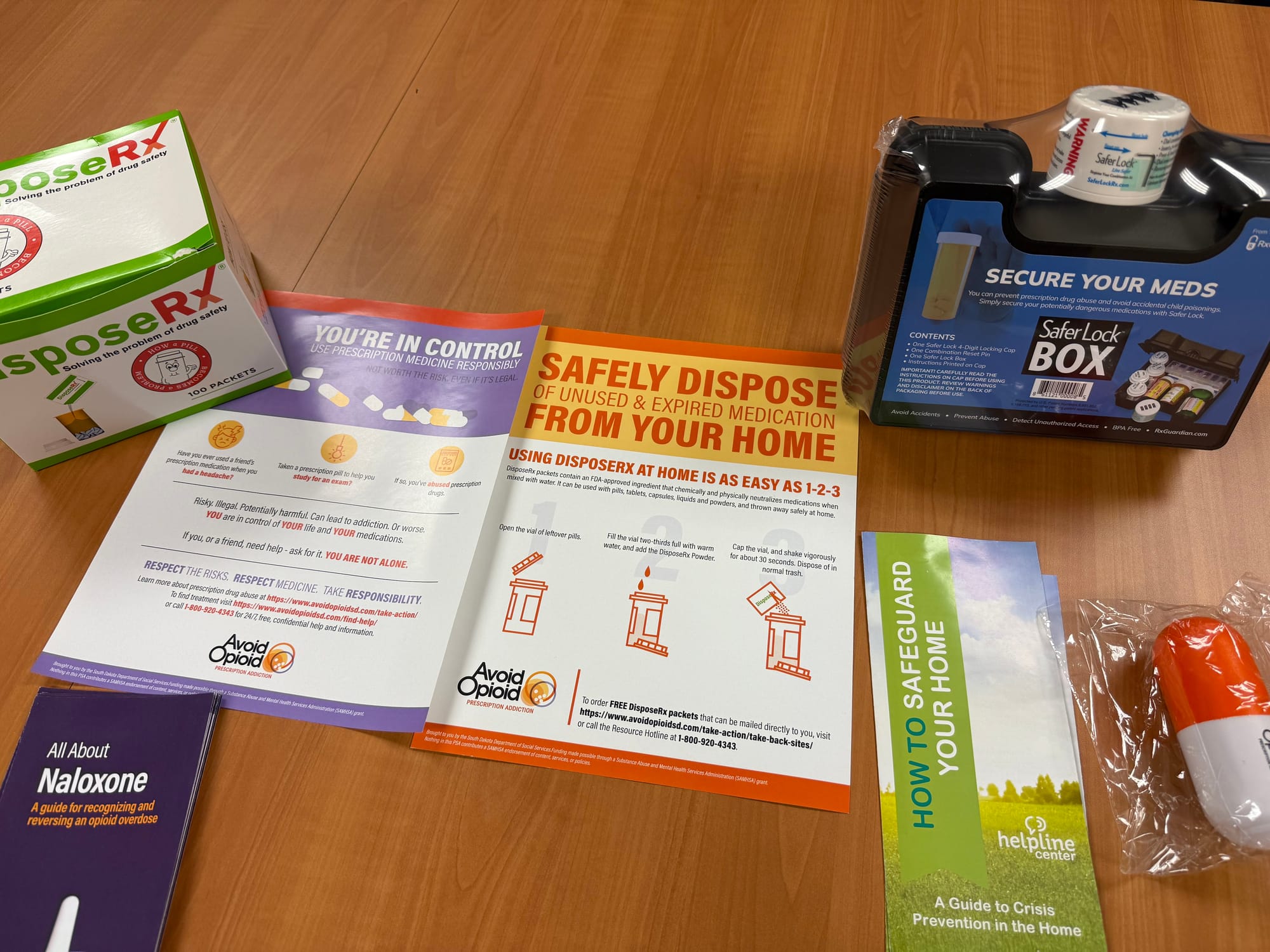
Tim Toomey, Watertown chief of police, told News Watch that the city mostly focused on taking care of its own needs regarding addiction services, with the hope that having a large set of resources in Watertown would benefit the entire population of Codington County.
“We work really closely with the sheriff's office, but with something like this, we really never met with each other," Toomey said. "We probably could have pooled our funds, but we had some needs at the time."
Because of an already-robust resource network in Codington County that includes programs like Codington Connects and Brothers and Sisters Behind Bars, the city was able to be more ambitious with its funding, Toomey said.
"With these extra dollars, we thought, 'How can we attack this crisis as well as enhance our own community engagement activities so that we can continue the reduction of overdoses and how we're responding to them?,'" Toomey said.
Nationwide, slow spending is the trend
Karen Scott and Ken Shatzkes, president and program director of the national Foundation for Opioid Response Efforts (FORE), told News Watch that the low spending trend in local governments is not unique.
Scott told News Watch that the organization has seen local governments nationwide have issues with effective spending programs – especially when the funding amounts are low and issues with substance abuse might not be as prevalent.
Prioritizing spending even when issues are not visible can help prevent future problems in a community, she said.
"There's always work that can be done on the upstream, really prevention-oriented in terms of creating stronger and more resilient environments for kids, for families and the community," Scott said. "That's one area that people can think about, even if they don't have a large number of overdoses and a direct overdose response."
States have taken vastly different approaches to localized share amounts.
In Louisiana, 80% of the state’s projected $600 million settlement will go directly to local governments and the other 20% to county sheriff’s departments, leaving the dollars entirely out of state hands. In Montana, counties and cities will see 15% of a projected $75 million.
Shatzkes said South Dakota's approach is relatively similar to many state's distribution models, which see allocations anywhere from 15-50% of funds for local government based on the state's individualized experience with the opioid crisis.
"We know that it's a crisis now, but the crisis may look different 10 years from now. The crisis looks different in different areas across the country," Shatzkes said.
Local agencies focus on law enforcement, corrections and emergency services
Much of South Dakota's local government spending has been directed to law enforcement, correctional and emergency services provided by the counties themselves.
The Ziebach County auditor’s office told News Watch that all of its opioid settlement fund money was going to the sheriff’s office for drug tests and other prevention initiatives. The Sanborn County auditor’s office, which has spent nearly all of its current $13,000 allocation, said the dollars have funded existing programs like law enforcement and first responder drug training to free up space in the general fund.

That type of spending is a natural pathway for counties that may not already have existing resource networks. And it provides a logical outlet for the dollars, which have specific spending guidelines set by the state's memorandum of agreement.
Shatzkes said that while the spending can be an effective place for dollars to go, he also recommends that local government officials employ those with knowledge about substance abuse in the area.
He cited a county in North Carolina that hired its local emergency medical services (EMS) responder as the county's opioid settlement coordinator as a successful example of harnessing local expertise.
"For the most part, in most places, states aren't trying to dictate how counties are spending the money," Shatzkes said. "They're only putting out a report on recommendations or just giving the thumbs up on whether (the program) fits. I think having outside expertise, away from government, to help make these decisions is probably the right way to go about it."
Scott said that especially in rural areas, collaborating with neighboring counties or municipalities could help solve many concerns about effective spending.
"Maybe there isn't an organization or expert in their county or their jurisdiction. But maybe there is one in the next county over or the next county over," Scott said.
For smaller counties receiving lower settlement amounts, drawing knowledge and resources from statewide networks like Face It Together and the charity Emily's Hope, which provides naloxone boxes and substance abuse support across the state, could make all the difference, Colwell said.
“What’s out there? What can be brought in? What’s an easy lift? What’s low hanging fruit?” she asked. “Just understanding the addiction programs that are out there. We’re getting better at being less siloed in South Dakota, but the silos are still there.”
South Dakota News Watch is an independent nonprofit. Read, donate and subscribe for free at sdnewswatch.org. Contact reporter/Report for America corps member Molly Wetsch: 605-531-7382/molly.wetsch@sdnewswatch.org.