How one woman's story illustrates the importance of support systems in the state's opioid crisis: "It's like the little breath that you get in all of the chaos."

Editor's note: South Dakota News Watch is not using the source's last name to protect her identity but has independently verified her story.
WATERTOWN, S.D. – A South Dakota city of about 25,000 people may not necessarily be the heart of the nation’s decades-long opioid crisis – but it certainly is a reminder of how far the epidemic has spread. And in Watertown, a vast community support network surrounding substance abuse has shown serious momentum and is proving its worth through real-life recovery.
One member of that network is Brothers and Sisters Behind Bars, a nonprofit that focuses on providing basic needs and addiction recovery support for those leaving the criminal justice system in Watertown.
 Molly Wetsch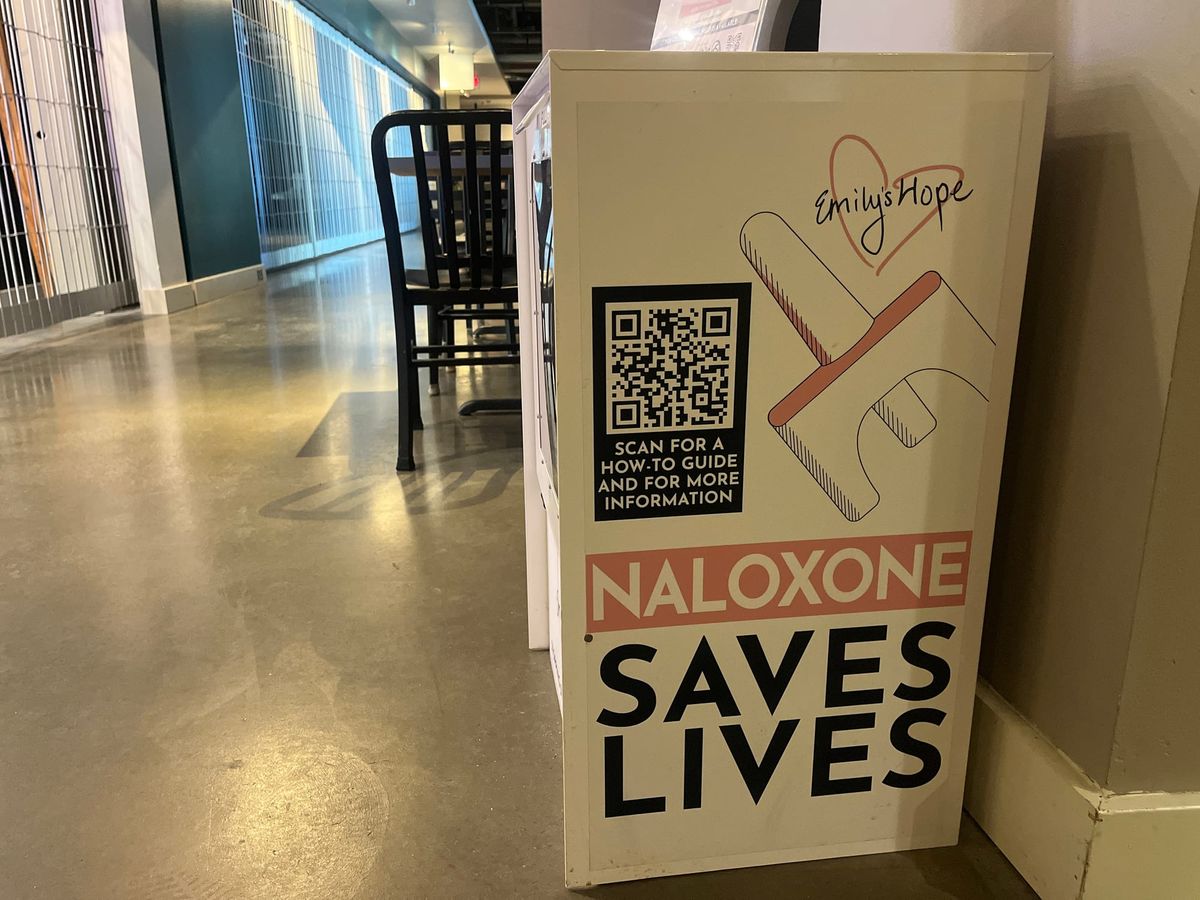
The organization's headquarters sits on a main street in the core of downtown, right next to coffee shops, boutiques and restaurants. Next door are the offices of Codington Connects, a community services organizations serving Codington County.
Cali, an office assistant and peer support specialist at Brothers and Sisters Behind Bars, is 26 years old. She was born in California but grew up in Sisseton, about 60 miles north of Watertown, on the Lake Traverse Indian Reservation.
She’s a mother of three, a licensed community health worker and has lived in Watertown for about five years. She jokes about her choosing her children’s next hairstyles and is soft-spoken but sincere. She knows just about everybody who enters the office by name.
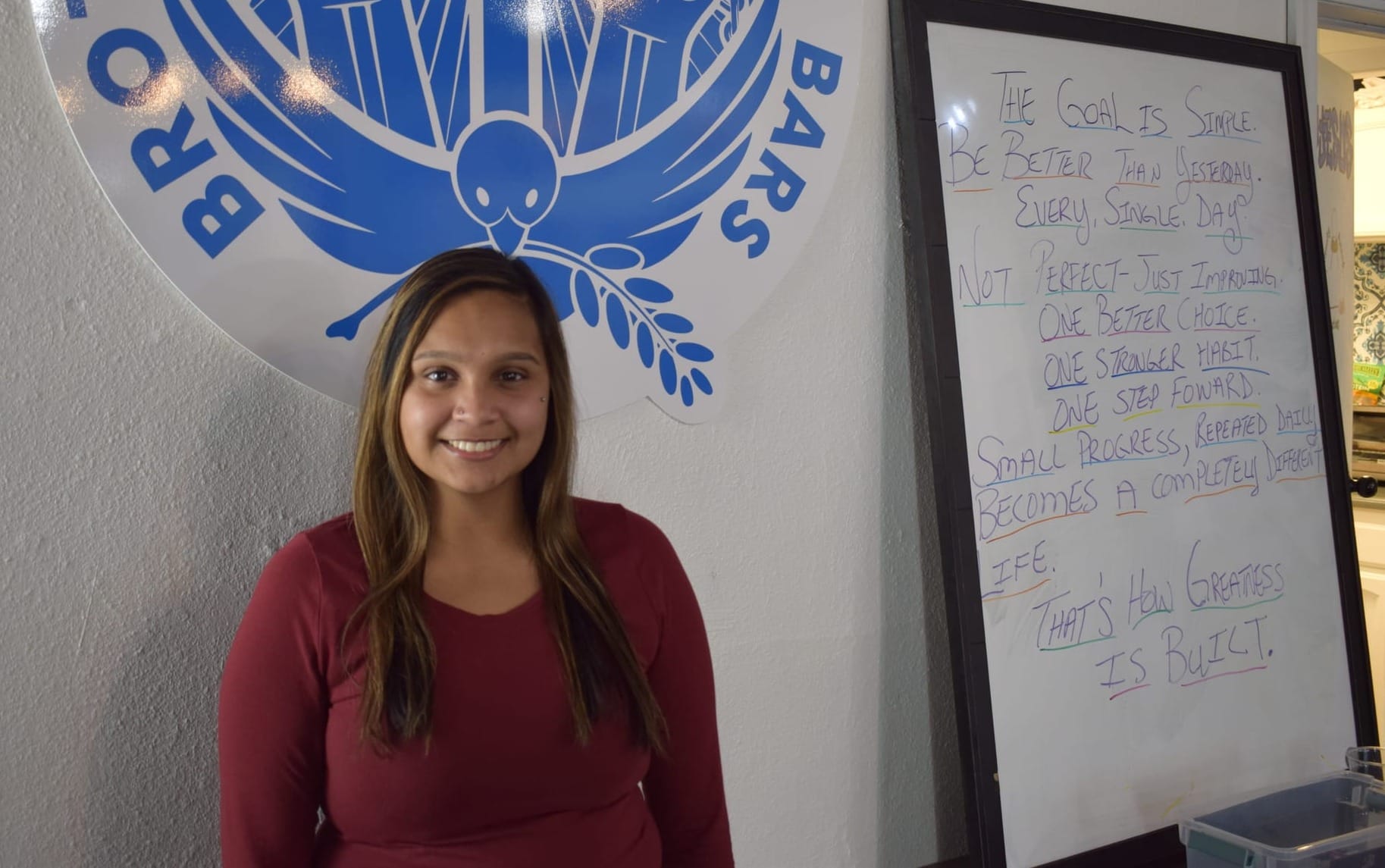
She’s also in recovery from addiction. Her drug of choice? Heroin, which played a significant role in the nation’s opioid epidemic.
Cali is not the typical demographic of those struggling with opioid addiction. Nationwide, males consistently see more addiction than females, and in South Dakota, most unintentional drug overdoses occurred in people between the ages of 35-44. But the opioid crisis has grown to reach every single corner of the country, including her.
Cali is clear that the drug does not discriminate. Though she grew up in a difficult environment after losing her parents at a young age, surrounded by people with addiction – a situation that increases the risk of addiction in young people – she said she knows others in her situation who came from very different homes.
Because of opioids' wide reach, from prescription medications to fentanyl to heroin, there are many ways for individuals to get addicted.
While the state’s drug problem has manifested mostly in the form of methamphetamine for years, opioids have slowly but surely made their way into communities across the state. Nearly half of the state saw more opioid overdoses than meth overdoses from 2020-2024, according to the South Dakota Department of Health.
Brothers and Sisters program worked when others didn't
Cali's road to recovery has been long, like many others. In and out of jail, she went through Codington County’s drug treatment court program, spending years meeting with court services officers, and doing near-daily check in calls.
When she stumbled, she was recommended Brothers and Sisters Behind Bars’ sober living house.
"When I first started coming here, I had just relapsed in drug court and my probation officer basically forced me to come here. She's like, 'You need to go here for a little bit and just check it out. If you like it, now you have somewhere to go. If you don't, then, whatever, at least you tried.' And I instantly fell in love," Cali said.
Get South Dakota news and information in a free email on weekdays. Cancel any time.
She said that having Brothers and Sisters Behind Bars as a second resource available saved her life and got her to where she is now: She graduated from drug court in June, celebrating more than 600 days sober. It illustrates how having multiple "safety net" options, spanning far and wide across a community, can make all the difference.
"It was huge to have something. Because, for one, going through drug court is scary, you know? It's a lot of change in such a short amount of time that you really don't know what to do, you don't know where to start and when," Cali said. "When there are people like that, that know of resources and options and other things to do, it makes it so much more helpful, really. It's like the little breath that you get in all of the chaos."
It's clear from looking around the office that Cali is beloved here.
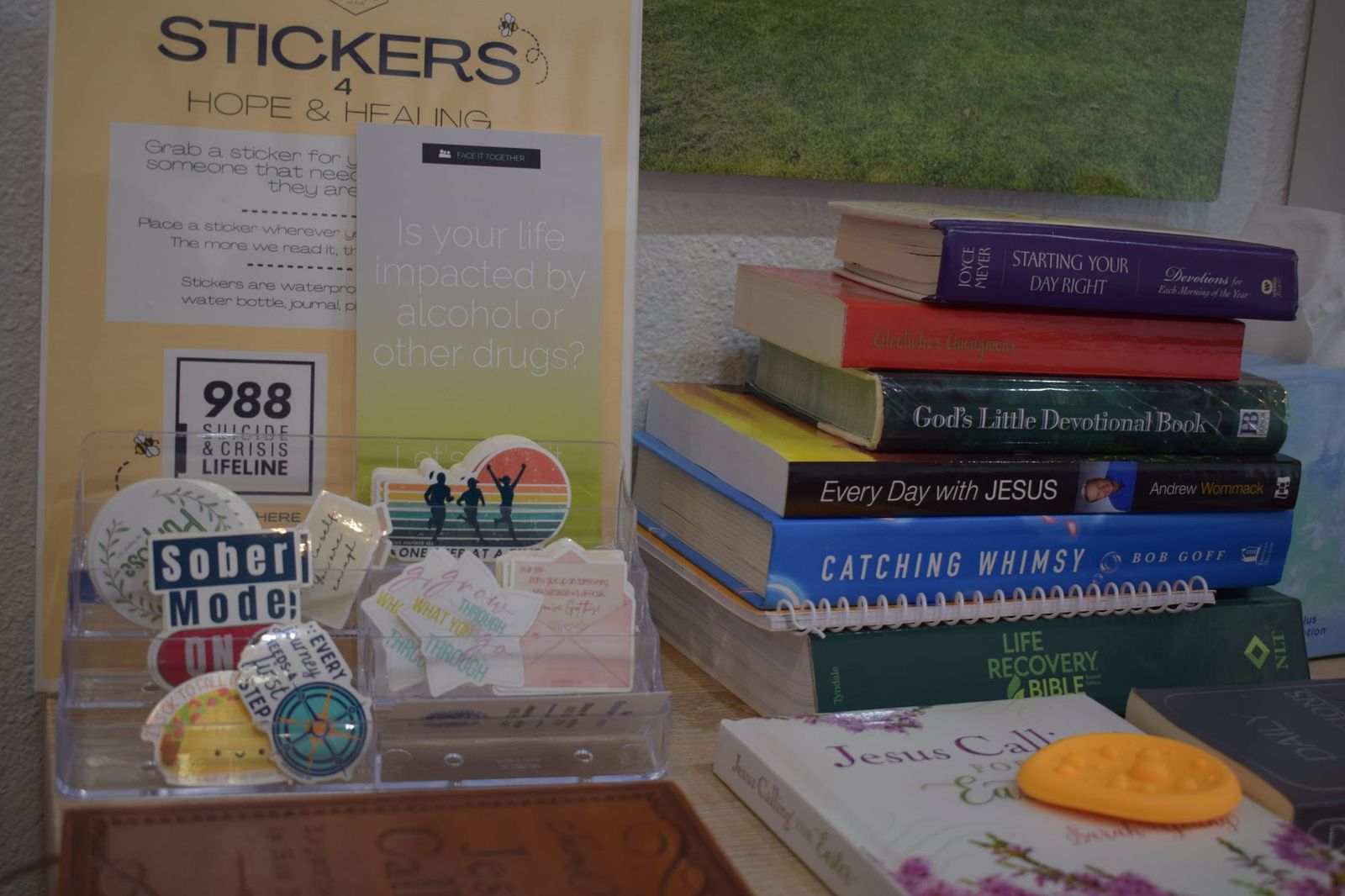
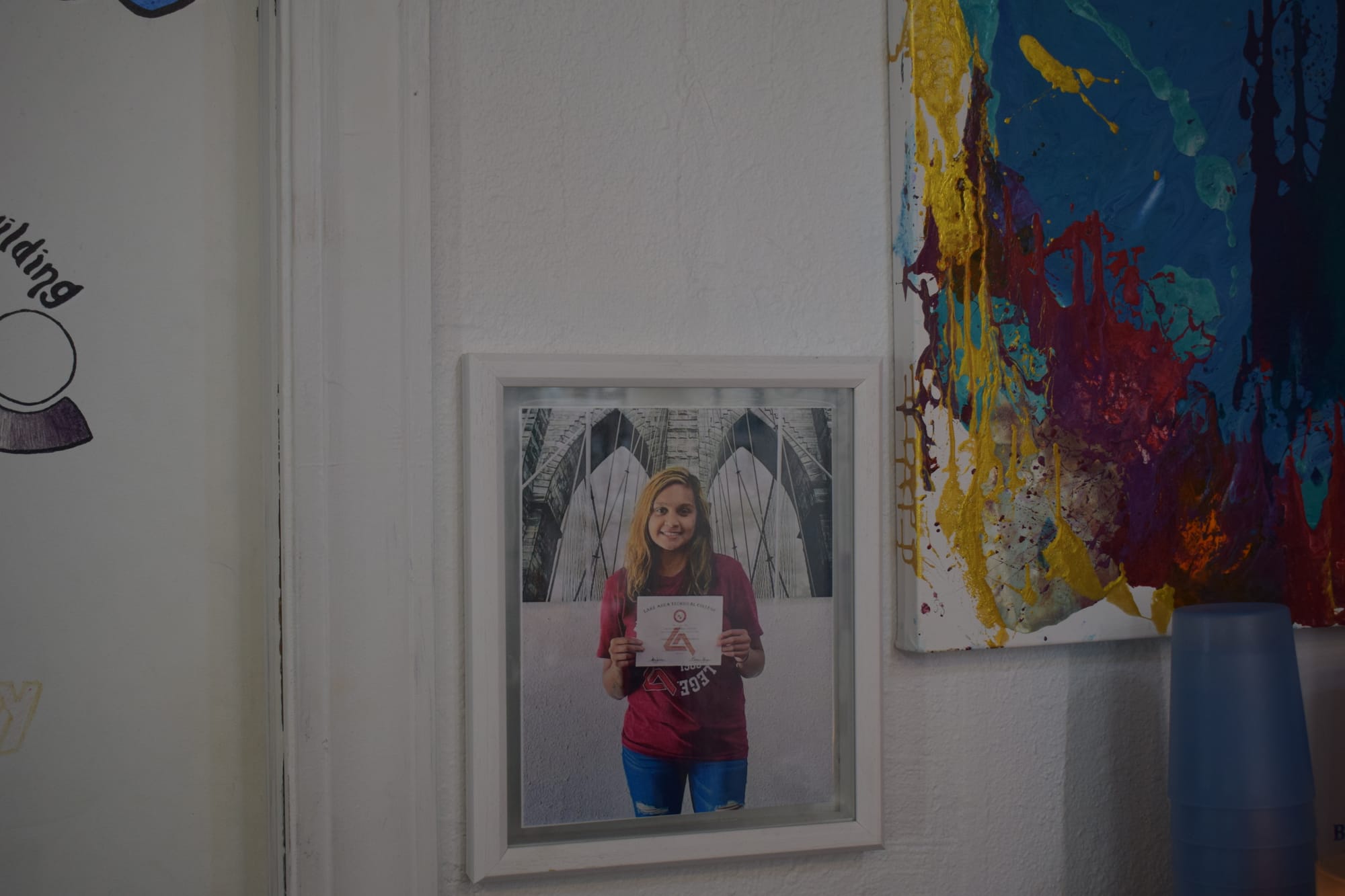
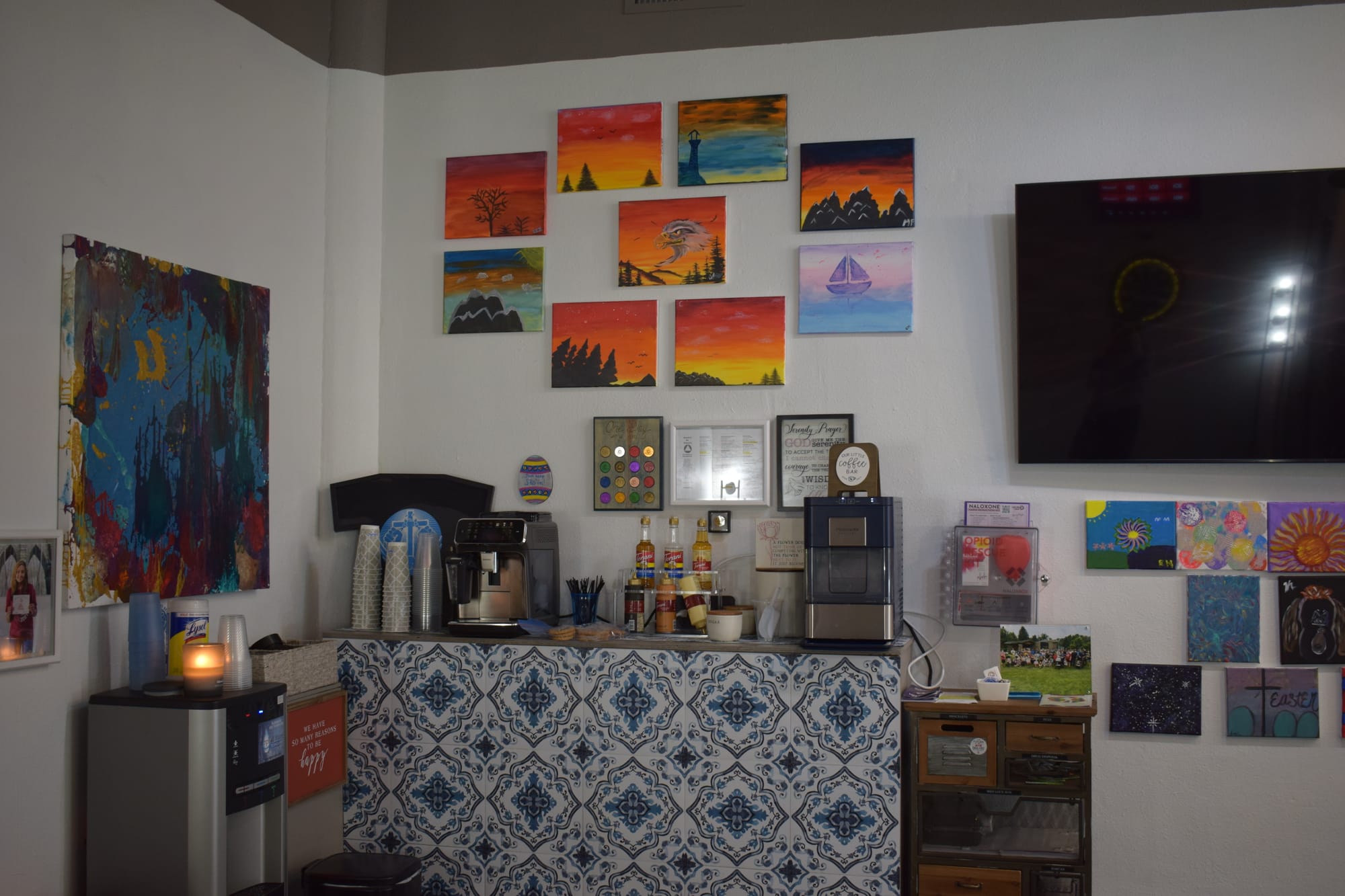
A photo of her receiving her community health certification hangs with pride in a frame next to artwork made by community members. She can point out exactly who painted what, which events were their favorites and even which community members were secretly pro artists – because she was there for it all.
Cali said that Brothers and Sisters Behind Bars may not be able to fix everyone's addiction problems but that sometimes, just knowing you're not alone is enough. The isolation of leaving the criminal justice system – where jobs, places to stay and friends can already be hard to find – combined with small-town South Dakota can be overwhelming, she said.
“You go from being high and drunk all the time and feeling like you have all the friends in the world that you need. But once you’re sober, they’re gone because they were only there for that one thing,” Cali said. “Like, you do feel alone, and you have no one to help you with anything.”
While she's candid about her own recovery journey, Cali brings the focus back to others in nearly every sentence. It’s clear just how much she cares – not just about her own family, recovery or community but about everyone, everywhere. In her words, all she wants to do is help people.
“I wish I could just have this really huge building for people to stay if they need to, and feed them three meals a day and all the things, but I can’t right now. I have to remind myself of that all the time because I can’t do everything for everybody,” Cali said.
Solution: Law enforcement gets involved with community support
Data from the Department of Corrections' 2025 statistical report indicates that over 28% of those incarcerated in South Dakota were in for a drug-related offense. In women alone, that number skyrockets to 51%.
The inherent connection between addiction and the corrections system is part of why Watertown's law enforcement arm has made a concerted effort to be part of the resource network built by nonprofits.

Partner with South Dakota News Watch and support fact-based news and information.
Watertown Chief of Police Tim Toomey told News Watch that his department recognized it had a problem with connecting people to resources and needed to find a solution.
"The police department was responding to the same people over and over again. Police are only equipped to do so much, and and there was no follow-through," Toomey said. "It's important to us to keep people in our community. The worst thing for a police department is not to do anything to address the issue, and then they're just a revolving door."
The solution came from the Watertown Police Department's hiring of a part-time social worker with its portion of opioid settlement fund dollars awarded by the city.
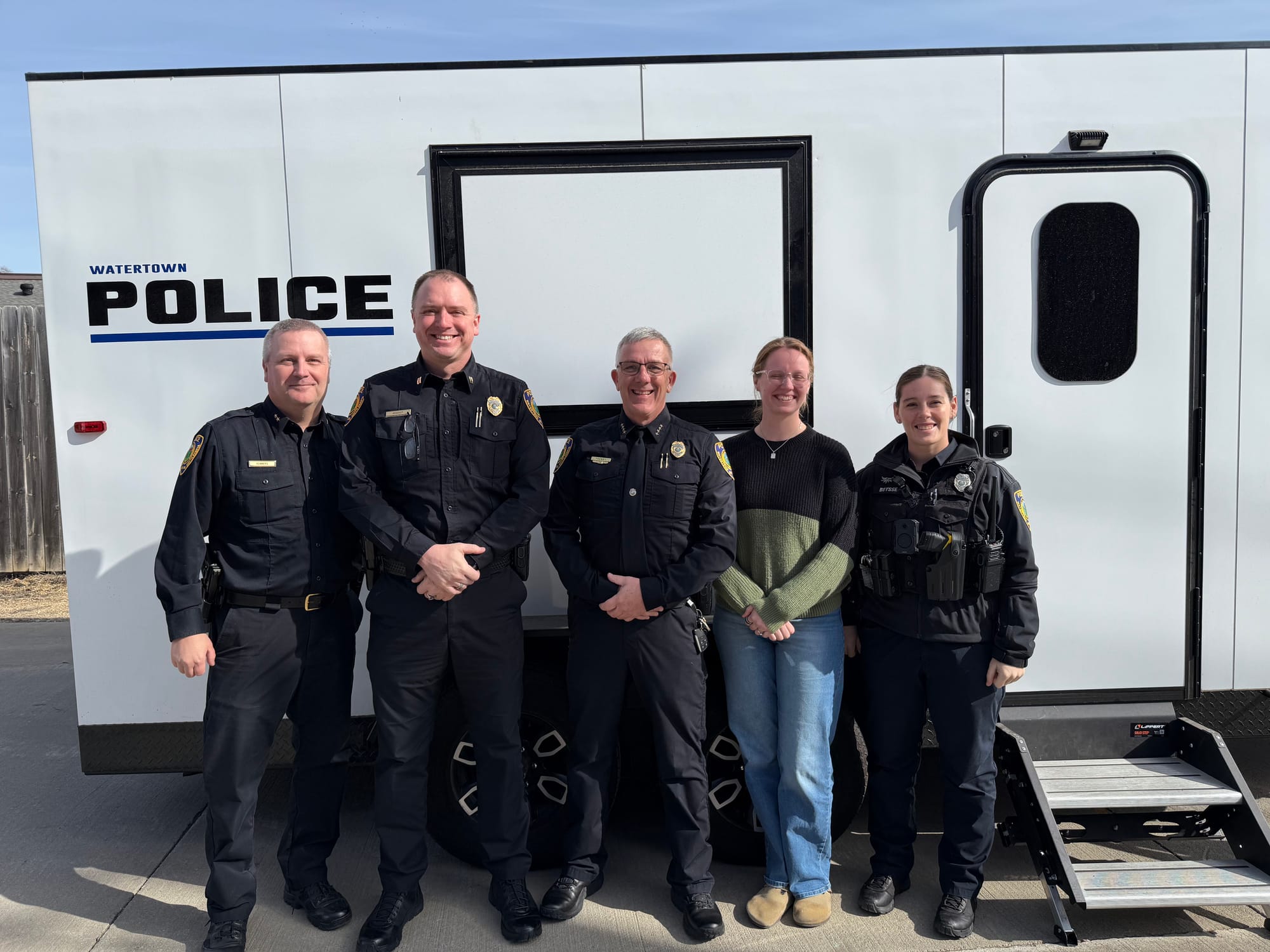
Alexis Buysse, the police department's mental health officer, and Elly Anderson, the social worker, now respond to drug and mental-health related calls as a duo. They can now connect people to resources like Codington Connects and Brothers and Sisters Behind Bars when they need it.
Prevention key to curbing addiction in communities
Toomey said that it is important that the community understand that drug use and struggles with addiction are not limited to the state's metro areas of Sioux Falls and Rapid City. He said that while they have issues in Watertown, the programs are also about making sure community support exists before people start to need it.
"We have overdoses all the time. We've actually been working with Emily's Hope and some other places to get Narcan boxes in the hospital and at the public library. I myself, even as chief, responded to an overdose and (gave someone Narcan). So it's not isolated in the big cities," Toomey said. "But part of the problem is prevention, right? We don't want it to come here. It's kind of like putting out a fire before it turns into an inferno."
Molly Wetsch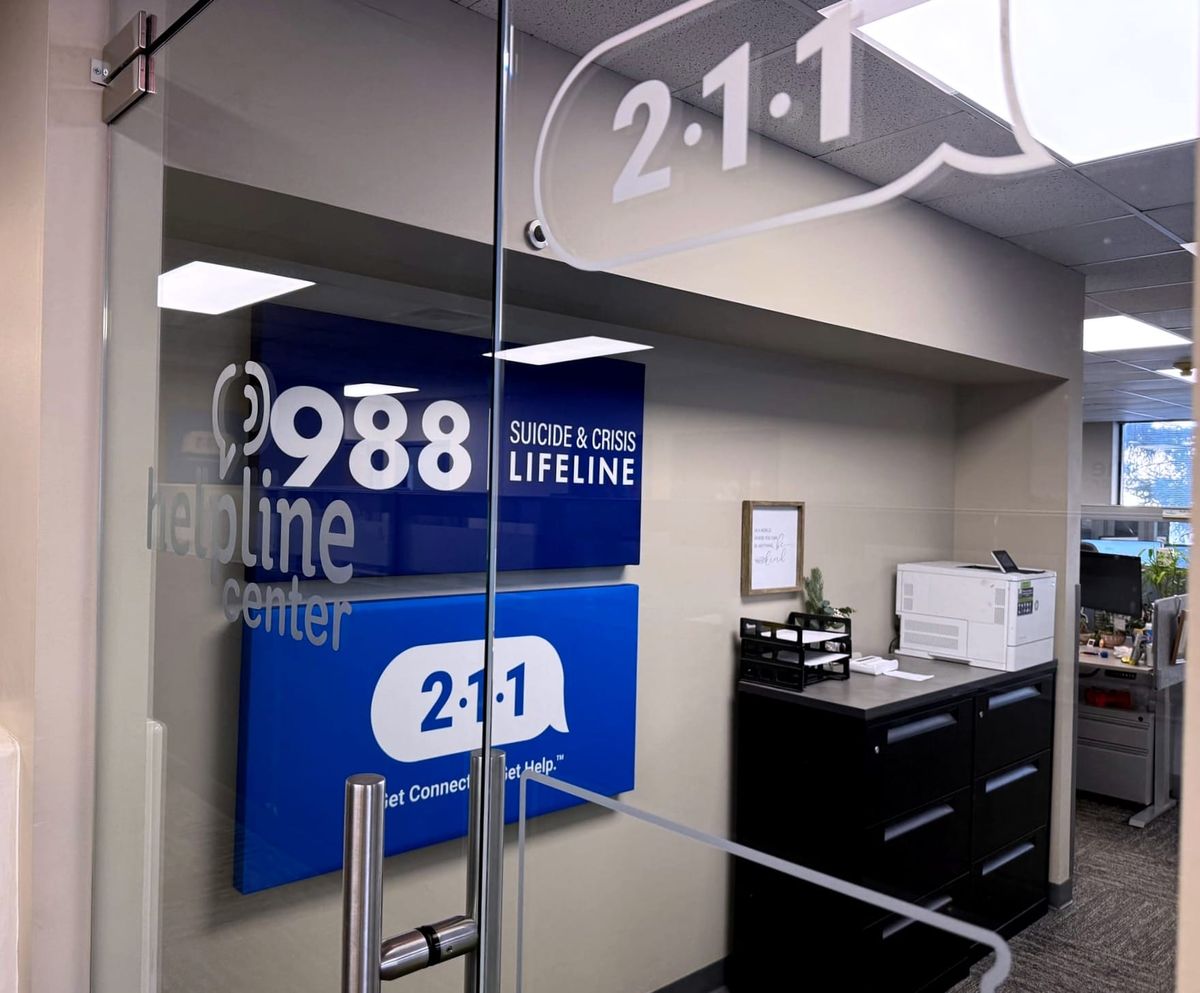
Cali said she hopes people understand how debilitating opioid addiction can be, and how it doesn't go away for good when you get sober – which is why she hopes prevention and resource efforts like Brothers and Sisters Behind Bars continue even if there isn't always a visible issue with addiction in the community.
“I want to change people’s way of thinking and stigmatizing because it’s not fair,” Cali said. “I am grateful for (heroin) being so hard to find around here because, honestly, I don’t know if I would be strong enough – even with all these years of sobriety – to sit right in front of it and get up and walk away. That’s how much of a hold it had on me.”
Though she said there will likely always be a part of her that struggles, she wants to live the rest of her life helping people, in any way she can.
Even though her journey with addiction may be what got her to where she is now, it is clear that her giving nature is something she was born with – not something shaped by adversity.
"I want to help. Even if helping people looks like just talking to them through wanting to relapse or talking to them after they relapsed and they're feeling like crap. There's all kinds of different kinds of ways to help people," Cali said.
South Dakota News Watch is an independent nonprofit. Read, donate and subscribe for free at sdnewswatch.org. Contact reporter/Report for America corps member Molly Wetsch: 605-531-7382/molly.wetsch@sdnewswatch.org.