How the nonprofit's comprehensive K-12 plan has already helped 30,000 students – and hopes to reach all of South Dakota's young people soon.

Next school year, about 141,000 students in South Dakota public schools may begin to see more conversations about substance use disorder – and how to prevent it – being had in their classrooms.
Emily’s Hope, a South Dakota-based nonprofit focused on substance abuse prevention, was recently awarded over half a million dollars from the state’s opioid settlement fund to distribute its multi-grade substance abuse prevention curriculum to public schools in South Dakota.
“I think that we have to have prevention, and all the studies show that you have to start at a very young age with these conversations. ... Prevention is where we save lives, and I think it’s often overlooked.” – Emily’s Hope founder Angela Kennecke
Emily’s Hope founder Angela Kennecke told News Watch that the organization’s education program has been in the works for years, beginning with pilot programs implemented in schools across the region. The curriculum now reaches 30,000 students in six states with programs from kindergarten through high school.
South Dakota will be the first to see statewide implementation thanks to the $518,000 award from the Department of Social Services, which controls the state’s $99 million opioid settlement fund.
The organization also received $100,000 from the South Dakota Community Foundation's Beyond Idea Grant toward its education efforts for a public awareness program called Facing Fentanyl, which will teach about the dangers of fentanyl and reach about 50,000 students, parents and educators.
Program designed to follow students through schooling
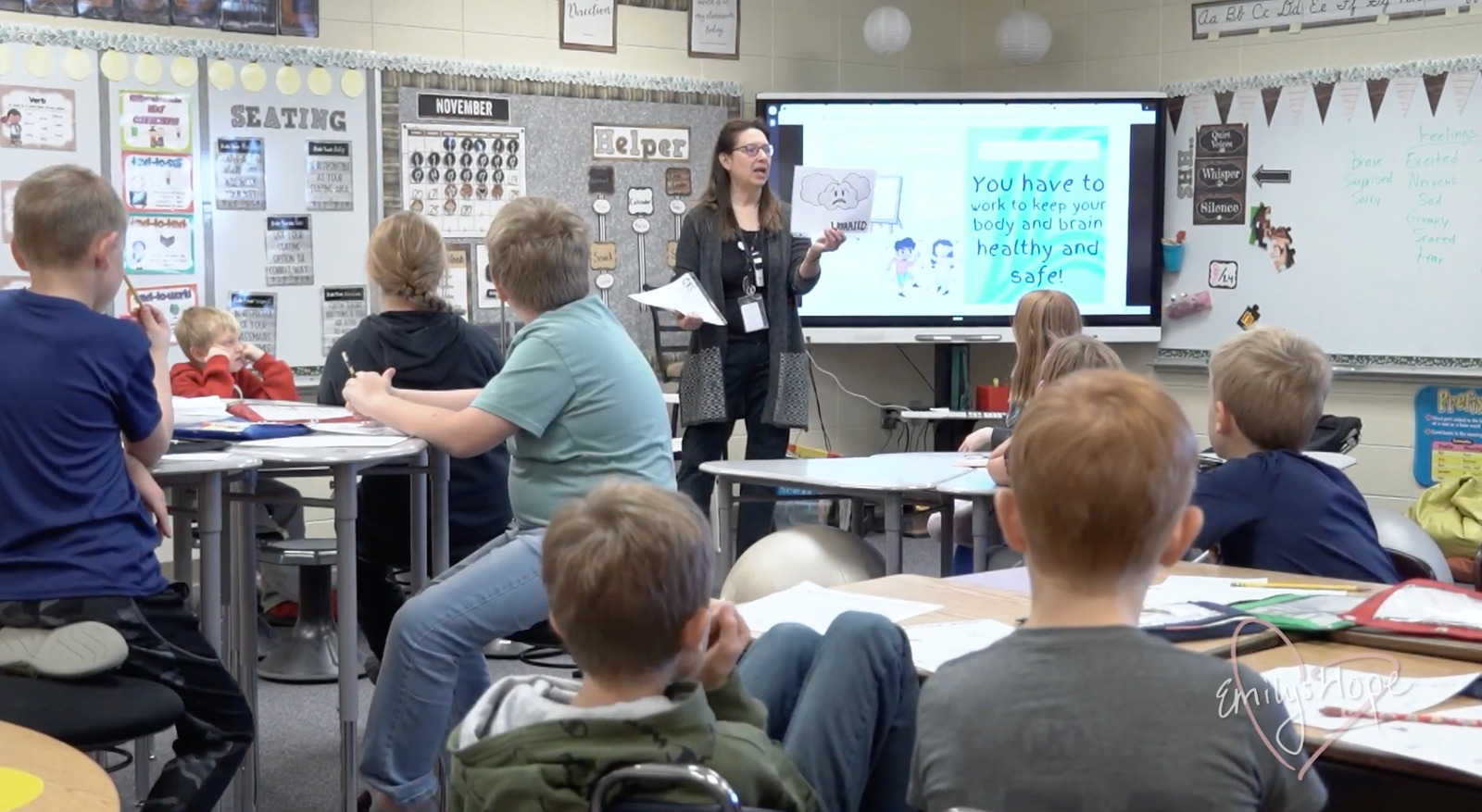
The program is not the same as the once-a-year Drug Abuse Resistance Education (DARE) assemblies of days past – though Kennecke said those still have their place, and she often goes to speak at school assemblies. Lessons take place throughout the school year, increasing in frequency as students get older. Because the curriculum follows students through their school journey, concepts can build off of each other as they get more complex.
In early years, students learn about their body, emotions and who “trusted adults” are. They read books written by Kennecke and illustrated by her daughter Abby Groth, where students are introduced to characters who will follow them throughout their education. Topics get more specific in nature as students age –first grade sees titles like "Your Super Powers!" In fifth grade, students will graduate to "Brain Busters: Cracking the Code on Substance Use."
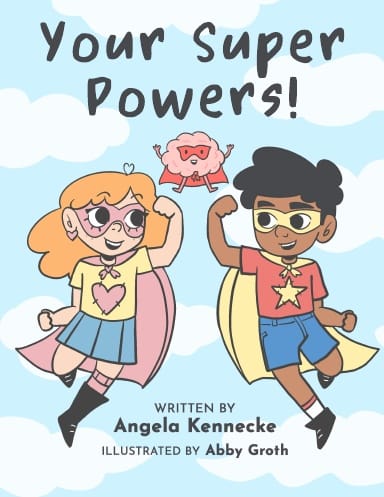
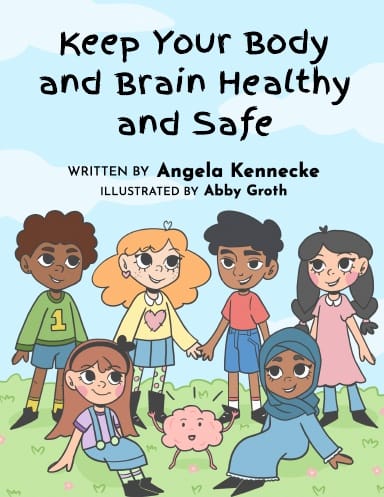
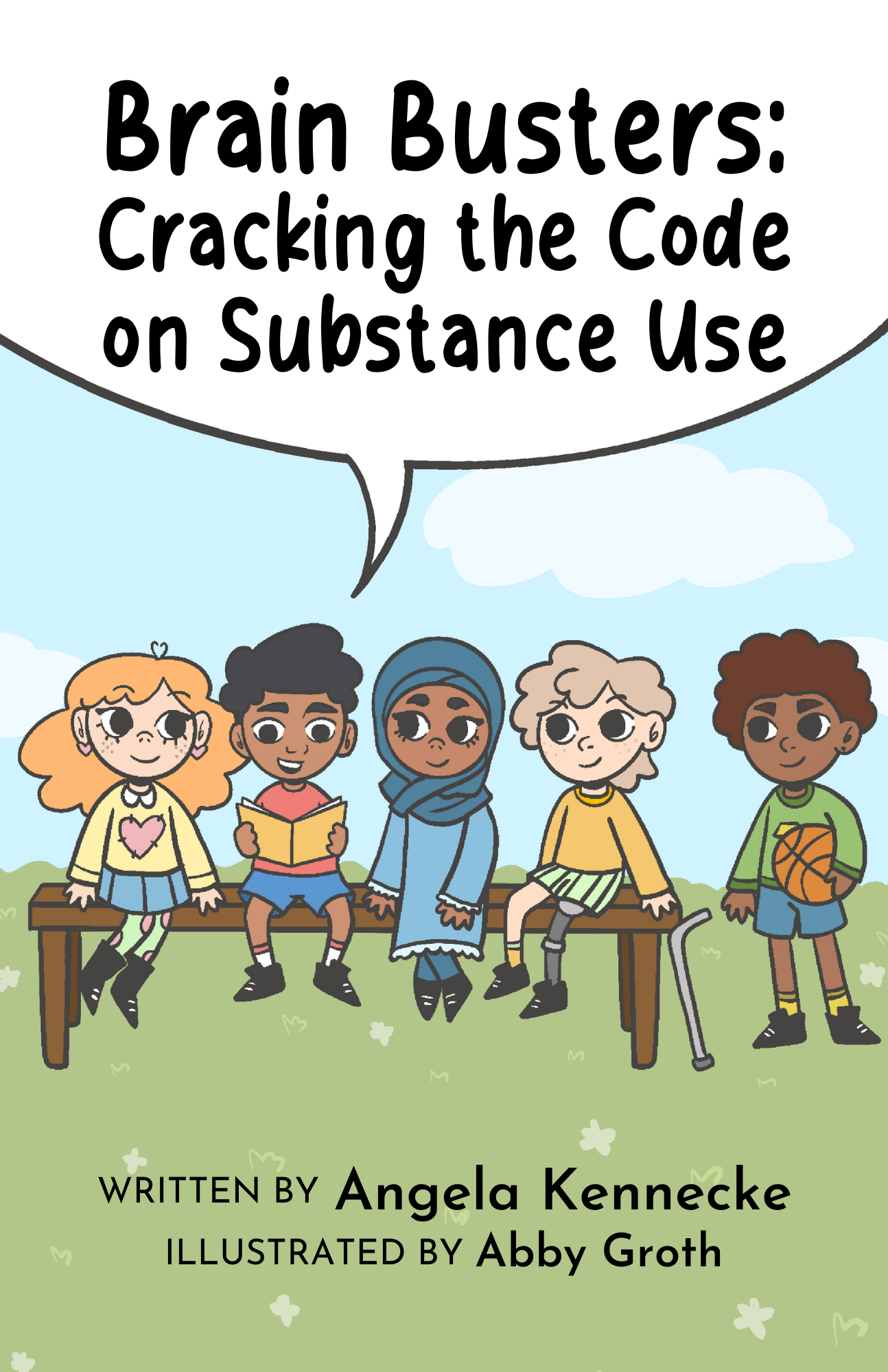
Covers for first, third and fifth grade books in the Emily's Hope curriculum program. (Photos: Emily's Hope)
In high school, conversations get much more practical. Those students are even more at risk for drug use and exposure to substance abuse, and Kennecke said it was important to create a curriculum that was able to reach students where they are.
“High school is a different animal, and we really worked with a lot of folks who work in high schools (to create the curriculum). So it's more project based, it's more student-led,” Kennecke said.
Get South Dakota news and information in a free email on weekdays. Cancel any time.
Importantly, students will be hearing about these issues from an adult that they know and trust. The curriculum is designed for teachers to easily implement into daily classroom activities, without much need for ongoing support from Emily’s Hope. Kennecke has said that while most pilot programs see teachers running the program, she’s also heard that school nurses and guidance counselors have also taken up the task.
“If you look at the studies on DARE, you'll see that it didn't do what was intended, and I think part of that was somebody coming in from the outside to teach it. It wasn't long enough, it wasn't comprehensive enough, it didn't go over enough years. And so I thought, 'Oh, my gosh, I want to start talking to kids at a younger age,'” Kennecke said.
That ongoing relationship means that teachers, counselors and nurses also receive education from Emily’s Hope on how best to handle difficult conversations, she said. For example, if a student reaches out with concerns for a family member or friend who may be using.
Pilot program sparks difficult conversations in some communities
Kennecke told News Watch that students sometimes recognize signs of substance abuse around them when being exposed to the concepts through Emily’s Hope’s curriculum.
In the northeast South Dakota town of Wilmot, population 381, the community suffered two overdose deaths in a single year, Kennecke said. That sparked Wilmot Public School counselor Tracy Ronke’s outreach to Kennecke to become a pilot school.
“I wanted to educate our kids on something that will help them lifelong, not something just for today,” Ronke said in a video for Emily’s Hope. “The drug addiction in our community is not going to go away.”
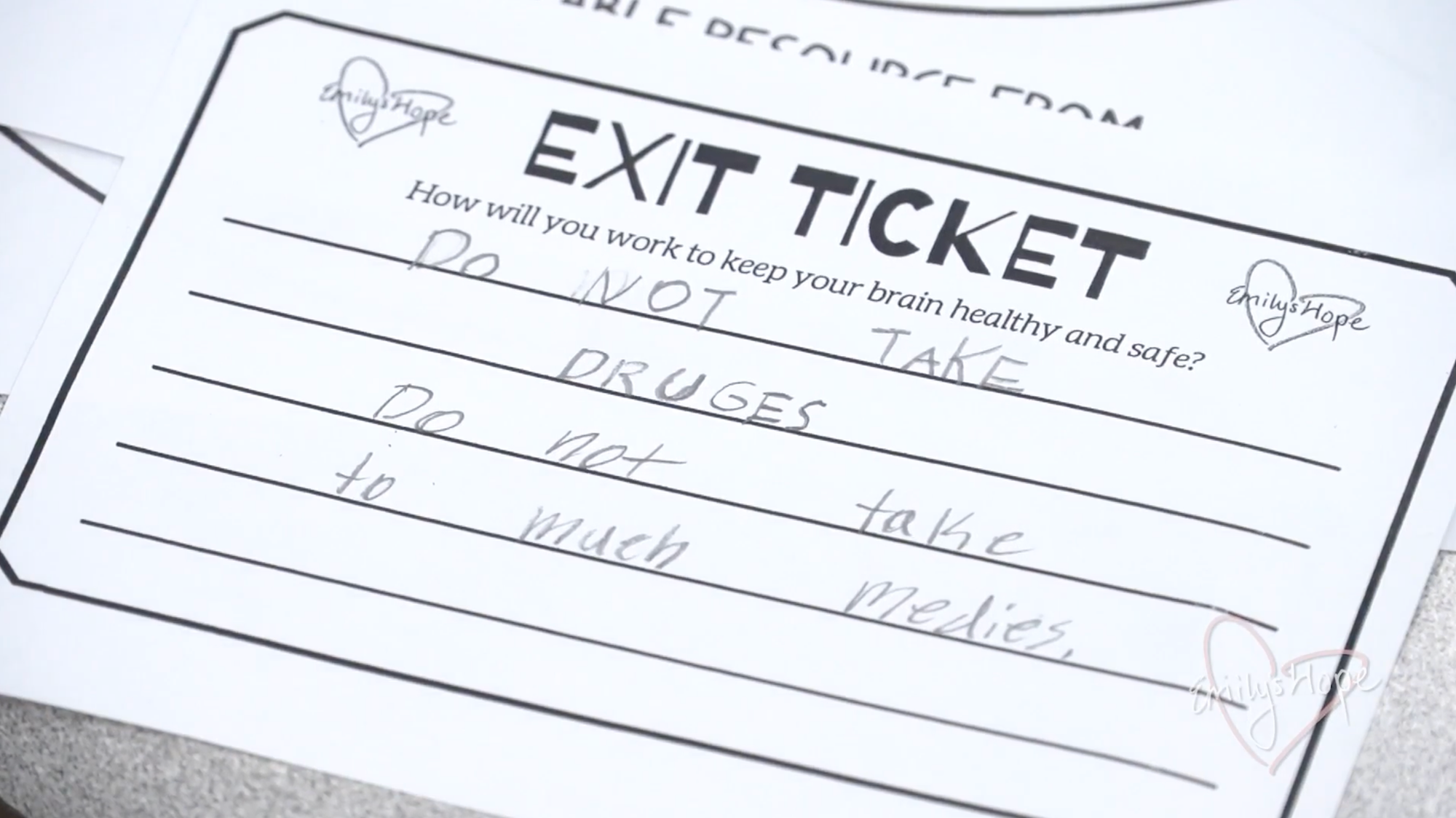
The Wilmot pilot program began with third and fourth graders. In those classrooms, Ronke said, it became clear that while some concepts from the curriculum – like how the endocrine system works – were new to students, others were all too familiar.
“What we learned along the way doing the curriculum is (the students) knew about the drugs. They knew about how drugs were being used. They knew that they saw them in their home, they knew that they had peers that were using them,” Ronke said. “What really started talking to me during this process wasn’t what the curriculum was teaching, it was what my kids already knew.”
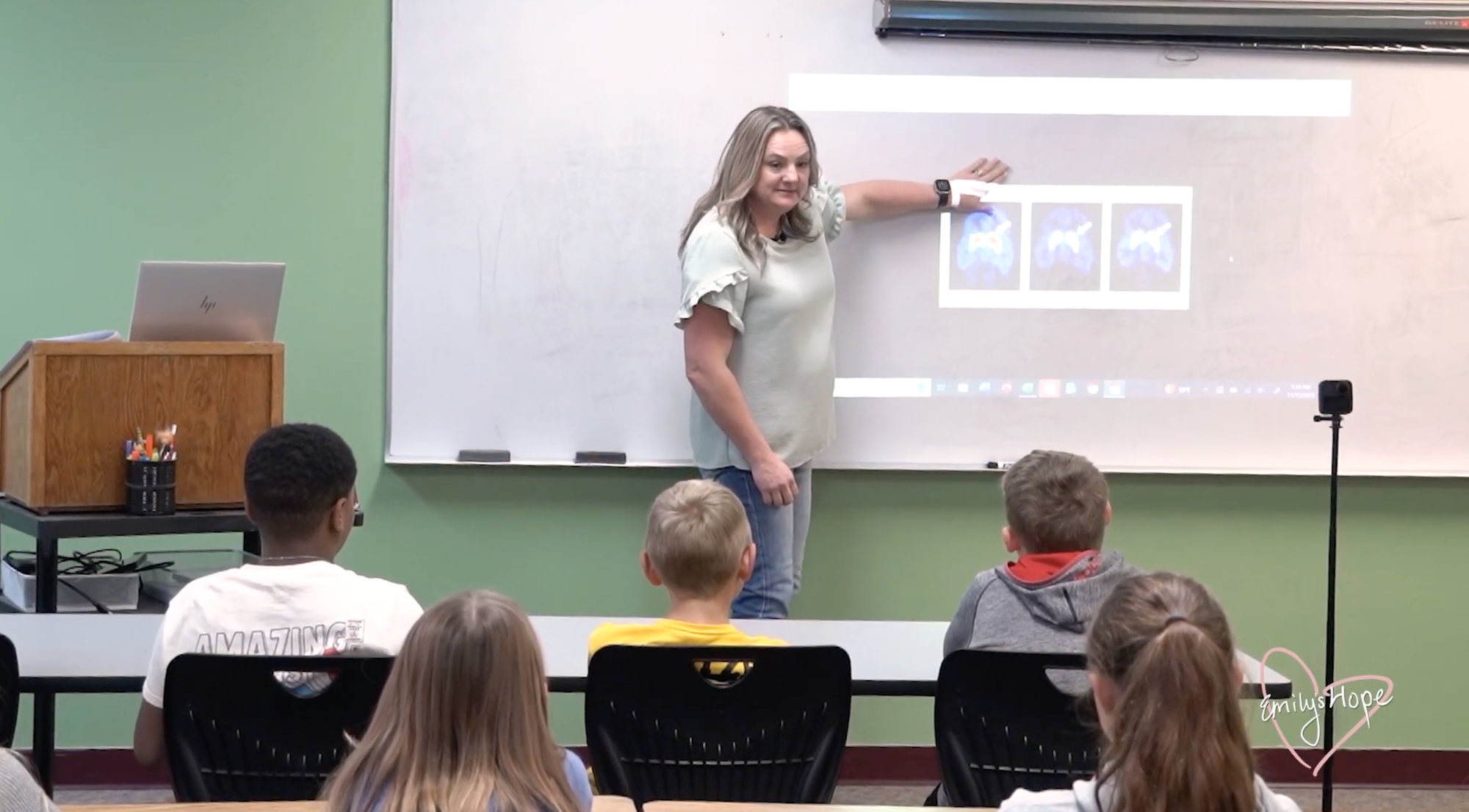
Part of the pilot program’s goals have been to re-contextualize the conversations about substance abuse that students may be exposed to. That especially applies to higher-risk communities, where having a family member or friend with substance use disorder is common, Kennecke said.
On the Rosebud Indian Reservation, for example, the ongoing pilot program at Rosebud Elementary School reaches students who live in a high-poverty county with high rates of substance use.
“What I have found when I talk to those students is that most of them have someone in their family or know someone suffering from substance use disorder, but they have no context for what's happening to that person. All they hear is the talk of adults. And a lot of times that can be stigmatizing language,” Kennecke said.
Prevention key part of ongoing opioid strategy
Though much of the state’s opioid settlement fund spending has gone to treatment and recovery initiatives, the funding for Emily’s Hope represents a broader need for ongoing prevention measures to stop addiction before it begins, Kennecke said.
On April 2, Gov. Larry Rhoden and Department of Social Services Secretary Matt Althoff announced $7.82 million in grants for various organizations across the state. In that disbursement, $1 million was allocated to the Sioux Falls School District to provide prevention education, community engagement and intervention protocols for students using substances across grade levels.
Programs that target young people often see big returns, Althoff said.
"There's always a predisposition to youth," he said during the press conference. "We'll always prioritize our youth in South Dakota. I think in many cases, if there's low-hanging fruit, it's from the youth, as far as investment and risk and reward."

Partner with South Dakota News Watch and support fact-based news and information.
Part of that funding will go to implementation of the Emily’s Hope curriculum in the district, which currently serves about 25,000 students. Kennecke said that the curriculum going into schools in South Dakota’s largest city has been a goal of Emily’s Hope for years.
“Everybody who helped formulate the elementary school curriculum, everybody who helped formulate the middle and high school curriculum, a lot of them are Sioux Falls educators or counselors. And so we were anxious to get our curriculum into the Sioux Falls School District,” Kennecke said.
Kennecke said that while some students may already have experience with substance use in their families, relationships or communities, a primary goal of the curriculum is to create awareness and prevention strategies for all students – regardless of whether they have been previously exposed.
“I believe in prevention. I think that we have to have prevention, and all the studies show that you have to start at a very young age with these conversations,” Kennecke said. “Prevention is where we save lives, and I think it’s often overlooked.”
Correction on May 7, 2026: Emily's Hope's $100,000 grant from the South Dakota Community Foundation will go towards an education program called Facing Fentanyl, which is separate from the Emily's Hope Curriculum. An earlier version of this story incorrectly stated that the grant would be going towards curriculum efforts.
Read the previous stories in this series
 Molly Wetsch
 Molly Wetsch
South Dakota News Watch is an independent nonprofit. Read, donate and subscribe for free at sdnewswatch.org. Contact reporter/Report for America corps member Molly Wetsch: 605-531-7382/molly.wetsch@sdnewswatch.org.