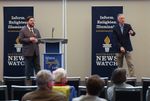
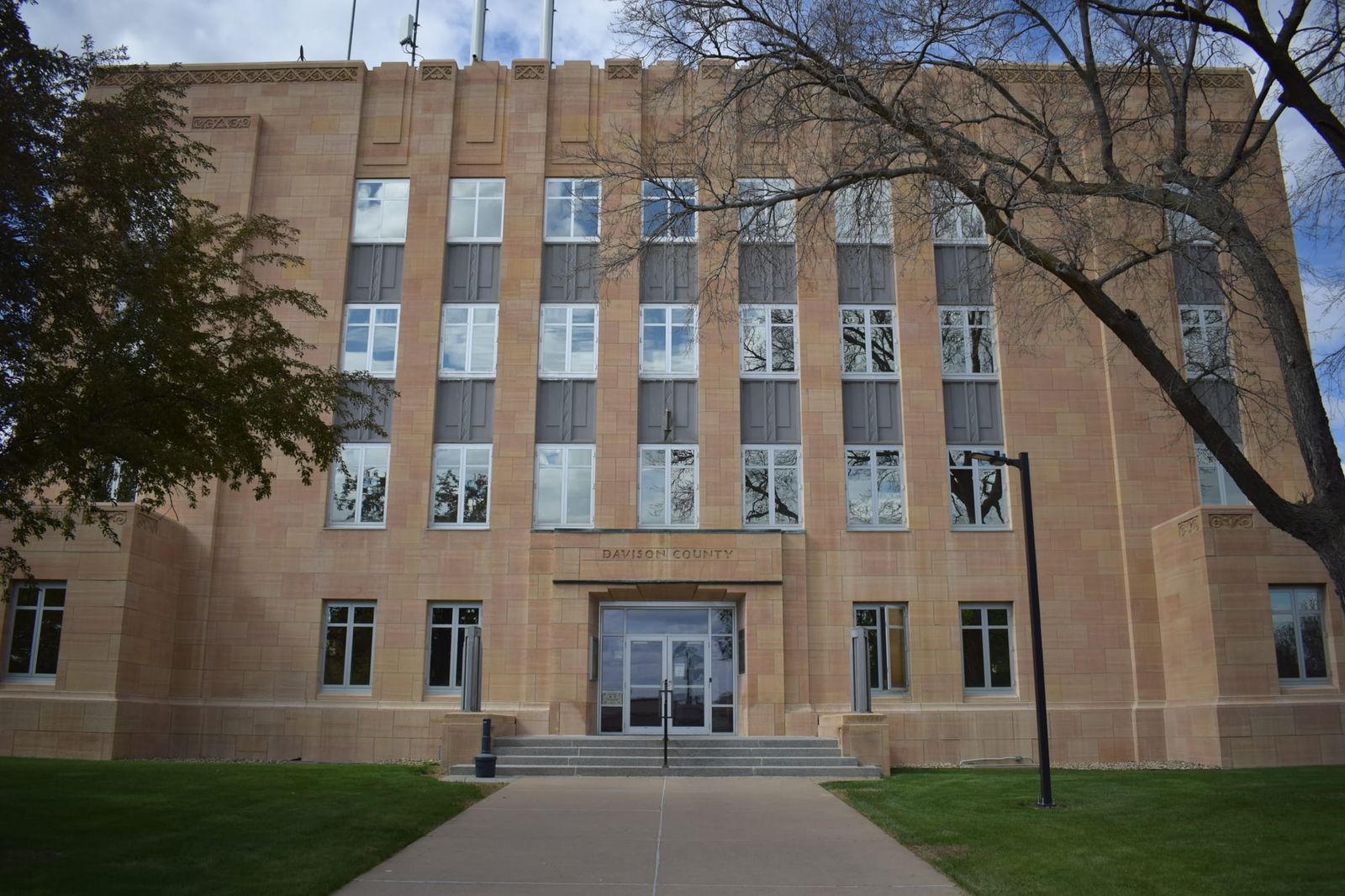
A judge did not rule on three motions Tuesday related to a former Mitchell baseball player's civil lawsuit against the American Legion and two local news organizations.

MITCHELL, S.D. – A judge heard arguments Tuesday for three motions in the civil lawsuit filed by a former Mitchell baseball player against two local news organizations and the American Legion Baseball league.
Circuit Judge David Knoff said he will rule later on the motions, one of which could put an end to the case or send it to trial.
The case revolves around a sentence in a letter by a representative from the American Legion sent to members of the Mitchell Baseball Association.
Peyton Mandel, who is now 20, was a player for the Mitchell baseball team and one of six involved in a hazing incident that took place in 2023 at a Rapid City hotel room. The event, in which another player said the boys held him down and performed forcible digital anal penetration on him, was later characterized as a rape case. He pleaded guilty in 2024 to one count of accessory to a felony as part of a plea deal.
In November 2024, American Legion adjutant C.P. Van Delist sent a letter to members of the Mitchell Baseball Association saying that the organization had decided that Mitchell Baseball would be immediately barred from participating in the American Legion and provided a set of conditions that must be met in order for the association to be reestablished in the future.
In the letter, after naming the six former players involved in the case, Van Delist said, "All of these individuals are guilty of accessory to a felony, acknowledging by affirmation of their guilty pleas, that the felonies they were charged with, rape and aiding and abetting, did take place."
In July of last year, Mandel filed a civil lawsuit saying that Van Delist made "false, malicious, and defamatory" statements about him. Nexstar Media Group, the owner of KELO-TV, and Forum Communications, owner of the Mitchell Republic, were also named in the lawsuit. Both organizations published stories containing Van Delist's letter.
Case sees multiple First Amendment considerations
The lawsuit states that Van Delist's statements and the subsequent news articles "falsely (represented) and (characterized) Plaintiff as an admitted rapist." The lawsuit also says that Mandel was "denied reapplication for an employment or experiential opportunity in the medical field" as a result of news articles published by KELO and the Mitchell Republic.
Mandel's lawyer, Tucker Volesky, said during the hearing that the contested sentence in the letter indicated Mandel was a rapist when that was not the charge that Mandel pled guilty to. Volesky said that because Mandel pleaded guilty to accessory to a felony, it was wrong to name him in the letter next to the statement of rape taking place.
Get South Dakota news and information in a free email on weekdays. Cancel any time.
The hearing spanned several First Amendment complexities, including what qualifies as "privileged" communication, whether Mandel can be considered a limited public figure in relation to the case and consideration about what constitutes the "truth" of the case.
Attorneys for the defendants said that even if Mandel's record does not indicate rape, a rape still took place. One sentiment was that because Mandel pleaded guilty to accessory to a felony, he therefore acknowledged that the rape happened. Volesky said that Mandel should not be associated with rape and said that the intention of the lawsuit was to say that a rape did not happen.
Hearing ends without decisions
All three motions considered Tuesday afternoon were taken under advisement by Knoff.
One was a motion for a judgment on pleadings filed by Volesky, which asked the judge to solely consider what Mandel affirmed by pleading guilty. Volesky also asked Knoff to consider the "narrow falsity issue" provided by the lawsuit and said that prior context was not relevant to the issue of whether Van Delist's letter falsely accused Mandel of rape.
A motion to quash a subpoena was presented by Jessica LaMie, a South Dakota Division of Criminal Investigation deputy attorney. That was in response to attorney Pete Heidepriem, on behalf of Nexstar, submitting a subpoena to the DCI requesting documents in the criminal investigation of the 2023 hazing case.
The final motion considered was a motion for summary judgment – which would have required the judge to rule on the case immediately without sending it to trial.
Attorney Sarah Collins, who represents Forum Communications and Mitchell Republic editor Luke Hagen, brought forward the motion. She said that there was no factual basis for the continuation of the case and that the plaintiff was "trying to prove malice when malice is not there."

Partner with South Dakota News Watch and support fact-based news and information.
Volesky said in response that the articles written were single-sourced and failed to verify the facts in the court record, violating traditional journalistic ethics standards.
Knoff said during discussion of that third motion that he felt he was "being asked to close (his) eyes on the act that took place" by Volesky and was struggling to find a factual basis for the decision to consider the letter in a vacuum.
Knoff did not indicate when he would rule on the motions but said it would be as soon as he could. There is no specific limitation on how soon a judge must rule after taking a case under advisement, and it can range anywhere from a few days after a hearing to several months.
South Dakota News Watch is an independent nonprofit. Read, donate and subscribe for free at sdnewswatch.org. Contact reporter/Report for America corps member Molly Wetsch: 605-531-7382/molly.wetsch@sdnewswatch.org.