Unique glacial lake landscape brings unique qualities to northeast South Dakota, though many small towns face similar issues.


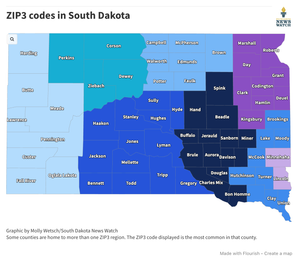
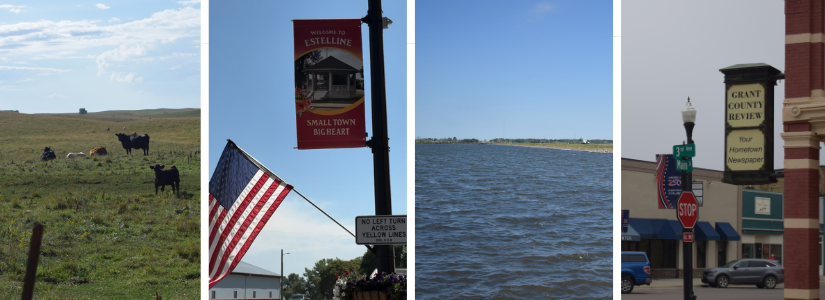
In the 572 ZIP3 region of northeastern South Dakota, deep blue lakes are about as common as cornfields.
The lake system in the northeast corner of South Dakota, generally known as the Prairie Pothole Region, sets it apart from other areas of the state. While the lakes provide for recreation and another source of tourism money, they present some unique challenges, too.
 Carson Walker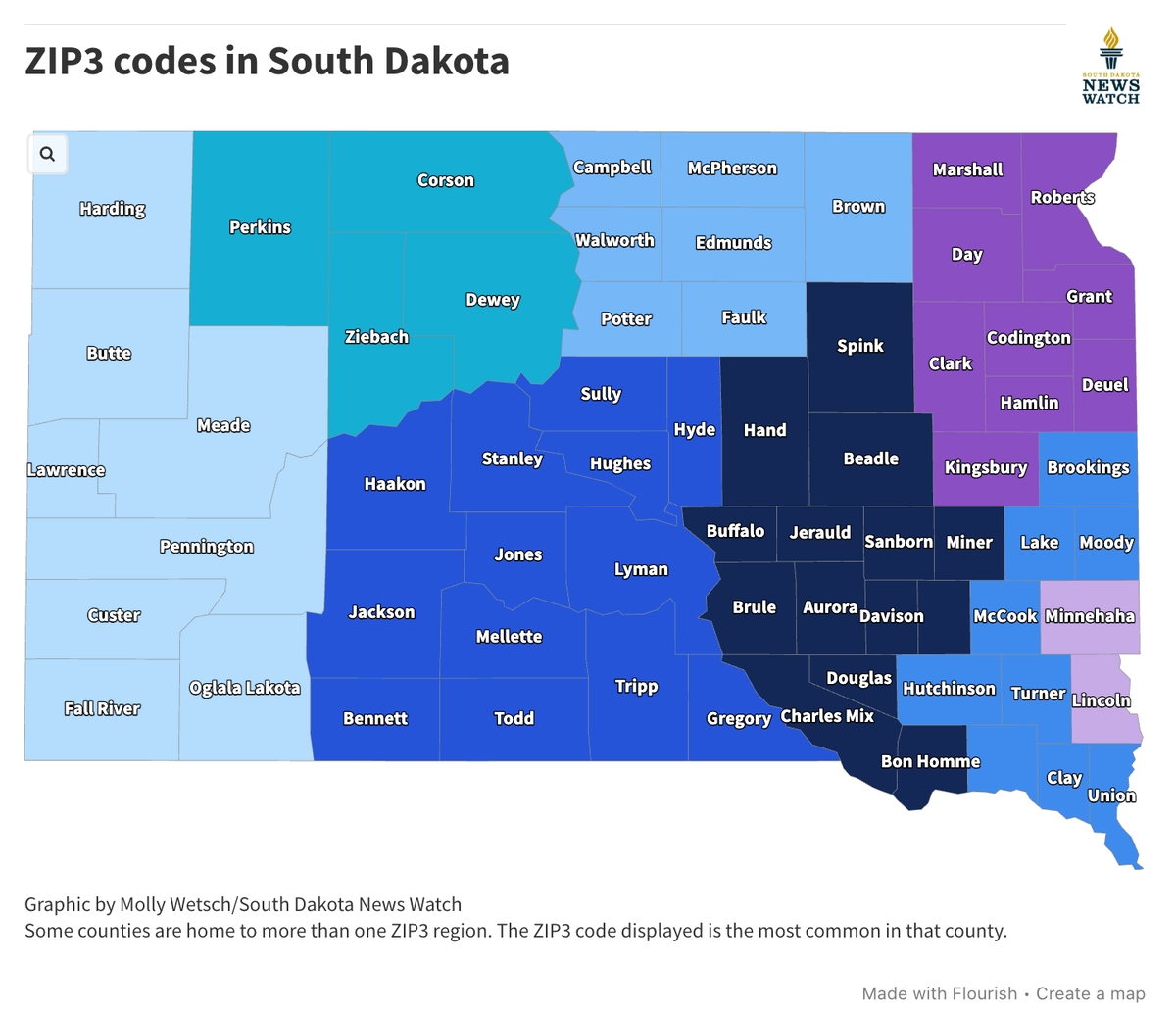
What to know about 572
The region is bordered by North Dakota to the north end and Minnesota to the east. The area's major industries range from the large dairies present in towns like Milbank to education and health care, anchored by the regional hub of Watertown – the largest population center in the 572 region. It's also home to the Sisseton Wahpeton Oyate, one of the state's nine Native tribes that resides on the Lake Traverse Reservation.
People in the region told News Watch about a variety of issues, including feeling isolated from the rest of the state and struggles keeping up with housing and workforce needs.
However, the people also illustrate the impacts that are possible when work is done to improve small communities.
Here's what five people in the region said about their communities.
Ried Holien, Watertown: A regional hub
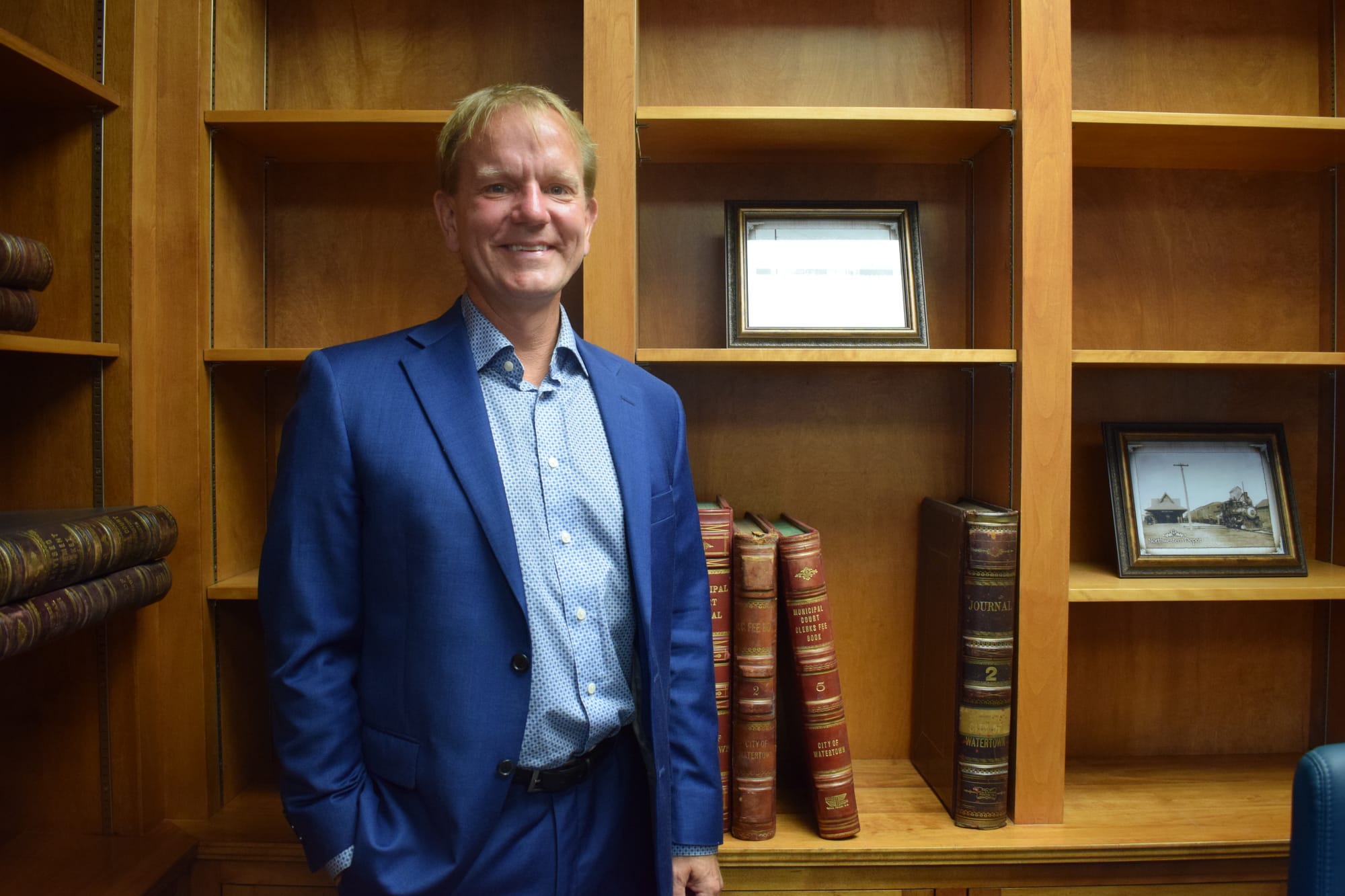
Ried Holien grew up in Watertown and has held the title of mayor since 2021. Prior to being mayor, Holien served in the South Dakota State Senate from 2011-2017. He represented District 5 as a Republican.
Watertown is the largest town in the 572 area code. Holien talked about the symbiotic relationship that Watertown has with surrounding area communities.
"Watertown needs to be a home station for all of these surrounding communities. Because I know a lot of people who live in Watertown and will go to the smaller communities, but far more of the people who live in the smaller communities come to Watertown to work," Holien said.
Watertown is growing at a rate of about 1.5%, Holien said. He'd like to see that number double. As costs rise, public amenities like parks and bike paths will get more expensive to maintain.
"If our population is only growing at 1.5% and inflation is growing at 3 or 4%, you can do the math. At some time in the future, we're going to hit a crisis in paying for these things," Holien said.
Cole Hoyer, Estelline: Small businesses anchor the town
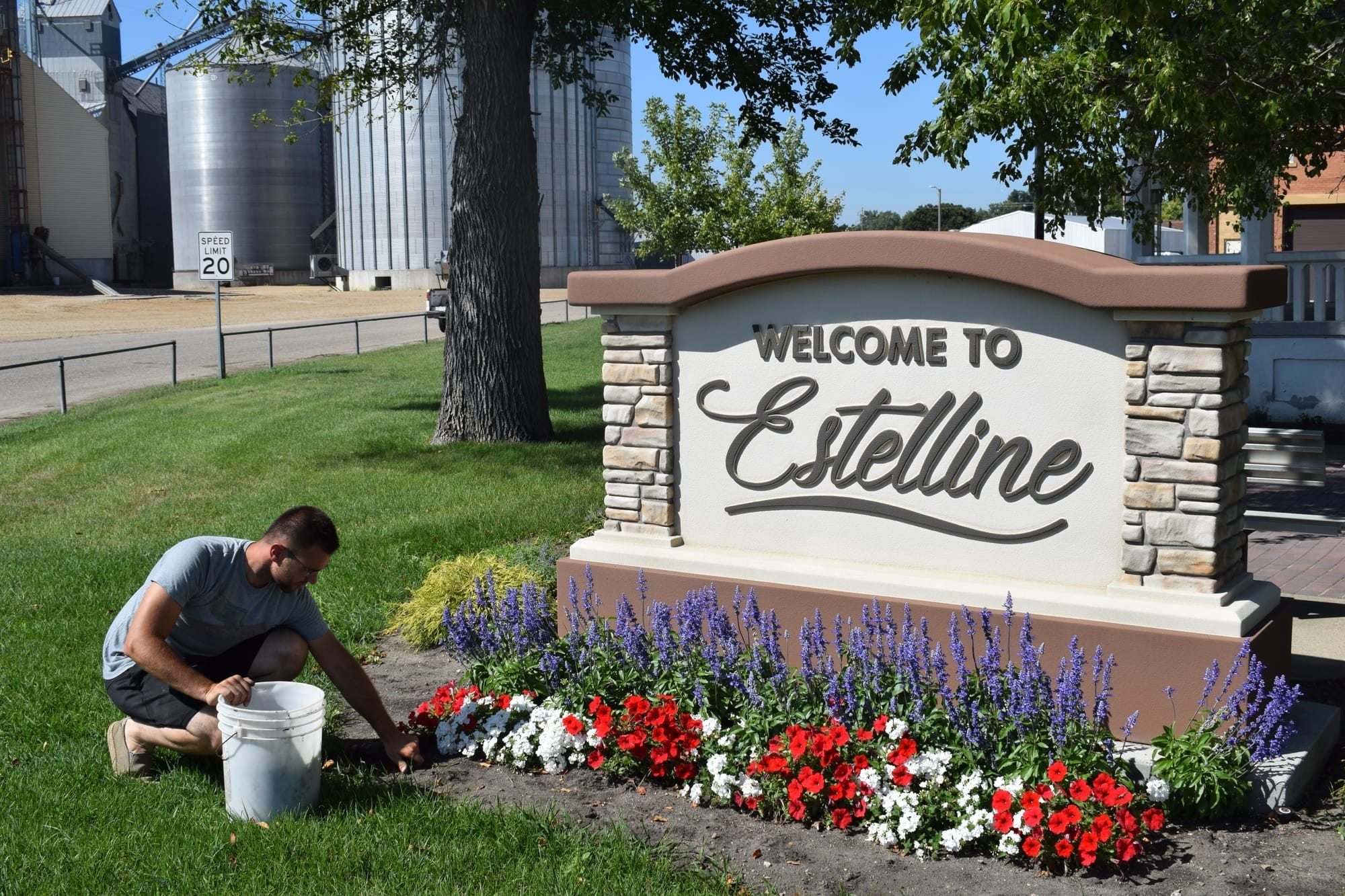
Cole Hoyer is weeding Estelline’s public park when he tells News Watch reporters how efforts to revitalize small towns can work in practice. The park is decked out with flowers and other greenery thanks to America in Bloom, a national nonprofit that works with communities to beautify their main streets and other public places through “flowers, plants, trees, heritage, and environmental and lifestyle enhancements.”
For Estelline, population 831, that looks like adding benches, paths and flower beds to the park and outside businesses on Main Street. The town also recently gave grants to businesses on Main Street looking to improve their facades. The town's post office and other small businesses have brand-new looks, which complements the beautification initiative started by American in Bloom.
Hoyer, who is the president of the Estelline Economic Development Corp. as well as a farmer in the area, told News Watch that the small community has benefitted from prioritizing its small businesses: a motel in town has rooms booked every night and a new coffee shop draws in-town and passerby traffic.
Lindsey Kimber, Britton: Community knows how to rally
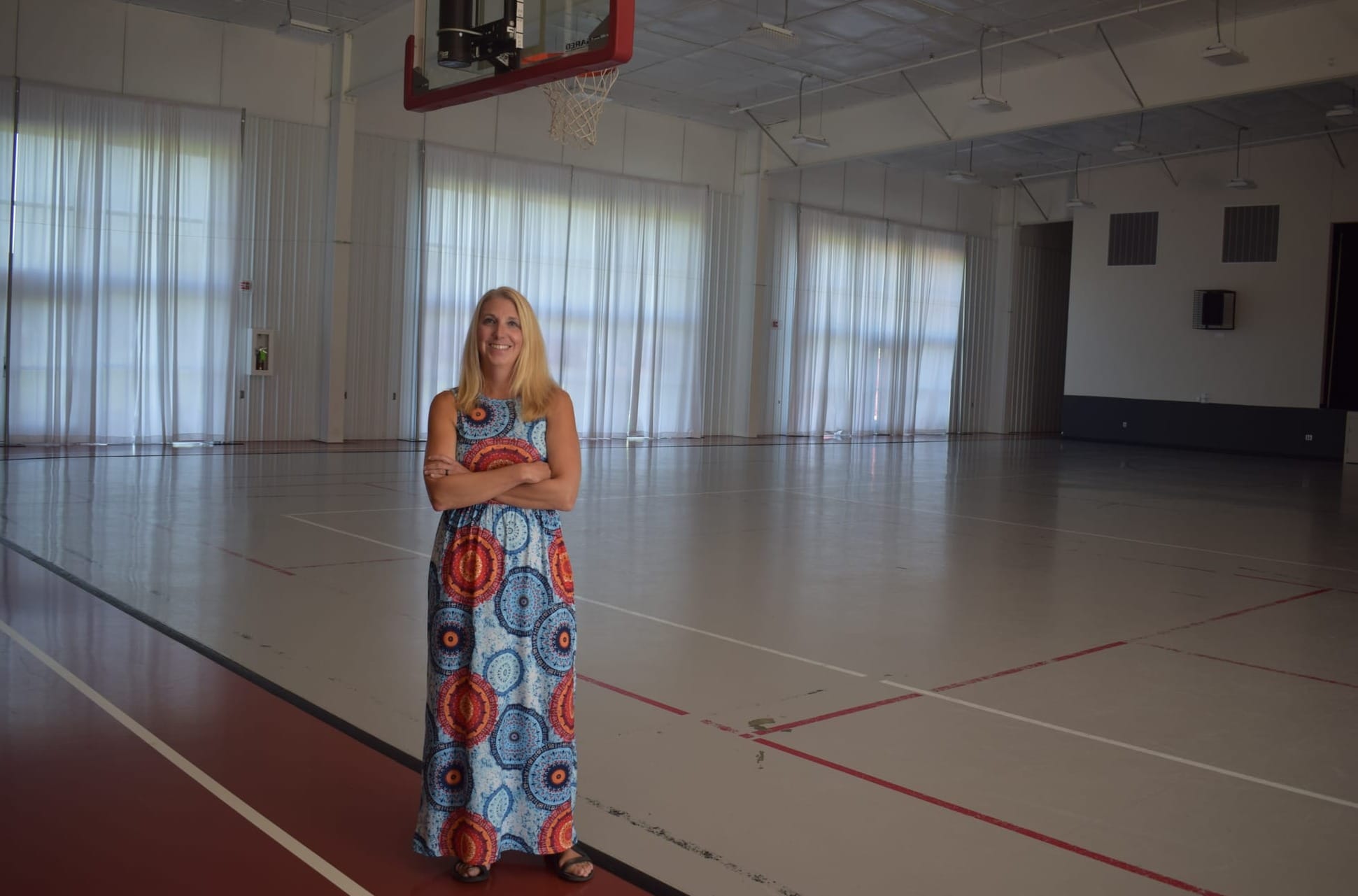
“The community really rallies when there's a need for something," said Lindsey Kimber, Glacial Lakes Area Development director.
News Watch reporters met Kimber in the Britton Event Center, a massive space on the north side of town decked out with a basketball court, auditorium, walking track and city offices, as well as a serving kitchen and seating areas. Kimber said that the space is a reflection of the Britton community’s desire to get things done – even without outside support.
The $3 million space was funded entirely by local philanthropy, which Kimber said is emblematic of how residents of the 1,200-person town get things done. The city budget isn't large. She told News Watch that people often misunderstand how much money the city collects from its tax base and mentioned road quality as a frequent concern that often drains city funds.
Get free, fact-based South Dakota news and information in a weekday email. No spam. Cancel any time.
Glacial Lakes Area Development supports small businesses in Marshall County. The organization has a revolving loan fund that provides money to individuals who may not qualify for traditional loans. She told News Watch that small business support is the biggest part of her job.
"Typically if you're looking at business development from a more statewide perspective, you know people always say, 'Well, we need to get this big company that hires 50 people or more, and you know, get them to move into Britton,'" Kimber said. "The reality is that the tax base is our small businesses, for the most part. I think people kind of understand that. But they overlook the importance of it to make sure that they keep running."
Sara Foust, Watertown: Breaking down silos
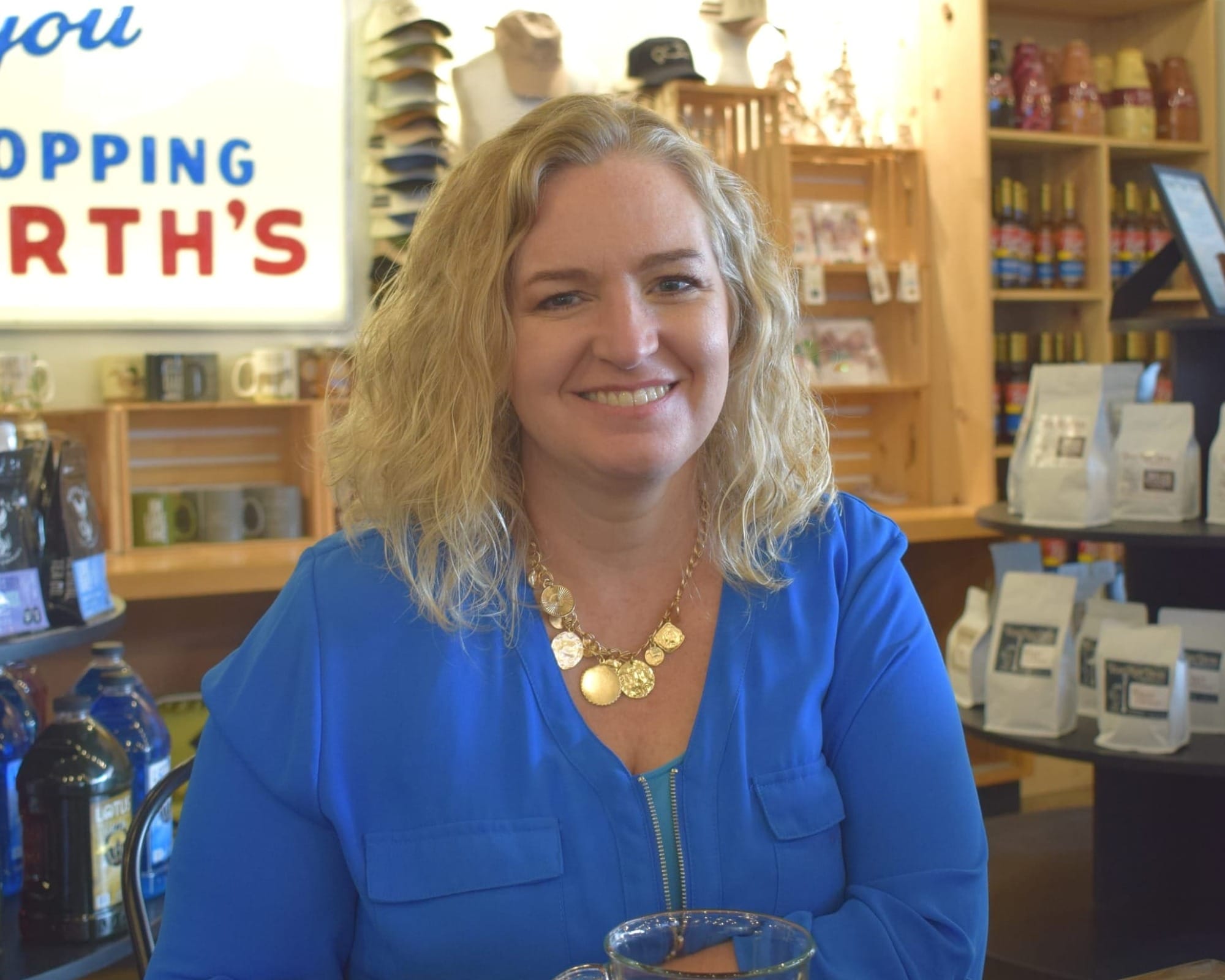
Sara Foust is the welfare director for Codington County. She’s been in her position since 2021, where she’s worked to connect different resources in Codington County into one central hub. They came up with Codington Connects, a place where all community resources are listed in one place.
“From the beginning of the work that we started doing with Codington Connects, it was like, how do we break down silos? And how do we get people to work better together? I think in general, our community has just recognized that we're better together,” she said.
Two goals of Codington Connects are improving housing and child care options in Watertown. Housing in Watertown, Foust and Holien both said, is among the most expensive in the state.
This fall, Lake Area Technical College students broke the enrollment record for the third time in five years, boasting 2,387 students. However, the school has no student housing. These extra Watertown residents drive up prices for rentals. Solutions are being worked on, but housing remains a problem, Foust said.
“If you can rent a place that’s affordable, it’s probably not habitable,” Foust said.
Mike Grosek, Webster: Changing geography, same small town
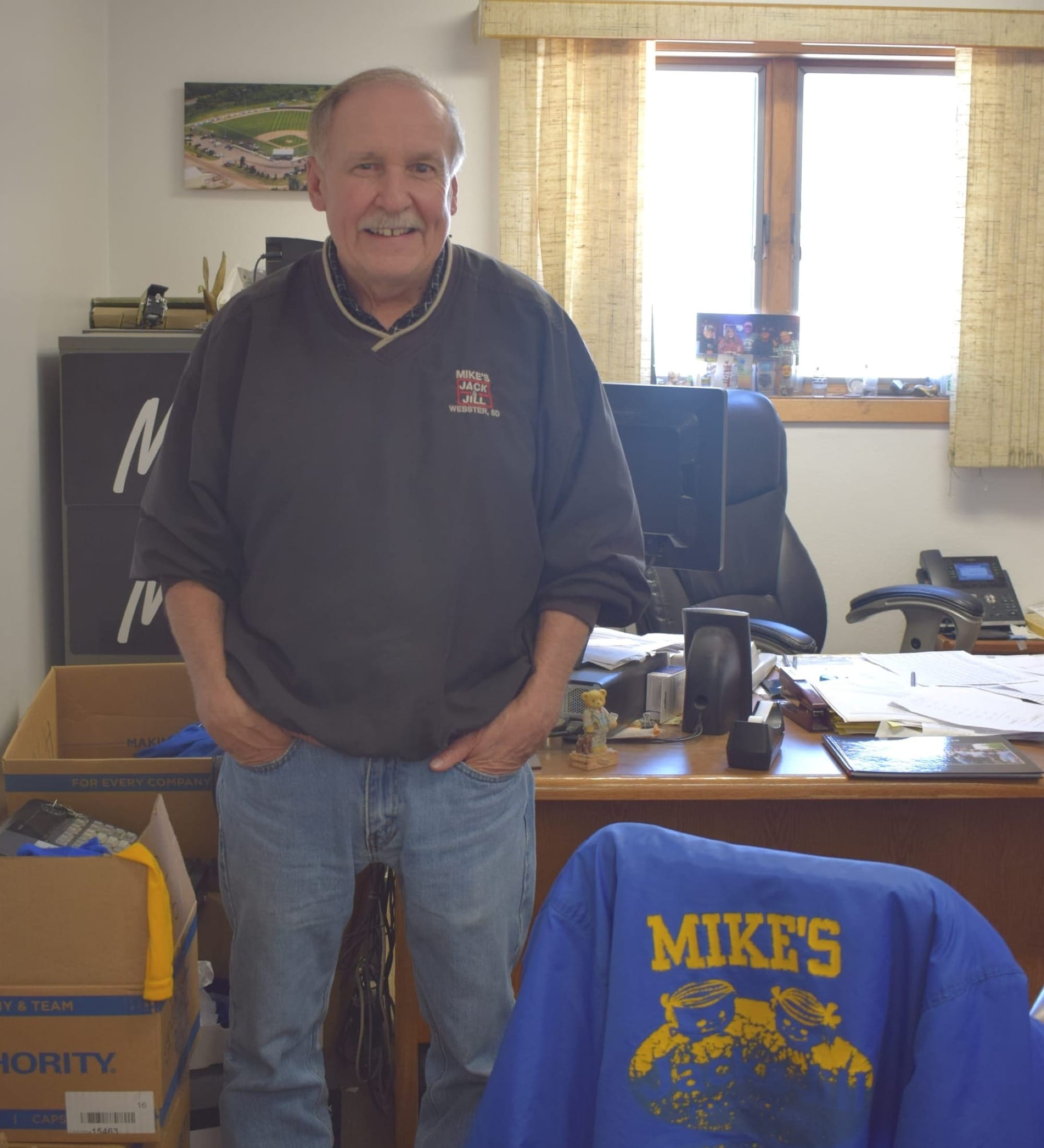
“We fend for ourselves," said Mike Grosek, mayor of Webster. "I mean, we have before, and we’re not out there begging for anything and we deal with what we have."
He's been the owner of Mike's Jack and Jill, Webster's only grocery store, for 50 years. He's also been running the town for nearly as long: last year, Grosek celebrated his 70th birthday and 40th year as Webster's mayor on Aug. 16. That's now been formally designated Mayor Mike Grosek Day by Gov. Larry Rhoden.
Grosek has seen a lot of change since he first took office, he told News Watch, from grocery prices at his store to restaurants opening and closing. But one of the most drastic shifts is due to the unique geography of the Webster area. It’s a closed basin, which means that none of the water in the lakes flows out of the region via creeks or rivers and can only exit via evaporation or seepage.
The area, especially around Webster and neighboring town Waubay, has had to deal with frequent flooding and eventual permanent geographic change. What was once farmland is now under water in Day County: Rush Lake, which now hugs Highway 12, didn't exist until the 1990s, Grosek said.
But he said people in the area have learned to make do with what they have, and when flooding or other severe weather happens the community often rallies together before asking for support from state government.
What issues are important to you and your community? Help shape our coverage by filling out this short form. Thank you!
South Dakota News Watch is an independent nonprofit. Read, subscribe for free and donate at sdnewswatch.org. Contact reporter/Report for America corps member Molly Wetsch: 605-531-7382/ molly.wetsch@sdnewswatch.org. Contact reporter Emily DeCock: 605-736-4396/ emily.decock@sdnewswatch.org.