
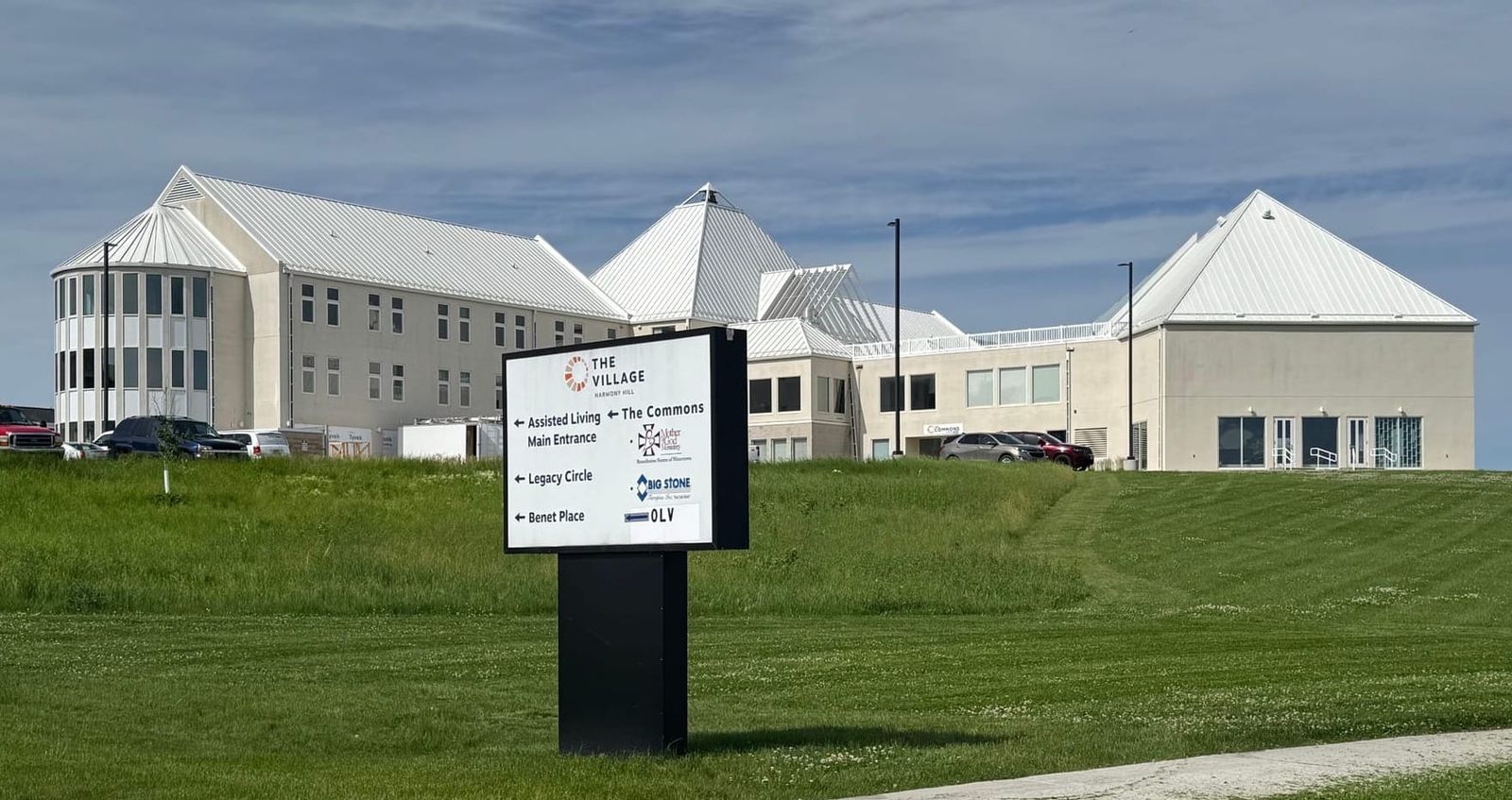
The aging Benedictine sisters had a late-in-life decision to make: sell their land and live out their final years elsewhere or stay in Watertown and remake their monastery into a campus of housing, health care and community resources.

WATERTOWN, S.D. – Throughout their entire adult lives, the women of the Benedictine Sisters of Mother of God Monastery have served others as educators, health care providers and spiritual leaders.
The Catholic nuns, many highly educated, have taught and ministered across the U.S. and in foreign countries. They also have played a role in establishing medical and long-term care facilities in several South Dakota cities.
"At the grand opening for the senior housing, I made a very, very brief speech. I just simply said, 'If you want to get something done, hire a nun.'" – said Michael Klatt, strategic adviser to the Village of Harmony Hill project
For more than 60 years, many of the sisters have lived, prayed and cared for one another at their monastery on 500 acres of hilly prairie land located on the east side of Watertown.
And now, as they age into their 70s, 80s and higher, the roughly 30 remaining sisters are continuing their lives of service with a final bold and grand act of ingenuity, grit and compassion.
 Bart Pfankuch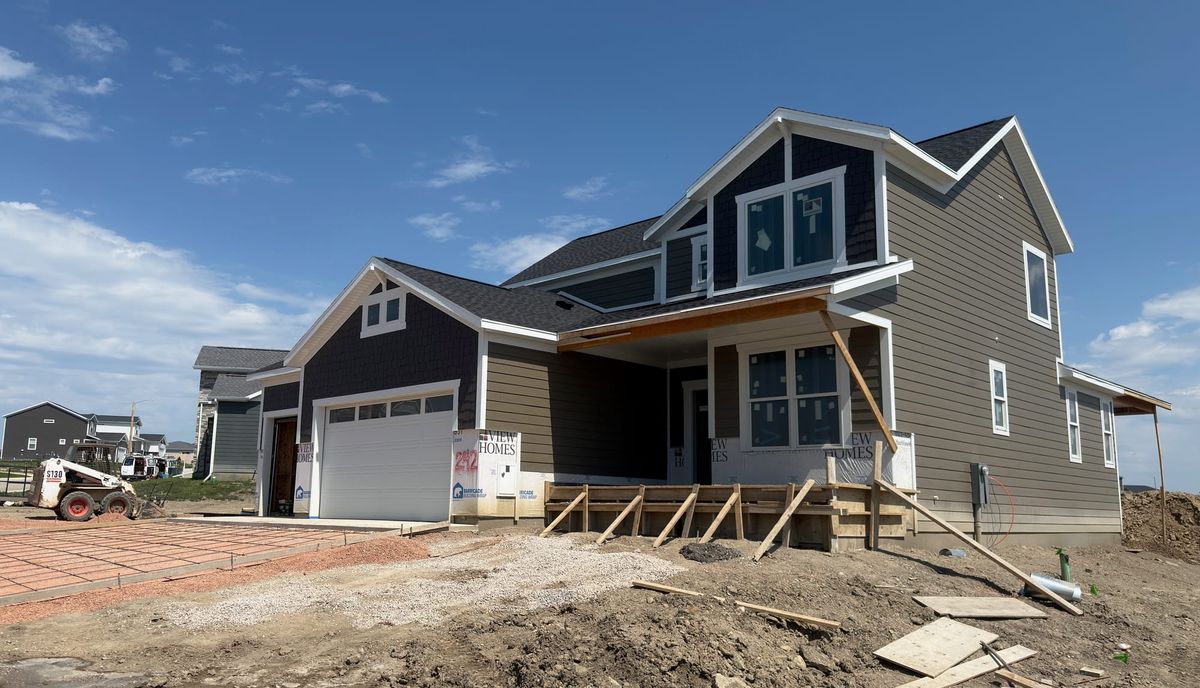
In what will become one of the largest and most diverse developments of its kind in state history, the Benedictine sisters are transforming their land into a multi-faceted housing, education, health care and commercial project that will benefit Watertown and the entire state of South Dakota long after the last nun has passed.
The sisters are the lead designers, funders and coordinators of a multi-year effort to remake the monastery site into The Village at Harmony Hill, planned as a multigenerational community where children as young as infants and elders in their final years can live, prosper and celebrate the word of God.
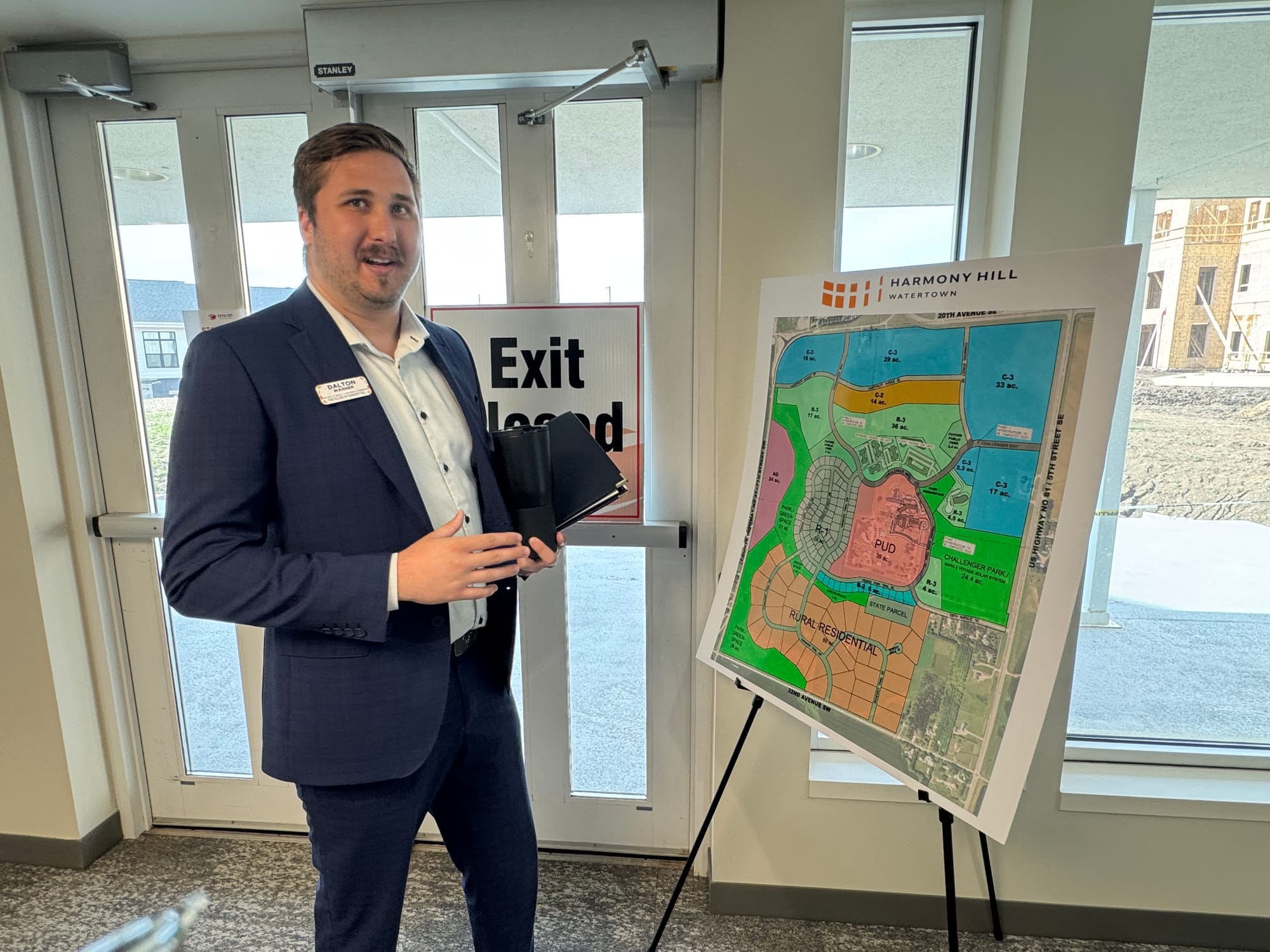
Completed, ongoing or future projects at the site, which are aimed at aiding the sisters but which will also be open to the public, include:
- Up to 700 residences, ranging from affordable apartments and single-family homes to rental units for veterans to assisted-living and memory care spaces for the sisters and the local community
- A child care center that could eventually house up to 200 children ranging in age from 4 weeks to 4 years old
- An 80-acre commercial development with room for dining and hospitality businesses as well as light industrial and manufacturing
- The Challenger Learning Center of South Dakota, a separate nonprofit built in affiliation with the National Aeronautics and Space Administration, that will promote science and careers in STEM fields and be open to children across the state
- A town square concept known as The Commons of Harmony Hill, which will transform the original monastery building into a welcome center with meeting rooms, bistro and pub, art gallery and maker's space, and spa and fitness studio
- Up to 80 acres of green space and a system of trails to encourage community recreation
"For the sisters, this has been about leaving a legacy," said Michael Klatt, strategic adviser to the Village of Harmony Hill project. "The average age of this group of sisters who made this decision to be a developer was 86 years old, and they did it."
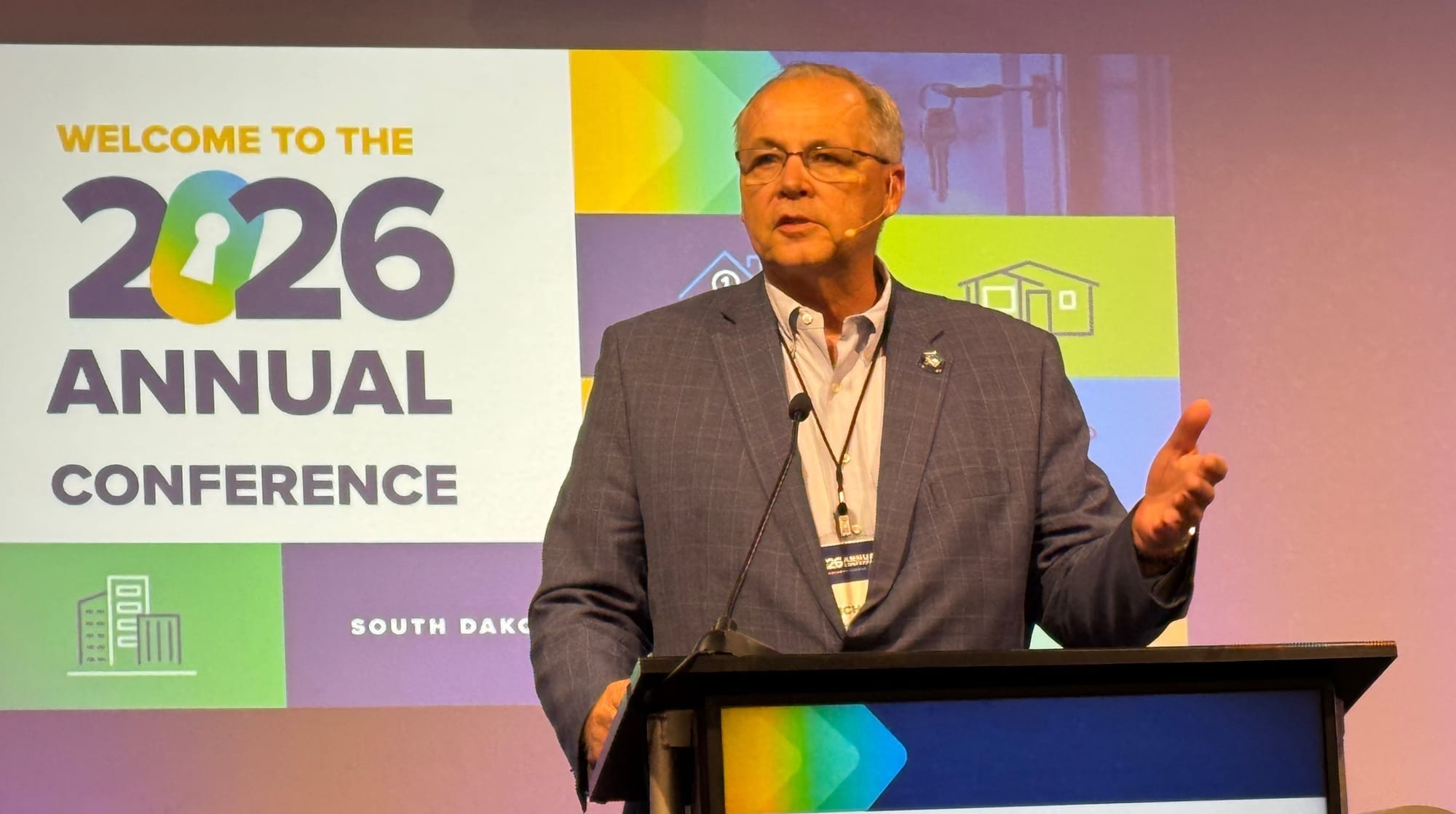
Klatt said it has been impressive and inspirational to watch and be part of the planning and execution of the project by the Benedictine sisters.
"From a business standpoint, it's been a good investment, but that's not how the sisters look at it. They look at it as, 'How can I give back to the community?'" he said.
"At the grand opening for the senior housing, I made a very, very brief speech," Klatt recalled. "I just simply said, 'If you want to get something done, hire a nun.'"
A big decision made from the heart and soul
As they began to age, and realized that few if any women were taking up the Catholic sisterhood, the Benedictine nuns had a big decision to make, said Dalton Wagner, marketing director for the Harmony Hill project.
"They could sell the land and have great end-of-life care and turn the lights off at the monastery, and that would be it," Wagner told News Watch during a tour of the property in June.
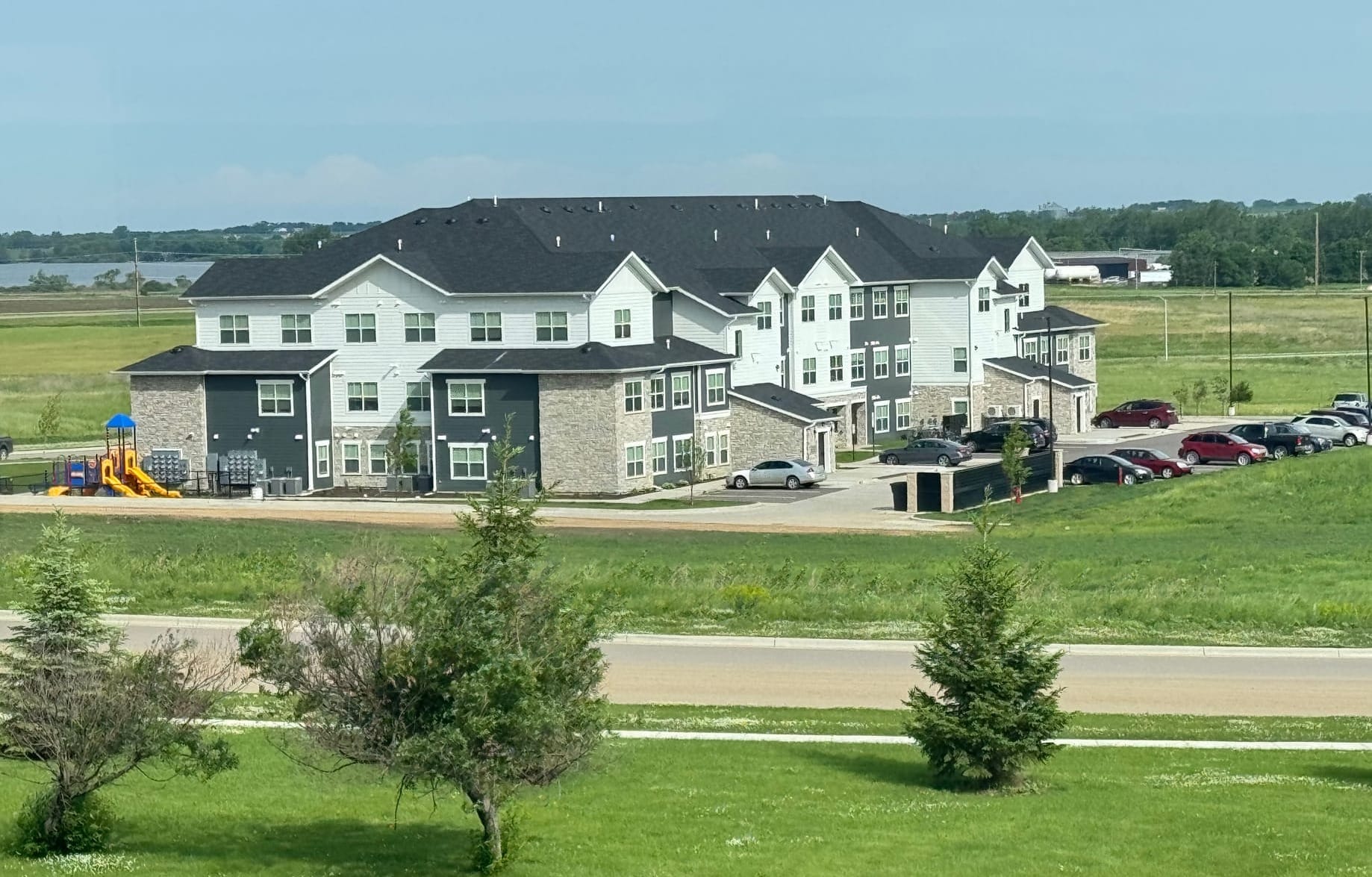
Additionally, they could have sold the land, dissolved the monastery in Watertown and lived out their final years at the Sacred Heart Monastery in Yankton, he said.
"The third option was to develop these 500 acres and leave something behind, a generational legacy that will give back to the community long after the sisters are here to do it," Wagner said.
Get free, fact-based South Dakota news and information in a weekday email. No spam. Cancel any time.
As of this summer, the project that began in 2021 has led to renovation of the monastery, conversion of 14,000 square-feet of existing space into a child care center and new construction of affordable apartments.
Remodeling of space is underway into housing for veterans and construction of a 62-unit independent senior-living villas, and the project recently broke ground on development of up to 40 of 200 planned affordable single-family homes with room for dozens of affordable duplexes.
A wide range of positive outcomes
The Harmony Hill project has the potential to be truly transformational for Watertown and Codington County by helping solve the big three challenges vexing all South Dakota communities: a lack of child care, affordable housing and workforce, said Watertown city manager Alan Stager.
By adding new day care slots and generating the first new affordable housing in the city in decades, the project will enable Watertown to bring in much-needed workers to fill the many open jobs, he said.
"They’re really looking to the future," Stager said. "They could have just let the land sit there, but instead they were looking out decades in the future and asking what’s possible. And as a result they're building an intergenerational community.”
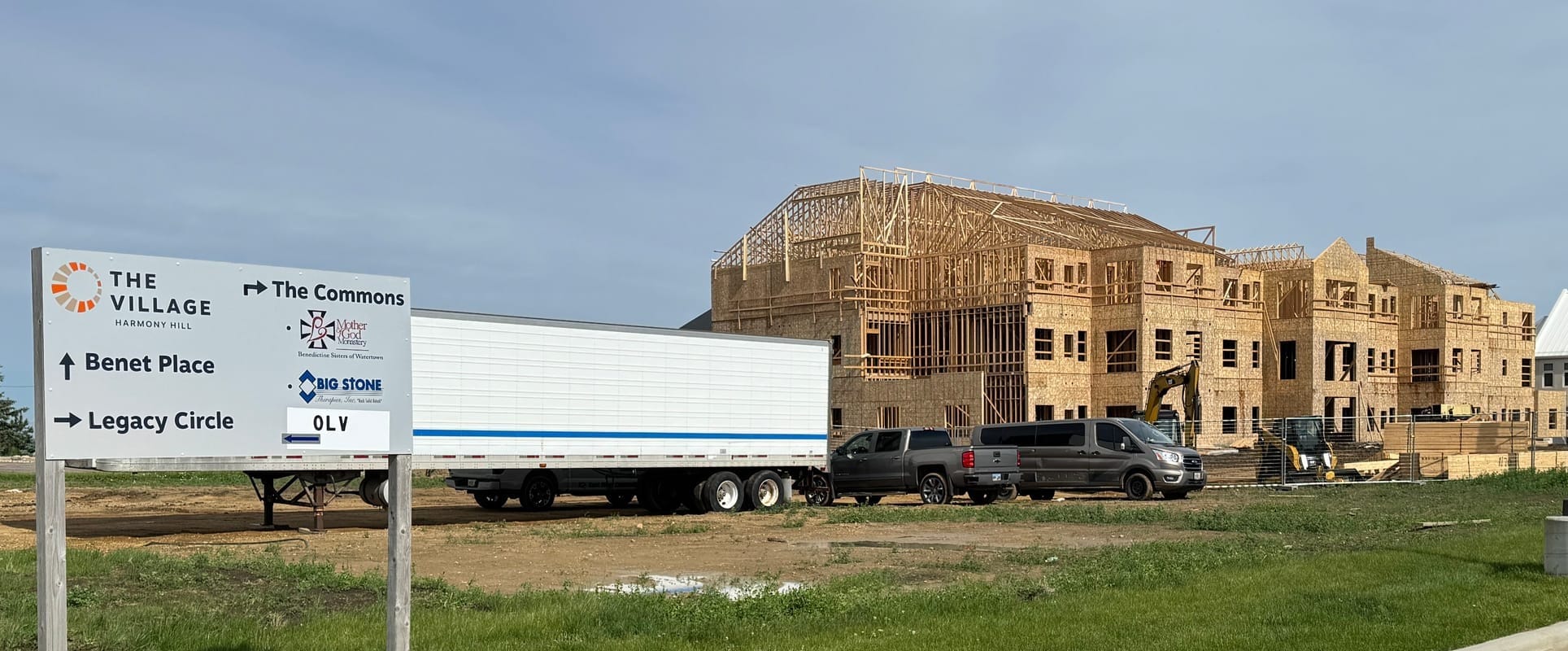
Stager said the thoughtful determination displayed by the Benedictine sisters, and their ability to create fruitful partnerships with builders, funders and government agencies, has created a model for how efficient developments can be executed.
"It’s been refreshing in many ways to work with the sisters of the monastery," Stager said. "They’ve really taught the community how development can be done in a planned, strategic, forward-looking manner."
The sisters have partnered on various elements of the project with the city of Watertown, South Dakota Housing, the Good Samaritan Society, Costello Property Management, Catalyst Construction and Seppanen Contracting.
The sisters have utilized donated materials, a variety of financing mechanisms and a tax-increment financing (TIF) district, Klatt said.
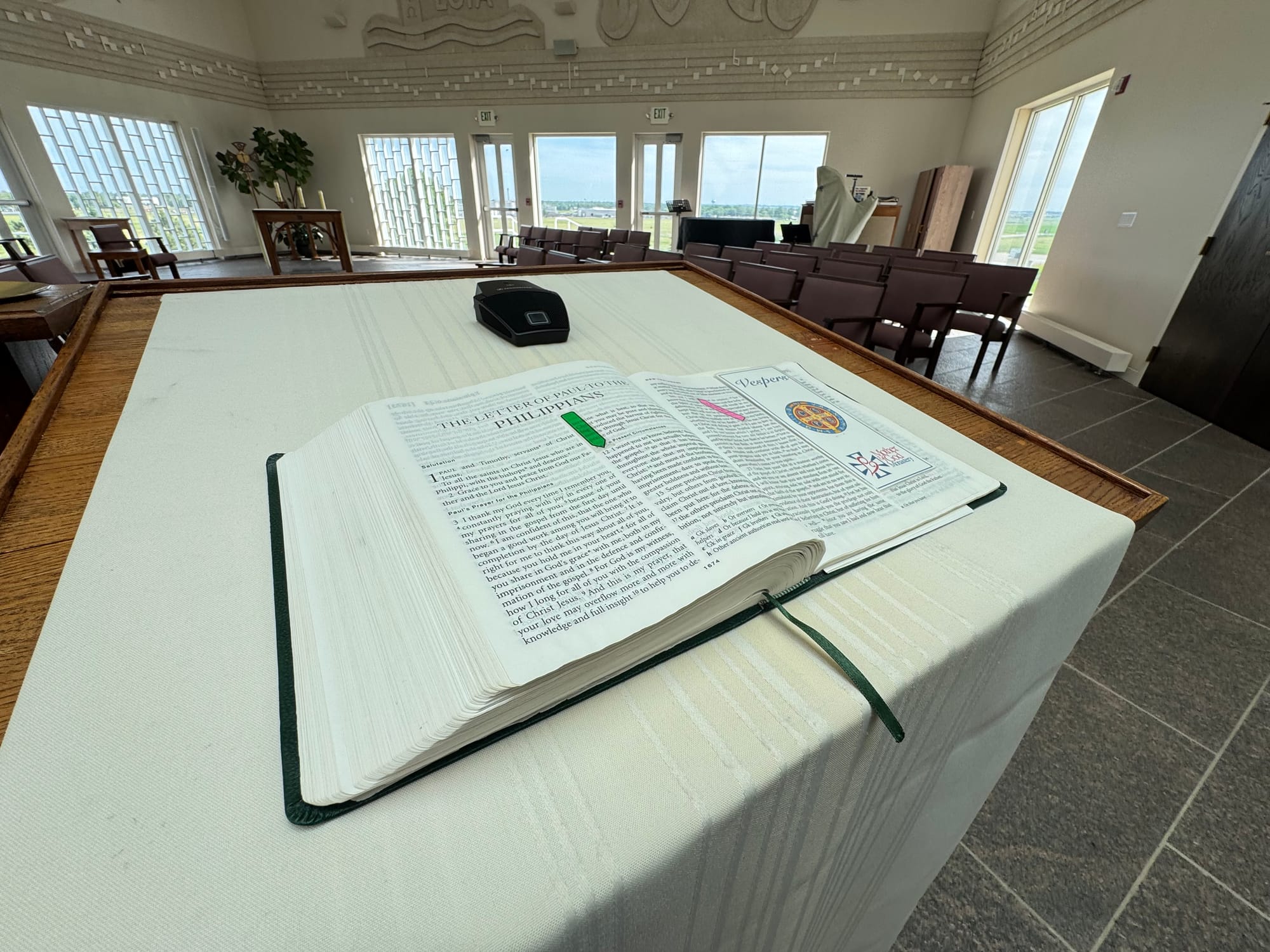
During construction and upon completion, the project will create a major economic benefit to Watertown and Codington County.
Construction is estimated to cost $83 million and generate an estimated 2,000 temporary jobs. Once complete, the project is forecast to create nearly 1,500 permanent positions with roughly $50 million in personal incomes and $40 million in annual consumer spending.
Projections include generation of more than $210 million a year in business outputs and about $5.4 million in annual property tax revenues.
A ‘womb-to-tomb’ approach to housing
A major focus of the Harmony Hill project is to create a “continuum of care” where people can flourish from the earliest days of childhood until the final days of life.
Spaces that care for infants or children are in close proximity on campus to places where adult and elderly residents are living and being cared for.
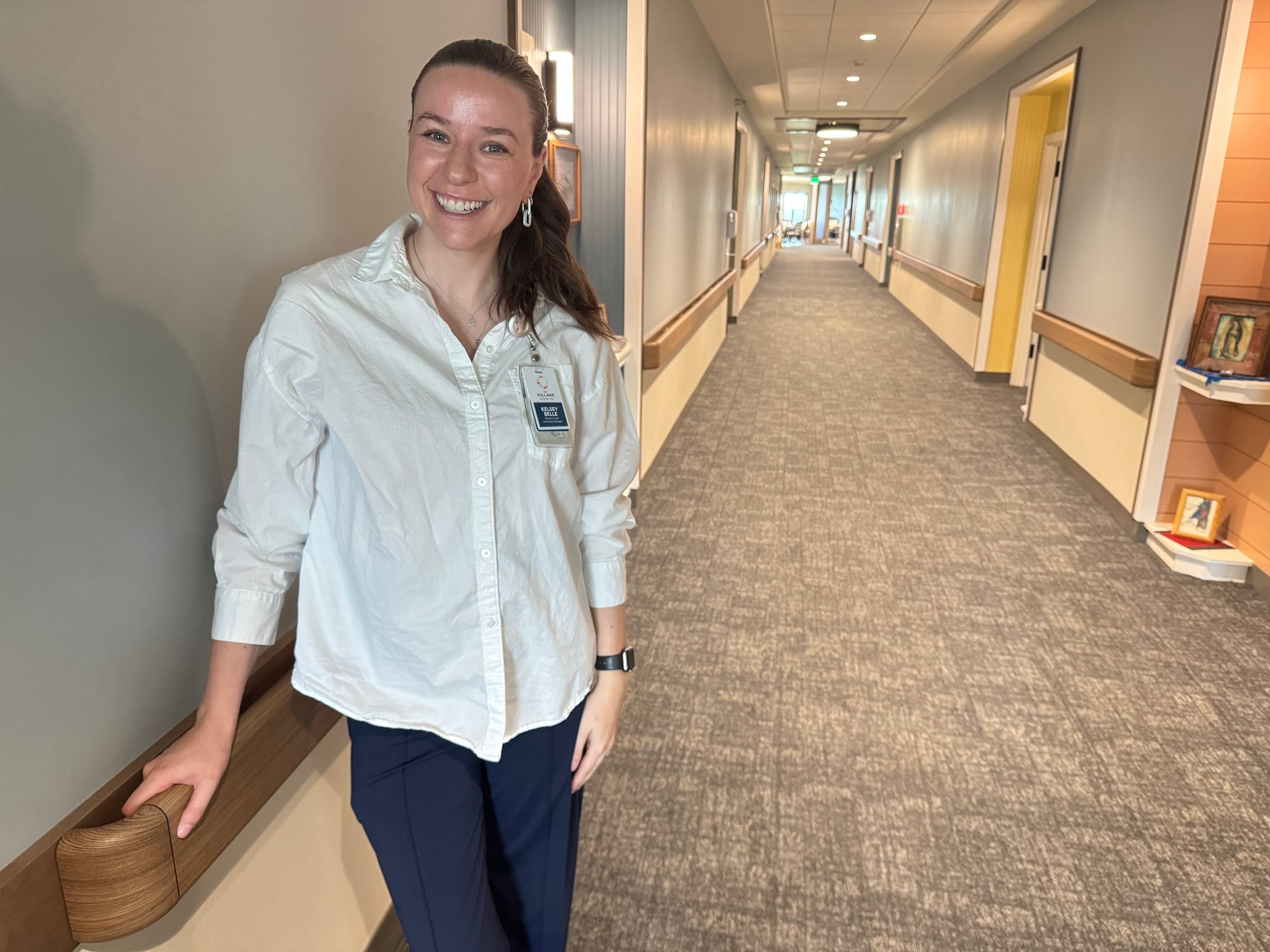
The physical closeness of the child-care center to the senior housing spaces allows for valuable interactions between the children and the residents of assisted living and memory care units, said Kelsey Belle Kohler, memory care manager at Harmony Hill.
At least once a week, children visit the senior care facilities and spend time with residents, reading a book, playing table games, decorating for the seasons, doing crafts or simply having discussions.
“You watch, and the residents will start to brighten up as soon as the children walk in,” she said. “It’s teaching children how to engage with another generation, and they learn a lot of life skills along the way.”
Support solutions-focused storytelling. Help South Dakota News Watch tell stories that identify and share solutions to the state's biggest challenges.
Elderly residents, including some from memory care units, then return the favor of creating social and emotional connections by visiting the child care center to interact with children, Belle Kohler said.
“I always say kids and babies do much more life enrichment than I could ever do, no matter how many degrees I have or how many staff,” she said. “So that's really amazing.”
Planting seeds for future generations
Sister Ida Hericks, 91, used a walker to stroll the grounds of the Harmony Hill campus on a comfortable sunny day in June and paused briefly to examine some flowers growing along a sidewalk.
In addition to her life’s work as a missionary and educator in sites such as Guatemala, Texas and South Dakota, Hericks is a master gardener who is known within the monastery for her green thumb and knowledge of plants.
“At one time, I was a gardener, and plants were really my thing, but I only supervise now,” she pointed out with a beaming smile.
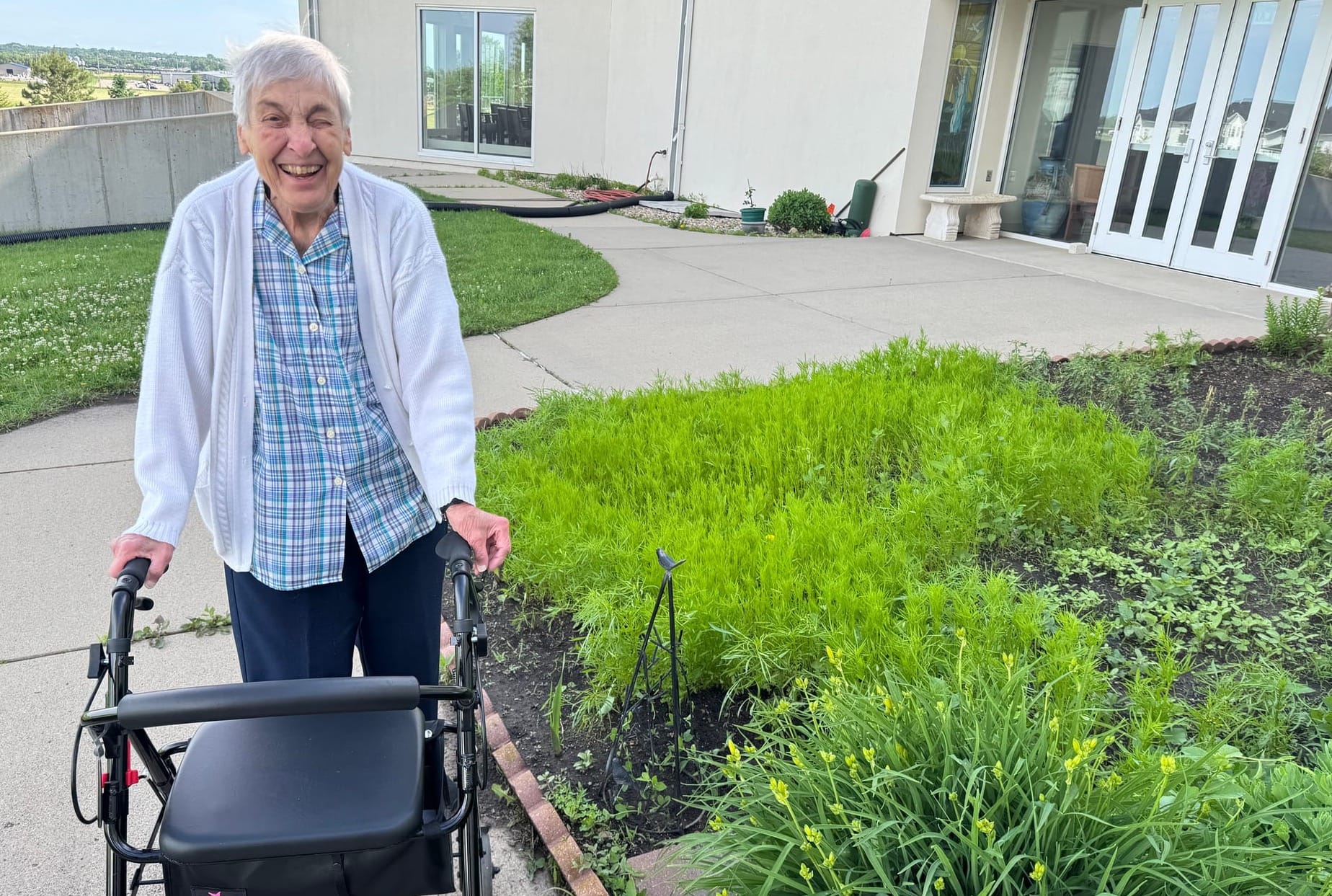
Hericks said she is pleased to see the progress on the development that will allow the sisters to leave a legacy of caring. The project will benefit the nuns in their final years and remain a major component of spirituality, hope and prosperity in Watertown and beyond, she said.
“We're a community of religious women that are getting older and need lots of help, and we didn't want to move away,” said Hericks, who was born in Hoven and has served as a Benedictine sister for nearly 70 years. “It’s also wonderful because we wanted to help other people.”
South Dakota News Watch is an independent nonprofit. Read, subscribe for free and donate at sdnewswatch.org. Contact content director Bart Pfankuch: 605-937-9398/ bart.pfankuch@sdnewswatch.org.