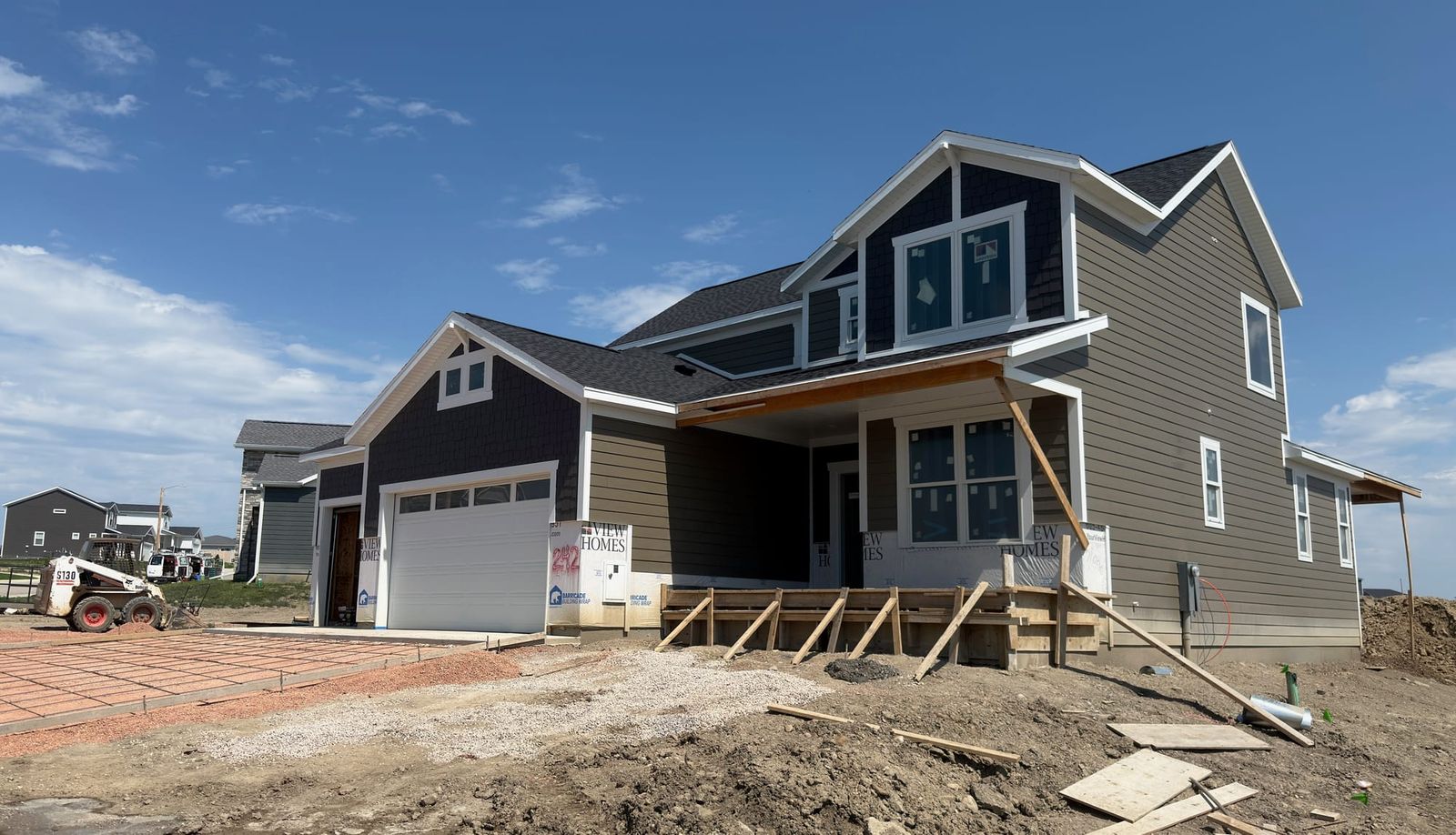
A list of entities and programs that can assist in developing or obtaining housing as well as links to News Watch reporting on housing solutions.

The best problem-solving happens when the people impacted the most develop ideas and share what they know. But nothing can happen to fix problems on a large scale if those good ideas that could work elsewhere aren't shared.
Engage South Dakota seeks to change that.

South Dakota News Watch is working with other organizations to identify and share ideas that might help solve some of the state's most-pressing housing challenges.
This story will serve as a collection that will be updated and can be used as a resource for individuals and decision-makers looking for solutions in their own communities.
-- $10,000 from Watertown Area Community Foundation
-- $100,000 from South Dakota Community Foundation in 2025 for the Beyond Idea Grant
-- First place in South Dakota NewsMedia Association public service contest
-- First place in "Strengthening Civil Society" competition for outstanding journalism covering philanthropy and the nonprofit sector
-- INNY Community Champion Award from the Institute for Nonprofit News
Below is a list of entities and programs that can assist in developing or obtaining housing as well as links to News Watch reporting on housing solutions. Click on the title or the drop-down arrow to see the details for each.
If you know of a housing solution we should include or report on, please send details to news@sdnewswatch.org or take the short survey at the end of this story.
Aberdeen and Mitchell: Homes Are Possible Inc. (HAPI)
Homes Are Possible Inc., or HAPI, uses a mix of public grants and private donations to fuel three separate housing programs that provide grants to income-qualified homeowners to fix up their houses, buy lots and build homes to replace aging or abandoned houses that are torn down and acquire land and develop subdivision infrastructure so HAPI and private construction companies can build homes there. Read how HAPI is helping to solve the housing problem through idea sharing. Contacts: Darin Beckius, executive director of Homes Are Possible Inc., in Aberdeen at 605-225-4274 or Terry Sabers, president of Mitchell Area Housing Inc. at 605-630-1608.
Affordablehousing.com (31 communities)
Affordablehousing.com provides contact information and housing program details in 31 communities across South Dakota. The list includes local housing authorities and redevelopment commissions, both of which can help renters and homebuyers in gaining information and potentially access to affordable rental properties and homes as well as public housing assistance.
Canistota: How housing is fueling a city's revitalization
The success story unfolding in this eastern South Dakota city shows how a commitment to housing development can break the pattern of decline afflicting many rural communities across the state. New and rehabilitated housing is opening the door to the city's continued population growth and a new role as a bedroom community for Sioux Falls and Mitchell.
Chamberlain: Free land available for new housing
Chamberlain is giving away lots in a subdivision in order to jump-start housing in a city where private developers have been reluctant to build homes on their own. Like many other small cities and towns in South Dakota, Chamberlain has a shortage of housing, which is preventing the city of 2,500 from experiencing growth in population, commercial development and employment. Instead of waiting around, Chamberlain has used taxpayer money and city resources to develop two subdivisions, including the latest project where free lots were given to individuals and developers who promised to build homes. Read how Chamberlain is taking the lead in encouraging development of new housing. Contacts: Clint Soulek, city administrator, (605) 234-4400, or Sheena Larsen, director of Lake Francis Case Economic Development, 605.234-4418.
Dakota Resources (statewide)
Dakota Resources is a nonprofit that helps rural communities across South Dakota in their efforts to create a thriving economy with strong housing, retail and industrial sectors. The organization, with status as a Community Development Financial Institution (CDFI), has a 25-year history of providing financial assistance, leadership training and community-building support to rural and underserved areas across the state.
Governor's House Program (statewide)
The Governor's House Program was conceived to provide affordable housing, particularly to those people who are seniors, have disabilities or are low- to moderate-income. Read more about it and whether you qualify.
Habitat for Humanity (9 communities)
Habitat for Humanity, a nonprofit that combines the money and efforts of volunteers and potential homeowners, seeks to empower qualifying families and individuals with the ability to obtain homeownership. The agency's South Dakota website includes contact information for the following communities: Aberdeen, Brookings, Fort Thompson, Huron, Mitchell, Rapid City, Sioux Falls, Watertown and Yankton. South Dakota's two largest Habitat for Humanity affiliates, in Sioux Falls and Rapid City, have become national leaders in their efforts to build subdivisions with multiple housing units rather than the traditional single home at a time. The move is driven by the great need for affordable housing, especially in regard to "starter homes" that provide opportunities to young or lower-income families to achieve homeownership. Read how Habitat developed subdivisions in Sioux Falls and Rapid City
Herreid housing fueled by unique funding options
The small, remote city of Herreid is in the midst of a community revitalization effort that is rooted in housing growth. Led by former lawmaker Dick Werner, a retired banking executive, the city of about 400 people has obtained more than $2 million in grants from a variety of sources for new houses, apartments and community amenities. "You just have to know where to get the money," Werner said. "You've got to have connections and partnerships, but it's important to know that there are resources across the state to help your community." Read how Herreid gets the funds to kickstart development.
Hot Springs: Housing tops list of needs
A survey completed by roughly 10% of Hot Springs residents revealed that the southern Black Hills town faces many of the same major issues as other South Dakota cities, notably challenges in housing and workforce. A majority of respondents listed housing (70%), business development (55%), workforce development (54%) and the labor shortage (52%) as major concerns. Responses showed that residents feel they have the ability to make a difference in their community, but some also believe opportunities for greater growth and development are being missed, and concerns arose over the city's positioning for long-term economic stability. That survey prompted a community gathering and discussion. Read the full story about the ideas shared and some of the potential housing solutions that residents identified.
Hot Springs: Housing subdivision funded by hospital
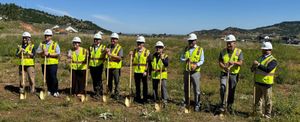
Fall River Health Services, an independent nonprofit medical center in Hot Springs, is paying $2.3 million of the overall $3.4 million cost of infrastructure for a subdivision that could create 48 new affordable housing units a few hundred yards from the hospital campus. "You can't stop providing care, so we need workforce to care for our local population," said Jesse Naze, chief financial officer at Fall River Health. "It's not wages or benefits keeping employees away, it’s simply that housing just isn’t available." Chas Olson, executive director of the South Dakota Housing Development Authority (South Dakota Housing), said he isn't aware of any project in the state which an employer invested money on permanent housing that will benefit the business as well as the community at large for years to come. Read the story.
Housing and Urban Development (statewide)
The U.S. Department of Housing and Urban Development offers a wide range of programs available to South Dakotans who want to build a home, buy a home or find affordable rental properties. HUD has counselors available by phone to help people find housing within their means and for Native Americans seeking to obtain homeownership or rental opportunities.
Pine Ridge Indian Reservation: Lakota Funds
The lending organization Lakota Funds makes personal and business loans to tribal members seeking to open or expand a business, which can include housing development. The agency, the nation's first Native Community Development Financial Institution, founded in 1986, provides access to capital, technical assistance, networking and infrastructure.
Rapid City affordable housing
Multiple philanthropic entities have created a $15 million pool of combined funding to create a revolving loan fund to reduce costs for developers who can then offer rents at below market rates. Since it launched in 2020, the Strategic Housing Trust Fund managed by the Black Hills Area Community Foundation has resulted in development or retention of 645 apartments totaling more that 1,230 bedrooms for people who have difficulty obtaining quality housing in Rapid City, where there is a dire shortage of affordable housing and average rental rates are the highest in the state.
Redfield's long-range approach to housing growth
Redfield, a city of 2,100 in central South Dakota, has been working vigorously to expand housing options for nearly 30 years. The city's model for growth has evolved slowly: from rehabbing one dilapidated house at a time to a current subdivision project with 42 lots. Cooperation, innovation and a strong work ethic have combined to enable the city to revitalize more than 150 aging properties and to encourage public and private investments in dozens of new homes and apartments. Construction of new homes, redevelopment of existing housing stock and provision of land to developers are all ways to further efforts to foster community growth. Read how Redfield has become a regional leader in housing innovation.
Salem residents own money in new subdivision
Not once but twice in 2022 the town of Salem was struck by derechos that destroyed buildings and upended the local economy. As it seeks to rebuild from those wind storms – and jumpstart a long stagnant housing market – business leaders and even individual residents put up their own money to help pay for a new subdivision. Read the full story on how obtaining funding to expedite housing growth requires innovation, determination and a combination of grants, loans and local taxpayer support.
Single Family Direct Home Loans (statewide)
For qualifying low-income and very low-income residents of South Dakota, the USDA Rural Development program offers mortgage payment assistance to aid in their ability to afford a home. The Single Family Direct Home Loan program offers financial assistance to encourage homeownership.
South Dakota Brownfields Program (statewide)
The state-funded Brownfields program provides funding to assist municipalities, counties or local development agencies in cleaning up and redeveloping properties that have been contaminated by prior use. This link provides important information on which properties might qualify, and how to apply for funding. Redeveloped properties can be used for construction of housing.
South Dakota Housing (statewide)
South Dakota Housing offers programs that provide mortgage loans, housing construction and rehabilitation, homelessness prevention, rental assistance, and educational opportunities to help people find and secure a place to call home.
Spearfish affordable housing project
A proposed $9.3 million apartment complex will be the first to use part of a federal affordable housing fund approved by Congress in 2024. The 32-unit Peak View II apartments on 3.5 acres off Paramount Drive in eastern Spearfish should begin accepting tenants in summer 2027. The project will rely in part on a low-interest loan made from a $30 million pool of money allocated by Congress for affordable housing projects across the greater Black Hills region. Read the story.
Thriverr (statewide)
About two dozen South Dakota economic officials attended the latest Thriverr Gathering held by Dakota Resources in Murdo in November 2025. Titled "Using Public Policy for Local Development," the event -- one of several held by the community development nonprofit -- featured idea-sharing and examples of innovative efforts that have led to successful housing projects in rural communities across the state. Read how the latest gathering was educational and inspirational for several South Dakota rural leaders
Vermillion develops state's first cohousing community
Vermillion, is the first South Dakota city to try cohousing, a method of living that prioritizes community connection and growth. Residents live in small houses with a large common house as the centerpiece where community events and regular shared meals are a cornerstone of the living style. Common houses usually contain large kitchens, dining and living rooms and are central gathering places for the residents. At the Vermillion development, called Dakota Prairie Commons, there will also be an emphasis on walkability, with footpaths connecting houses. Read the full story and while residents will have their own homes, they will be encouraged to rely on others for many day-to-day activities.
Wall expands from attracting tourists to residents
Mayor Mary Williams said her message to other communities that want to grow is to keep an open mind, always look for the potential benefits of growth and work hard together as a team. "This is not about any one person. It’s about a progressive-minded community as a whole," she said. Even small communities must diversity in order to strengthen the overall economy, Williams said. That lesson was driven home during the COVID-19 pandemic. “I have a picture of Main Street in Wall in 2020 with one vehicle on it, showing us we cannot put all our eggs in one basket,” she said of the town reliant on tourists who flock to Wall Drug. “You either keep pedaling your bike or you’re going to tip over. You can’t stay stagnant if you want your community to grow.” Read how Wall is building a model to encourage housing growth.
Watertown taps residents for housing and other solutions
A Watertown resident-driven community planning effort in the 20102 resulted in the $21 million Prairie Lakes Wellness Center, the $5 million restoration of the 130-year-old opera house and construction of the $36.5 million Prairie Lakes Ice Arena. With that success, the city of 23,000 is in the midst of a new 25-year planning effort that shape how the city will grow over the next 25 years. The first survey revealed that many residents feel great about living in Watertown. But it also revealed some big needs, including a lack of affordable housing and a shortage of amenities that could attract more young people to the city. Read the full story and the process that other cities could use to identify solutions.
Get South Dakota news and information in a free email on weekdays. Cancel any time.
This story was produced by South Dakota News Watch, an independent, nonprofit organization. Read more stories and donate at sdnewswatch.org and sign up for an email to get stories when they're published. Contact Bart Pfankuch at bart.pfankuch@sdnewswatch.org.