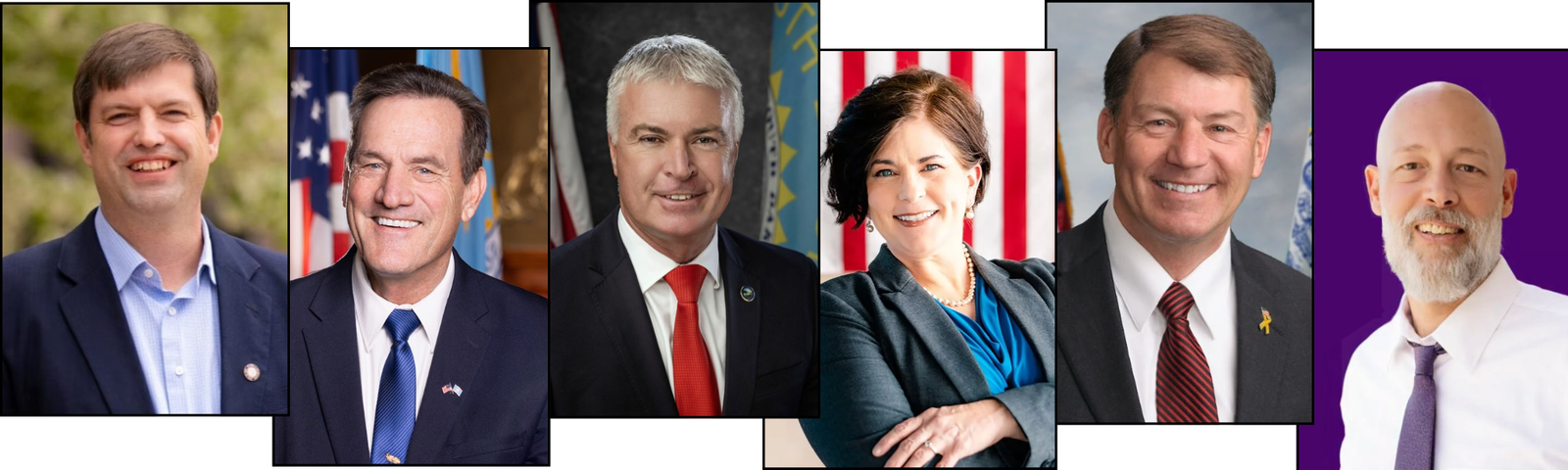
Gov. Larry Rhoden earns his first election as governor. Longtime prosecutor Marty Jackley heads to the U.S. House. And U.S. Sen. Mike Rounds gets a third term. GOP's candidate for Secretary of State's Office also won.

This story was updated Nov. 4 to reflect the final results.
Republicans Larry Rhoden, Marty Jackley and Mike Rounds swept the top races on the ballot in Tuesday's South Dakota General Election. In down-ballot races, Republican Heather Baxter and other GOP candidates for constitutional and statutory offices also won.
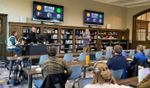
On Tuesday evening as results dribbled in, Rhoden, Jackley and numerous other Republican candidates gathered at the Hyatt Place hotel in downtown Rapid City to dine on steak tips and corn on the cob. A pair of large TV screens connected to the Secretary of State’s website displayed updated vote tallies.
 Molly Wetsch
Just after 9 p.m. Mountain time, Jackley took the stage and was announced as South Dakota’s new congressman-elect, having built a 2-to-1 vote lead over Democratic challenger Nikki Gronli.
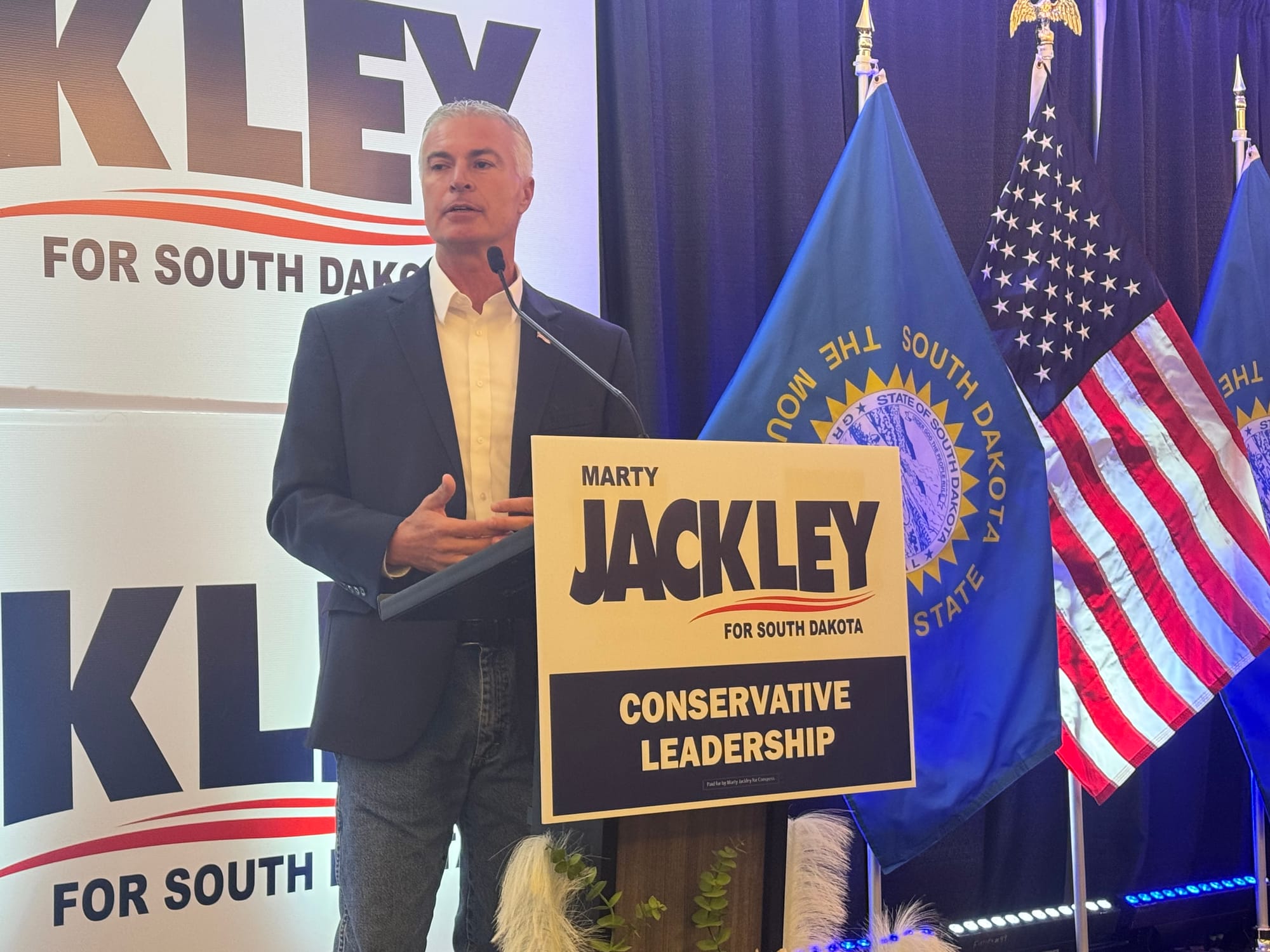
Jackley thanked his family, campaign staff and supporters and vowed to fight for “what’s near and dear to us in South Dakota — our principles and our values.”
Jackley said he heard voter concerns over affordability issues including high gas and health care prices. He promised to work toward a Farm Bill that helps state farmers. He said he will support families, education and small businesses.
Jackley also said he will battle against the “corruption and fraud” occurring in Washington.
“I won’t forget where I came from,” Jackley said. “I’ll work exceptionally hard to start protecting taxpayer dollars and address our national deficit.”
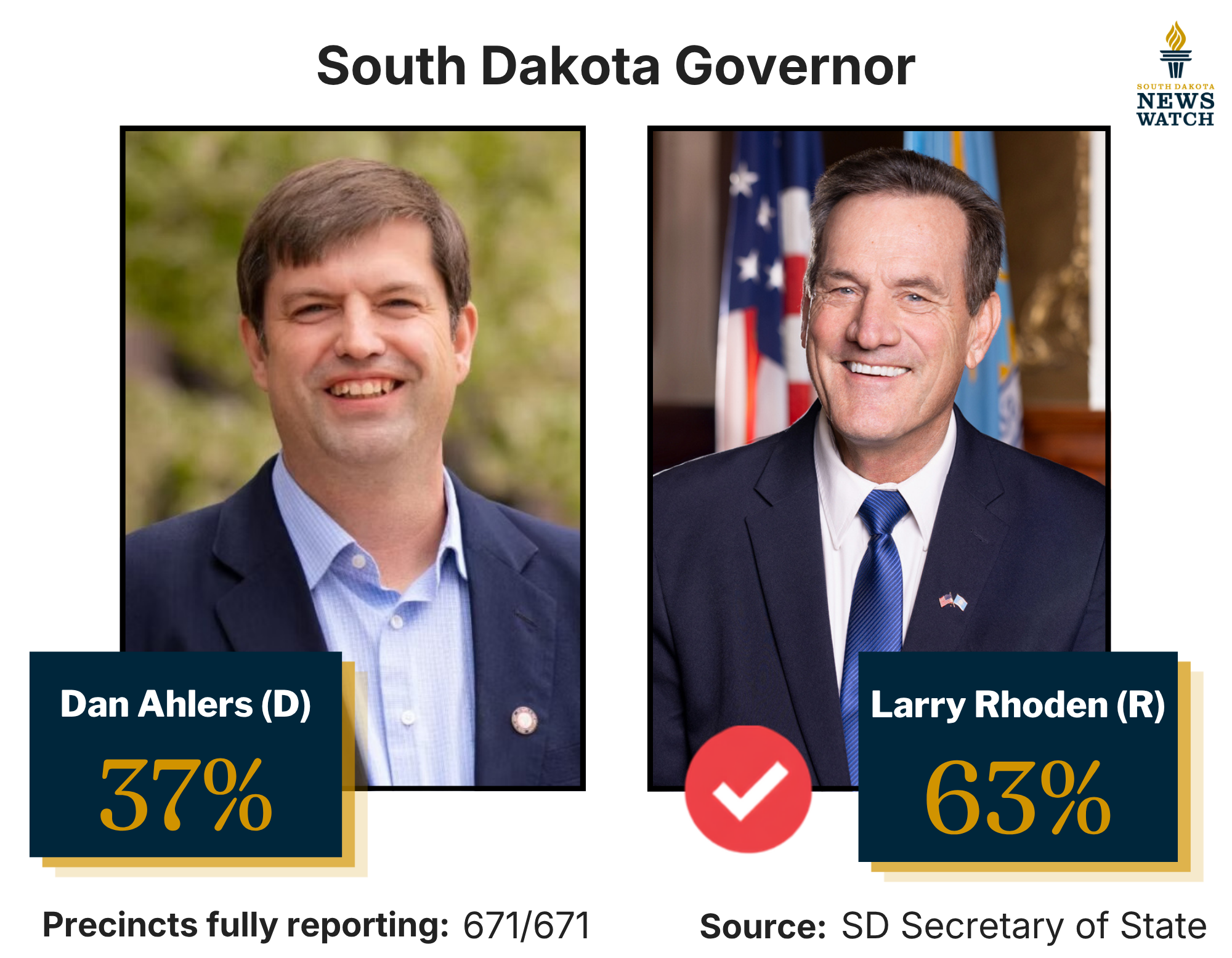
Rhoden, the incumbent Republican governor who took office in early 2025 after former Gov. Kristi Noem left for a post in the Trump administration, was elected to his first full four-year term. He and Lt. Gov. Tony Venhuizen defeated Democrat Dan Ahlers and his running mate Steven McCleerey, also by a roughly 2-to-1 margin.
Venhuizen, a state history buff, pointed out that Rhoden is the first West River governor elected since 1944 and the first South Dakota politician to win three statewide elections in the same year.
Rhoden, who hails from the small town of Union Center, remarked how difficult it was to earn the victory, surviving a crowded GOP primary and then a Republican runoff before finally winning Tuesday’s general election.
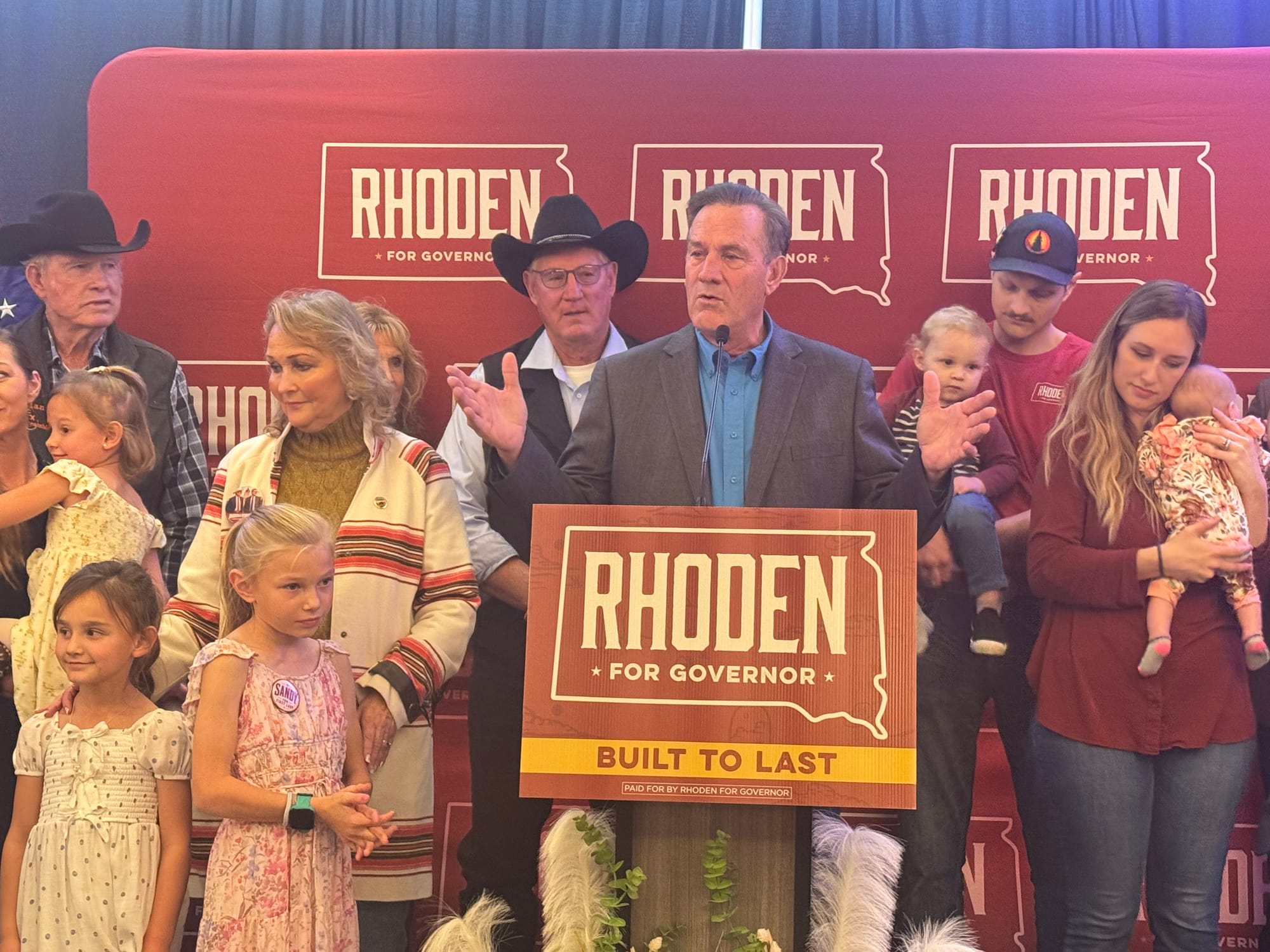
Rhoden took the stage with more than two dozen members of his extended family, including his wife, Sandy.
“That’s what this is all about — family,” Rhoden said to a crowd that stood, cheered and waved signs. “It’s about the next generation.”
Rhoden promised to stay focused on “policy over politics” over the next four years.
“We’re going to be single minded,” he said. “We’re going to lead by example (and) remain true to our pillars of civility, openness and responsiveness, and of integrity, and we’ll work every day to make South Dakota stronger, safe and freer for the next generation.”
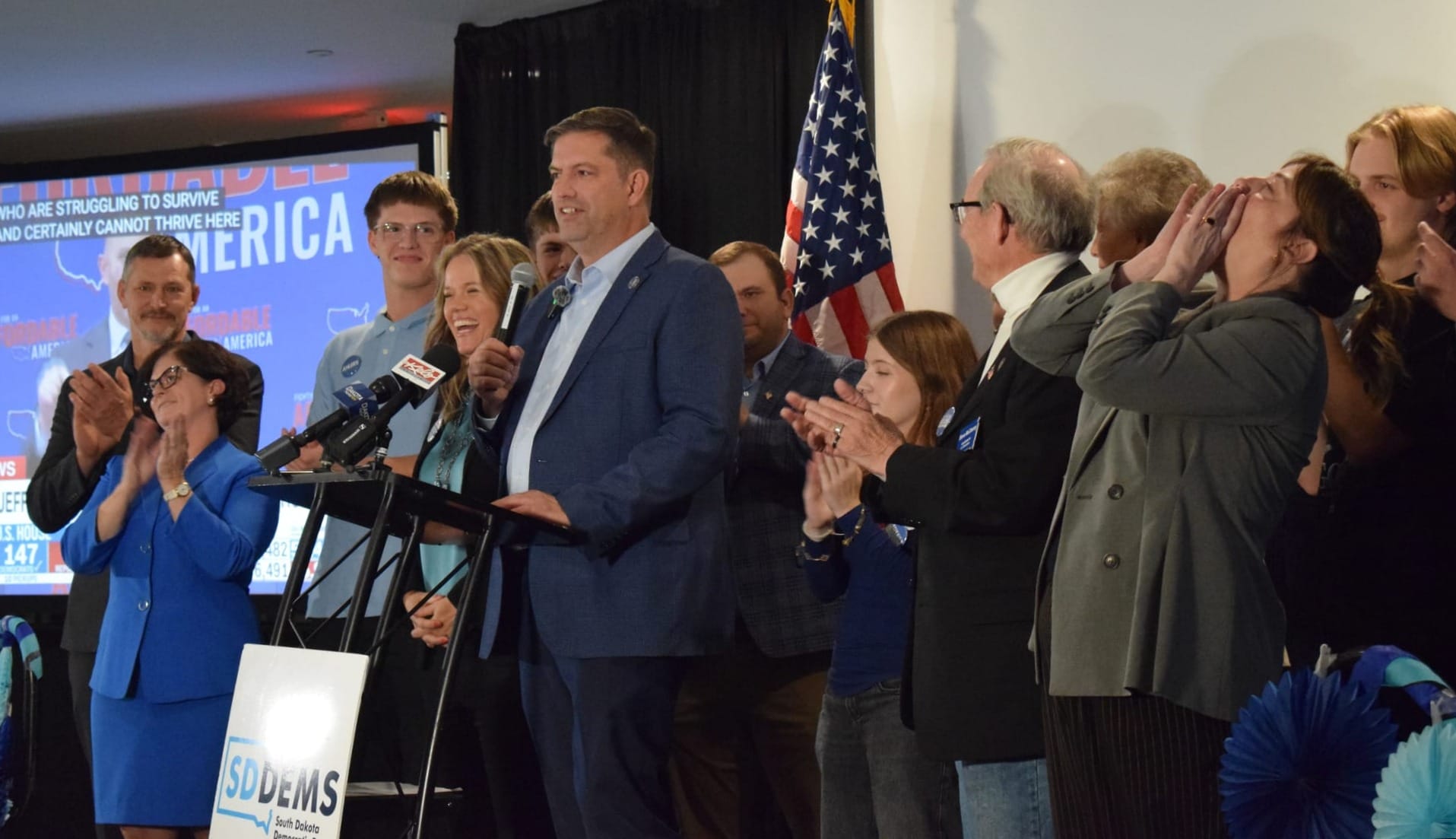
At the Democratic watch party in Sioux Falls, Ahlers threw out a challenge to voters and Rhoden in his concession speech.
"If things continue to go the direction they are, and Larry is still governor of South Dakota, I hope all of you help hold his feet to the fire. They have been dismissive of the concerns of the people of South Dakota, and we know that there are are a lot of problems. There are a lot of great things about South Dakota, but we have a lot of things that we need to address," Ahlers said.
"To Larry, if you are governor of South Dakota at the end of the night, I expect more from you."
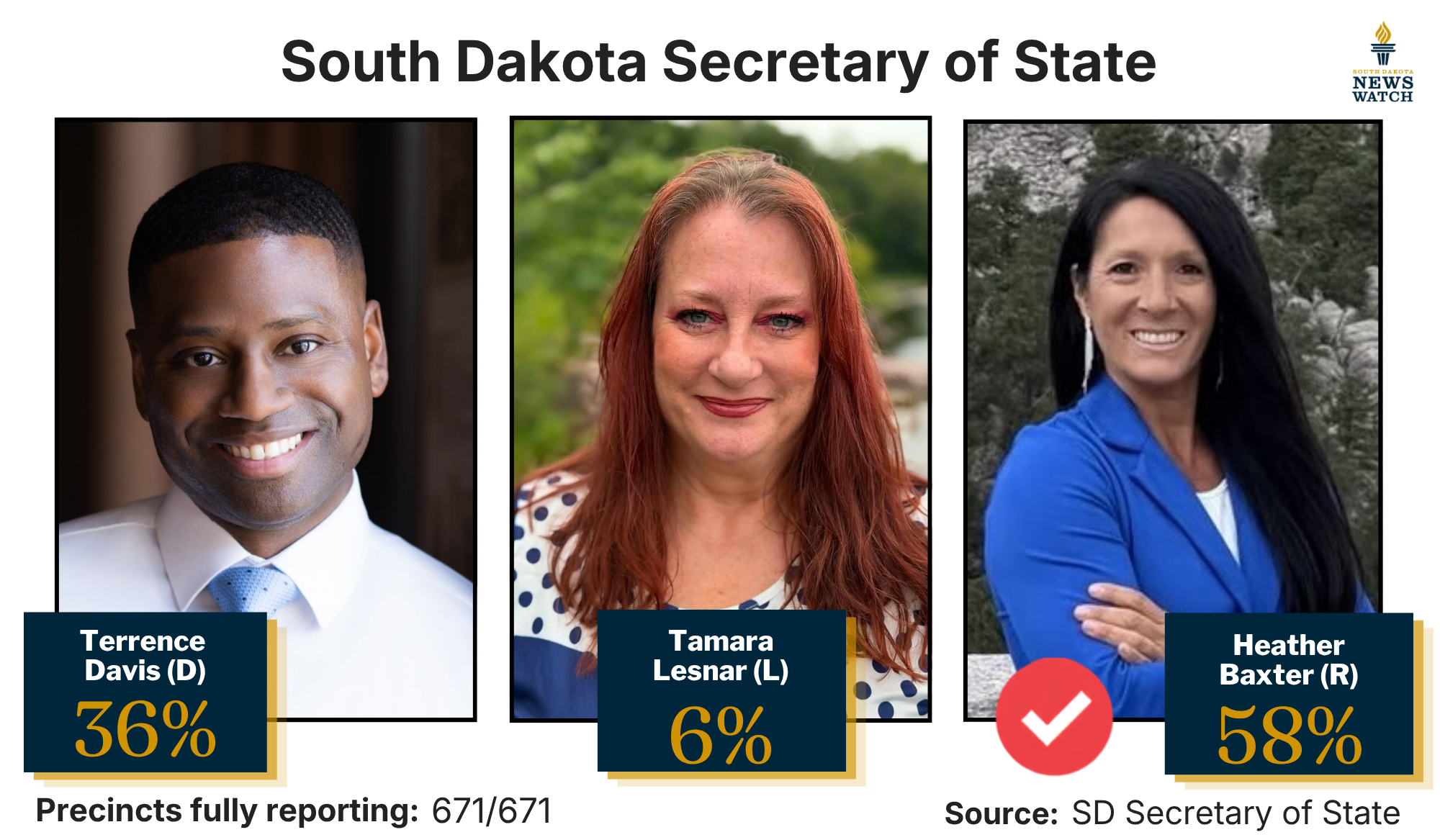
Baxter, of Rapid City, is a state legislator for District 34 and a member of the South Dakota Freedom Caucus, a far-right, populist group that has pushed for lower taxes, less state spending and election reform. Baxter has called herself a "strong proponent of election integrity and accountability" and has voiced support for improved hand-counting methods.
The Democrat in the race, former state trooper Terrence Davis, was endorsed by Monae Johnson, the sitting secretary of state, after she lost the primary to Baxter at the June Republican convention.
Tamara Lesnar ran as the state's sole Libertarian candidate for statewide office. She formerly ran for state House in 2024 and for U.S. Senate in 2022, where she lost to incumbent Sen. John Thune.
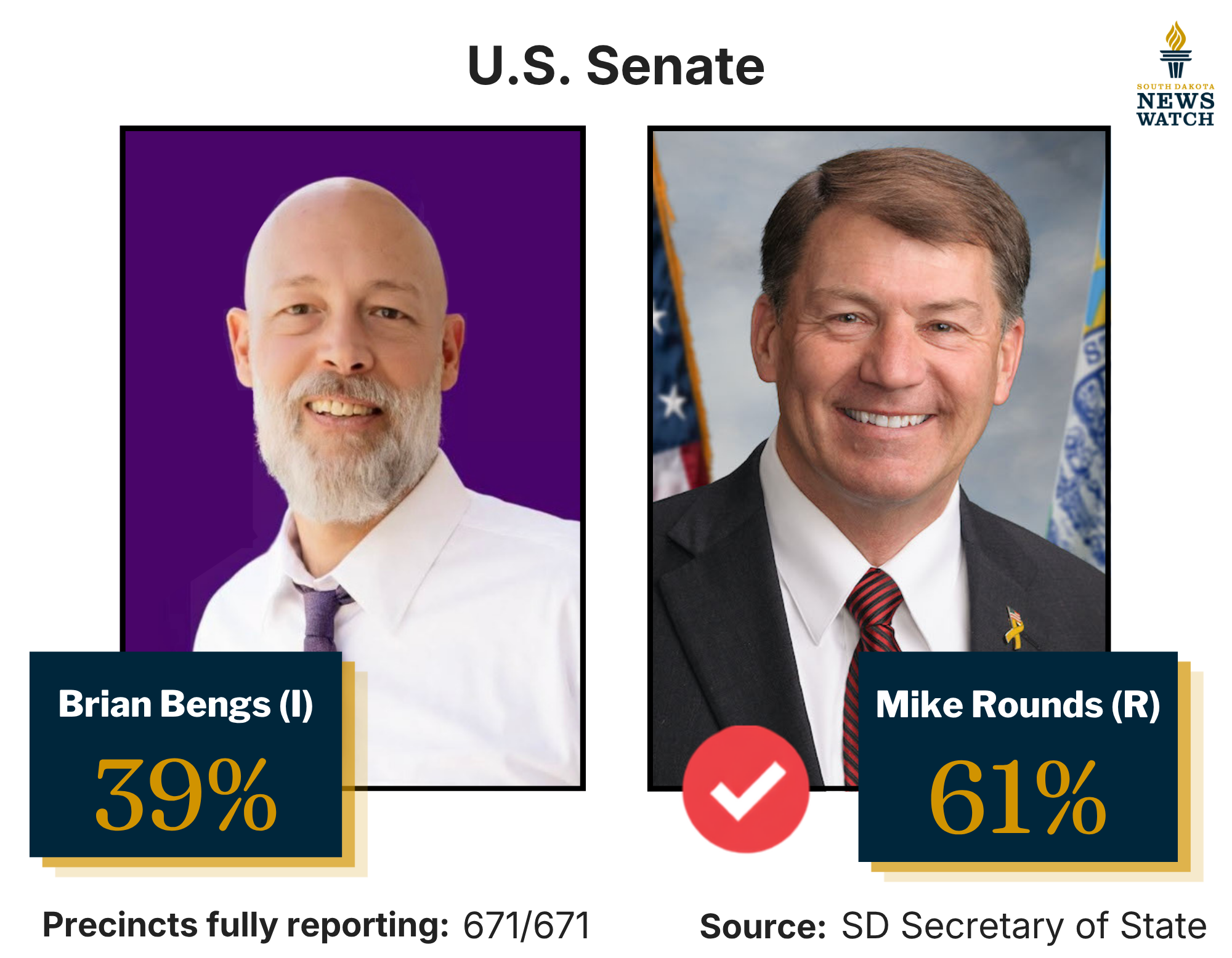
Rounds, who previously served in the state Legislature and as governor, won another six-year term over his challenger, Independent Brian Bengs, a U.S. Navy and Air Force veteran.
Rounds said he was grateful for South Dakotans’ support and optimistic about returning to the Senate. He noted that this campaign was different, as it was his first without his late wife, Jean.
"This is the the third time now that I've asked for their support to work in Washington on (South Dakotans') behalf in the United States Senate. I take that very seriously," Rounds said.
The GOP being the minority party will be a change, but Rounds will continue to do bipartisan work, he said. Rounds also said Republicans must start thinking about nominations for president.
"(President Donald Trump) still has to be able to operate the executive branch of government, and, you know, that's going to take some some work on the part of the executive branch because he's going to have to have Democrat support in order to do that now," Rounds said.
Bengs, who previously ran for the office as a Democrat, raised considerable funding and drew national media attention as he campaigned with other independent Senate hopefuls Dan Osborn of Nebraska and Seth Bodnar of Montana.
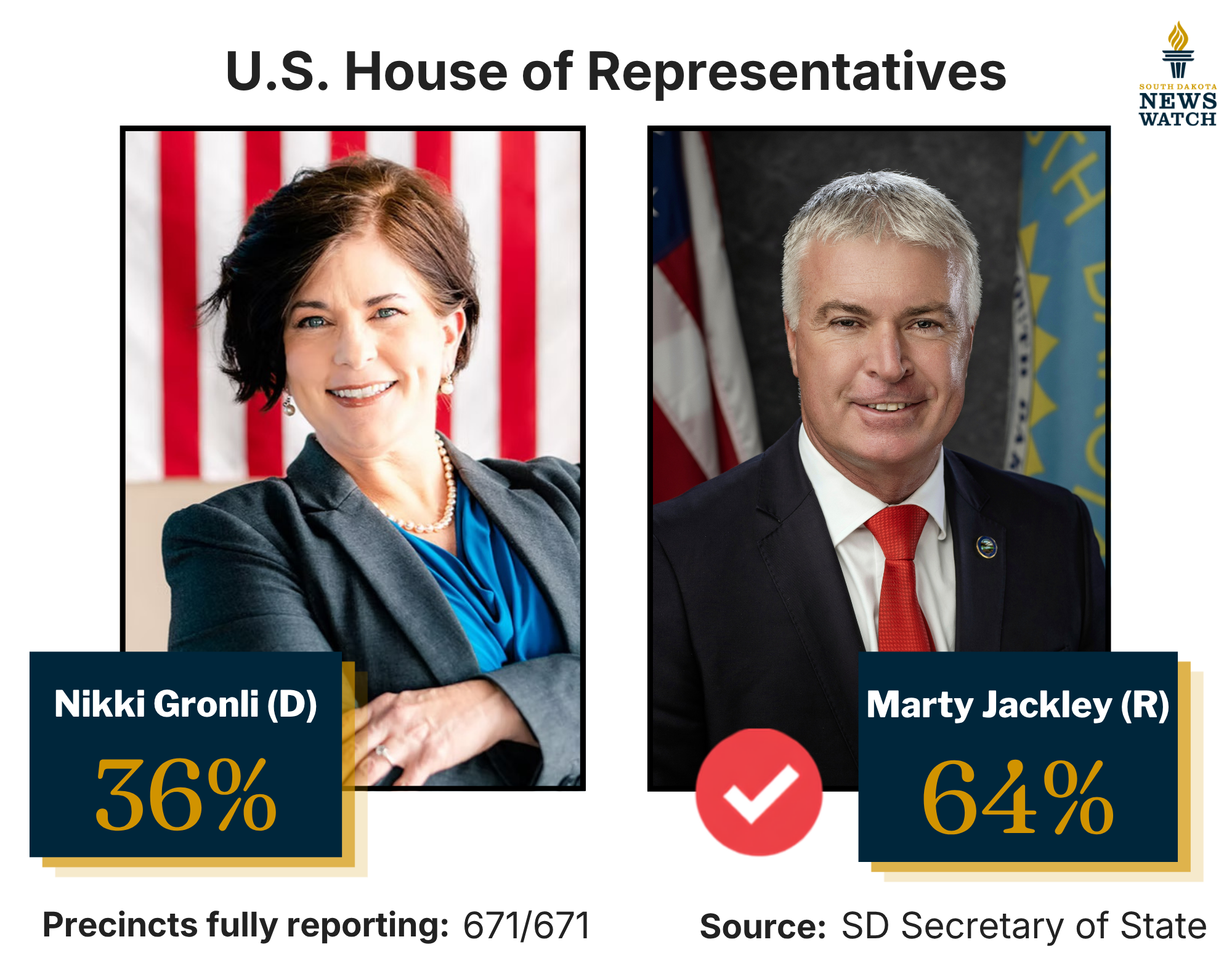
Attorney General Jackley previously served as AG as well as the state's U.S. attorney and will serve a two-year term in Congress.
Gronli was formerly the state's director for the U.S. Department of Agriculture’s Rural Development program.
"Our communities may be different, but I heard a common message," Gronli said during her concession speech. "South Dakotans want a fair chance to get ahead. They want their voices heard, and they want representatives who listen and remember who they are. And I ask you all to keep an eye on them as we go forward."
High early voting numbers
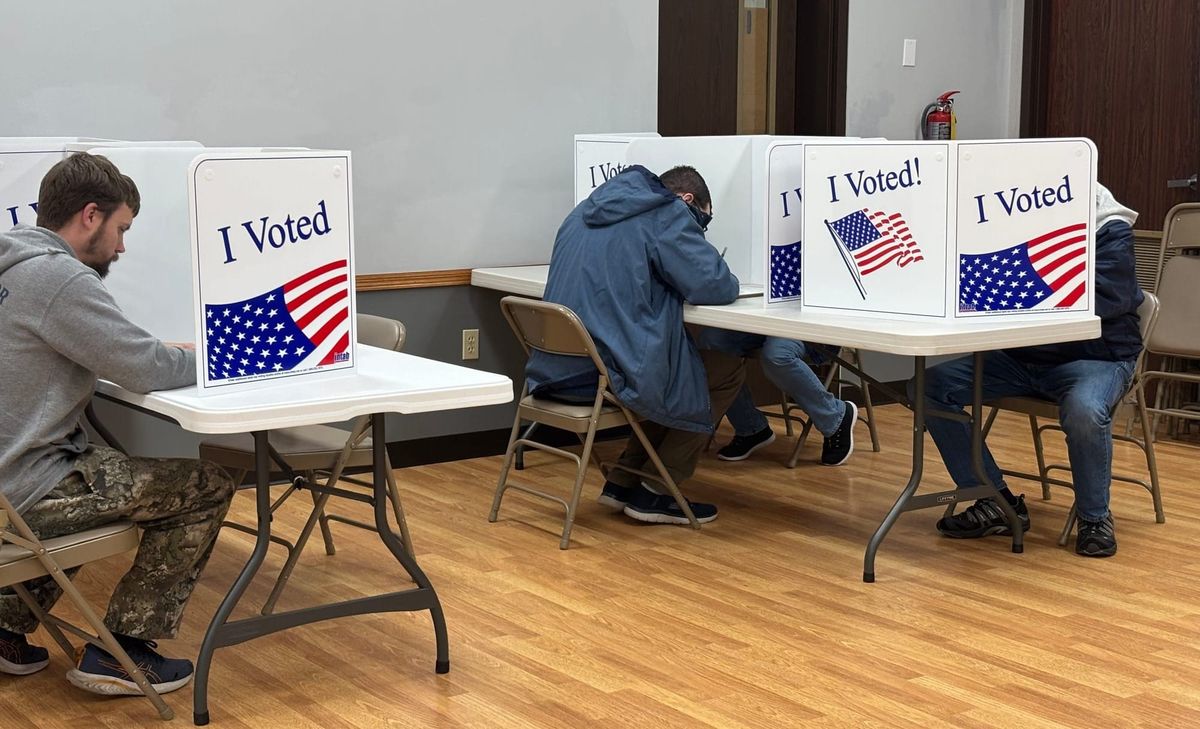
Statewide, 78,788 absentee ballots had been received by the Secretary of State’s Office as of Friday. That's quite a jump from 2022, when 55,377 absentee ballots had been received by the Friday before Election Day.
Julia Hellwege, associate professor of political science at the University of South Dakota, said that the election results fall mostly in line with how polling from News Watch and the Chiesman Center for Democracy indicated the vote would go. Republicans elected to statewide office will mostly have to consider whether they won with a strong enough majority to remain confident in their accountability to voters.
"The question is also what is the mandate, and are Democrats and Independents and moderate Republicans still holding their incumbent partisans and their party nominees accountable," Hellwege said.
Get free, fact-based South Dakota news and information in a weekday email. No spam. Cancel any time.
Hellwege said that early voting can indicate decisiveness in voters and could demonstrate a more engaged or informed voter base.
"Early voters are more likely to be more confident in their votes. They're more likely to be strong partisans, or at the very least, more civically engaged, more informed. They know what they want to do," Hellwege said. "At the very least, those high numbers tell us that more people were more confident in their vote and were more strongly tied to their candidates, potentially their party, than they were previously."
Despite the losses for Ahlers and Gronli, the crowd's spirits were still high after their concession speeches because of Democratic victories elsewhere.
"Who's up for karaoke?" someone shouted.
Emily DeCock contributed to this story produced by South Dakota News Watch, an independent nonprofit. Read, subscribe for free and donate at sdnewswatch.org. Contact reporter/Report for America corps member Molly Wetsch: 605-531-7382/molly.wetsch@sdnewswatch.org.