As South Dakota universities and major employers navigate a tight labor market, shifting federal policies and a new rule ending "Duration of Status" prompt uncertainty for international students, high-skilled faculty and seasonal businesses.
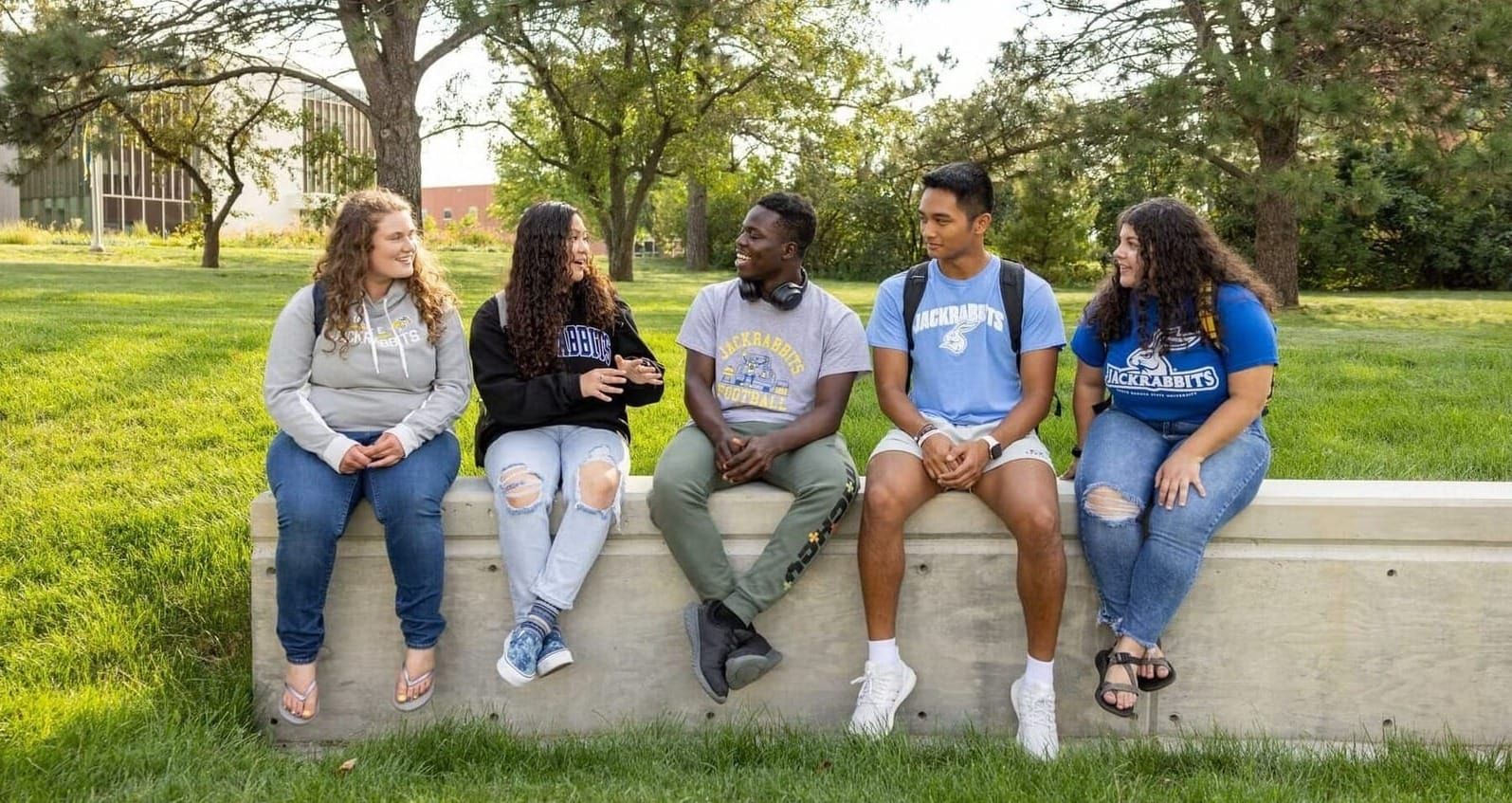
BROOKINGS, S.D. – International enrollment at South Dakota's public universities has increased steadily over the past several years. But university leaders expect fewer students from other countries this fall as visa uncertainty and changing federal immigration policies create doubt among prospective students.
At the same time, employers across the state, from tourism businesses like Wall Drug to hospitals, schools and agricultural operations are still searching for workers in a tight labor market while navigating increasingly complicated visa programs.
Interviews with immigration attorneys, international student advisers and employers suggest that hesitation surrounding student and work visas has grown as federal processing times extend and immigration policies evolve fast.
 Bart Pfankuch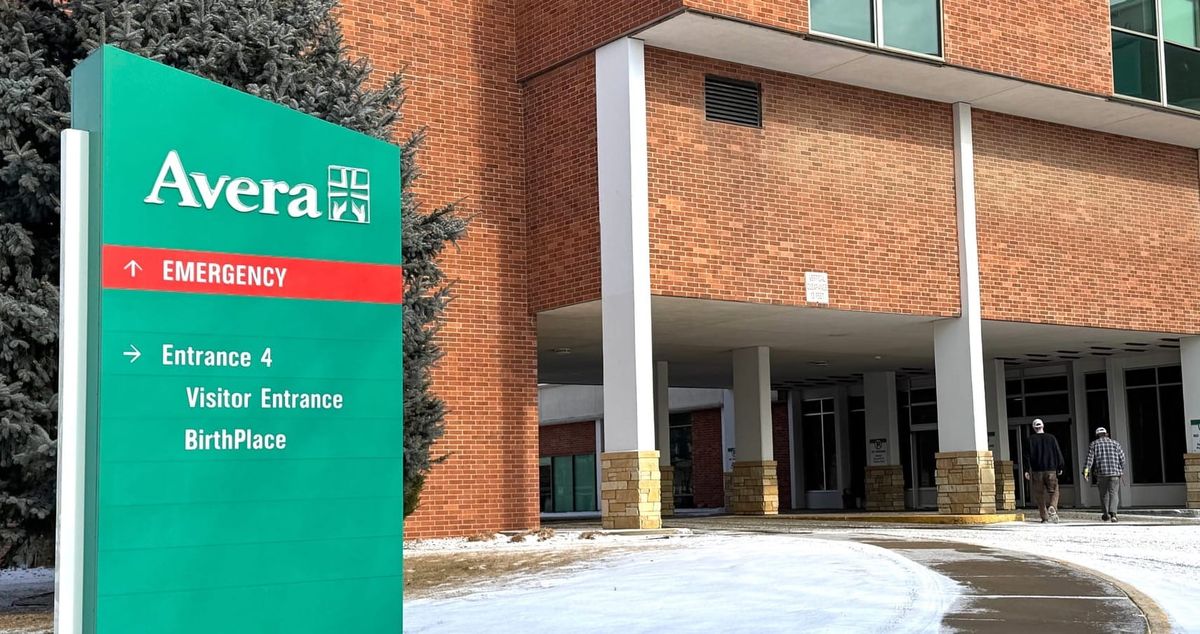
"There is a lot of uncertainty," said Casey Eekhoff, an immigration attorney with Eekhoff Law, Prof. in Sioux Falls, who has practiced immigration law for more than a decade. "Things that used to take much less time are now taking two years or more."
New federal rules shift rules for international students
Adding to mounting uncertainty across higher education, the U.S. Department of Homeland Security (DHS) finalized a major regulatory overhaul on July 17 that eliminates the longstanding "Duration of Status" framework for international students and exchange scholars.
For decades, F-1 student visa holders – the primary federal visa category for full-time international students attending U.S. colleges and universities – were permitted to reside in the United States for as long as they maintained good academic standing and full-time enrollment.
Get free, fact-based South Dakota news and information in a weekday email. No spam. Cancel any time.
Under the new rule taking effect Sept. 15, international students will be locked into fixed admission periods tied directly to their program length, capped at a maximum of four years.
Students who pursue complex multi-year research projects, change academic majors or seek advanced doctoral degrees will now have to submit formal extension applications and pay additional administrative fees to remain in the country legally. Those fees go to U.S. Citizenship and Immigration Services (USCIS), the federal agency that oversees legal immigration and work permits.
Some higher education advocates said these added hurdles, paired with a post-graduation departure grace period reduced from 60 days to 30 days, risk deterring top global talent at a time when domestic enrollment is down.
State leaders warn of regional economic impact
The tension between federal immigration policies and local workforce needs is drawing concern from state financial leaders. During a national press briefing on July 16, they warned that restricting legal visa pipelines threatens long-term structural damage to Midwestern economies.
Minnesota State Auditor Julie Blaha said agricultural and health care dependent states in the Upper Midwest are uniquely vulnerable when high-skilled visa channels are constricted.
"Foreign-born workers make up a critical part of our regional labor force," Blaha said, noting that visa delays directly impact rural health care access and technical support for advanced agriculture. "We are dependent on having our new neighbors stay here and be successful. If we try to keep immigrants out, it will hurt us at every level, from paychecks to access to health care."
Colorado Treasurer Dave Young pointed out that policy uncertainty prevents regional employers and research institutions from planning for the future. He noted that limitary visa rules hit rural states like South Dakota just as severely as major technology hubs.
"When you narrow the field, particularly in rural parts of the country, you eliminate the prospects for smart hiring," Young said. "You want the most competent people to have an opportunity to come to your state, deliver effective services and add research value."
Less worry about getting admitted and more about staying compliant
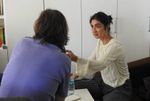
South Dakota State University's Office of International Affairs said prospective students still ask traditional questions about housing, tuition and campus life. But immigration rules now dominate many conversations.
Students frequently ask how federal rules may change, how future visa policies could affect them and what they can do to strengthen their chances of receiving or maintaining an F-1 student visa.
"We're hearing lots of questions about what U.S. visa regulations look like," said Kirsten Linke, the director of Office of International Affairs at SDSU.
The office also has seen more concern about travel limitations affecting students from certain countries and uncertainty surrounding future immigration policy.
Linke said SDSU expects fewer international students this fall than in previous years, reflecting nationwide suspense surrounding federal immigration policies.
Nevertheless, cycles of enrollment increases and decreases have occurred before, she said.
According to South Dakota Board of Regents data, international enrollment increased at each of the state's six public universities between 2021 and fall 2025. South Dakota State University enrolled 865 international students in fall 2025, compared to 615 in 2021. Comparable increases occurred at the University of South Dakota, Dakota State University and the remaining public universities.
Despite the fact that enrollment has steadily increased, universities now expect fewer international students this fall because of growing uncertainty surrounding visa processing and federal immigration policies.
Eekhoff said one of the biggest misunderstandings students have is believing immigration rules allow flexibility.
"In reality, they're very unforgiving," she said.
Students sometimes suppose they can begin working while paperwork is pending or accept unauthorized employment without consequences. Federal immigration rules generally ban those actions.
Work authorization and strict deadlines
Employment authorization presents another challenge. Students participating in Curricular Practical Training (CPT) or Optional Practical Training (OPT) often underestimate how important timing can be.
CPT is an off-campus work authorization program that allows enrolled international students to accept paid internships, practicums or jobs if the work is directly related to their major and required by their degree program.
OPT gives temporary work authorization to international graduates, allowing them to work in their field of study in the U.S. for up to 12 months after graduation or up to 36 months for graduates in science, technology, engineering and math (STEM) fields.
While CPT is managed and approved directly by university advisers, OPT requires formal government application and approval through USCIS, making strict adherence to processing deadlines essential.
"You don't want to start working before you're authorized," Eekhoff said.
Longer federal processing times have made planning more important, she added. Students should begin discussing long-term employment options with employers well before graduation, especially if H-1B visa sponsorship may be needed.
That's the standard federal work visa that allows U.S. businesses to temporarily employ foreign professionals in specialized occupations requiring a college degree.
State labor data highlights growing demand
South Dakota employers rely on international workers to help fill labor shortages in various industries as the state's job market expands.
Data provided by Dawn Dovre, communications director for the South Dakota Department of Labor and Regulation (DLR), which works directly with state-level H-2A agricultural and H-2B non-agricultural seasonal visa programs, highlights how critical short-term and seasonal labor is across the state.
In May 2026 alone, South Dakota’s non-farm wage and salaried workforce expanded by 9,400 workers to reach 475,200, driven largely by seasonal surges in leisure and hospitality (up 4,200 workers) and construction (up 2,500 workers).
Join other South Dakotans and support statewide, fact-based news and information.
While state labor data highlights broad industry trends, individual businesses demonstrate how deep the reliance on international labor runs.
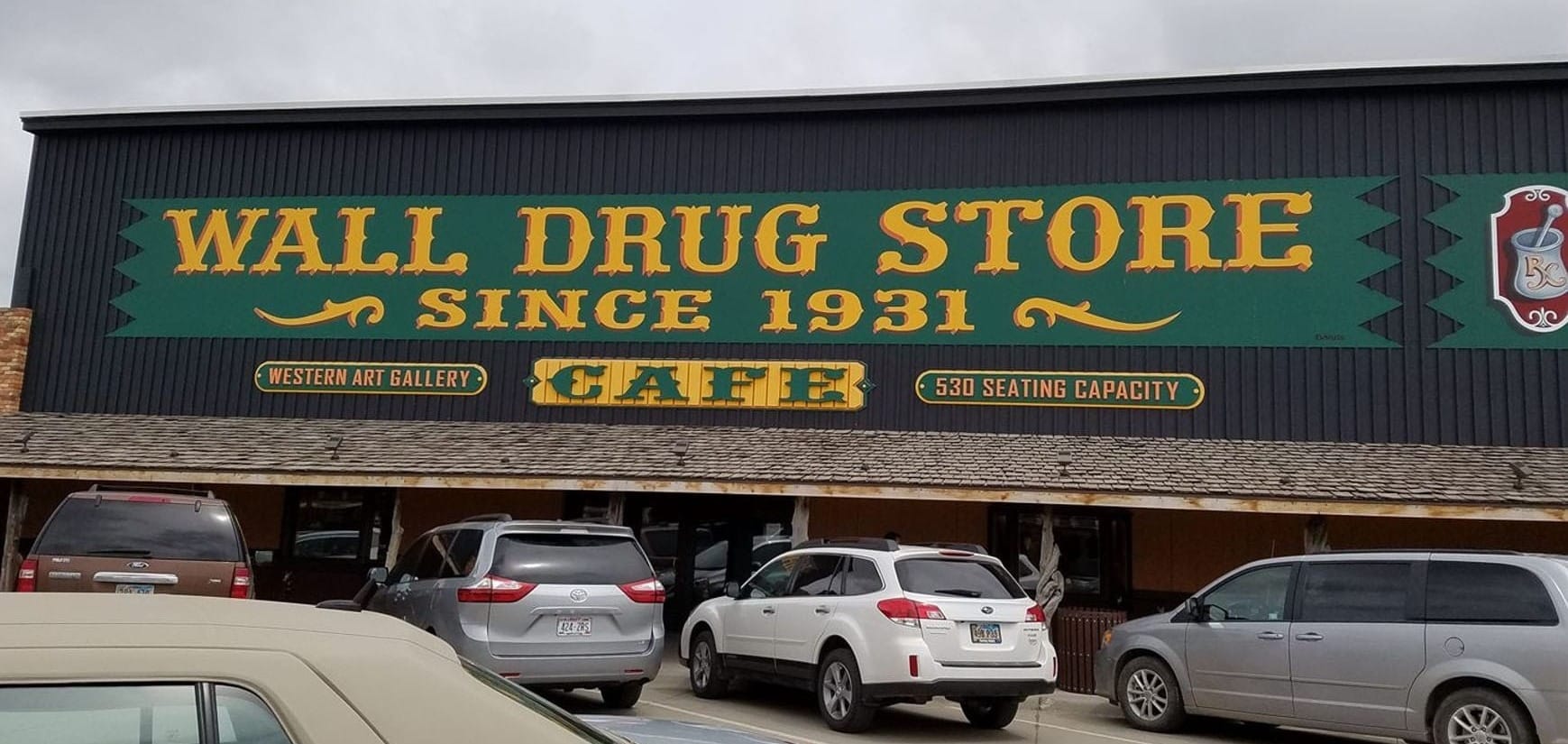
Few South Dakota employers illustrate that need more clearly than Wall Drug, the tourist stop advertised around the world through road signs.
Amanda Frink, HR director at Wall Drug, said the business brings in about 115 seasonal employees each summer, with most arriving from other countries to fill roles across retail, food service and maintenance.
"We have to have that many workers," Frink said. "The American database of people that are available to work is very slim."
However, securing that workforce has grown increasingly complex.
Employers relying on non-agricultural seasonal labor depend on H-2B visas, which are distributed through a federal lottery.
Meanwhile, student workers arriving on J-1 visas faced high denial rates at foreign embassies this year. Those exchange visitor permits allow foreign university students to work and travel in the U.S. during summer breaks.
"This year was the highest visa denial rate I've ever seen in the last four years," Frink said.
Administrative bottlenecks forced some international staff to arrive as much as a month later than scheduled, creating operational stress during peak tourist season, she said.
Despite the administrative difficulties, Frink emphasized that international workers remain essential to keeping operations running smoothly.
"Their work ethic is usually great," she said. "They're usually very efficient employees."
Year-over-year trends reflect steady expansion in key service and health care sectors. Between May 2025 and May 2026, leisure and hospitality added 2,300 jobs, while health care and social assistance gained 1,200 workers, according to DLR data.
Looking long-term, state projections point to South Dakota’s job growth outpacing the national average. Between now and 2032, state employment is expected to grow 7.7%, compared to 2.8% nationwide.
According to DLR industry trends, the fastest-growing sectors statewide will be professional and technical services (15.2%), health care and social assistance (12.0%), transportation and warehousing (11.8%), construction (11.5%), and arts, entertainment and recreation (10.5%).
Health care and educational services account for nearly half of all advertised job openings statewide, while retail, hospitality and business administrative roles make up much of the remaining demand, the trends indicate.
Eekhoff said businesses across these top-hiring sectors frequently turn to legal immigration programs to fill lingering vacancies, particularly in rural communities contending with sharp labor shortages.
"I see agriculture, hospitality, tourism, food processing, health care and education," she said. "Especially in rural communities where workforce shortages exist."
High-skilled visas power higher education and health care
Federal workforce filings also illustrate how deeply embedded international talent is within South Dakota’s core institutions.
According to data from the USCIS H-1B Employer Data Hub, 220 employers across South Dakota accounted for 5,089 approved high-skilled visa beneficiaries through early 2026.
Major regional health care networks, including Sanford Health and Avera McKennan in Sioux Falls and Monument Health in Rapid City, account for most of remaining top sponsors, utilizing visa programs to staff regional hospitals and rural clinics dealing with severe, ongoing labor shortages.
High-skilled visa pipelines also faced uncertainty after a September 2025 presidential proclamation attempted to impose an additional $100,000 filing fee on new H-1B petitions for workers hired from abroad. A federal district court in Massachusetts struck down the fee on June 8, ruling that the administration exceeded its authority, and the First Circuit Court of Appeals denied a federal request to reinstate the fee on July 24 while litigation continues, according to official USCIS guidance.
While financial services lead overall raw volume, high-skilled visas are heavily concentrated in public education and medical infrastructure. South Dakota State University ranks fourth statewide with 236 approved beneficiaries, underscoring the land-grant university's reliance on global scholars to drive research and instructional demands.
At SDSU, those high-skilled visa holders primarily consist of faculty members, while the remaining positions are filled by postdoctoral fellows and research scholars, according to Jill Fier, SDSU's digital news and media relations coordinator.
Fier explained that the university opens its recruitment to all qualified candidates regardless of national origin, prioritizing hiring the most qualified candidate for every role.
"All SDSU faculty, including international faculty, researchers and specialized professionals, bring expertise and knowledge that supports the university’s research and academic mission and goals," Fier said, highlighting that international scholars are a crucial part of any university's educational programs and research endeavors.
She noted that SDSU closely monitors and complies with evolving federal requirements regarding the H-1B process and broader immigration policies.
Communication matters
Eekhoff and Linke said many immigration problems can be avoided simply by asking questions early.
The SDSU Office of International Affairs encourages students to build relationships with their international advisers rather than relying on advice from other students.
"Please don't take advice from your friend unless they say, 'Go talk to the international adviser,'" Linke said.
Eekhoff offered similar guidance.
"I wouldn't be afraid to ask," she said. "Make sure you're always in compliance with the expectations and requirements of your status."
Congressional offices provide limited immigration assistance
South Dakota's three congressional offices can sometimes help constituents experiencing delays with federal agencies.
Michael Finan, press secretary for U.S. Sen. John Thune, said South Dakotans experiencing problems with federal agencies are encouraged to contact the senator's office for assistance.
U.S. Rep. Dusty Johnson's office refused to comment.
"Unfortunately, we do not comment on constituent casework and casework processes," said Press Secretary Andrew Rasmussen.
Editor's note: Amina Aidarkhanova is from Karaganda, Kazakhstan, and attends SDSU in Brookings on a student visa.
South Dakota News Watch is an independent nonprofit. Read, subscribe for free and donate at sdnewswatch.org. Amina Aidarkhanova received the 2026 Jeffrey B. Nelson Investigative Journalism Endowed Internship and the Chuck Raasch and Sandy Johnson Scholarship from the SDSU Foundation. Contact: amina.aidarkhanova@sdnewswatch.org.