Everything to know about registering and voting in statewide elections, and who and what are on the ballot.

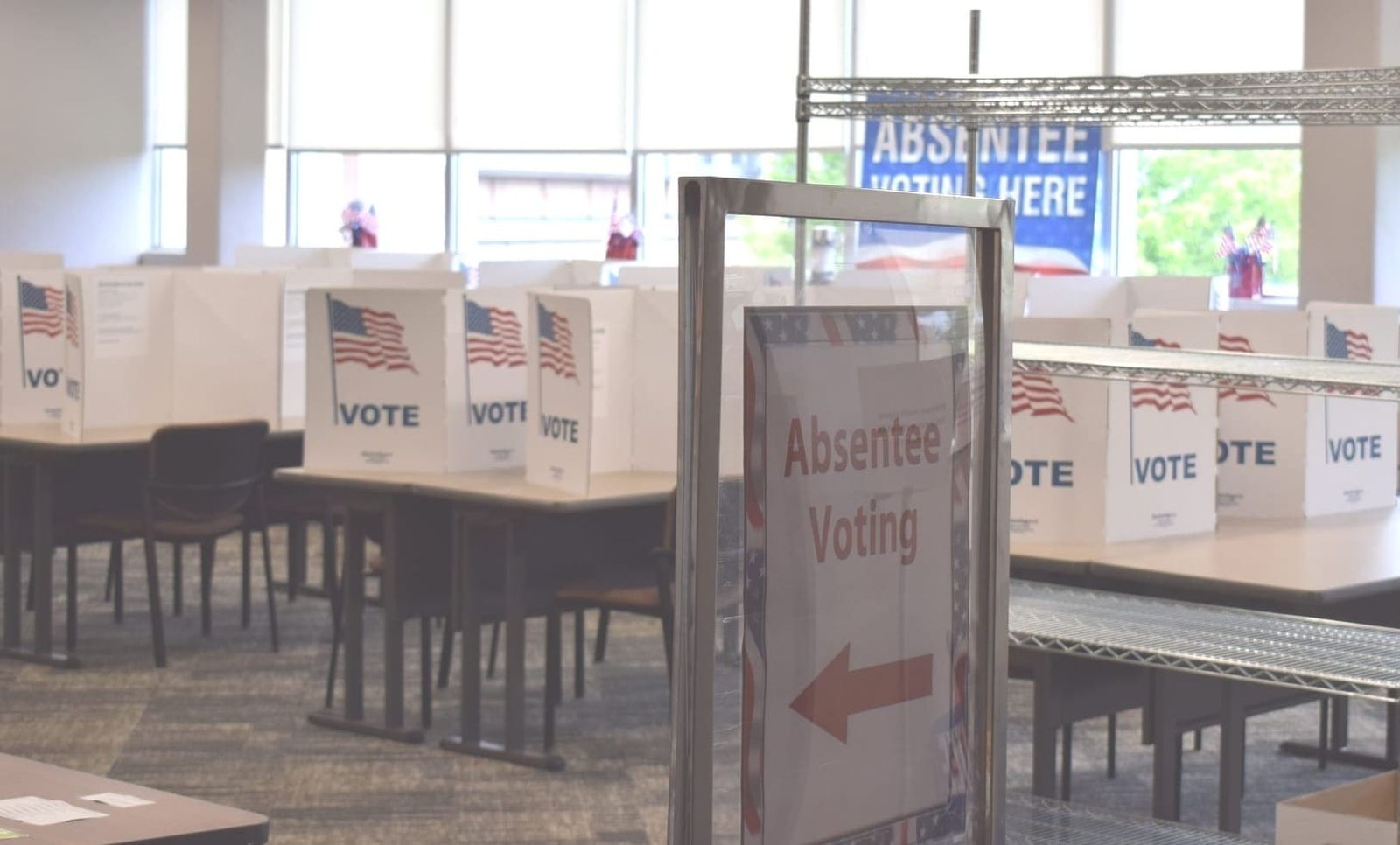
Early and absentee voting has started for the Nov. 3 general election. This guide is intended to help South Dakotans make informed decisions using fact-based reporting to fairly and clearly explain the process and who and what is on the ballot.
The guide will be updated as new information becomes available, so consider bookmarking it and sharing with family and friends. Send questions, suggestions or corrections to info@sdnewswatch.org. Watch for individual stories on polls, profiles, ballot issue explanations and other topics.
Important dates and voting basics
When are upcoming deadlines, events and elections?
Upcoming important dates and deadlines:
Monday, Oct. 19: Deadline to register or change voter registration for the general election
Tuesday, Nov. 3: General election, polls are open statewide from 7 a.m. to 7 p.m. local time
Am I qualified to vote in South Dakota?
To register to vote in South Dakota, you must:
- Be a U.S. citizen
- Live in South Dakota
- Be at least 18 years old on or before next election
- Not be serving a sentence for a felony
- Not be judged mentally incompetent by a court
After you register, you'll get a card in the mail with details of where to vote and other information, such as which legislative and school districts you live in.
Every registered voter may vote in the November general election and in local elections in June or November. But in the June primary election, a voter is given only the ballot for the party they're registered in, except for voters registered as an Independent or No Party Affiliation (NPA):
- The South Dakota Democratic Primary is open to registered Democrats and Independents/No Party Affiliation voters but not Republicans.
- The South Dakota Libertarian Primary is open to voters registered as Libertarian, Independent or No Party Affiliation.
- The South Dakota Republican Primary is open to only registered Republicans.
How do I check if I'm registered?
First check your current status on the Voter Information Portal that's provided by the Secretary of State and all 66 county auditors.
If you do need to register, you can do it at these places:
- County auditor’s office
- Driver’s license station
- City finance offices
- Public assistance agency, TANF or WIC
- Department of Human Services offices that provide assistance to people with disabilities
- Military recruitment offices
- Download a registration form from the Secretary of State’s website
Here's an FAQ with helpful information and the location of all auditors.
How and when can I vote, and what do I need to bring?
There are three ways to vote in South Dakota state elections:
- To vote in person on Election Day, just go by your assigned polling place on your voter registration card between 7 a.m. to 7 p.m. local time. Volunteers will walk you through the entire process. (Make sure you get your "I voted" sticker.)
- Early voting is allowed at your county auditor's office during business hours starting 46 days before an election (Sept. 18). Staff will help you with the process.
- If you're going to be out of town on Election Day or want to mail in your ballot, you can submit an absentee ballot to your county auditor's office starting 46 days before an election (Sept. 18).
Regardless of how you vote (in person, early or absentee), all voters must show proof of identification or sign a personal identification affidavit at their polling place. Approved forms of photo identification include:
- South Dakota driver's license or nondriver ID card
- U.S. government photo ID such as a passport
- U.S. Armed Forces ID
- Tribal photo ID
- Current student photo identification card from a South Dakota high school or South Dakota accredited institution of higher education
If I didn't vote in the primary election, may I still vote in the general election?
Yes. Just make sure you're registered by the deadline above.
We strive to cover issues important to all South Dakotans, but that can be difficult in a large, diverse state. Please fill out the brief survey at the link below and help guide what fact-based news and information we produce for free. Thank you for your help!
Who's on the ballot
Here are the statewide federal and state offices with races in 2026. Candidates are listed in alphabetical order by last name. Party affiliations are Democratic (D), Independent (I), Libertarian (L) and Republican (R). Incumbents are noted with an asterisk (*). See local races and more information, including live results, on the Secretary of State's website.
U.S. Senate
Like all 50 states, South Dakota has two U.S. senators in Congress, one of whom is up for re-election this year to a six-year term. Here are the candidates who will meet in the Nov. 3 general election:
Brian Bengs (I), who previously ran for the office as a Democrat, announced his bid for Senate as an Independent in May 2025. He is the only Independent candidate running for federal office in South Dakota. Bengs is a U.S. Navy and Air Force veteran and currently lives in Hot Springs.
He has pledged to not serve more than two terms in Congress if elected and supports an Independent caucus in the federal government. Bengs has decried party politics and has said that “hyper polarization” is the cause of problems in Washington.
Watch SDPB's Sept. 14, 2026, televised interview with Bengs. (Sen. Mike Rounds elected not to participate.)
*Sen. Mike Rounds (R) has served as one of South Dakota’s two senators in Congress since 2015. Before then, he was governor of South Dakota from 2003-2011, served in the Legislature and ran an insurance business in Pierre. In Washington, he currently serves on these committees: Senate Appropriations; Armed Services; Banking, Housing and Urban Affairs; Indian Affairs; and the Select Committee on Intelligence. This year, he requested a formal investigation into the U.S. Postal Service in South Dakota.
Rounds, who has largely focused his campaign on national security and economic development issues like American energy infrastructure. He also has said that he supports the effort to eliminate the Department of Education and “believes in local control of education.” He was endorsed by President Donald Trump in July 2025.
See Rounds' activity on legislation in the U.S. Senate on Congress.gov.
Watch the Sept. 14, 2026, SDPB/SDNW interview of Bengs (Rounds declined to participate)
U.S. House of Representatives
South Dakota is allocated one congressional seat in the U.S. House of Representatives for a two-year term. Here are the candidates who will meet in the Nov. 3 general election:
Nikki Gronli (D), of Dell Rapids, announced her bid for Congress in September 2025. She was formerly South Dakota’s director for the U.S. Department of Agriculture’s Rural Development program under President Joe Biden.
Her campaign focuses on affordability for working families, public education and rural health care. She has called for legislation supporting and expanding tribal law enforcement, Indian Health Services, and tribal colleges and universities.
See Gronli's campaign website.
Marty Jackley (R) has been attorney general of South Dakota since 2023 and previously served in that office from 2009 to 2019. He is also the former U.S. attorney for South Dakota. As attorney general, Jackley established the roles of Missing and Murdered Indigenous People (MMIP) and Human Trafficking directors.
His campaign for Congress has focused on border security, public safety and “supporting the Trump agenda.” He has called for “less Washington red tape” for farmers and ranchers – Jackley owns a ranch near Pierre and a farm in Butte County. He was endorsed by President Donald Trump in March.
See Jackley's campaign website.
Watch the Oct. 1, 2026, SDPB/SDNW debate between Gronli and Jackley
South Dakota governor
South Dakota's governor leads the executive branch of state government in Pierre and is limited to two consecutive, four-year terms.
Here are the candidates who will meet in the Nov. 3 general election:
Dan Ahlers (D) and Steven McCleerey (D). Ahlers, of Dell Rapids, executive director of the South Dakota Democratic Party, announced his campaign for governor in February. He previously served as a state representative and senator for three terms.
In his campaign announcement, Ahlers spoke about eminent domain and property taxes, calling for reliance on "intelligent" state employees to solve the issues that South Dakotans have expressed concern about. Other policy positions he has touted include the expansion of access to mental health services, rural hospital infrastructure development and the support of “local solutions to increase housing availability.”
On Aug. 12, Ahlers announced that he had chosen McCleerey, a farmer from Sisseton and former state lawmaker as his running mate for lieutenant governor.
*Larry Rhoden and Lt. Gov. Tony Venhuizen (R). Rhoden has served as South Dakota’s governor since January 2025. He took former Gov. Kristi Noem’s place after she was appointed as secretary of the Department of Homeland Security. He had served as Noem’s lieutenant governor since 2018 and before then was a state legislator for more than 15 years.
Rhoden has largely hinged his campaign around his experience in the state Legislature and executive branch and hopes to be formally elected to the office in November. He won the Republican nomination in a crowded field of four candidates and defeated Aberdeen businessman Toby Doeden in a runoff election on July 28. Rhoden is a rancher from Union Center who has, while in office, supported property tax reform and tough-on-crime policies like Operation: Prairie Thunder, a collaboration between the South Dakota Highway Patrol and Immigrations and Customs Enforcement.
See Rhoden's campaign website.
Watch the Sept. 29, 2026, SDPB/SDNW debate between both candidates
Constitutional and statutory offices
While voters elect candidates for governor in the primary, political parties choose other state executive candidates.
CONSTITUTIONAL OFFICES
Constitutional officers are limited to two consecutive, four-year terms terms. They provide functions of state government such as legal representation, official filing duties, election administration, processing of state payments, receipt of payments to the state, and administering school and public lands. These duties are separate from the legislative, executive and judicial branches.
Here are constitutional office candidates who will appear on the Nov. 3 general election ballot:
Attorney General:
- Lance Russell (R), the current states’ attorney for Fall River and Oglala Lakota counties, earned the Republican nomination for attorney general during the party’s convention in June. Russell won over McPherson County state’s attorney Austin Hoffman of Eureka and former state circuit judge John Fitzgerald of St. Onge in two rounds of voting. Russell also ran for the office in 2018 but was defeated by Jason Ravnsborg at the GOP convention that year. Ravnsborg would then be elected attorney general and serve until 2022, when he was impeached.
- South Dakota Democrats did not nominate a candidate for attorney general at their 2026 convention, so Russell is currently running unopposed.
Secretary of State:
- Heather Baxter (R), of Rapid City, is a state legislator for District 34 and a member of the South Dakota Freedom Caucus, a far-right, populist group that has pushed for lower taxes, less state spending and, notably for Baxter, election reform. Baxter has called for hand-counting ballots in the state and says that she “echoes (President Donald Trump)’s concerns” about election integrity. On her campaign website, she also says she hopes to “cut through red tape via SD DOGE to make government work better for everyday South Dakotans.” See Baxter's campaign website.
- Terrence Davis (D), a former state trooper in Tennessee and South Dakota, was chosen as Democrats’ secretary of state nominee during the June party convention. Davis is currently employed with East River Legal Strategy and is pursuing a doctoral degree in law and public policy through Liberty University, according to the South Dakota Searchlight. See Davis' campaign website.
- Tamara Lesnar (L) is running as the state's sole Libertarian candidate for statewide office. She formerly ran for state House in 2024 and for U.S. Senate in 2022, where she lost to incumbent Sen. John Thune.
Treasurer:
- Melissa Hull (R), who is from Philip, is the current treasury manager of the South Dakota Treasurer’s Office. She has served in the role under state Treasurer Josh Haeder since 2019. Hull received Haeder’s endorsement over Heath Shields, whom she ran against for the Republican nomination.
- Margaret Kuipers (D) formerly served as the treasurer of the South Dakota Emergency Medical Services Association and as treasurer for Democrat Sheryl Johnson’s 2024 campaign for U.S. House. Kuipers, of Sioux Falls, has run three campaigns for state House in 2018, 2020 and 2022.
Auditor:
- Catherine Barranco (R), of Sioux Falls, received the Republican nomination for Auditor during the party’s convention in June, defeating state legislator Tamara Grove and Renae Randall, a former employee of the South Dakota Investment Council. Barranco has bachelor’s and master’s degrees in economics and is a former president of the South Dakota Federation of Republican Women. See Barranco’s campaign website.
- Tom Cool (D), of Sioux Falls, is running a third time for constitutional office in South Dakota. He was the Democrat’s previous nominee for Auditor in 2018 and for Secretary of State in 2022. He has also run several campaigns for state Senate.
School and Public Lands:
- Brock Greenfield (R) has been the commissioner of School and Public Lands since 2022. He spent more than two decades in state legislature as both a senator and representative. His biography on the School and Public Lands website says that his tenure has been marked by “exploring new opportunities for land use, such as gas and oil exploration on previously untapped areas.”
- Raeann Mettler (D), of Spearfish, is a former professor at Black Hills State University who holds a PhD in natural sciences. She currently works for Missouri Breaks Industries Research, a Native-owned health research organization. She ran for a city council seat in Spearfish in 2025 and a Spearfish school board seat in 2026.
STATUTORY OFFICE
South Dakota also has one statutory office led by three public utilities commissioners who are elected for six-year terms on a staggered basis and without term limits. They regulate public utilities within the state, including electric, natural gas, telephone utilities and grain storage warehouses.
Here are the Public Utilities Commission candidates who will meet in the Nov. 3 general election:
- Don Haggar (R), of Sioux Falls, served in the South Dakota House of Representatives for several years, representing District 10 and serving as Speaker Pro Tem. He was also the state director of Americans for Prosperity, a conservative political advocacy organization. Haggar’s campaign for PUC has centered around property rights – he has decried “eminent domain abuse” – and fighting “overregulation” to keep energy affordable.
See Haggar’s campaign website.
- Frank Kloucek (D), of Scotland, was a state representative for District 19 over several terms, beginning in 1991 and ending in 2003. He was re-elected to that position in 2011 and served until 2013, and between 2003 and 2011 served as a state senator. Kloucek’s campaign website promises “full transparency, local input and a clear accounting” of data centers and their costs to South Dakotan residents and an opposition to pipeline projects in the state. He says he hopes to be a “rural advocate” in Pierre.
See Kloucek’s campaign website.
South Dakota Legislature
The South Dakota Legislature is comprised of 105 lawmakers from 35 legislative districts, each of which has one senator and two representatives. Find out which district you live in and also the list of candidates who will be on the Nov. 3 general election ballot.
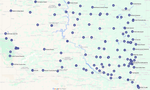
Or find out who's running in your district through this interactive map produced by SDPB News. To zoom in on a computer, hold "Ctrl" while scrolling. On a phone, use two fingers.
As part of its mission to inform South Dakota voters, SDPB News produced an interactive map featuring links to pages for each and every candidate running for state Legislature in 2026.
Candidate pages include links to their campaign finance report page on the South Dakota Secretary of State's website as well as campaign websites. SDPB was not able to identify campaign websites or social media pages for all candidates. In addition, incumbent candidate pages include links to their pages on the South Dakota Legislative Research Council's website, where their legislative history can be found.
Find SDPB News' coverage of election-related stories on our election page.
SDPB News reached out to each candidate running for state Legislature in 2026 with a short questionnaire. If you're a legislative candidate who did not receive this questionnaire, email news@sdpb.org.
What else is on the ballot
The following "yes/no" ballot measures have been approved for the Nov. 3 general election ballot, all of which were referred by the Legislature. Here is more information about ballot questions on the Secretary of State's website.
Constitutional Amendment I: Expanded Medicaid repeal
This amendment would require that expanded Medicaid coverage be repealed if federal funding drops below 90%.
It comes after South Dakota voters approved Amendment D in 2022, which expanded Medicaid eligibility to “anyone over the age of 18 and under 65 whose income is at or below 133% of the federal property level, plus 5% of the federal poverty level for the applicable family size.”
Under Amendment I, those expanded categories are removed from Medicaid coverage if the federal government funds less than 90% of South Dakota’s Medicaid expansion. The federal government is currently legally required to fund that 90%.
Constitutional Amendment J: Voter eligibility
This amendment would formally clarify that an individual must be a U.S. citizen to vote in elections in South Dakota.
It would do so by officially adding non-citizens to the list of those disqualified from voting in the state constitution. Currently, that list includes those with felony convictions or “mental incompetence.”
Non-citizens are not legally eligible to vote in South Dakota.
Constitutional Amendment K: Unclaimed property fund
This amendment would establish a trust fund for unclaimed property held by the state treasurer.
Currently, unclaimed intangible property is considered “abandoned” if it remains unclaimed for three years. That includes “traveler's checks, money orders, bank deposits, refunds, stocks, funds owed under a life insurance policy, and property held in a safe deposit box,” according to the attorney general’s explanation of the amendment.
If passed, part of the interest and income from the trust fund would be distributed into the state’s general fund “for the benefit of the state.”
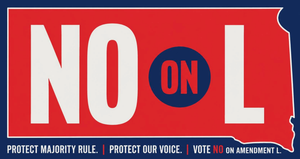
Constitutional Amendment L: Require 60% to amend Constitution
This amendment would require that any proposed amendment to the state of the South Dakota Constitution receive at least 60% of the vote to pass.
The current law says that constitutional amendments – like this one – only need to receive a majority vote among South Dakotans to become part of the constitution.
News Watch's political reporting standards
Here are FAQs about South Dakota News Watch's political reporting standards.
Do South Dakota News Watch’s journalists have a political leaning?
No. We operate with integrity and independence and abide by journalism ethics that require fairness. We explore multiple sides of issues. We aren’t beholden to special interests, public officials, political parties or corporate entities. We don’t produce commentary, editorials or express opinions. And we don’t accept contributions from anonymous donors or elected officials.
How can I trust that your political stories are accurate and fair?
We clearly state who we talked to in each story, only cite credible sources, seek comment from all sides and verify the background of people we interview. Our graphics often include the raw material on which stories are based, so readers can decide for themselves if we got the story right.
How are your political stories different?
Other traditional and new media organizations do a great job covering day-to-day developments about politics and government. South Dakota News Watch’s journalists strive to produce stories that go deeper on important issues. We research and do reporting that explains complex topics that are relevant to people and policymakers. We also conduct scientific polls and public forums that explore what’s on the minds of South Dakotans.
Do you do hit pieces on politicians?
No. The nation’s founders believed a free press was vital to holding elected leaders accountable. Some politicians have found it effective to accuse all news organizations of being biased against them. We believe South Dakota News Watch should be judged on the merits of its own work because its journalists take their role seriously. Donors, all of whom are listed on the website, represent people from across the political spectrum and appreciate that commitment. They are concerned about the state of civics and democracy and appreciate News Watch's independent coverage of politics and government.
Where can I learn more about your standards?
The best practices policies in the website footer spells out all of standards clearly.
Get free, fact-based South Dakota news and information in a weekday email. No spam. Cancel any time.
Sources for this guide include original reporting and publicly available resources provided by the South Dakota Secretary of State's office. It only includes information on statewide and legislative races. Details about local races can be found on each county auditor's website and the state's great local media outlets.
South Dakota News Watch is an independent nonprofit. Read, subscribe for free and donate at sdnewswatch.org. Contact reporter/Report for America corps member Molly Wetsch: 605-531-7382/molly.wetsch@sdnewswatch.org.