
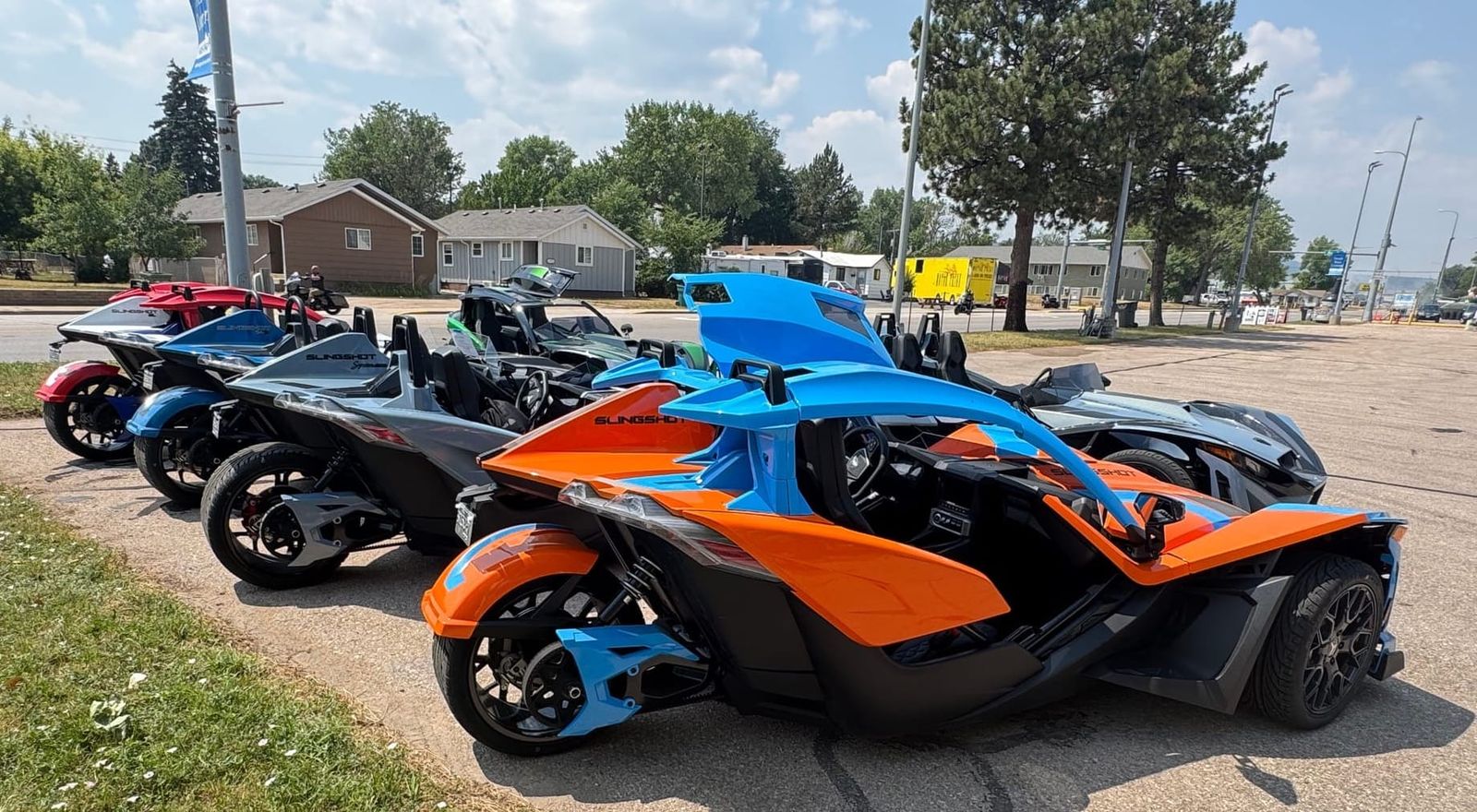
Trikes, Spyders and Slingshots are growing in popularity, but they can prove tricky on turns, as evidenced by a recent wreck that killed a Sioux Falls woman.

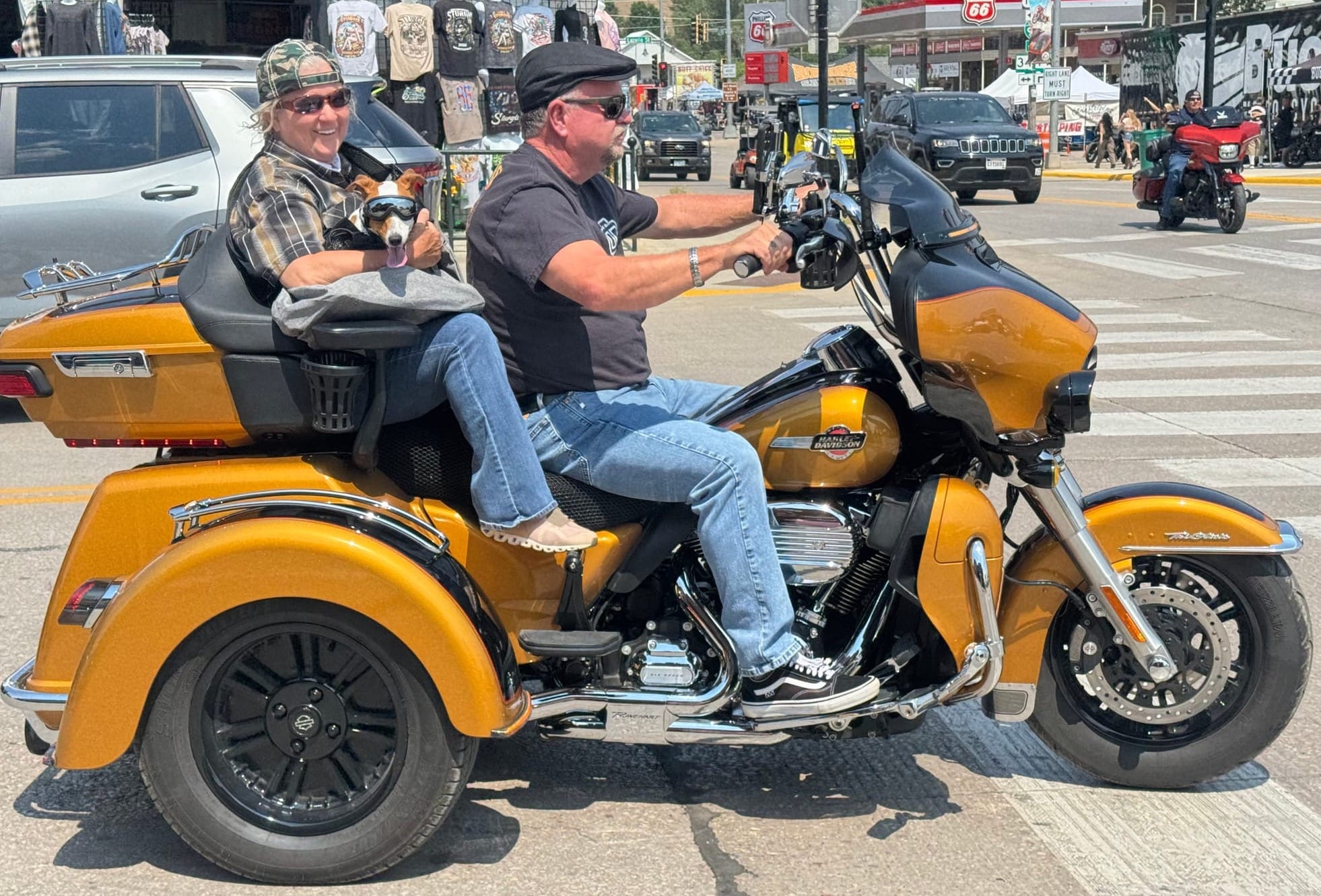
STURGIS, S.D. – It takes only a brief drive through the streets of Sturgis during the 2026 motorcycle rally to realize that three-wheeled cycles have become a hot new trend in the biker world.
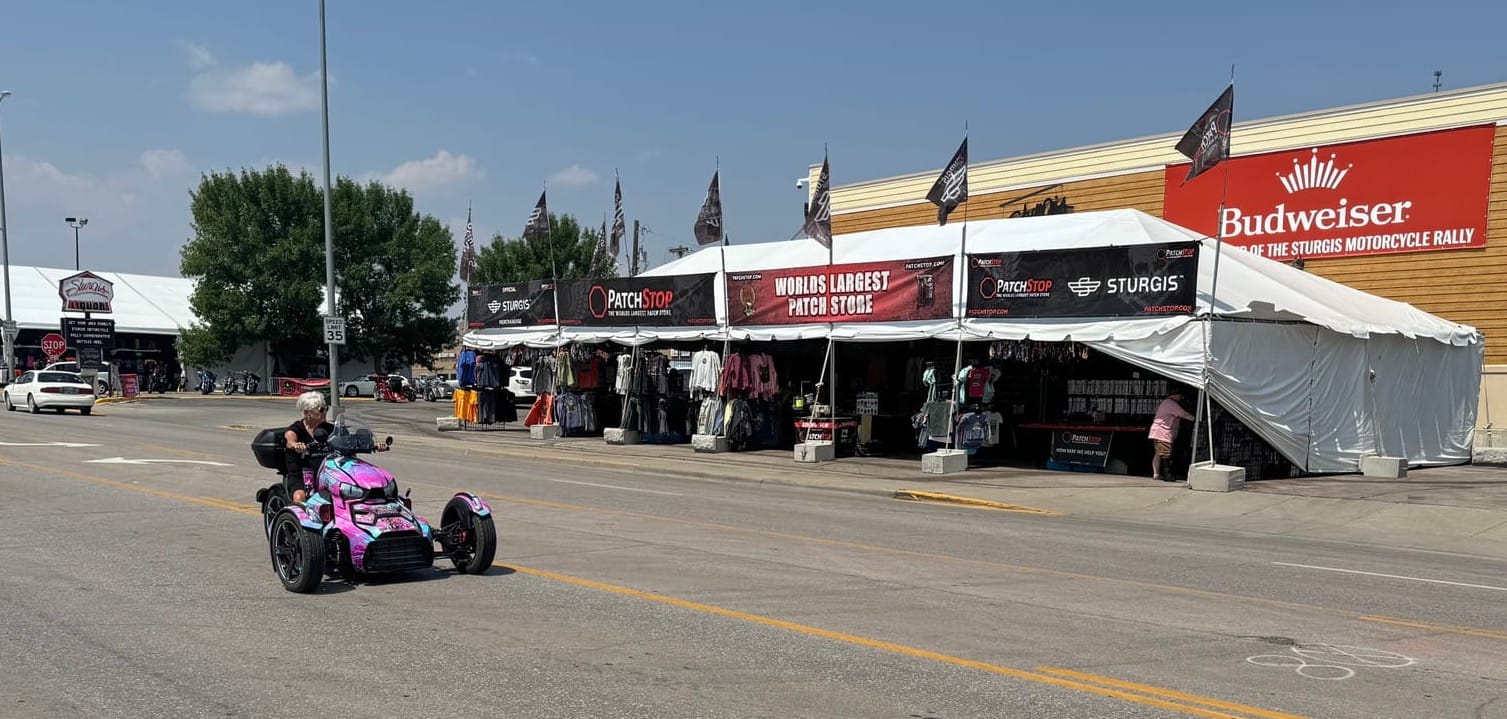
Motorcycles with three wheels instead of two can readily be seen driving in traffic, parked amid the rows of bikes on Main Street or displayed at temporary sales and rental lots that pop up during the Sturgis rally that attracts more than 500,000 bikers to South Dakota each August.
"It is harder to steer at a higher speed, especially given that you have more weight and you have to press much harder to steer. They’re fun, but they just need to be navigated correctly." – Gina Suelflow, certified cycle trainer with the South Dakota Safety Council
The key innovations of three-wheelers are greater stability while driving or stopped, increased visibility for users and among other motorists, more spacious rider and passenger seating and expanded cargo space. The three-wheelers are also more adaptive for riders with physical limitations or disabilities.
But while they are by design more stable than two-wheelers, they also carry navigation challenges that can increase loss of control or rollover risk in some travel situations, namely while turning, navigating curves or steering at high speeds.
"The people who are moving to a three-wheeled machine do need to realize that it takes a lot more strength to steer," said Gina Suelflow, a certified cycle trainer with the South Dakota Safety Council. "We’ve seen a lot of people get themselves into trouble there because they don’t have the upper body strength required."
Get free, fact-based South Dakota news and information in a weekday email. No spam. Cancel any time.
Suelflow said people who shift from two-wheeled to three-wheeled motorcycles need to know that three-wheelers do not allow for leaning of the bike, the main method for turning a two-wheeled cycle. Three-wheelers are often heavier than traditional two-wheeled cycles and do not always handle well at high speeds, she said.
"It is harder to steer at a higher speed, especially given that you have more weight and you have to press much harder to steer," said Suelflow, a Rapid City-based trainer with the statewide nonprofit safety group. "They’re fun, but they just need to be navigated correctly."
Sioux Falls woman killed in 3-wheeler wreck
According to a 2025 blog post by Street Iron Gear, a national biker apparel company, three-wheelers require a "stability trade off" when compared to two-wheelers.
"While traditional trikes are easy at low speeds, they can be a handful in the corners," the post stated. "Because the body of the bike does not lean, the rider has to actively resist the forces trying to pull them off the seat. This can require surprising upper body strength and can feel unstable in sharp turns, sometimes even lifting an inside wheel if pushed too hard."
 Michael Klinski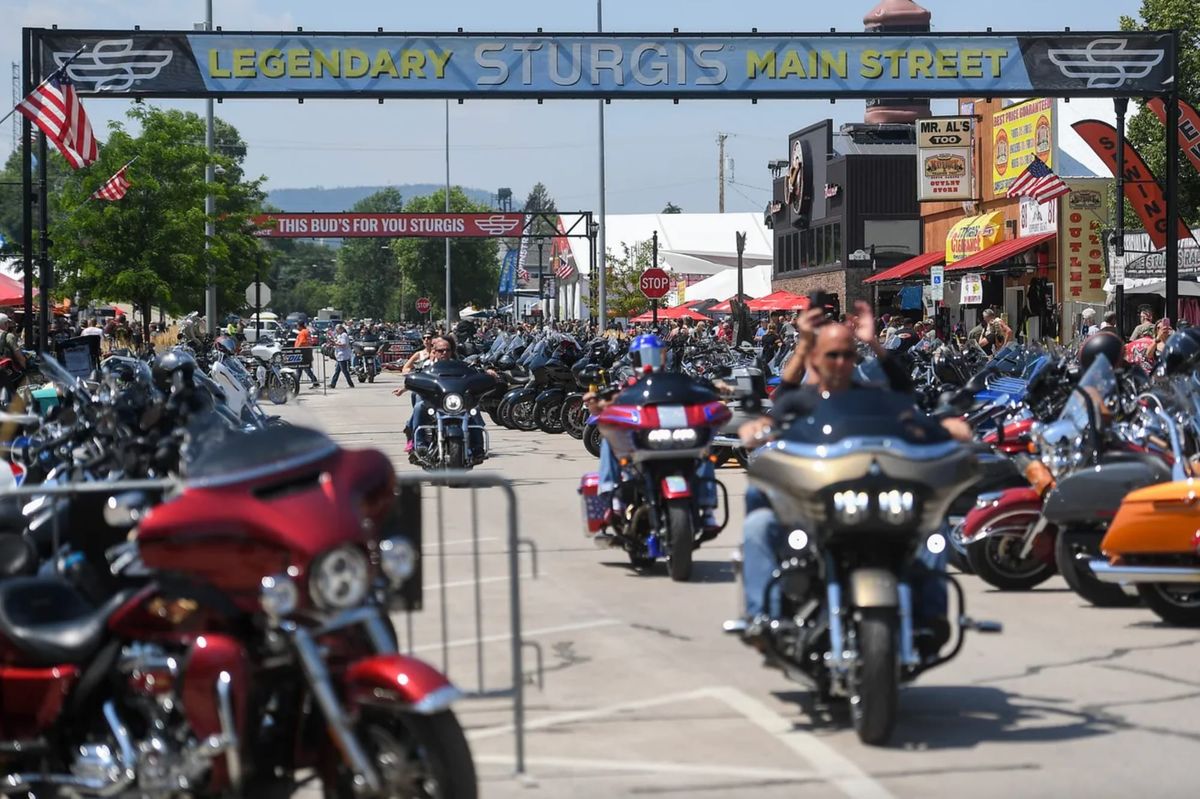
The risks associated with driving a three-wheel motorcycle – or any cycle for that matter – were made tragically clear in an Aug. 1 accident that killed a Sioux Falls woman who was riding on a 2025 Can-Am Spyder RT three-wheeled cycle.
Dawn Hillman, 67, was killed in the single-vehicle accident that happened just after 11 a.m. on South Rochford Road about 5 miles west of Rochford in the northern Black Hills, according to the South Dakota Department of Public Safety.
The wreck occurred when the driver of the three-wheeled cycle, Randall Lee Hillman, 72, of Sioux Falls, failed to negotiate a curve and left the road, causing the vehicle to roll, the state said.
He was taken to a Rapid City hospital with serious, non-life-threatening injuries. Both occupants were wearing helmets, and the investigation into the accident is ongoing, the DPS said. News Watch reached Hillman by phone on Aug. 5 but he declined to discuss the accident.
The 2026 rally has reported several fatal wrecks so far.
On Thursday, Aug. 6, the day prior to the official start of the rally, five people were killed in accidents, including a 46-year-old Sioux Falls woman killed on U.S. 14A near Sturgis who has not been identified. Two Illinois residents died in a fiery wreck on U.S. 385 north of Hill City. And a pair of Coloradans died in an accident on U.S. 14A east of Deadwood on Thursday.
On Saturday, a 72-year-old biker who was not identified died in an accident on U.S. 85 near Spearfish.
None of those wrecks appear to have involved three-wheeled motorcycles, according to state incident reports.
Sales higher and expected to rise more
Three-wheeled cycles fall largely into two main categories – those with two wheels in the rear and one in front, and those with two wheels in front and one in back. In both cases, navigation and turning is done via the front wheel or wheels.
The cycles with two wheels at the rear are often called trikes, and Harley-Davidson is a major manufacturer.
 Bart Pfankuch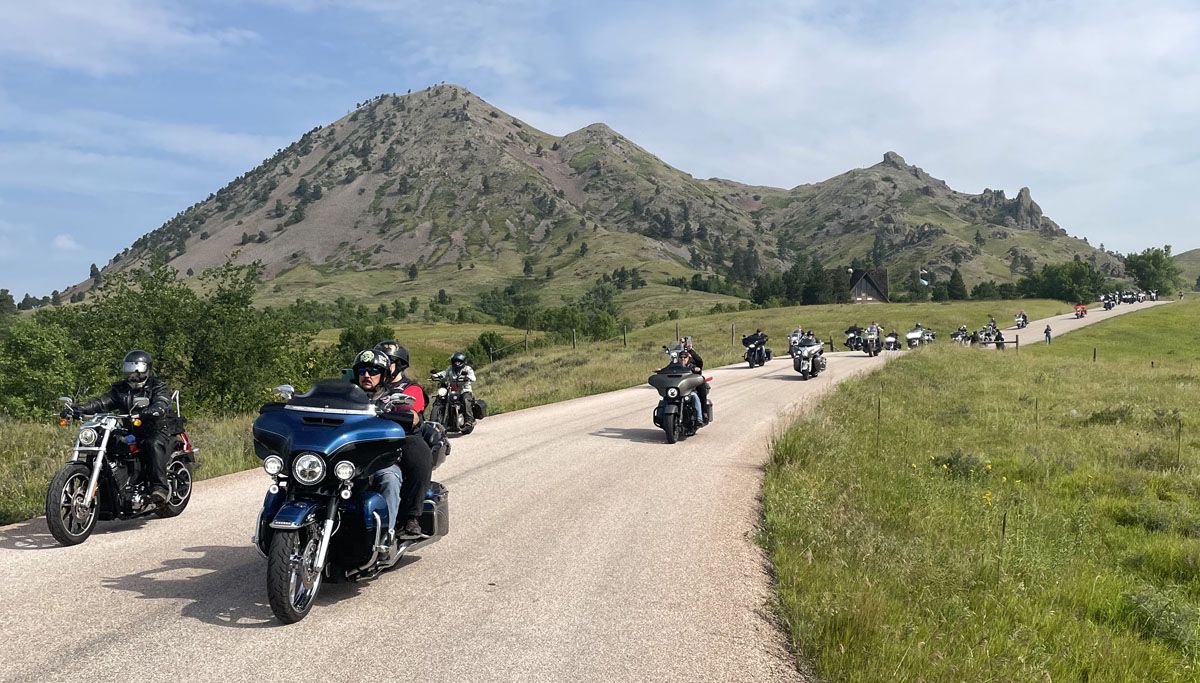
Those with two wheels in front are mainly referred to by their trade names, including the Can-Am Spyder and Ryker, the Polaris Slingshot and the Yamaha Niken or Tricity.
Three-wheeled cycle sales are on the rise across the U.S. and are expected to continue to climb over the next decade, according to Future Market Insights, a financial research firm. Overall sales were $1.9 billion in 2020, rose to $2.7 billion in 2025 and could reach $5.5 billion by 2035, an industry analysis showed.
Sales of models with two wheels in front are expected to make up the majority of future three-wheeler sales, which are being driven by "increasing consumer demand for versatile and stable personal mobility solutions," according to the analysis.
Accident data not provided for 3-wheelers
Safety data is hard to come by because the National Highway Traffic Safety Administration lumps crash and fatality data on three-wheelers into the same category as two-wheeled cycles, which still dominate the market.
But some statistics can still be helpful in understanding the risks of three-wheelers and for motorcycles overall.
For example, motorcycles remain much less safe than passenger cars and trucks, with a fatality rate that's 28 times greater for cycles on a per-mile basis. Motorcycle deaths have risen by 23% since 2019, with the highest fatality rate on cycles coming among drivers aged 50 years or older.
Alcohol was a factor in 26% of fatal cycle wrecks in 2023, and during August of each year, South Dakota has by far the highest per-capita cycle death rate among all U.S. states.
The NHTSA does compile accident data on all-terrain vehicles, which the agency says are increasingly being driven on public roadways.
ATV deaths in the U.S. rose by 66% in a recent 10-year period, from 325 in 2014 to 540 in 2024. About 70% of fatalities came in single-vehicle wrecks and more than two-thirds of deaths occurred in rollover accidents.
He likes his trike, but goes easy on turns
Bob Walker of upstate New York rode his 2010 Harley-Davidson Tri Glide three-wheeler 1,900 miles through Canada and back into the United States on his way to attend the 2026 Sturgis rally.
On Aug. 5, Walker made a stop at a discount store in Summerset, just west of Rapid City, to get a soda and a few other necessities for his campsite nearby.
Walker, 83, said he rode three-wheeled cycles for decades but transitioned to the trike when his knees got weak and it became more difficult to keep a traditional motorcycle upright.
“I love this bike, and you can’t beat it,” Walker said. “You don’t have to worry about stabilizing yourself or holding yourself upright.”
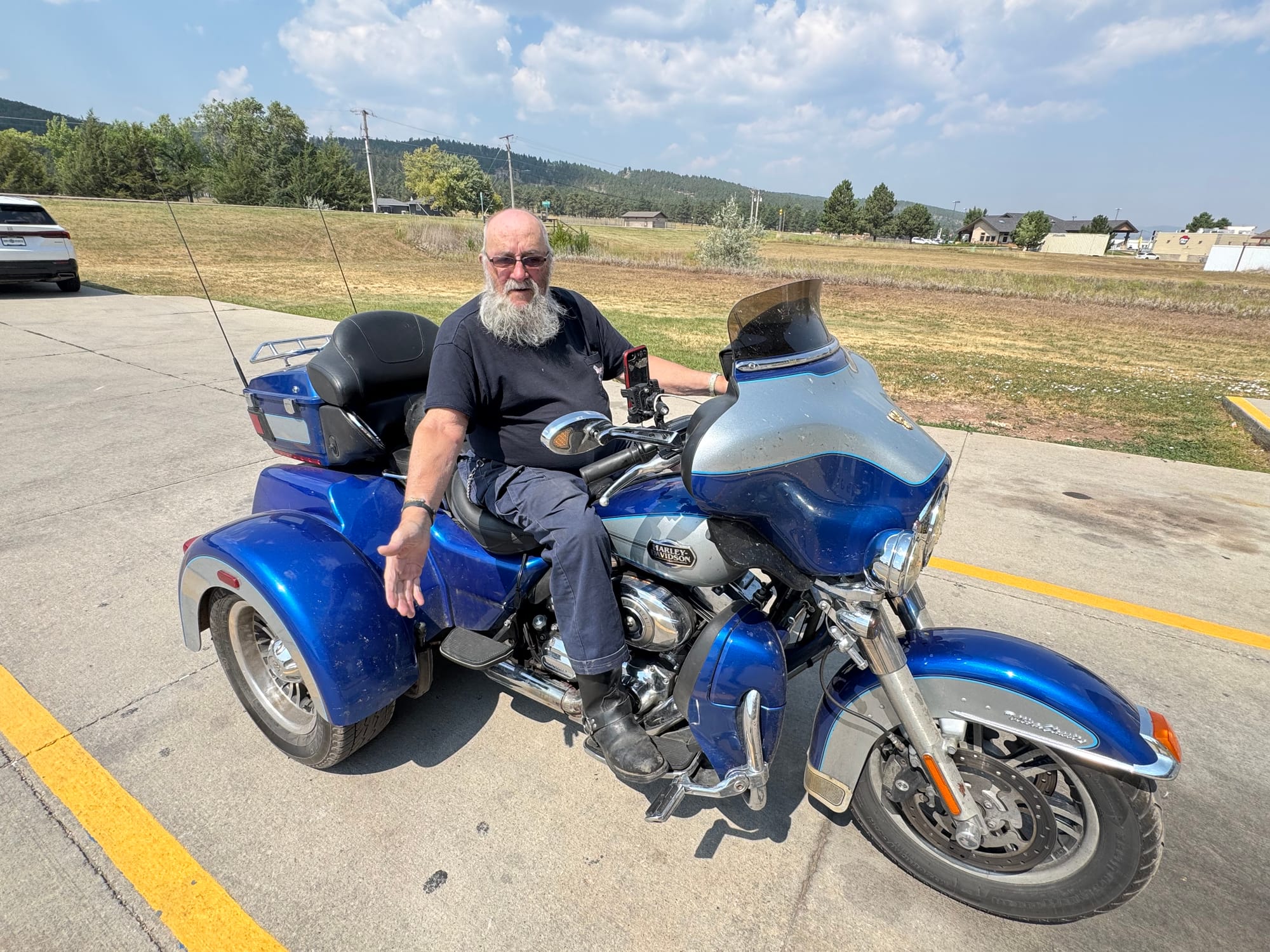
Walker said he has noticed the increasing popularity of three-wheelers at cycle rallies in Sturgis and at other biker events he attends across the U.S.
But he doesn’t care for the look or handling of cycles with two wheels up front. He has taken test rides of cycles with two wheels in front and said they remind him of the difficult maneuverability of a forklift, which he drove at work prior to retirement.
“It’s very user-friendly and easy to drive. But you cannot take corners fast, you just can't.” – Craig Hillman, rider of a 2024 Can-Am Spyder
He said his trike handles well and takes curves with ease, even in the Black Hills where bikers often ride scenic two-lane highways with limited shoulders and numerous hills, curves and switchbacks.
But Walker said slower speeds for three-wheelers are mandatory to be safe in turns. On rough, bumpy surfaces, greater care is also required on his trike because the low weight of the front wheel can cause it to jump around or sometimes lift off the ground, resulting in a brief loss of navigability.
“You’ve got to watch every corner around here,” he said. “And you have to be careful no matter what you ride.”
Medical conditions drive shift to a Spyder
Craig Hillman and his wife, Sue, trailered a three-wheeler for him and a two-wheeler for her from their home in Plymouth, Massachusetts, to attend the 2026 Sturgis rally as a celebration of Craig’s 65th birthday. The couple was shopping on Main Street in Sturgis on Aug. 5 with their cycles parked on the street.
Craig shifted to his 2024 Can-Am Spyder with two wheels in front for greater stability after it became difficult to maneuver his two-wheeled cycle and keep it upright while stopped.
“I’m full of medical hardware,” he said, citing past surgeries in his hips, foot and wrist. “It’s just the ease of riding it and you don’t have to put your feet down to hold it up.”
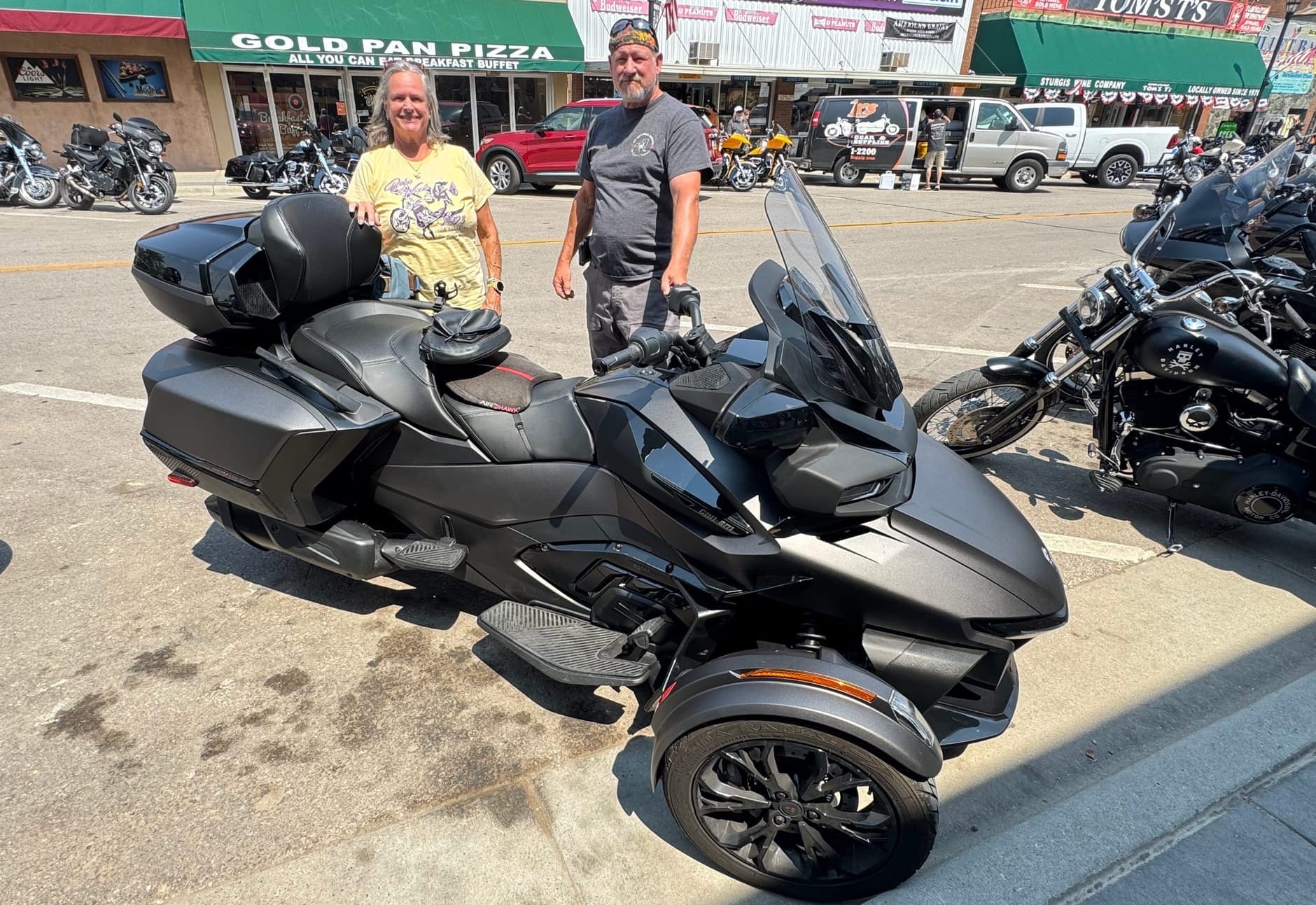
The Hillmans — no relation to the Sioux Falls couple involved in the Aug. 1 fatal wreck — appreciate that their Spyder has a reverse gear, can tow a small trailer and has greater stability and storage space than a traditional two-wheeled cycle.
“I can do my grocery shopping in this,” Sue Hillman said.
The Hillmans said they see more three-wheeled cycles on the roads and have attended state rallies specific to Spyder models. Craig said that while he feels safer on his Spyder, caution is required to maintain control in some situations.
“It’s very user-friendly and easy to drive,” he said. “But you cannot take corners fast, you just can't.”
Join other South Dakotans and support statewide, fact-based news and information.
South Dakota News Watch is an independent nonprofit. Read, subscribe for free and donate at sdnewswatch.org. Contact content director Bart Pfankuch: 605-937-9398/bart.pfankuch@sdnewswatch.org.