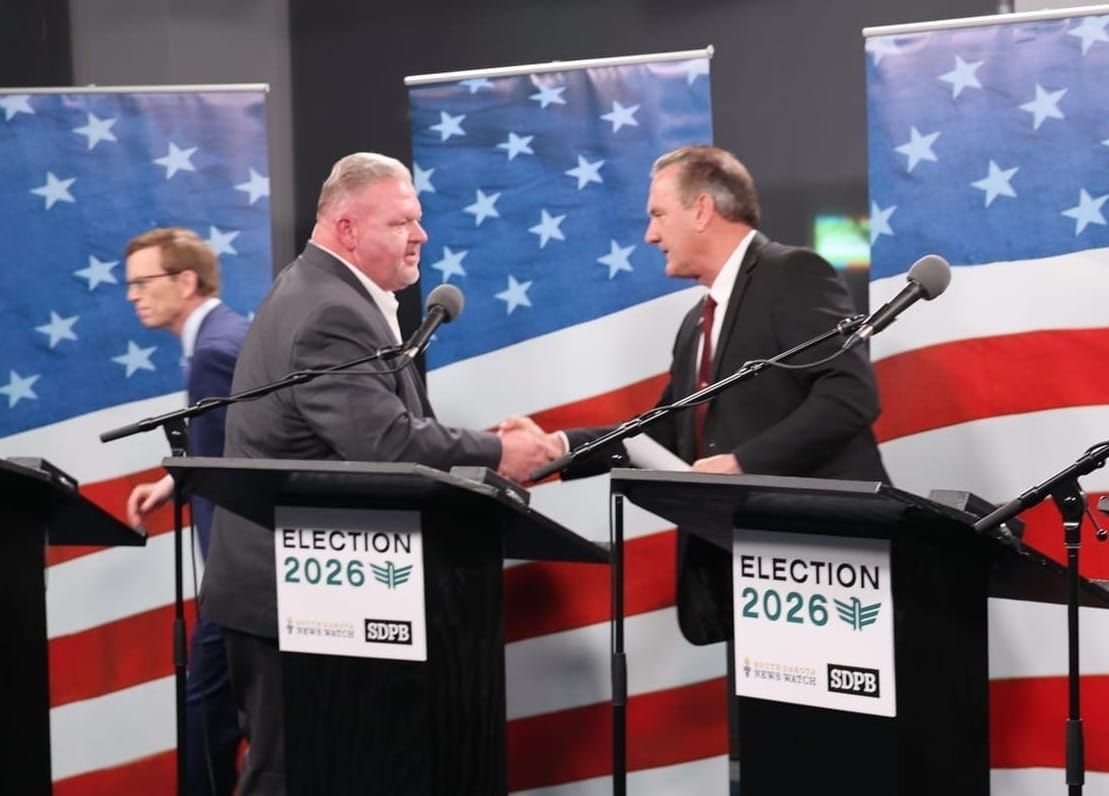
Several factors are leading up to the historic election, including a year of campaigning, fights over property tax and negative advertisements.

South Dakota Republican voters once again head back to the polls next week.
The gubernatorial runoff on July 28 is the result of more than a year of campaigning in a pool of what was once four candidates for the Republican nomination. It comes after the primary election on June 2 declared Gov. Larry Rhoden and Toby Doeden the two candidates moving on.
Here's what to know about the runoff:
It's the first one.
The South Dakota law requiring a runoff if no candidate meets a certain threshold in primary voting has been around for more than 40 years. But this is the first election that it's been required since the law was passed in 1985 by former lawmaker Joe Barnett.
Doeden received 31% of the vote on June 2 and Rhoden received 25%. Other candidates, Congressman Dusty Johnson and Speaker of the South Dakota House Jon Hansen, received 23% and 21%, respectively. No candidate received 35% of the vote, which is required to advance to the general election.
The runoff brings a new level of uncertainty to the race, which saw one of the most crowded candidate fields in recent memory, as well as once-presumed favorite Johnson fall short in the primary.
 Alexander Rifaat
Two very different candidates want the job.
While both candidates are running in the Republican primary, they represent two very different sides of the political spectrum.
Rhoden is the incumbent candidate. He succeeded Gov. Kristi Noem, as her lieutenant governor, after she left office to join the Department of Homeland Security in January 2025. Rhoden is a rancher from Union Center and has spent 25 years in Pierre as a state representative, state senator and in the executive branch.
Doeden, by contrast, is a businessman from Aberdeen who calls himself an "outsider" and relies on his lack of political experience as an asset. He has largely decried the "establishment" in Pierre and called for new voices in state government.
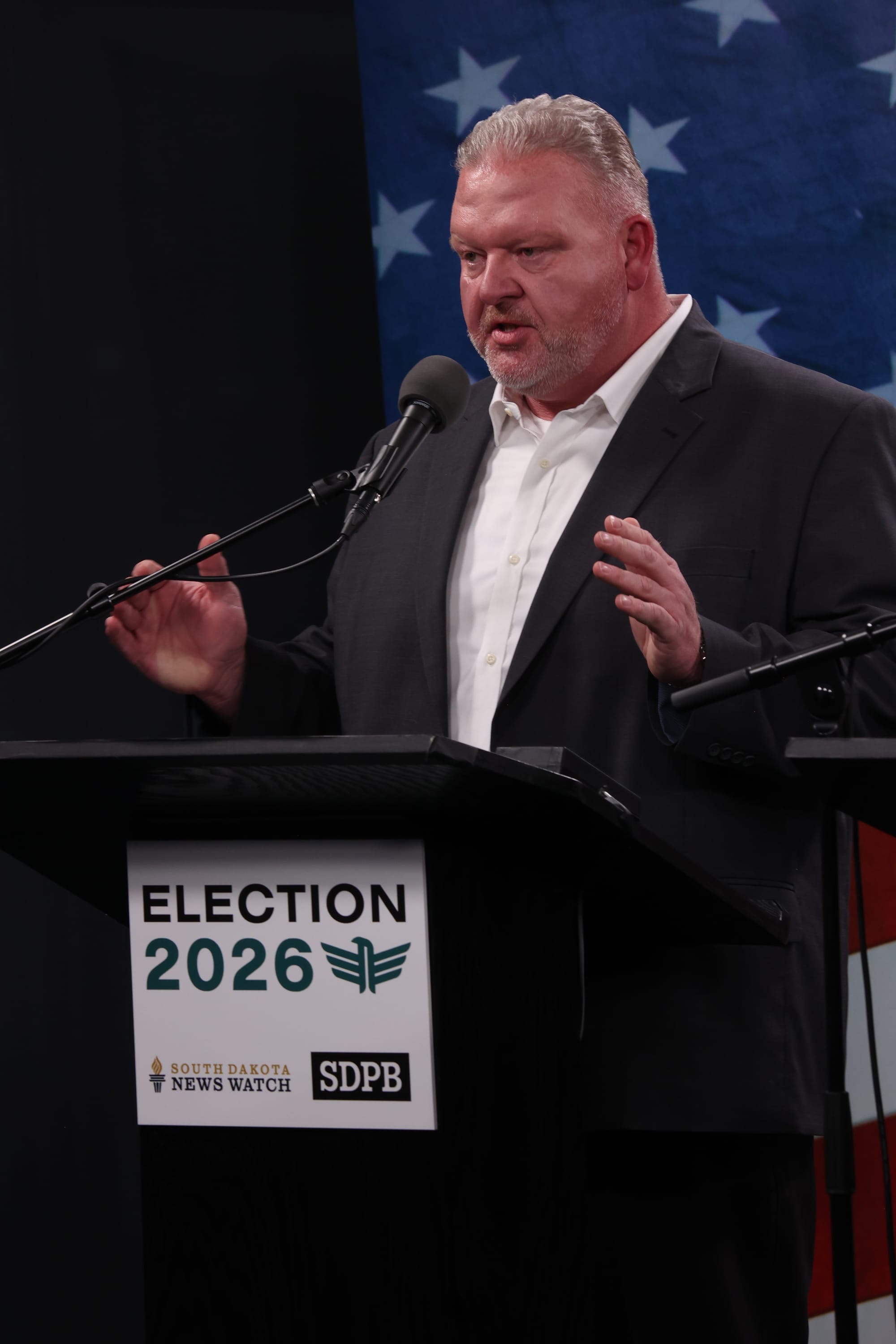
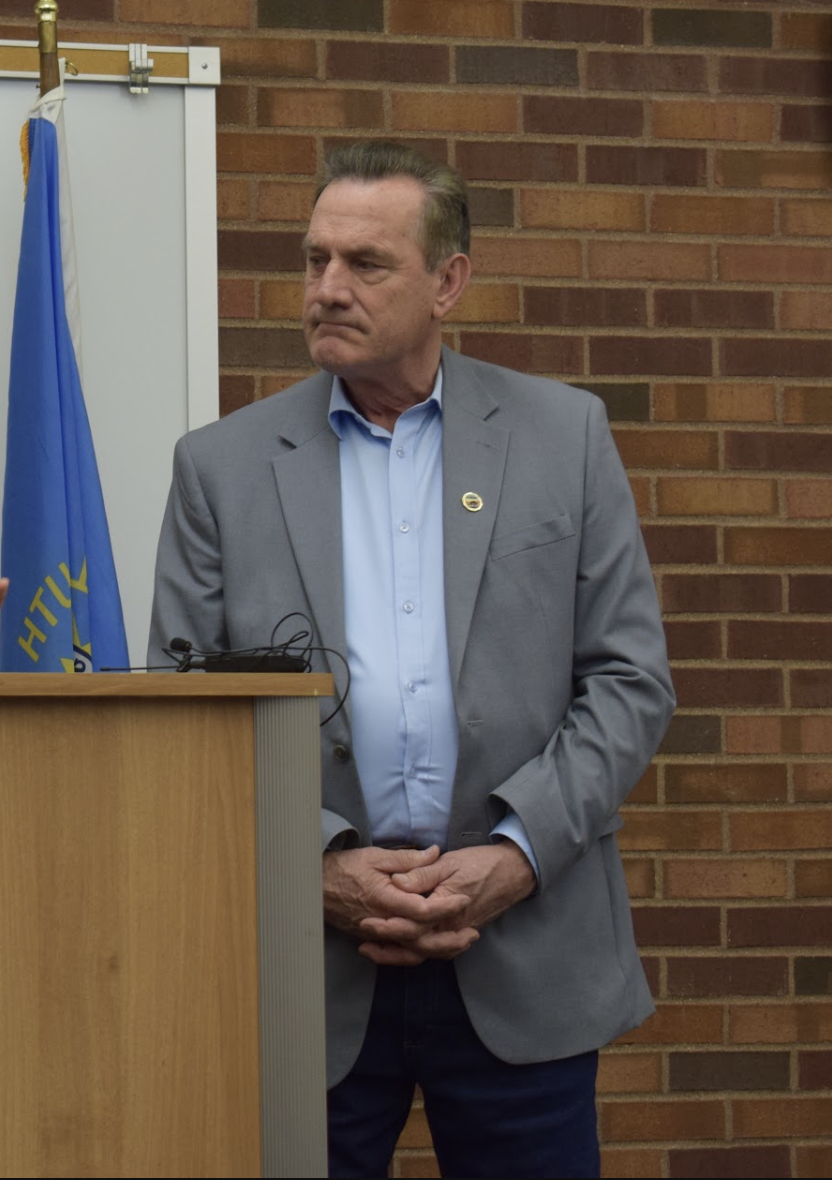
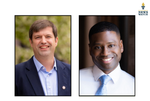
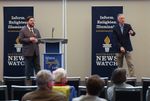
Toby Doeden speaking at a gubernatorial debate in Sioux Falls, S.D. on April 13, 2026, (left) and Gov. Larry Rhoden at a press conference in Sioux Falls, S.D. on April 2, 2026 (right). (Photos: Jon Beringer/South Dakota News Watch and Molly Wetsch/South Dakota News Watch)
The runoff pulls from the largest Republican voter base in state history.
Voter registration for South Dakota Republicans is at an all-time high. Nearly 10,000 more voters are able to cast votes for governor on July 28 than were able to at the beginning of this year.
Doeden told News Watch on Friday that he believes some of the growth in Republican voters is part of an effort from non-Republicans to sway the primary.
"It's pretty natural in a state that has as many independents as we do, that you see them switching regularly," Doeden said. "Some of those are organic, that would happen in any cycle. But there's certainly been an uptick, and it would certainly seem to me that the Democrats are trying to steal a Republican election because one of the candidates is far closer to their ideology and political beliefs than I am."
Rhoden's campaign did not respond to multiple requests for comment.
 Molly Wetsch
It's (almost) all about property taxes.
Property taxes have been a defining feature of both candidates' campaigns: One with promises to eliminate them and one who hopes that his prior reform efforts will speak for themself.
Doeden's well-publicized plan to eliminate property taxes has been the subject of scrutiny from some of his opposition. He has said frequently on the campaign trail that he plans to eliminate property taxes entirely, and hinged much of his campaign on the plan.
On July 17, a spokesperson from Doeden's campaign told South Dakota Searchlight that plan "has never applied to any classes of property beyond owner-occupied homes." But Doeden said to News Watch that it was still his goal to eliminate all property taxes, though he said he plans to start with owner-occupied property.
"I think we can get rid of all owner-occupied property taxes within three or four years. I genuinely do," Doeden said. "And if we keep and maintain strong conservative leadership in the governor's office and the Legislature, I think another four or eight years, we can get rid of commercial and ranch and ag land property tax and replace it with taxes that are more fair and equitable, like sales tax. Not raising the sales tax, but growing the economy and generating more sales tax revenue."
Get free, fact-based South Dakota news and information in a weekday email. No spam. Cancel any time.
Rhoden has largely touted his previous work in property taxes as a reflection of how he will operate in the future. Most of the bills Rhoden has brought to the table, as a state representative or as governor, have focused on tax reform. Senate bills 96 and 245 are the bills passed in this year's Legislature that Rhoden said will reduce owner-occupied property taxes by 34%.
"I think for the time being, we're going to see how that plays out, see how many counties take advantage of the half-cent side of it," Rhoden told SDPB's Jackie Hendry in an interview aired last week. "That coupled with the fact that, like we said before, things are starting to get back on track, I think we're in pretty good shape."
It's gone negative.
South Dakotans have likely gotten used to seeing political ads on their screens related to the governor's race. They also may have noticed that in the past few weeks, those ads have tilted toward attacks of the opposing candidate.
Social media ads paid for by Doeden's campaign have called Rhoden "Lyin' Larry" and claim that he has raised taxes 400 times. On his own social media, Doeden has called Rhoden "Larry RhoBiden," in reference to former President Joe Biden.
Rhoden's campaign launched a website last week that casts doubt on Doeden's property tax strategy and calls Doeden "reckless" and "too risky for South Dakota." Other ads have called Doeden out for saying he "might have voted for Barack Obama" in prior elections and for not voting in the 2016 and 2020 primaries.

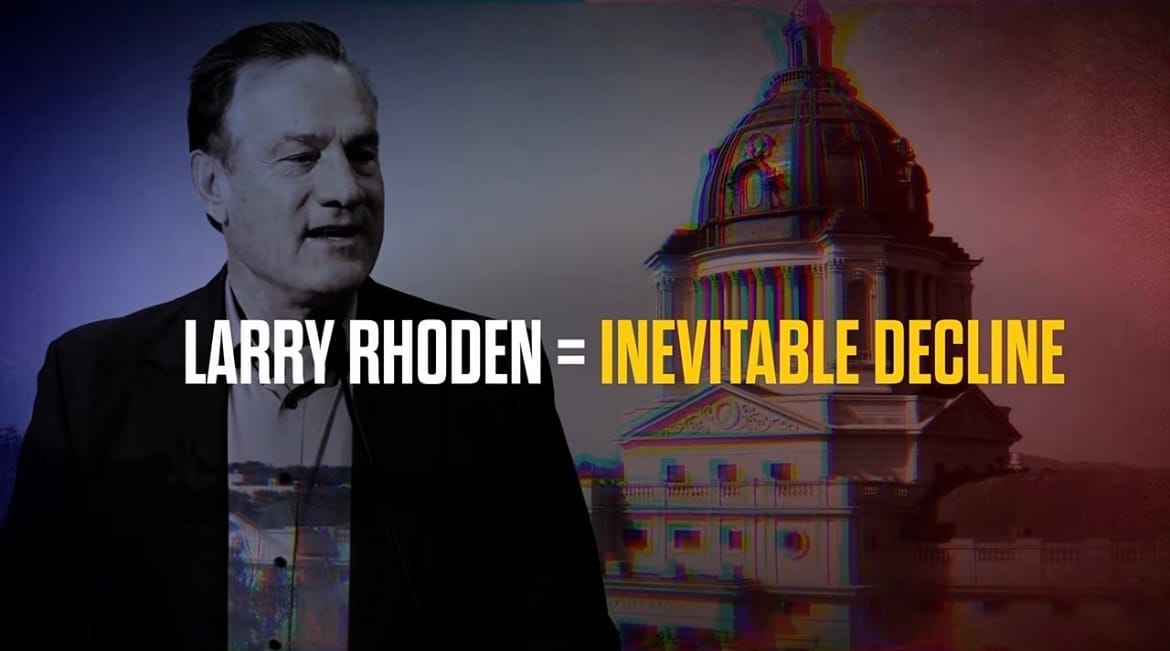
Screenshots from ads currently running from Gov. Larry Rhoden (left) and Toby Doeden's (right) campaigns for governor.
Doeden told News Watch that the ads his campaign is running are positive and that negative ads against Rhoden are from unaffiliated groups. He maintained that he is running a positive campaign – something he said he believes was the reason for his success in the primary – but that he thinks ads mentioning Rhoden's record are not attack ads.
"If people want to call it attacking that's fine, but it's simply just pointing out the record. Every ad that Toby Doeden has run on this campaign, including since June 3rd, has been 100% positive. I have run the most positive campaign in the history (of the state)," Doeden said. "Now I know there are some people and some organizations that support me that are perhaps attacking Larry. I can't control that."
We won't know much about how it was funded until it's over.
A major point of discussion from the beginning of the race was how candidates were funding their campaigns.
Doeden notably donated $4 million of his own money to his campaign. Rhoden has reported raising just over $1 million and spending just under $1 million, much of which has come from state and federal political action committees.
But because campaign finance disclosure requirements are not tailored to runoff elections, the public won't know much about the past eight weeks until Oct. 19 – the next filing deadline. That makes information about who's funding Rhoden and Doeden's campaigns, and how they're spending that money, somewhat obscure.
Campaign finance disclosures can illuminate which candidates were raising and spending the most money and shed light on what groups may be backing a candidate's campaign.
 Molly Wetsch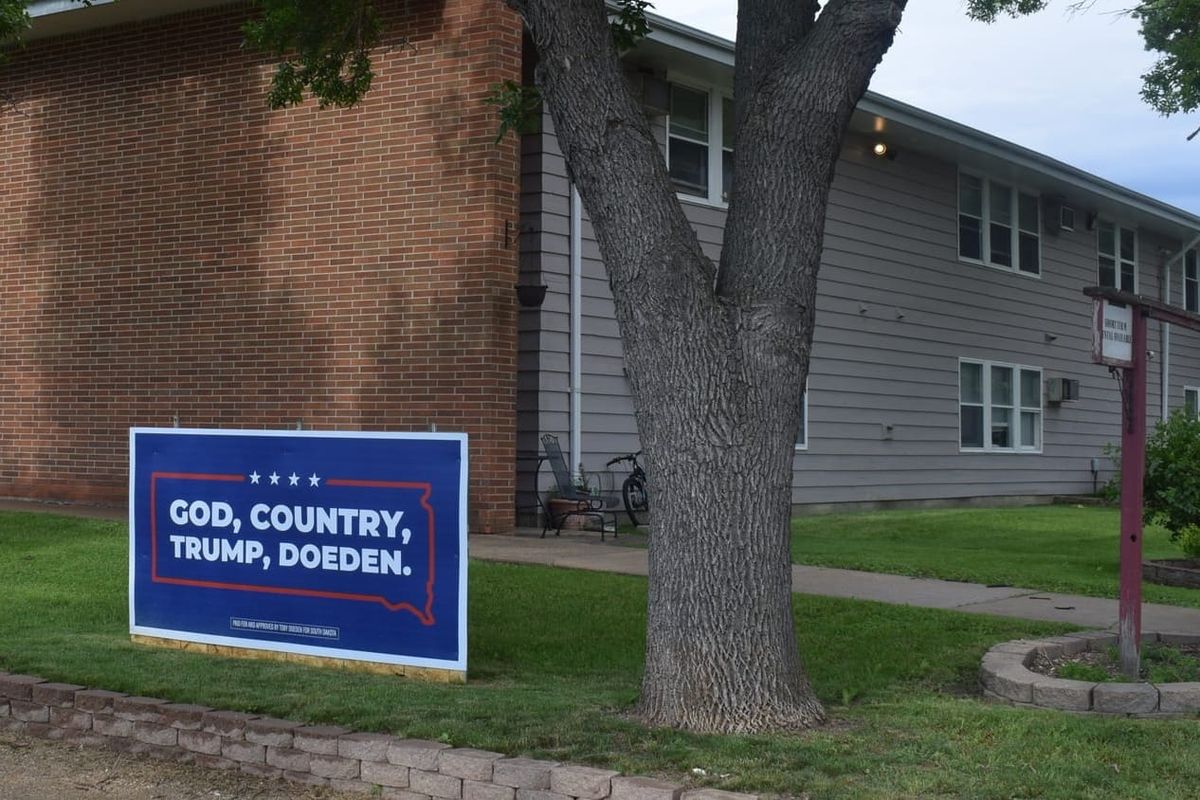
 Molly Wetsch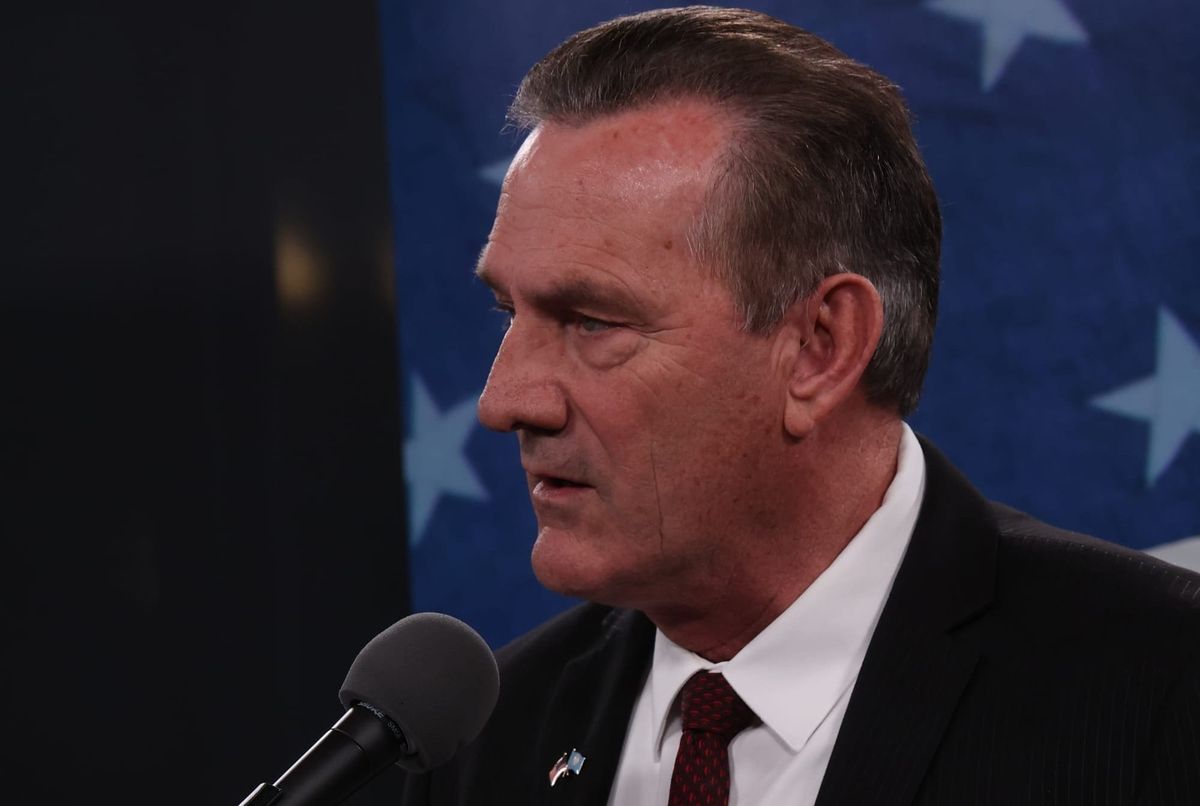
It doesn't end here.
While the victorious candidate will certainly have much to celebrate after the runoff is completed, the campaign will not end on July 28. The winning candidate will face Democrat Dan Ahlers in November for the general election.
A Democratic candidate has not been elected to the office of governor in more than 50 years. Gov. Richard Kneip was elected in 1971 and served until 1978.
The winning candidate, though they may anticipate election to office in November, will have to find a way to unite Republicans that have been divided over their choice of candidate for nearly the entirety of the campaign.
 Molly Wetsch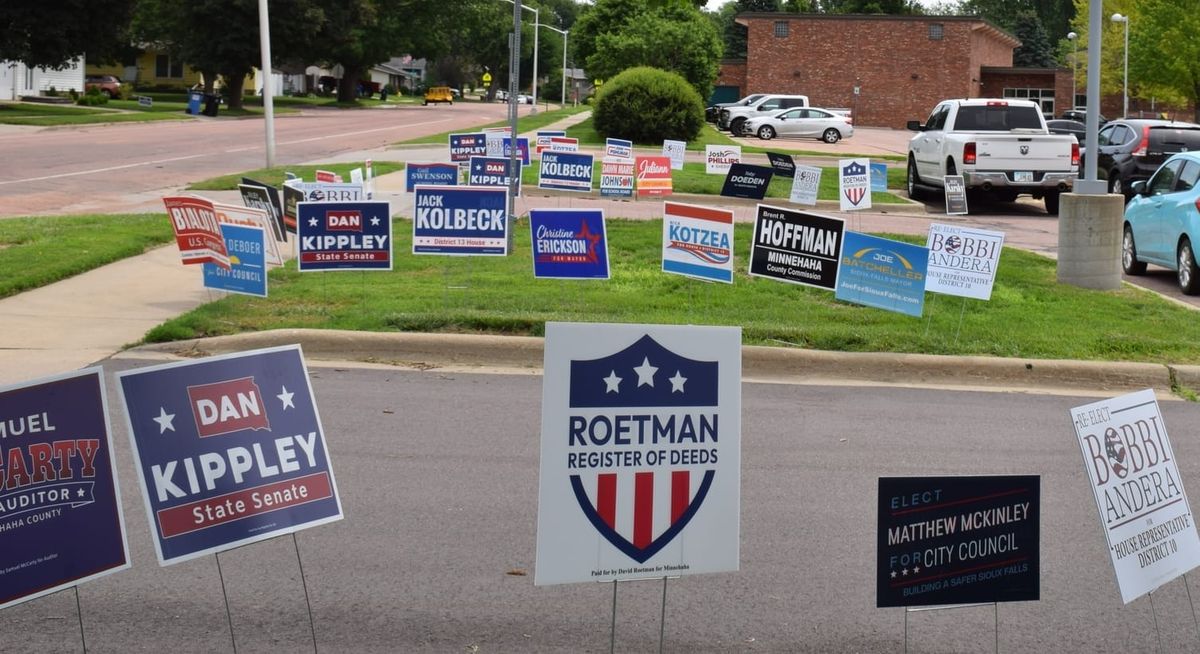
Doeden said that he is not concerned about rallying the party behind him if he advances beyond the primary, comparing himself to President Donald Trump, as he has frequently during his campaign.
"Ninety-five percent of the mudslinging has been from the political class towards the outsider. Once the outsider wins, that'll go away and they'll unite. The same thing happened to Donald Trump in 2016," Doeden said.
Rhoden said during the SDPB conversation that politics in South Dakota had undergone "choppy waters."
"We've come a long way just in the last 17 months of getting things back on track, and I think that will continue for the next period of time," Rhoden said. "I've always said we do a lot of things right in South Dakota, and our political process is one of them. Sometimes we'll get a little off track, but the ship always has a way of righting itself, and we're in the process right now of the ship righting itself in South Dakota, and I want to continue that."
A recent Emerson poll from KELO-TV showed Rhoden leading with 62% to Doeden's 32% of 500 likely voters polled. Rhoden said to KELO that the poll was "encouraging," while Doeden slammed it as "absurd" and said he was "embarrassed" that he was discussing it.
What else to know for July 28
Do I have to be a Republican to vote?
Yes. The runoff is part of a closed primary, meaning only Republicans can vote. The deadline to register was June 13.
Did I have to vote in the primary to vote in the runoff?
No. As long as you are a registered Republican, whether or not you voted in prior elections does not matter.
Will my polling place be the same?
Not necessarily. Because the primary election on June 2 included municipal and other local elections for several areas, your polling place may have changed. You can check where to vote on the Secretary of State's website.
Both candidates discussed the issues and the campaign ahead of the runoff.
SDPB's Jackie Hendry sat down with Doeden and Rhoden for candidate conversations. It aired last week and is available at the link below.
 Molly Wetsch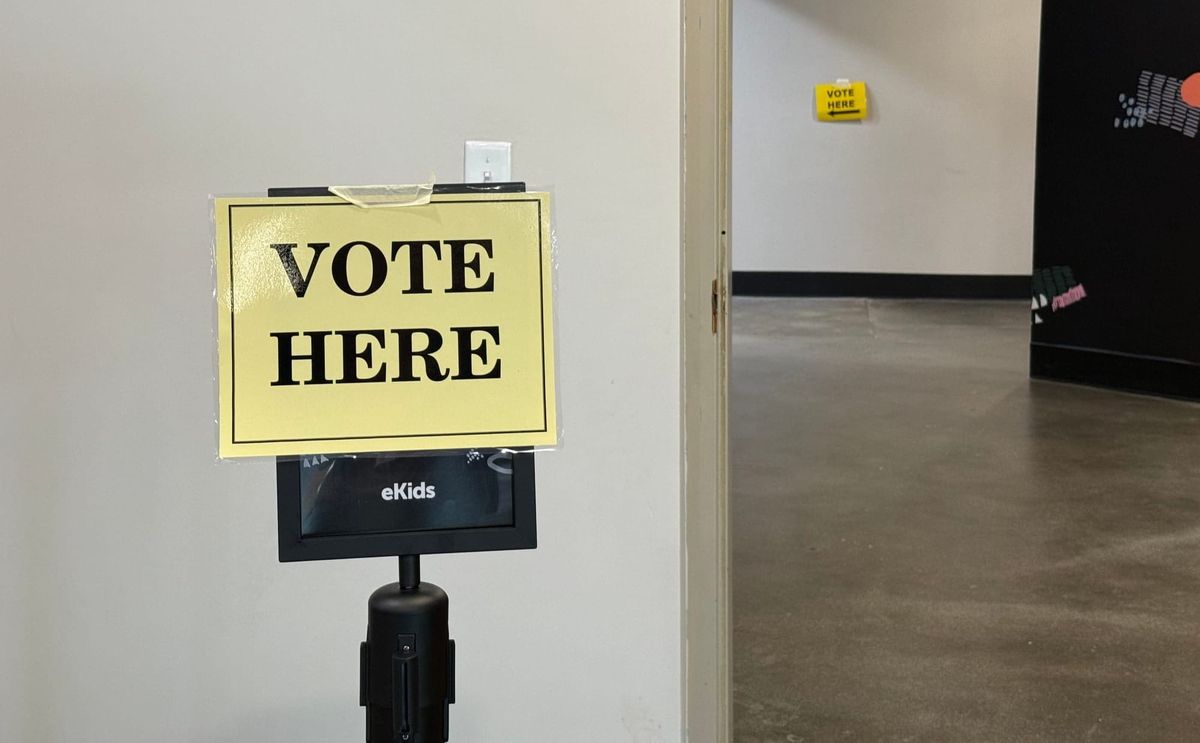
South Dakota News Watch is an independent nonprofit. Read, subscribe for free and donate at sdnewswatch.org. Contact reporter/Report for America corps member Molly Wetsch: 605-531-7382/molly.wetsch@sdnewswatch.org.