How historic and current voter registration numbers illustrate the unprecedented nature of the July 28 gubernatorial runoff.

South Dakota's first runoff election for governor has driven a record number of voters to register as Republican, according to state data from after Monday's registration deadline.
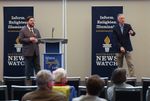
Aberdeen businessman Toby Doeden and Gov. Larry Rhoden meet in the July 28 runoff because none of the four candidates in the June 2 GOP primary drew 35% of the vote. Only registered Republicans can vote in the contest, which will decide who meets Democrat Dan Ahlers in the Nov. 3 general election.
There are now more registered Republicans in South Dakota than ever before, with about 10,000 joining the party in the past few months and roughly 2,000 of those in the past two weeks.
That brings the party's total registration in the state to 328,829, which sits in sharp contrast to the South Dakota Democratic Party, which lost about 6,000 party members since the year began and now sits at 134,135.
 Molly Wetsch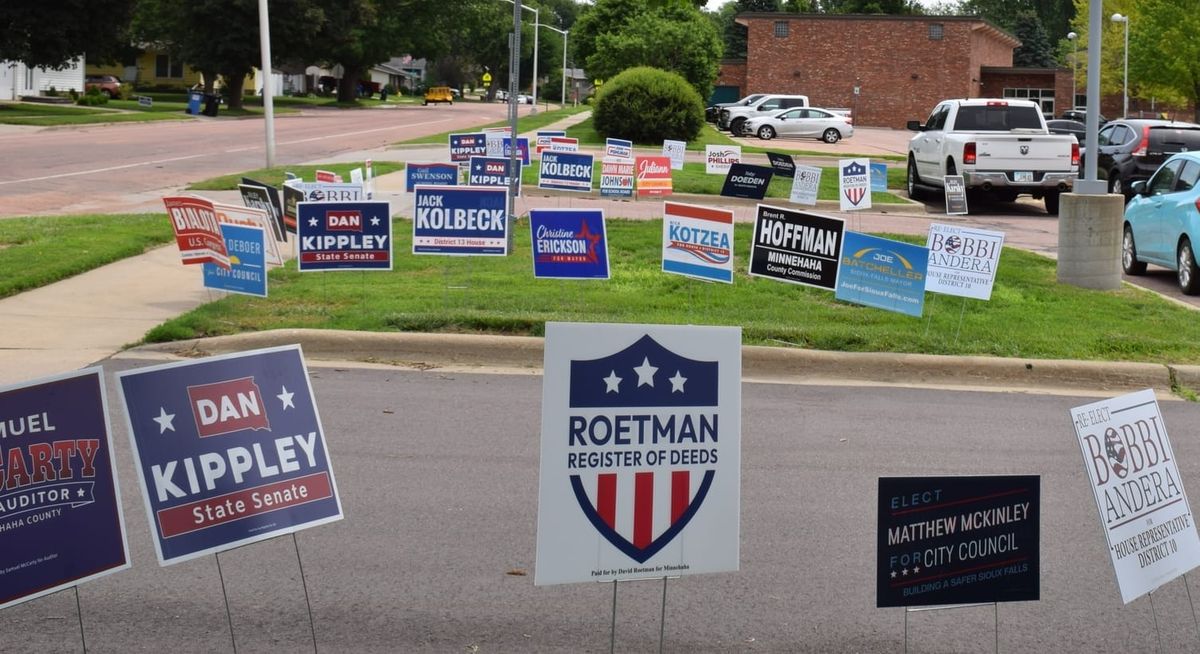
The rest of the voters in South Dakota are not party affiliated, Independents or Libertarians and now claim a larger chunk of voters than Democrats at 158,247 total voters between those three categories.
It's illustrative of how South Dakota's political landscape has drastically changed since it once regularly elected Democrats to federal and statewide office. Those times may well be in the distant past of many voters' minds now, as Republicans have claimed South Dakotan seats in Congress for the past 15 years and the governor's office for the past 40.
Representatives from both state parties did not respond to multiple requests for comment.
Closed primaries, strong control of state make Republican party 'the only game in town'
Jon Schaff, a professor of political science at Northern State University in Aberdeen, told News Watch that the gubernatorial primary is certainly one of the most likely factors behind the increased number of registrants.
The Republican party in South Dakota, unlike its counterpart, hosts closed primaries, meaning only those that are registered as Republicans can vote in the party's elections and runoffs.
"Specifically in our bigger counties, like Minnehaha and Pennington, there has been a concerted effort by people who are basically Democrats to register people as Republicans, precisely because they know that the real gain is in the Republican primary," Schaff said.
"That has been due to some local elections, but also I know the governor's election this year has been an impetus behind that, and what is, essentially, as I understand it, has been an effort to stop Toby Doeden."
That effort did not work in the primary: Doeden led the June 2 primary with 31% of the Republican vote. Rhoden held the second-highest percentage of the race at 25%.
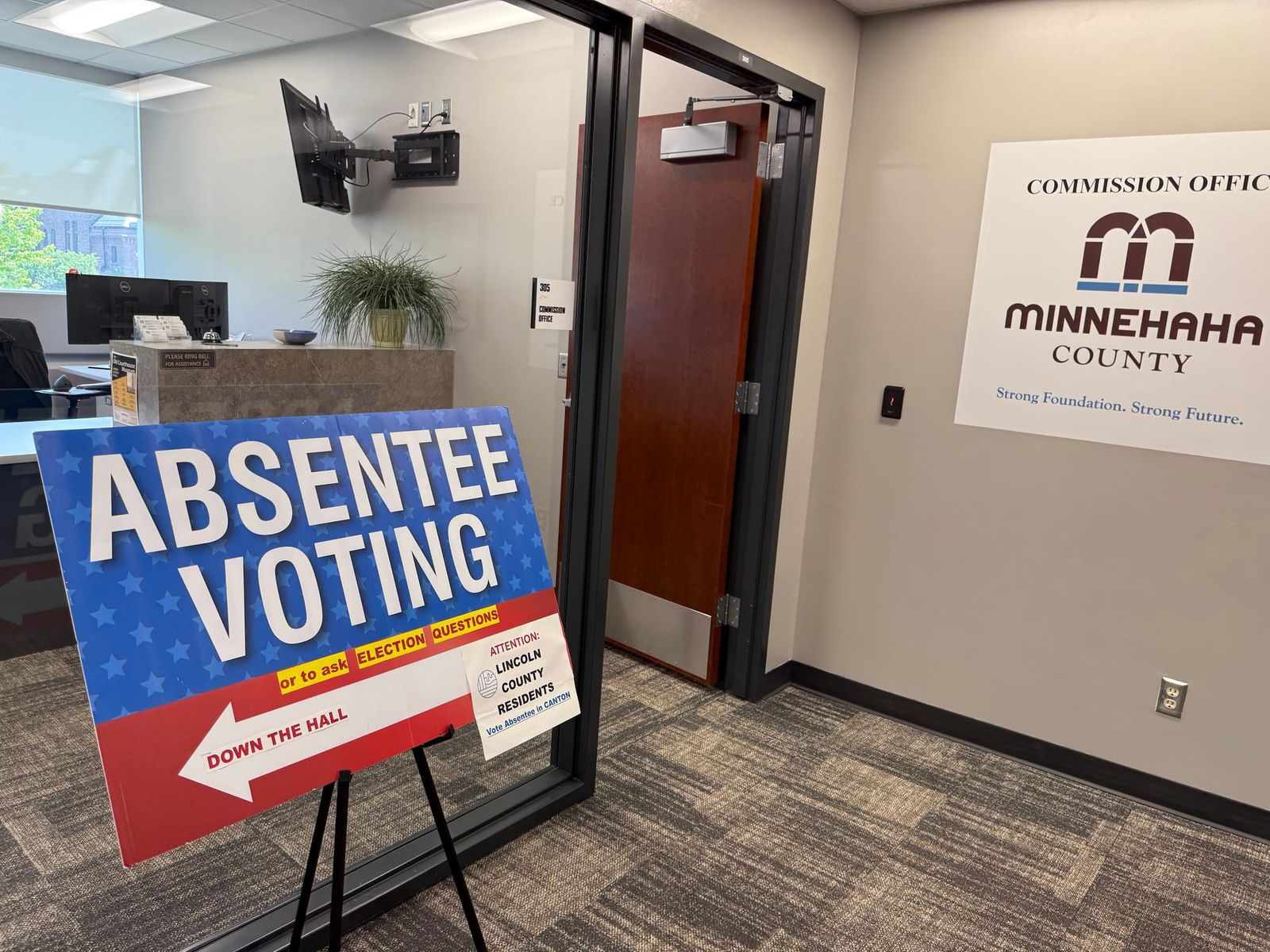
But since that primary, nearly 7,000 new Republican voters have registered, many of them right up to the July 13 deadline to register. Jenna Baker, an election supervisor in Brookings County, told News Watch that Monday was a busy day for the finance department, which houses the auditor's office.
"I can't give you an exact number of how many we had, but I would say we probably had close to between that 40 to 50 mark of getting registered, changing parties, that sort of thing. (Monday) alone, we had 65 people absentee vote, so that was our busiest day yesterday," Baker said. "And I do think it probably had something to do with that deadline, that more people were coming into the office to switch. We saw a lot of that, people switching parties and then wanting to vote."
Get free, fact-based South Dakota news and information in a weekday email. No spam. Cancel any time.
Schaff said that it's hard to know what the intentions of those voters are, even if conversations about switching parties usually come from non-Republicans looking to participate in contested primaries.
"When you see Republican numbers climbing, it's always a question of, 'Who are these people? Are there people with actual convictions switching parties or are there people who know, or at least sense, that the only game in town is the Republican Party?'"
And when looking at historical party registration numbers, it has certainly become clear that that may be the case. Voter registration rolls from the past 40 years bring more context to how South Dakota's political landscape has drastically changed since the 20th century.
There was a time where Democrats and Republicans could claim a nearly even split of the voter base in South Dakota – hovering around 43% Democrat and 48% Republican in 1988. Now, Democrats make up just 21.7% of the total electorate, with Republicans at 52.5%.
The number of registered Independents declined by about 1,000 since the beginning of the month, and so did the number of registered Democrats. While there is no way to confirm whether those voters explicitly switched to the Republican Party, the decrease in Independent and Democrat voters is nearly equal to the increase in Republicans from the same time period.
When it comes to the runoff, it remains to be seen whether new Republican voters will cast their vote for Rhoden, who has served as a state legislator, lieutenant governor and governor for 25 years, or for self-described outsider Doeden, a businessman who's spent over $4 million of his own money on his campaign.
Go deeper
Learn more about the July 28 gubernatorial election in News Watch's profiles of the two Republican candidates:
 Molly Wetsch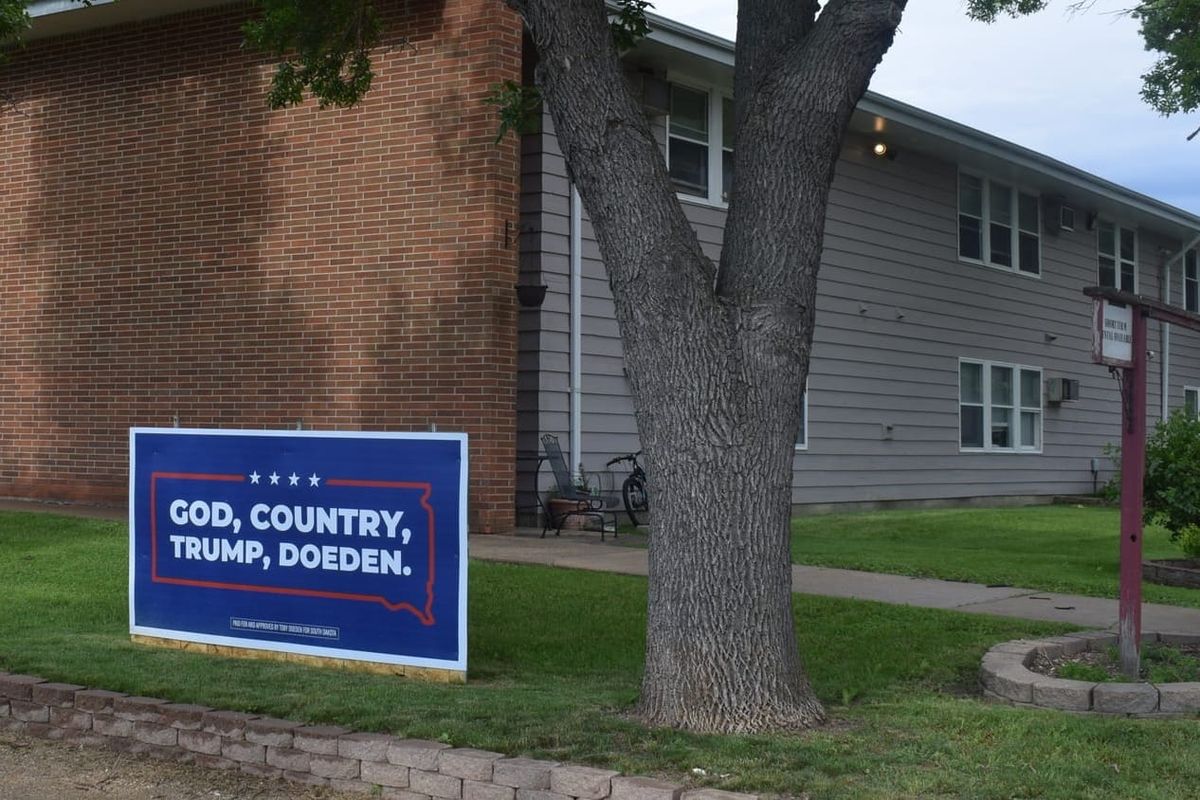
 Molly Wetsch
South Dakota News Watch is an independent nonprofit. Read, subscribe for free and donate at sdnewswatch.org. Contact reporter/Report for America corps member Molly Wetsch: 605-531-7382/molly.wetsch@sdnewswatch.org.