
PIERRE, S.D. – As much as lawmakers debated whether South Dakota should build a new men's prison, they generally agreed that rehabilitation must be a vital component to ease the state's overflowing prisons and drug problems.
After passage of a bill authorizing a $650 million prison to replace the current state penitentiary in Sioux Falls, Gov. Larry Rhoden set up the Correctional Rehabilitation Task Force to look for programs and best practices that keep people from ending up back behind bars. The 30-member panel began meeting in October.
As the task force explores options for improving and expanding programs to reduce recidivism, one program shows considerable success. Of those who participate in the South Dakota Unified Judicial System’s (UJS) treatment courts program, just 27% commit another felony offense within five years of their involvement with the program. That includes those who don’t graduate from it.
For those who went into South Dakota’s prisons in 2020, 43% returned to prison within three years and 28% were for a new crime. The rest were technical parole violations, according to the Department of Corrections.

South Dakota has 17 treatment courts across the state. The program targets people who are addicts, have a high risk of reoffending and have multiple convictions. People enter the program when they’re sentenced to prison. If the courts determine the person is right for treatment court, a judge will suspend that sentence on the condition the felon participates in the program.
The participants receive 200-300 hours of group and individual counseling. They’re required to have community supervision, weekly court sessions and drug testing throughout their time in the program, which is 18-24 months. The annual cost of treatment courts in South Dakota is $8,000 per person. That’s compared to $33,656 for incarceration.
Treatment court graduate: ‘A new me’
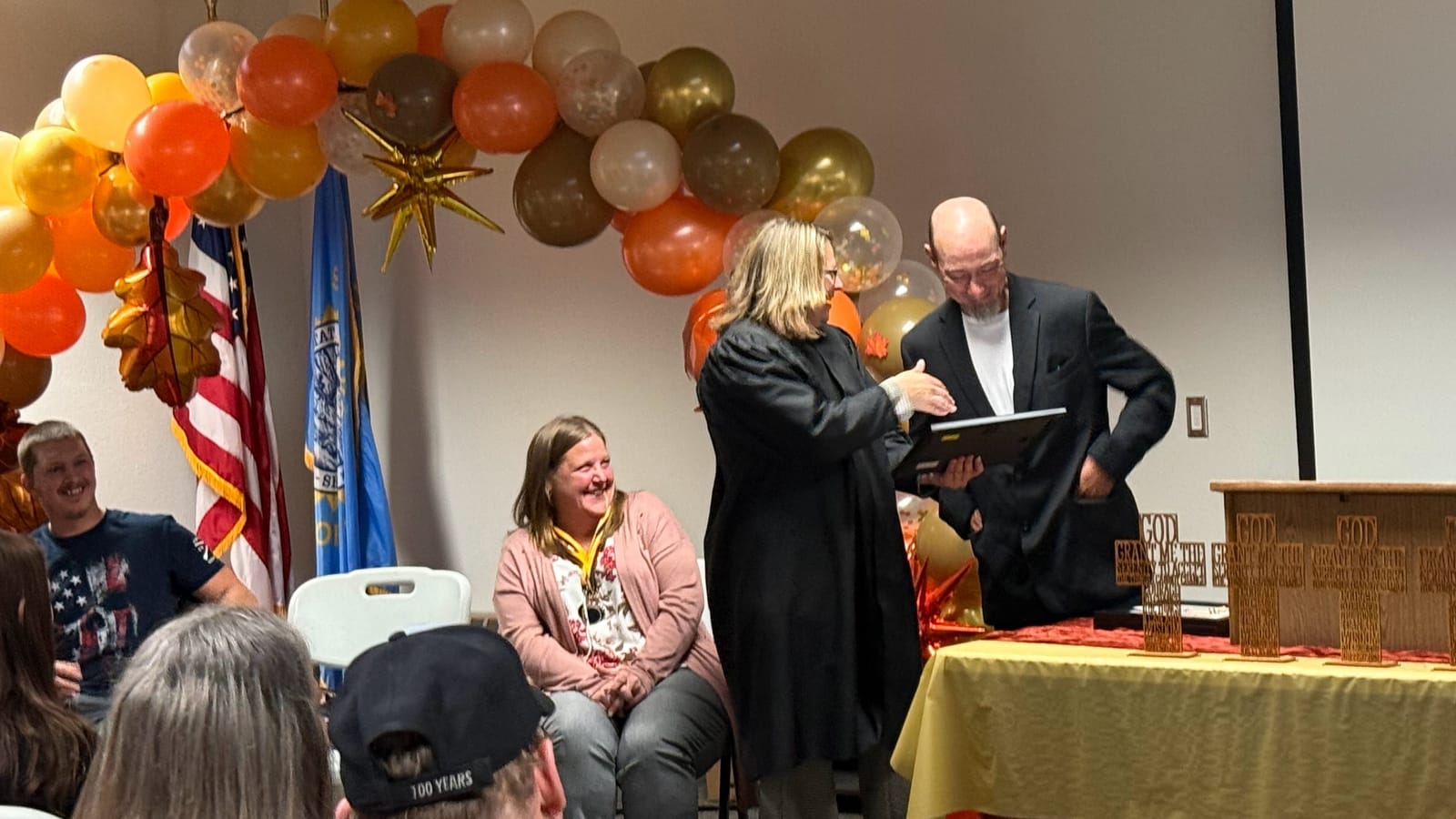
The UJS regularly holds graduation ceremonies across the state to recognize those who successfully complete the requirements of the program.
In a ceremony in Pierre in November, four graduates convicted on drug and DUI offenses were given plaques and a trophy of a cross made out of letters spelling out the first lines of the “serenity prayer.”
Among the graduates was Jennifer — only first names are used — who stacked up multiple DUIs in her lifetime. When her last DUI landed her in prison once again, she was left alone in her cell at one point. She wrapped a bedsheet around her neck, intending to take her own life.
“I was drinking to kill myself. I wanted to stop. I was over it,” she told a few dozen people in the audience — friends and family members who came to support the graduates.
“Everything I’ve done has made a new me.”
– Dylan, recent treatment court graduate
Jennifer did not end her life and instead chose to pursue an aggressive treatment program. She even relocated temporarily to the Pierre area where she could access the treatment services she needed.
“Now that's a commitment to your recovery. That's amazing,” said South Dakota Supreme Court Justice Janine Kern, who spoke at the ceremony.
The others had their own stories of climbing out of their addictions to find recovery in the treatment court program. Mikey had been to prison six times, and every time he got out, he went back to using meth only to end up back in prison.
 Kevin Killough
“I was in a deep, dark place. I didn’t know if I was ever going to come out of that,” he said.
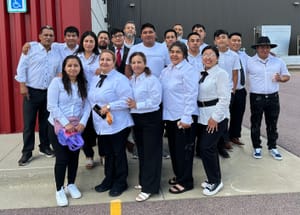
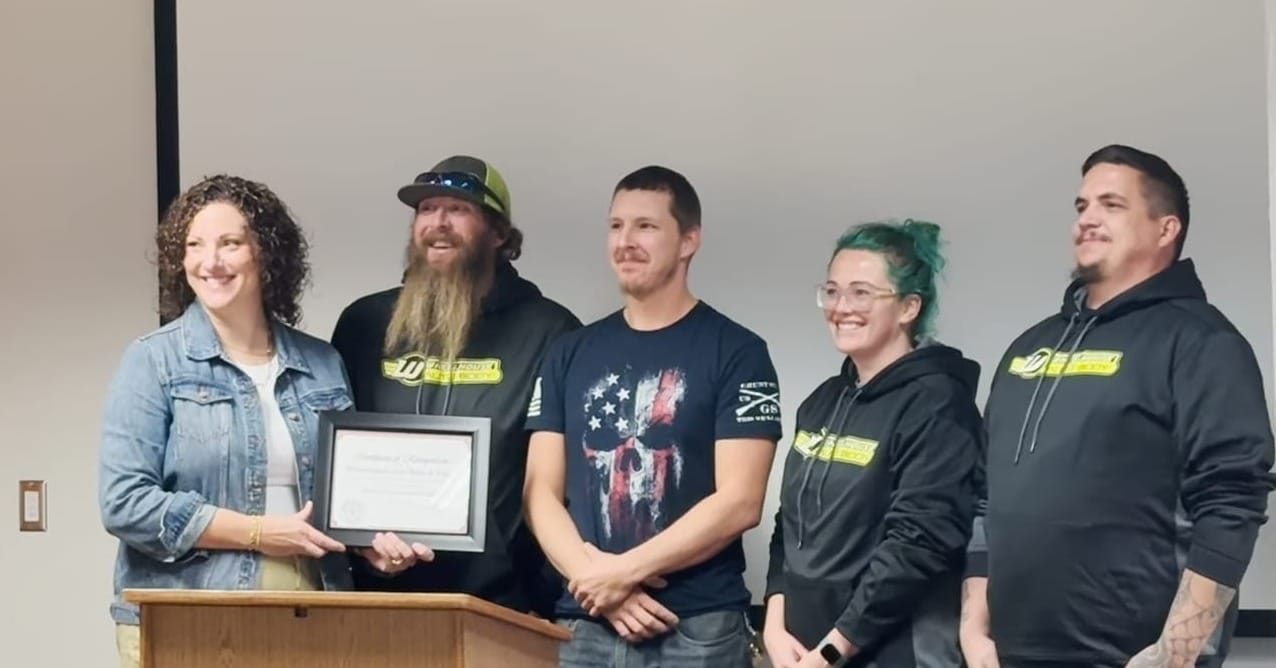
Another graduate, Dylan, received a lot of support from his boss at Wheelhouse Auto Body and Paint, and his co-workers came to the ceremony that day to congratulate him.
“Everything I’ve done has made a new me,” Dylan said.
While in the program, Zachary purchased his own food truck called Truck-It Burritos and Street Food, which he often parks near the Capitol in Pierre around lunchtime.
As each of the graduates received their awards, they were met with applause and cheers.
“You chose not to go to the penitentiary. And as one of the graduates told me today, that's the easy way out. But you didn't choose that. You chose to fight for yourself and for your family by tackling your addictions and learning new ways to cope with life's challenges,” Justice Kern said.
Graduates of program reoffend at lower rates
The UJS had previously tracked the recidivism rates of graduates of the program, but it didn’t have data on what rates were for the nearly 3,000 people who have ever participated in it, which includes those who didn’t complete the program.
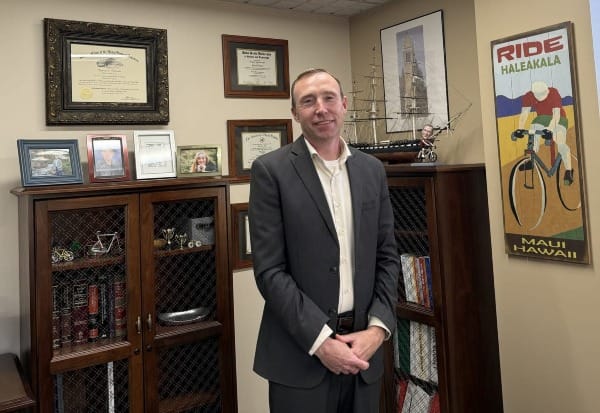
Greg Sattizahn, state court administrator, said that a legislative study in 2019 had suggested that just being in the program produced long-term results. The UJS wanted to test that theory by measuring the recidivism rate of all participants.
“It really broadens who we’re looking at,” Sattizahn said.
He said they were surprised to find that nearly three-fourths of the participants didn’t get a felony conviction within five years of being in the program. Besides being cheaper than incarceration, the lower recidivism rates produce other savings to taxpayers.
“Those we don’t see again are the success stories. They’re employed, paying taxes, living in stable homes, reunited with their families and contributing positively to their communities. The transformation in the lives of these individuals is truly remarkable,” Supreme Court Chief Justice Steven Jensen said in a statement announcing the recidivism-rate results.
Evolving corrections philosophy
With crack cocaine spreading epidemically across the country in the 1980s, drug addiction came to the forefront of Americans' concerns. The initial approach to the problem was to incarcerate as many drug offenders as could be caught.
State and federal lawmakers increased penalties for possessing and selling drugs, and mandatory minimum sentences were set, which required judges to impose lengthy sentences.
But drugs continued to be a serious problem. Between 2003 and 2022, the number of overdose deaths per capita quadrupled from 8.9 to 32.6 per 100,000 population, according to the Centers for Disease Control, though the number dipped in 2023.
Drug courts have been around for more than 30 years. As it became apparent that locking people in prison wasn’t going to solve addictions, they’ve been utilized more often as a tool to address addiction. South Dakota implemented them in 2008.
More than 3,400 drug courts operate in the United States today, and 150,000 people are served by them each year, according to the National Association of Drug Court Professionals.
As of June 30, 2,970 individuals had participated in the South Dakota treatment court system, and close to half had completed their program.
Treatment programs tailored to each participant
There are different types of treatment courts in South Dakota.
Some courts target those with DUIs and others are for those with drug offenses. Some courts handle both. Others are for those with mental health needs, and others are specifically for military veterans.
The needs of the participants of the programs go beyond their addictions, Sattizahn explained. Some have problems with mental illnesses, employment, housing and family relationships.
 Kevin Killough
A collaborative team involving judges, counselors and treatment providers develops personalized, evidence-based plans to address whatever needs the participants have. And while the participants work through the program, probation officers provide consistent community supervision.
Sattizahn described it as a hub.
The probation officer becomes a resource to connect the person with other resources, which can be things like getting clothes for a job interview, getting transportation, building relationships with their families — which are sometimes fragmented as a result of the addiction — or other basic life skills needs. This is all on top of drug treatment, counseling and supervision.
“It's really very holistic,” Sattizahn said.
'Eventually the drugs kind of got to me'
Derek Moe is another graduate of the South Dakota treatment court system. He started using marijuana and alcohol when he was 11 years old. Eventually he got into harder drugs, like MDMA, also known as ecstasy, and it wasn’t long before he was using cocaine and meth.
“All during this time, I was having kids and going to college. And I somehow managed to start a career as an engineer,” he said.
He eventually lost his high-paying engineering job, and it was the first time in his adult life he was unemployed. He was 36.
It happened during the COVID pandemic. Being in denial about his addiction, he blamed the pandemic for his job loss. His boss gave him a severance package, but he didn’t say he was letting Moe go over his drug use.
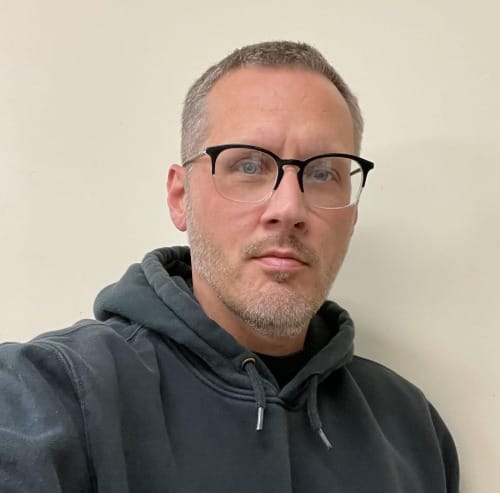
“My boss sat me down and said, ‘Derek, I just have to let you go.’ He was very kind to me because I helped him for seven years. I helped him develop his business in Sioux Falls from the ground up, and he had a lot of success. But eventually the drugs kind of got to me,” Moe said.
After finding himself unemployed, he discovered it was the job that was providing him with some structure to keep him functioning. Without a job to hold him together, he could use and sell drugs all day.
From the time he was 18 until he was 36, he got two DUIs. In two years after he lost his job, he didn’t make a single house payment. He lost his house. He lost his kids. And he ended up with 27 misdemeanors and two felonies.
The felonies were ingestion charges, which occurs when someone is arrested and tests positive for drugs after their arrest. The judge offered to suspend his sentence if he went through the drug treatment program.
 Kevin Killough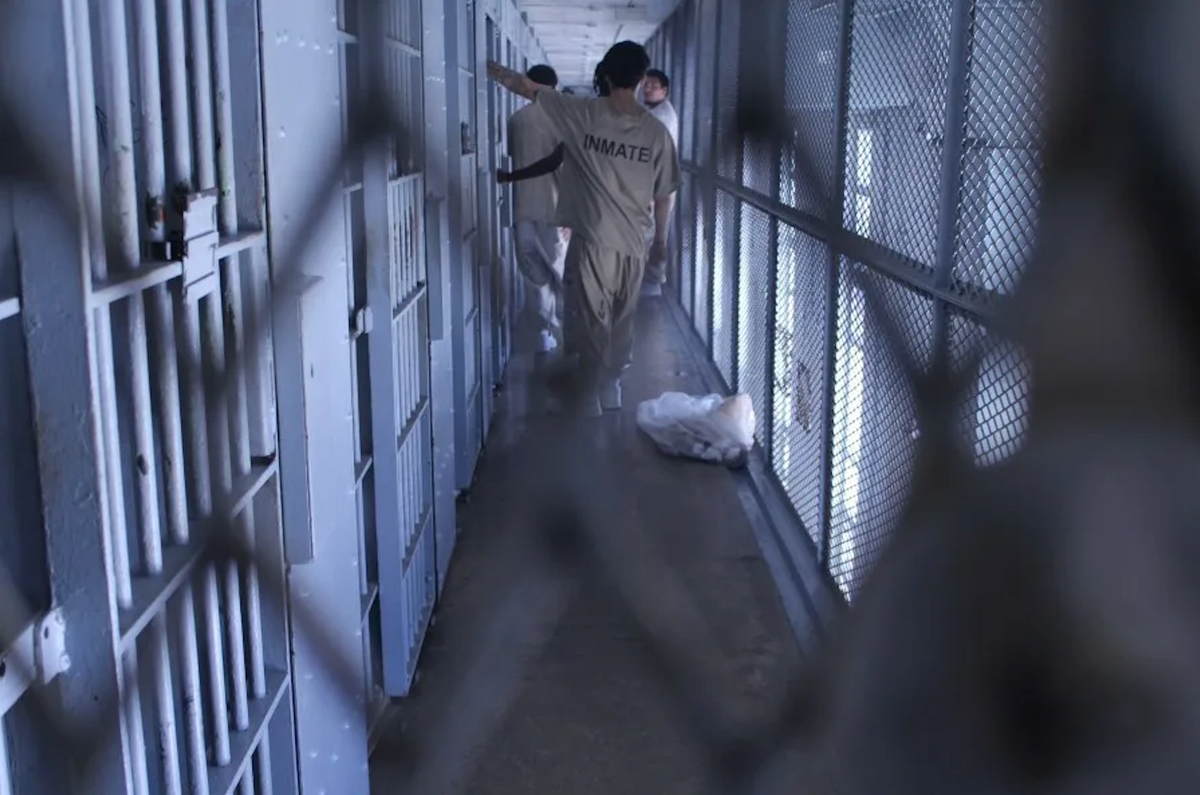
In the beginning, Moe didn’t want to submit to the treatment program. He moved into a bedroom in his dad’s mobile home in Brookings and bought an ounce of psilocybin mushrooms, a hallucinogenic drug. Since drug tests don’t usually test for psilocybin, he could continue getting high.
“I wasn’t willing to give up the addiction and alcoholism. I did that for a while until my daughter and my mom came and visited me. And I realized another felony would probably land me in prison for 10 years,” Moe said.
A mustard seed: 'It's incredible how it works'
He submitted to the treatment program, and at the time, he wasn’t a believer in God. The 12-step program requires submitting to a higher power, which for many is God. Moe’s higher power was initially the administrators overseeing his drug court program.
“They were definitely a power greater than myself. And I started there,” he said.
Over the 18 months he was in the program, Moe worked through the 12-step program, a popular self-help approach to addiction recovery that was created by the founders of Alcoholics Anonymous in the 1930s.
His sponsor at the time was a Christian, and Moe said the sponsor led him to the Lord. He was able to work his way back into an engineering job, starting out working for $10 per hour for a friend.
Now, he sponsors others, hosts Bible studies and works with other people struggling with their own addictions. He’s also rebuilt relationships with his family. He said, thanks to his sobriety, he’s been able to help other family members in their own struggles.
He compares the impact of drug court to Jesus’ parable of the mustard seed. It’s a story Jesus told in the New Testament that describes the Kingdom of Heaven as being like a mustard seed that grows into a large plant, providing shelter for birds and others.
“All these things happen from this tiny, little seed. Drug court helps one person. Then that person goes off and does all kinds of other things to help others. It’s pretty incredible how it works,” Moe said.
Correction: This story was updated at 10:08 a.m. CT on Friday, Dec. 5, 2025, to correct the name of Greg Sattizahn in the caption of his photo.
This story was produced by South Dakota News Watch, an independent, nonprofit organization. Read more stories and donate at sdnewswatch.org and sign up for an email to get stories when they're published. Contact statehouse investigative reporter Kevin Killough at kevin.killough@sdnewswatch.org.