Recent record-breaking wind gusts were the latest in a string of recent disasters.

South Dakota is no stranger to severe weather events. The latest proof: a 131 mph wind gust on June 29 in Highmore that was one of the strongest recorded in U.S. history and the second-highest gust recorded in South Dakota.
The National Weather Service issued a severe thunderstorm warning at the time of the storm and confirmed the winds did not come from a tornado, according to a fact brief published by News Watch.
Laura Edwards, SDSU Extension state climatologist, said winds exceeding 130 mph are "uncommon," but with the right ingredients, it can occur.
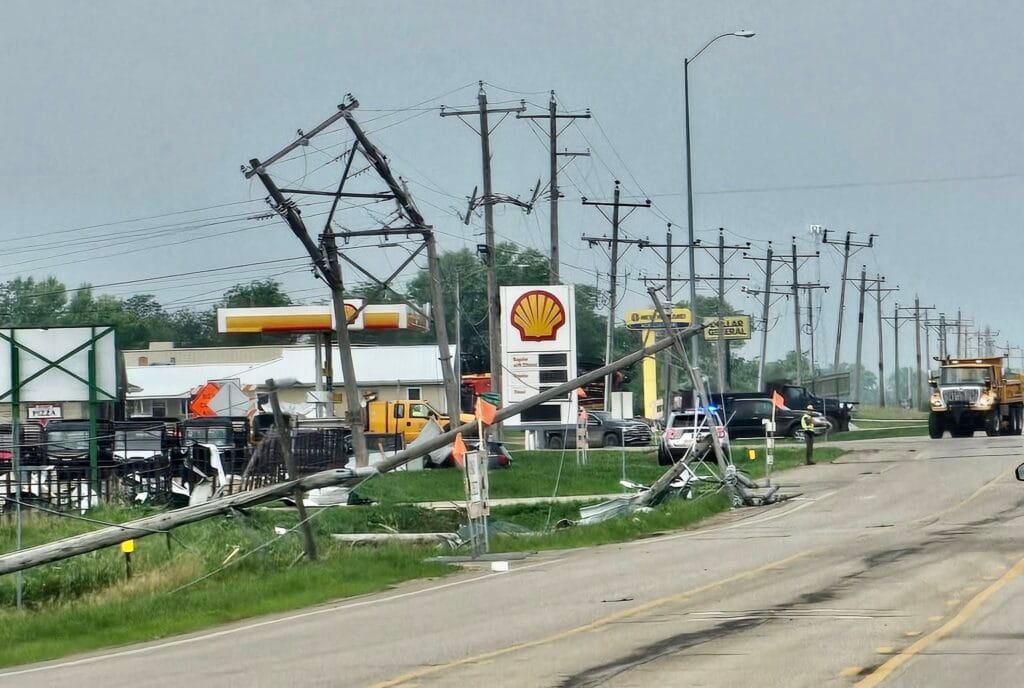
"I think they had just the right perfect conditions with the strengthening storm as it was approaching that area," she said. "It did predict previously it had produced about 2-1/2-inch diameter hail down just south of the border in Nebraska, and South Dakota Mesonet (weather stations) had measured about 80 to 85 mile-an-hour winds already when it was just crossing the border down in Bennett and Todd County. It had strong winds coming in and basically picked up and increased strength as it approached the central part of South Dakota."
Data from the National Weather Service Archive displaying recorded wind strength shows some fluctuations of strong winds in South Dakota over the past two decades. In 2008, 2015 and 2022, there were 18, eight and 13 instances of wind strengths over 100 mph, respectively.
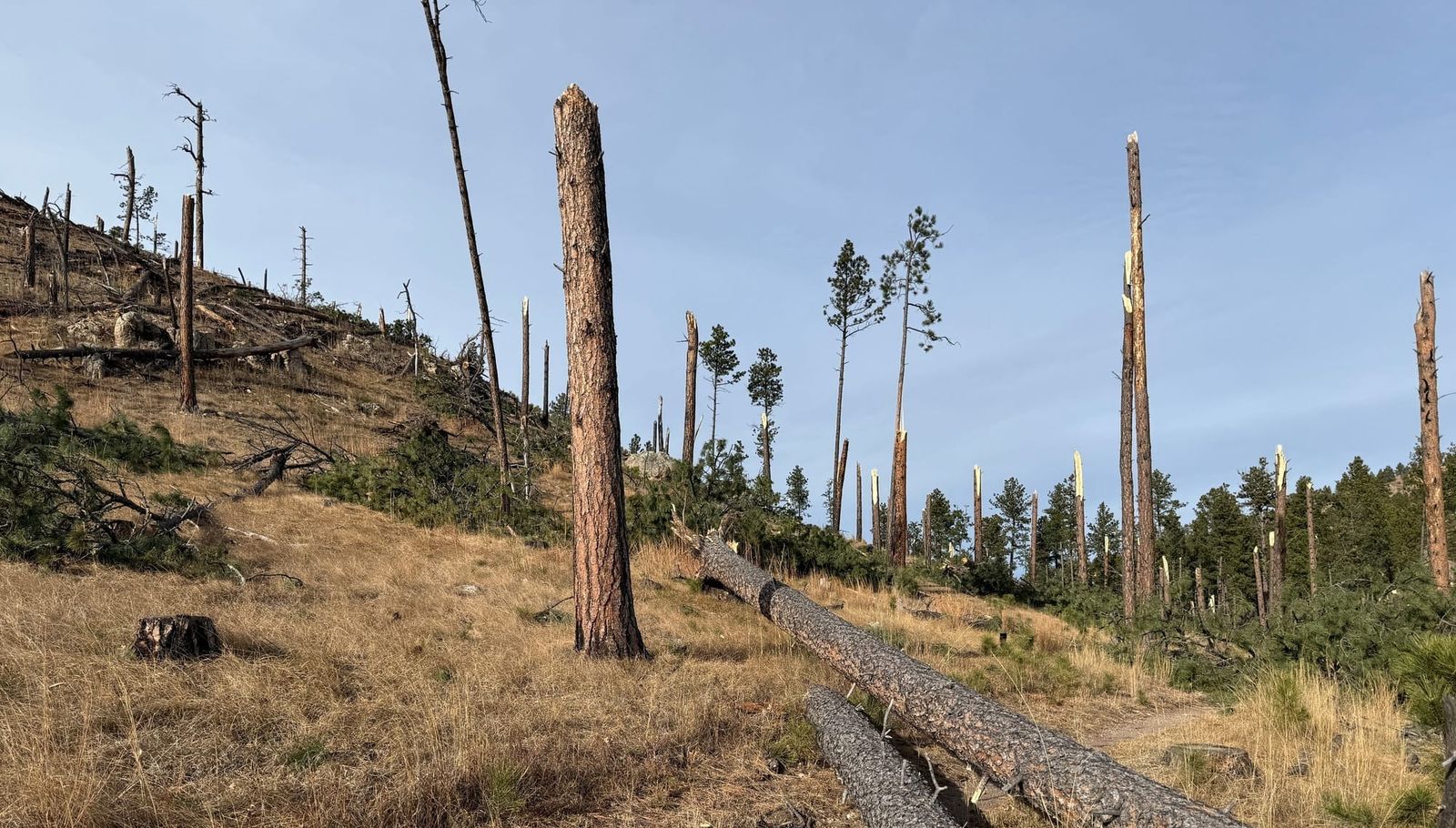
In December, a record-breaking winter windstorm swept across Custer, Fall River and Pennington counties, causing widespread damage.
According to a press release from Gov. Larry Rhoden, the storm produced sustained winds and gusts exceeding 90 mph, bringing down power lines, snapping off and topping trees, damaging public infrastructure and leaving thousands of residents without power. It prompted Gov. Larry Rhoden to request a presidential disaster declaration, which was received in April.
16 federal disasters in past decade
Over the past nine years, there have been 16 federal major disaster declarations, not including the COVID-19 pandemic, in the state of South Dakota, according to the Federal Emergency Management Agency (FEMA). Federal disaster declarations are determined by the president.
The reasons, outlined in the graphic below, include winter storms, flooding, thunderstorms, tornadoes and straight-line winds.
State disaster declarations, on the other hand, are issued by the governor. Executive orders related to state disasters from the previous decade, outlined in the graphic below, include severe winter storms, flooding, droughts and straight-line winds.
"Disaster declarations are based on the extent of damage and the resources needed for recovery. Local officials conduct initial damage assessments, which the state reviews to determine whether the situation exceeds local and state capabilities," the state Office of Emergency Management said in a statement to News Watch.
Drought-like conditions in South Dakota
Aside from the two recent major wind-related storms, South Dakota has also seen a lack of precipitation in the southern parts of the state.
Darren Clabo, associate professor of practice and state fire meteorologist at South Dakota Mines in Rapid City, said the jet stream drives weather across South Dakota.
"So far this summer, we've largely been under what we say is northwesterly flow, so that's a jet stream that runs kind of from the northwest to the southeast," Clabo said. "Unfortunately, this year, there really hasn't been any moisture that's come with it, but it's come with a lot of wind."
Andrew Kalin, senior service hydrologist for the National Weather Service in Sioux Falls, said in the northwest and other parts of the state, precipitation levels are closer to normal.
Data from the U.S. Drought Monitor shows approximately 48% of the state is in moderate to extreme (D1-D4) drought, affecting an estimated 557,792 people. These drier conditions, primarily concentrated within the southern parts of the state, are causing a lack of soil moisture, especially following a drier winter that had less snow, Clabo said.
Edwards said that there has been an ebb and flow of drought in the state over the past five or so years, especially along the southern part of the state.
"We've had big swings from hot to cool temperatures, variable precipitation. And we've seen this a lot over the last few years with very localized conditions different than say a neighbor even 10-20 miles down the road," Edwards said.
She predicts improvement will be relatively local, meaning it will not be uniform across the state.
"I think the improvement that we'll see will be relatively local, and I think we're going to continue to see this ebb and flow of worsening and improvement," Edwards said.
Staying informed: Weather alert services
In instances of severe weather, South Dakotans have multiple options to stay informed. One of theses are weather sirens, which are designed to alert people who are outdoors.
Sometimes, though, not everything goes according to plan.
Back in early June, weather sirens in Aberdeen and Viborg experienced troubles ahead of tornado season ramping up.
 Elena Tittel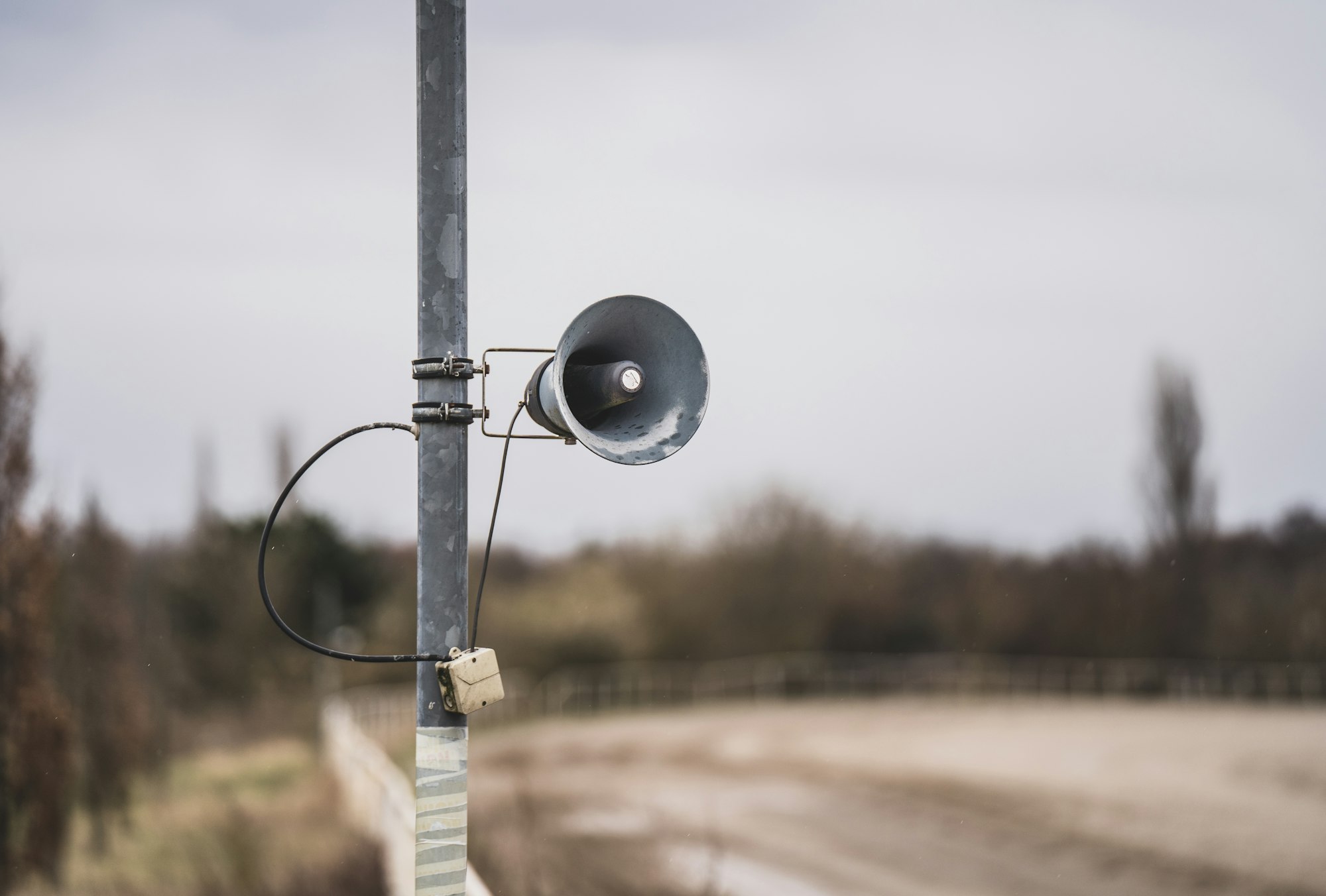
Tanner Jondahl, chief of police for the city of Aberdeen, said the backup plan is still working. The sirens are being tested every Wednesday at 6 p.m. and they expect the new primary system to be up and running sometime in August.
In the southeast South Dakota town of Viborg, the sirens on the west side stopped working after a control board burned out. It has been replaced and the sirens are working again, said maintenance superintendent Jody Nelsen.
Aside from weather sirens, there are multiple ways to stay informed during potentially life-threatening situations. The most widespread weather alert system is NOAA Weather Radio, a nationwide radio station network, providing 24/7 weather alerts. Aside from tuning into the radio, people can also enable wireless emergency alerts on their iPhone or Android's settings.
However, it's wise not to rely solely on one weather alert system, due to potential unpredictability.
For example, in Sioux Falls, the NWS radar was offline from June 24-30 due to the replacement and repainting of the radar dome panels.
According to reporting from Dakota News Now, the repairs are done by a national contract, meaning contractors themselves decide when repairs are completed. These repairs are harder to do in the wintertime, due to potential difficulties posed by winter conditions.
Public radio broadcasting serves as another way for people to receive weather alerts. While radio coverage exists statewide, radio access can be especially important in remote areas where access to cellular service is less reliable.
Last summer, U.S. Sen. Mike Rounds secured $9.4 million in funding for 35 public tribe-owned radio stations. While the funding was temporary, it provided support amidst federal funding cuts for public media.
Looking forward, a forecast from the NOAA Climate Prediction Center, the next one to three months are projected to have warmer than average weather in the west, south and eastern parts of the state, whereas the north-central part of the state may experience near- to below-average temperatures.
South Dakota News Watch is an independent nonprofit. Read, subscribe for free and donate at sdnewswatch.org. Elena Tittel's internship was funded with support from the Nonprofit Newsroom Internship Program created by The Scripps Howard Fund and the Institute for Nonprofit News. Contact: elena.tittel@sdnewswatch.org.