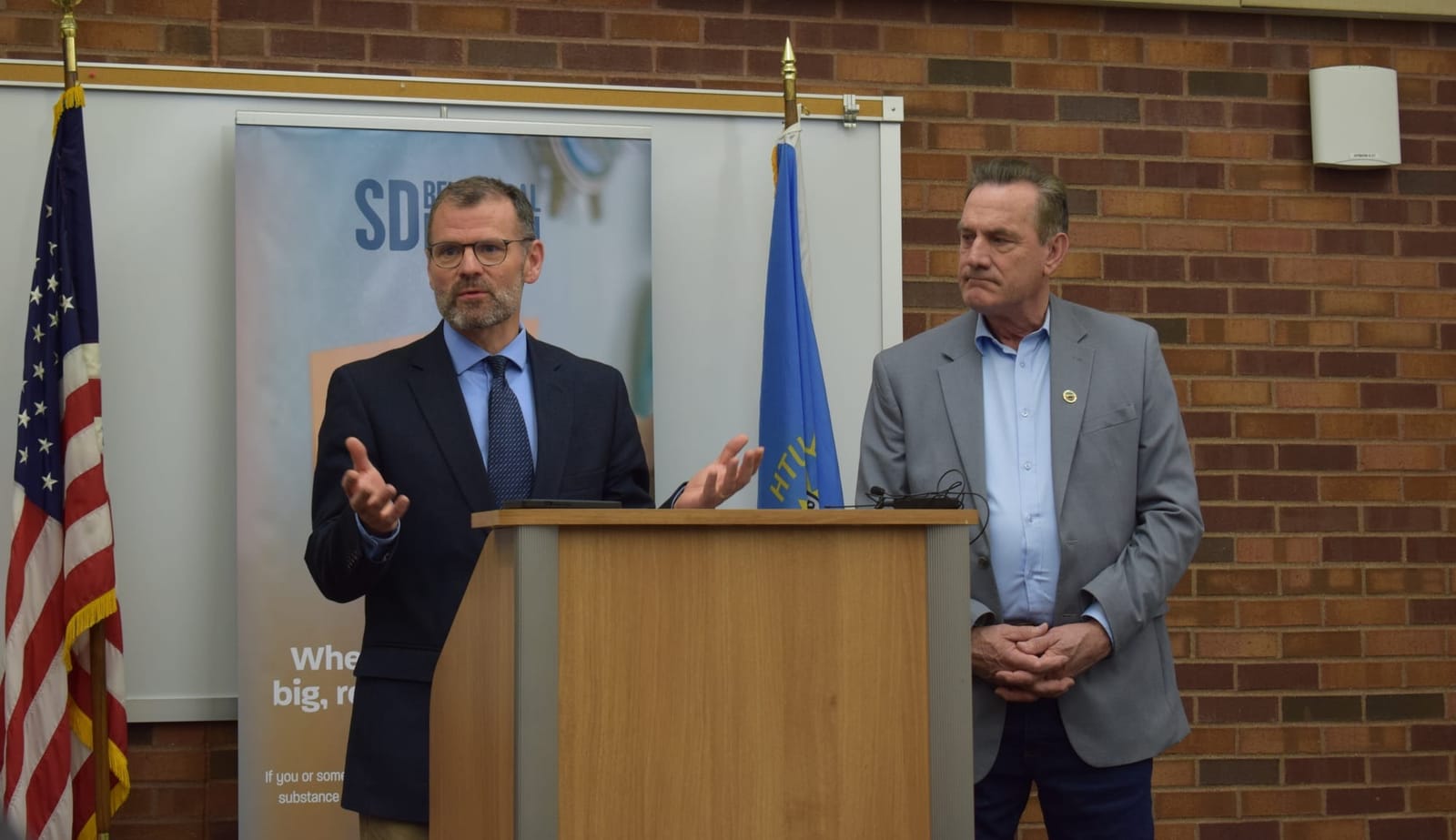

SIOUX FALLS, S.D. – Gov. Larry Rhoden and Department of Social Services Secretary Matt Althoff announced Thursday that $7.82 million in opioid settlement funding would be distributed to 10 organizations across the state for projects targeting substance abuse.
"In total, these 10 awards hold great promise of filling gaps that (DSS) and the opioid advisory committee have confirmed exists today," Althoff said at a press conference.
Since disbursement began in December 2022, the state has received more than $32 million in opioid settlement fund dollars and is projected to receive just under $99 million by 2038. Of those already-received dollars, $9.6 million has been allocated directly to cities and counties through the localized share, which makes up 30% of the fund.
The state has now spent or allocated about $20 million of the $23 million statewide share it has received since disbursement began. That comes after some legislators criticized DSS late last year for not spending the money quickly enough.
The state began accepting grant applications for individual projects and programs in October. Rhoden said that more than $10 million has been allocated to individual grantees in 2026.
Grantees focus on youth, vulnerable populations
Many of the awarded programs seek to focus on support for youth, pregnant women and mothers and individuals involved in the justice system.
The grants vary in scope, from $3 million for adolescent addiction services to more than $700,000 in planning dollars for the state's major cities' addiction treatment centers:
- Avera Behavioral Health: $3 million for the expansion of adolescent addiction and behavioral health care to fill the gap of a recent closure of a juvenile residential program.
- Center for Family Medicine: $750,000 for clinical training programs dedicated to addiction medicine for primary care settings.
- Cheyenne River Long-Term Recovery Group: $250,000 for mobile crisis response and cultural healing programs in northwest South Dakota.
- Face It Together: $920,700 for a comprehensive re-entry program for individuals discharged from carceral settings.
- Lewis & Clark Behavioral Health Services (Yankton): $254,000 for infrastructure supporting pregnant and postpartum mothers with substance use disorder.
- Midwest Street Medicine (Sioux Falls): $750,000 for expansions to detox, counseling and treatment programs for high-risk individuals transitioning from incarceration.
- Pennington County Sheriff's Office Care Campus (Rapid City): $615,000 to establish a strategy and sustainability plan to increase engagement with treatment and recovery support.
- Sioux Falls School District: $1 million to provide prevention education, community engagement and intervention protocols for students using substances across grade levels.
- The Link (Sioux Falls): $100,000 to coordinate care and establish a strategy and sustainability plan for existing treatment providers and recovery support systems.
- West River Mental Health: $186,000 to create a recovery health care assistant position to coordinate care for pregnant and postpartum women with substance use disorders.
Dispute between DSS and city leaders
In August, Attorney General Marty Jackley clashed with DSS and Althoff about whether more opioid settlement dollars should be allocated to Sioux Falls and Rapid City.
Jackley, joined by Sioux Falls and Rapid City mayors Paul TenHaken and Jason Salamun, said during a press conference that most of the state's opioid dollars should be allocated to the two cities via block grants. He said if DSS disagreed, he would request that the state Legislature disband the opioid advisory committee.
Althoff later said in a statement that Jackley's interpretation of the funding was inaccurate, and that Sioux Falls and Rapid City had not requested any additional funding from DSS.
 Melissa Avelino
Jackley told News Watch days before Thursday's press conference that Sioux Falls and Rapid City should receive a significant amount of funding from the statewide share because they have treatment programs already in place.
"They are doing the state a favor by having the programs and skin in the game that we could use these dollars to enhance," Jackley said. "In working with them, they have what I feel are the right proposals to strengthen those existing programs and help them serve so many others that have addiction challenges."
Minnehaha County and Sioux Falls have received nearly $3.4 million to date and reported $1.4 million in spending from the localized share of the opioid settlement fund. Rapid City and Pennington County have received $1.5 million and reported about $300,000 in spending, according to DSS's opioid settlement fund dashboard.
The dollars the four government bodies have received so far make up 56% of the total localized share, which currently sits at a total of $9.6 million, and distributes funding based on population. Last year, the populations of Sioux Falls and Rapid City officially made up half of the state's total population.
During Thursday's press conference, Althoff said that he suspected that because of the "disproportionate" number of providers in Sioux Falls and Rapid City, those regions would likely see funding in an amount close to Jackley's request through individual project grants, even if block grants never materialize.
"Our largest cities are often where individuals turn when they need support. Both the Rapid City and Sioux Falls communities have erected and successfully maintained a common entry portal, a place to go when an individual has no other social supports to lean on," Althoff said.
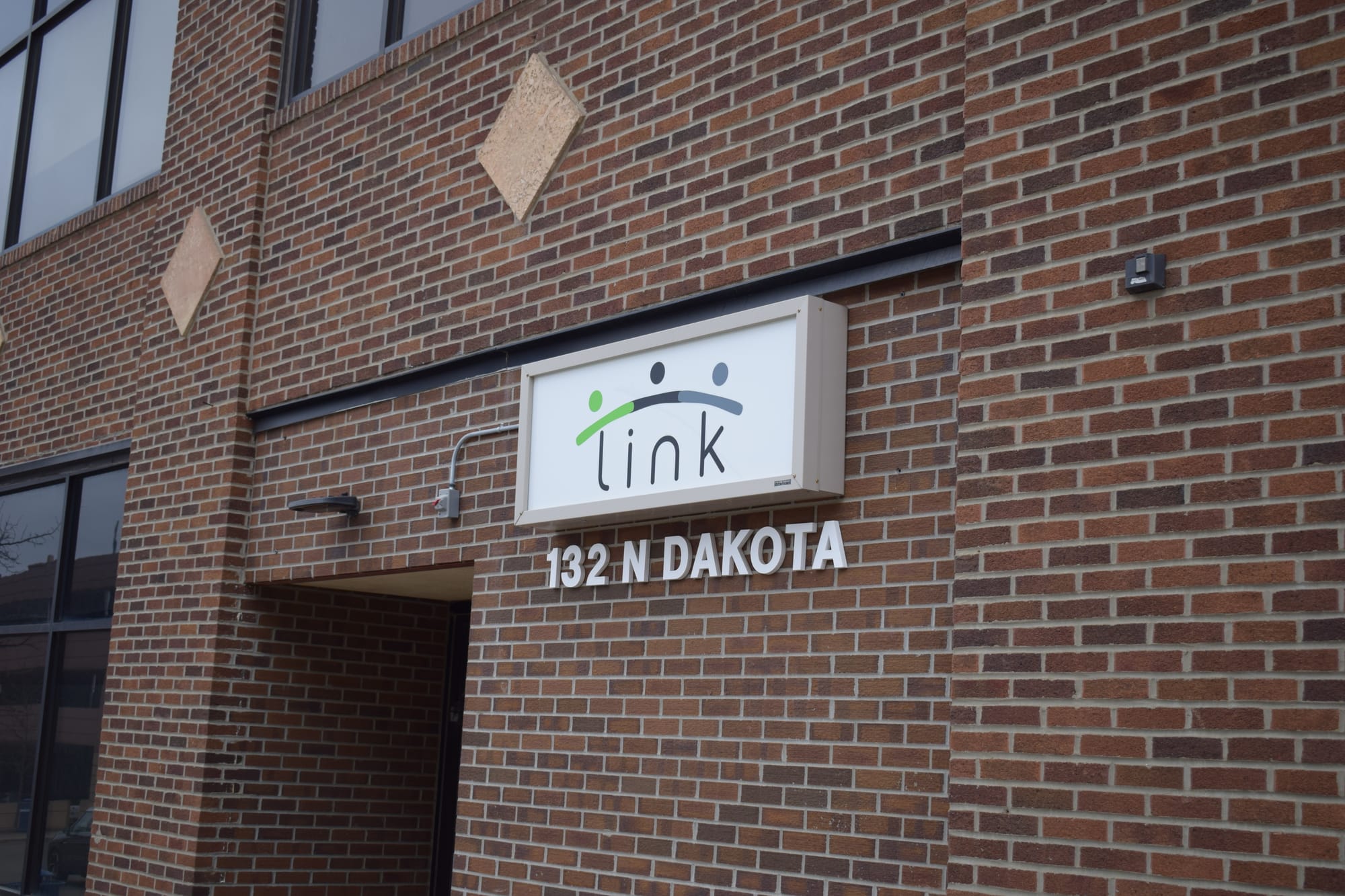
The Link addiction triage center and the Pennington County Care Campus, which is operated by the Pennington County Sheriff's Department, are the cities' programs providing services for adults with substance use disorder. Both organizations were awarded grants for planning programs Thursday.
The Link has been the recipient of most of Sioux Falls and Minnehaha County's opioid spending, according to DSS and the Department of Health's Let's Be Clear annual report.
Pennington County Sheriff Brian Mueller told News Watch that the $615,000 grant would allow the Care Campus to catch up on the backlog of drug and alcohol assessments at the county jail and assess the needs of the community in hopes that more funding in the form of block grants would be released down the line.
"Part of this planning is in anticipation for getting a larger pot of that money. We want to be prepared, if we're going to be able to free that money up, to come out here and to do something truly transformative instead of piecemealing things together and giving out the smaller parts," Mueller said. "We're very appreciative that we're able to fund a lot of things today that I do think will make a difference for people across the state."
Play a bigger role in our storytelling. Join us as a partner in telling stories that are important to all South Dakotans with a tax-deductible donation.
He said that more dollars allocated to the state's two metro areas would allow projects to proceed that may not be possible through smaller grant programs.
"When you look at the amount of money that South Dakota is expecting to receive over the next several years, I think we have to be able to think big. What can we do to have the most impact right now and moving into the future on those affected by substance abuse? The cost of just continuing to do things the same, I don't know that we can build enough jail beds. I don't know that we can build enough prison beds," Mueller said. "The criminal justice system is not the primary way to handle substance abuse. So we need to get outside the box."
Althoff said that the department would continue to evaluate its strategic plan going forward and whether the spending remains effective.
"We want the data to inform, 'Where is the greatest threat to the spectrum of resources that South Dakotans are toiling every single day to make sure are in place?,'" Althoff said.
South Dakota News Watch is an independent nonprofit. Read, donate and subscribe for free at sdnewswatch.org. Contact reporter/Report for America corps member Molly Wetsch: 605-531-7382/molly.wetsch@sdnewswatch.org.