
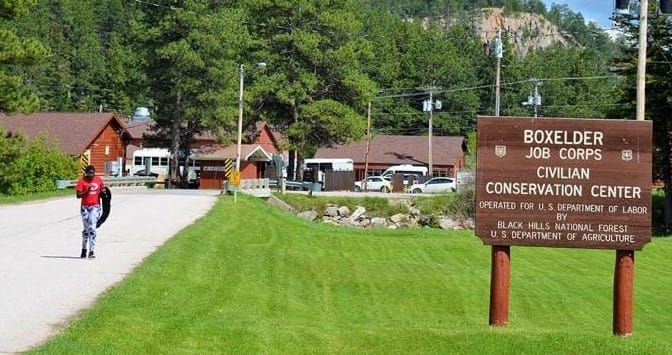
The job-training facility for low-income youths and young adults at Nemo was under threat of closure by the Trump administration for nearly a year.

The future once again looks stable for the federal Job Corps workforce training center in the Black Hills of South Dakota now that Congress has fully funded the federal program and a recent lawsuit settlement provided a symbolic boost to the program's status.
"We're doing great and we're thriving," said Bonnie Fuller, director of the Boxelder Job Corps Civilian Conservation Center near Nemo, South Dakota.
Get free, fact-based South Dakota news and information in a weekday email. No spam. Cancel any time.
That optimistic outlook is a major shift over early 2025, when the future of the 125 Job Corps programs across the country looked bleak.
Launched in 1964, Job Corps is designed to provide education and job training to income-qualified youths and young adults who struggled in traditional schools.
The taxpayer-funded program offers tuition-free housing, classroom education, job training, meals and health care for low-income qualified youths and young adults. The program enrolls about 60,000 students a year and has an annual total cost around $1.8 billion, according to federal budget documents.
The federal government issued a memorandum in May 2025 calling for pausing of operations at 99 contractor-operated Job Corps centers across the country. The memo required the pending closure of centers operated by contractors hired by the U.S. Department of Labor.
 Bart Pfankuch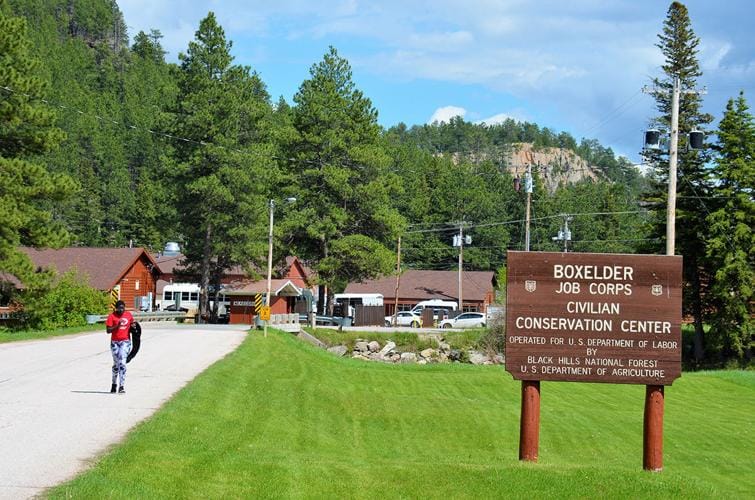
That same memo, obtained recently by News Watch, also called for the closure of another 25 centers operated by the U.S. Department of Agriculture, which included campuses in South Dakota and northwestern Nebraska.
At the same time, the Trump administration also called for defunding of the entire program.
Memo laid out closure plans
In a May 2025 news release, then-Labor Secretary Lori Chavez-DeRemer said a government report showed that the contractor-run programs operated at a $140 million deficit in 2024, did not meet participant graduation or job goals and had seen nearly 15,000 reports of sexual, violent or drug-related incidents on its campuses.
The department said its decision aligned with President Trump’s Fiscal Year 2026 budget guidelines to ensure wise use of taxpayer dollars.
Those actions put the future of the Nemo facility and a similar Pine Ridge Job Corps facility near Chadron, Nebraska, in jeopardy.
According to the USDA, the Boxelder Job Corps facility in 2024 had about 80 enrollees aged 16-24, about half of whom were Native American. USDA documents showed the facility had an average annual budget ranging from $4.5 million to $6 million in recent years. Staffing consists of roughly 40 employees.

The proposed elimination of the federal program drew significant opposition across the country, including within the public and among a bipartisan group of congressional lawmakers. Most closures, including in South Dakota and Nebraska, were delayed by a lawsuit that led a federal judge to stay the closures until the case could be settled.
The uncertainty lingered for months, but Job Corps programs received new life in February 2026 when Congress passed the Consolidated Appropriations Act, which included $1.76 billion in funding for Job Corps centers. President Trump had called for zero funding, but Congress overrode that recommendation.
Lawsuit settlement bolsters program status
This week, the Trump administration decided to settle the lawsuit that held up the pending closure of Job Corps centers run by the Labor Department, according to Adam Pulver, a lawyer for the Public Citizen Litigation Group, which represented the plaintiffs in the case.
The legal case centered around the claim that the Department of Labor violated written procedures required prior to closure of any Job Corps centers, and that the proposed elimination of the program was arbitrary and capricious.
"The wholesale slashing of the Job Corps program wasn't going to be accepted by the courts, and we've seen also that it's not going to be accepted by Congress," Pulver told News Watch in an interview. "The Job Corps program is very popular in rural areas and places where people are really struggling to get the skills needed to find high-paying work."
In addition to offering a path toward a high school diploma or General Educational Development (GED), the Nemo facility offers training in multiple disciplines, including certified nursing assistant, culinary arts, carpentry, painting, welding, office administration and maintenance.
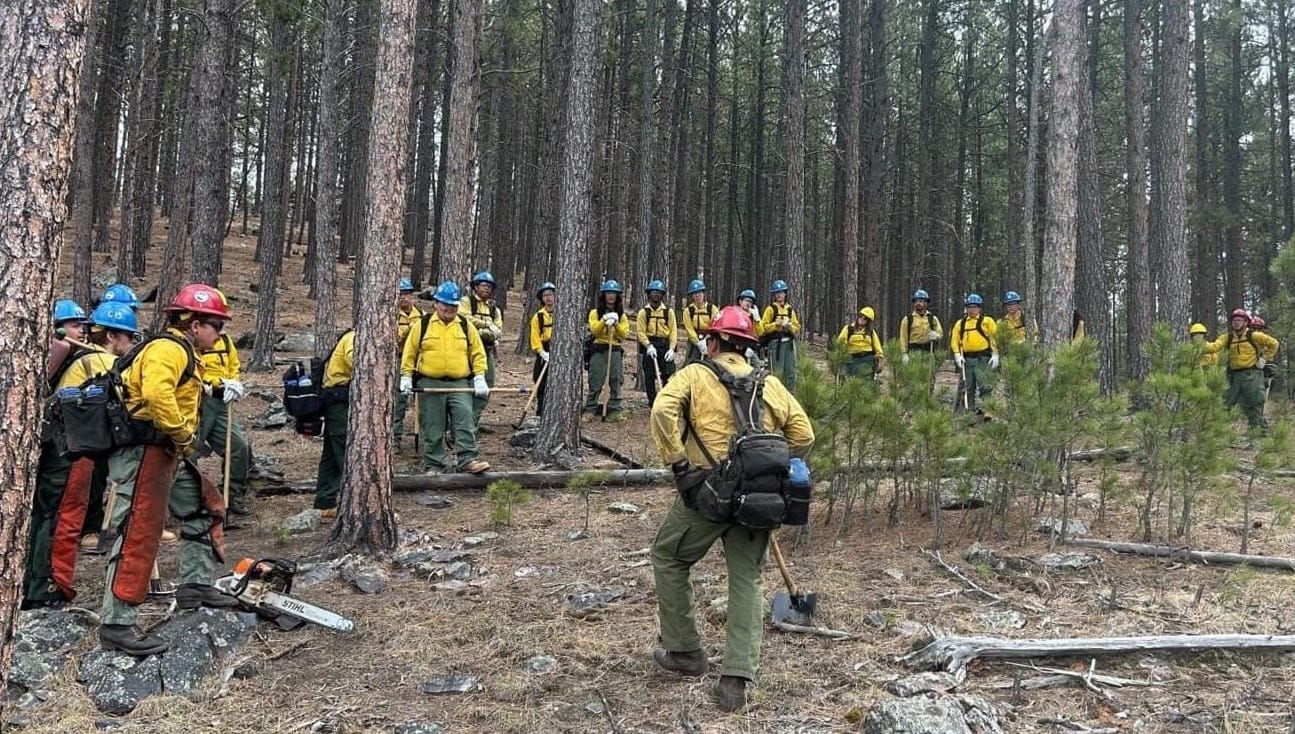
The center also works closely with the U.S. Forest Service to provide firefighting and other skill sets to Job Corps enrollees.
Fuller told News Watch that several contingents of Boxelder Job Corps enrollees had been dispatched to fight wildfires in South Dakota earlier this year. Other groups of students were also sent to battle wildfires or provide firefighting support at fires in Colorado and in the Boundary Waters area of northern Minnesota.
The congressional funding for Jobs Corps will cover spending only through June 2027, but lawmakers appear to be supportive of the program moving forward, Pulver said.
The recent court settlement will also protect the centers, and even though it did not directly relate to the USDA-run centers, the administration's capitulation should provide further stability to those Job Corps programs, he said.
"The fact that support has been so bipartisan in Congress made it clear that you can't just get rid of the program," Pulver said. "I wouldn't expect to see any more of these radical plans to get rid of the program."
South Dakota News Watch is an independent nonprofit. Read, subscribe for free and donate at sdnewswatch.org. Contact content director Bart Pfankuch: 605-937-9398/bart.pfankuch@sdnewswatch.org.