Making up 10% of the farming population, the state's colonies play a large role in the state's agricultural and manufacturing industries.

SPRING VALLEY COLONY, S.D. – Down a dirt road about 20 miles from Wessington Springs sits Spring Valley Colony. Though it has fewer than 150 people, the colony actively contributes to two major industries: agriculture and manufacturing.
Spring Valley is one of more than 60 colonies in South Dakota, which has the largest Hutterite population in the U.S. And Hutterites make up about 10% of the state's farming population.
 Elena Tittel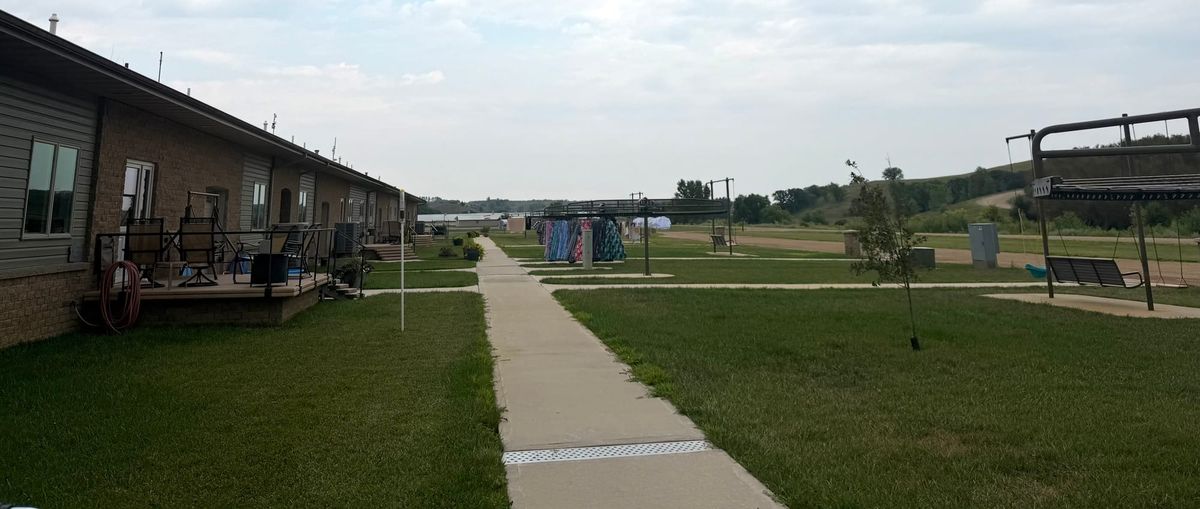
Though specific numbers are not available on how much of South Dakota's $6.2 billion value-added agriculture industry can be attributed to the Hutteries, the colonies do play an instrumental role and fully embrace modern farming technology, unlike the Amish. Hutterites contribute livestock like turkey and beef as well as feed grains and fresh vegetables.
Major poultry producers
George Stahl, who has been Spring Valley Colony's minister for more than 30 years, has lived here his entire life.
"I wouldn't live any other place," he said.
Spring Valley Colony's turkey farm has three turkey barns. Stahl said that each barn houses approximately 15,000 turkeys. Each barn has the turkeys in a different stage. When the turkeys get shipped, they weigh around 50 pounds each, he said.
According to South Dakota Poultry Industries Association, Hutterite colonies are the top producers of turkey in the state of South Dakota, with an average of 5 million turkeys a year.
Data from the South Dakota Governor's Office of Economic Development showed that in 2024, 128.5 million pounds of poultry were produced in the state with a value of $72.1 million.
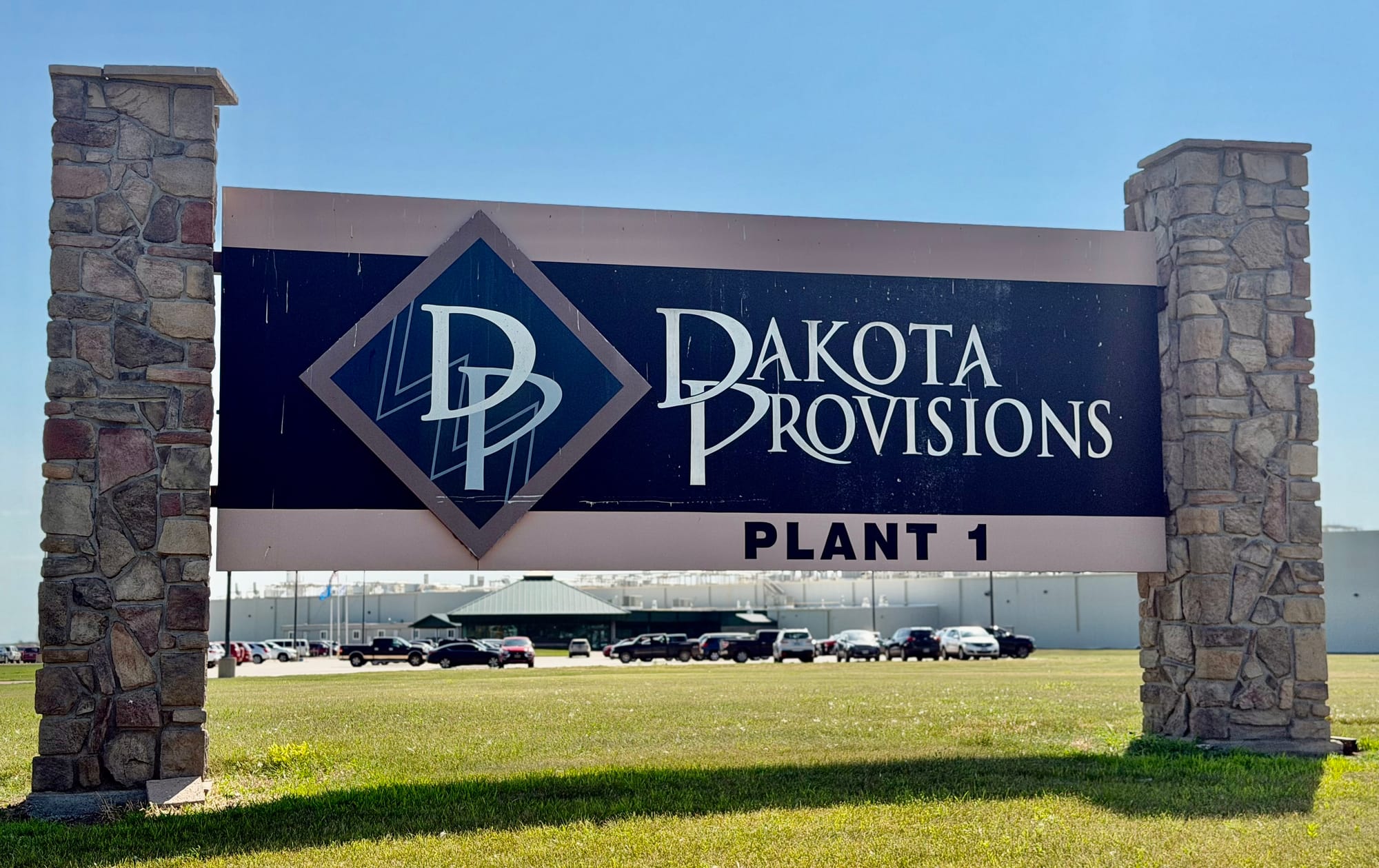
Huron is home to Hutterite-owned Dakota Provisions, a meat processing facility. Many Hutterite colonies, including Spring Valley, ship their turkeys to Dakota Provisions. According to Dakota Provisions' website, farming families have invested over $120 million in cutting-edge turkey production facilities.
The business started in 2004 with 44 independent growers. Now, they produce more than 200 million pounds of product annually, its website states.
Dakota Provisions declined an interview request.
Get free, fact-based South Dakota news and information in a weekday email. No spam. Cancel any time.
Other livestock contributions include hogs and beef, Stahl said. At Spring Valley, the colony's beef cattle are sold to live auctions in Mitchell, and hogs are sold to packing plants.
Farm-to-table
Farmer-raised products from colonies are not just sold to large companies. They can also be found at local farmers markets.
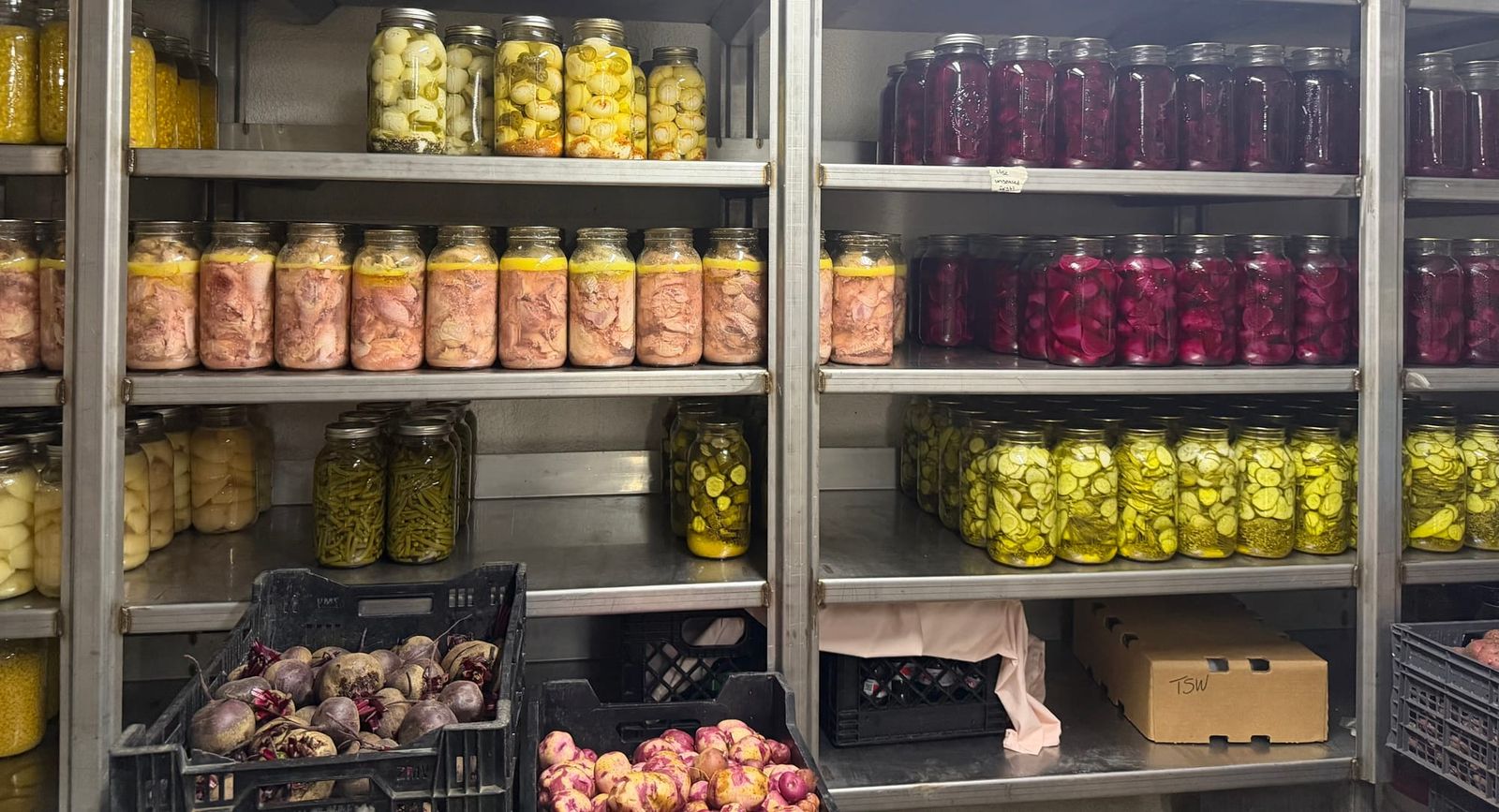
At the summertime Wessington Springs Farmers Market, George's wife and head seamstress Becky Stahl sells a range of pickled vegetables, from beets to spicy pickles for $8 a quart. They also sell dairy and meat products, with a "big hit" being fresh turkey wraps with crispy bacon.
Women ages 15 to 45 on the colony take turns picking fruits and vegetables from the garden, George Stahl said.
Becky Stahl said food and meal preparation is taken very seriously at Spring Valley Colony. Each week, there are 12-15 rotating female cooks who work from 6 a.m. to 6 p.m. preparing and serving food to the colony.
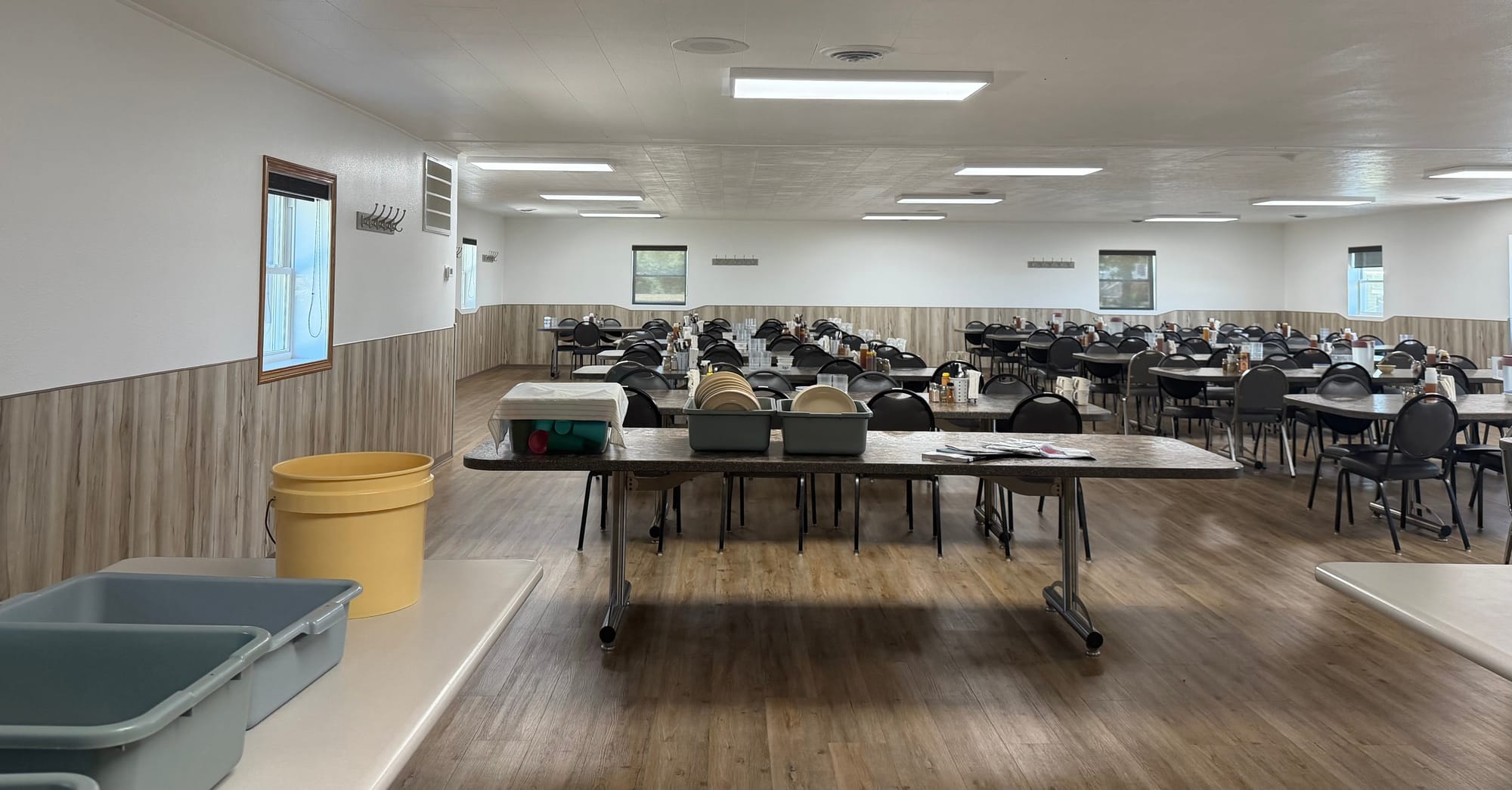
Depending on the time of year, dishes range from turkey cutlets and potatoes to beef with fresh vegetables.
Eating practices are similar at other colonies, too.
At Wolf Creek Colony, located about 10 miles outside of Freeman, most of the food for meals comes directly from the colony's grounds. Large quantities of produce such as vegetables are picked directly from the garden, stored and later prepared to serve.
According to one woman who lives on Wolf Creek Colony, there are currently about 500 quarts of green string beans in storage.
Manufacturing industry contributions on the rise
Agriculture is not the only industry Hutterites contribute to. Colonies have begun expanding into the manufacturing business, producing products like steel, foam and prefab.
For example, CR Foam, founded in 2016 and located on Spring Valley Colony, currently serves 11 states: Illinois, Indiana, Iowa, Kansas, Minnesota, Missouri, Montana, Nebraska, North Dakota, South Dakota and Wisconsin.
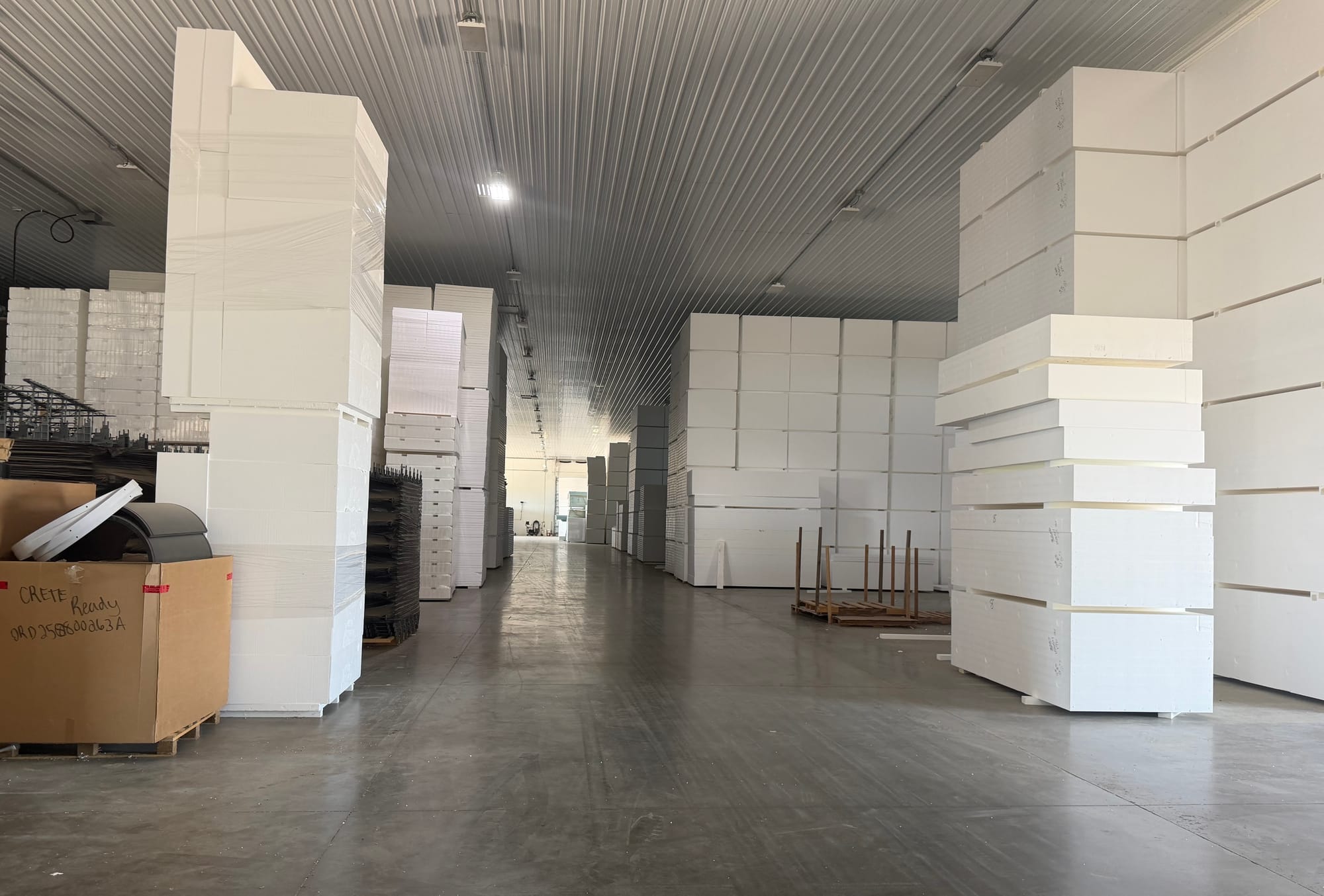
With a handful of small foam balls in his hand, Stahl said that the tiny pieces expand like popcorn once they move through a blower system. After three weeks of storage, the foam is shipped for use in various construction purposes such as wall insulation, Stahl said.
The many contributions of Hutterites communities are what make them instrumental to South Dakota's economy.
"They're a very vital part of our community, and they're very diverse," said Mayor of Huron, Mark Robish.
South Dakota News Watch is an independent nonprofit. Read, subscribe for free and donate at sdnewswatch.org. Elena Tittel's internship was funded with support from the Nonprofit Newsroom Internship Program created by The Scripps Howard Fund and the Institute for Nonprofit News. Contact: elena.tittel@sdnewswatch.org.