

Federal budget cuts reduce annual gathering from a weekend to one day in Sioux Falls. One featured author wrote about the history of Mount Rushmore.

Although questions about federal funding for the humanities remain, the South Dakota Humanities Council will again host the South Dakota Festival of Books, now in its 24th year.
This year, the program is shorter and will feature fewer authors. In years past, 60-70 authors were selected for the event, which spanned a weekend. This year, about 30 authors will be featured at the one-day event on Oct. 3 in Sioux Falls, said Joshua Rudnik, director of the Center for the Book.
After Department of Government Efficiency federal funding cuts threatened humanities councils nationwide, the SDHC evaluated how the event would go forward, he said.
“We kind of had to sit down and ask ourselves, ‘What are the humanities?’” Rudnik said. “The humanities are well defined, but I don't think people are aware of what the humanities are, that they touch our lives every day.”
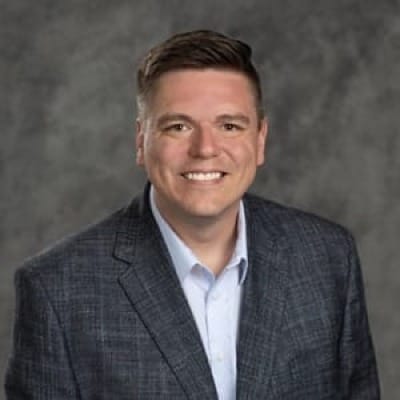
Each year, the event is held on different sides of the state. Rudnik said he hopes having the event in Sioux Falls will help spread awareness of the book festival and expose the organization to more people.
Another impact of the cuts is the shortening of the event. Last year in Spearfish, the event went over a weekend from Friday to Sunday. This year’s event is one day long.
“Having fewer authors, it's really more about the impact that these authors make on the general public," Rudnik said.
Author wrote about past and present Rushmore
Matthew Davis is author of "A Biography of a Mountain: The Making and Meaning of Mount Rushmore," which was selected as the 2026 One Book South Dakota.
SDHC created that program in 2003 to feature and promote the readership of one book for the whole year.
Davis, who now lives in London with his wife and children, grew up in Chicago. While writing the book, Davis was living in Washington but traveled to the Black Hills to research.
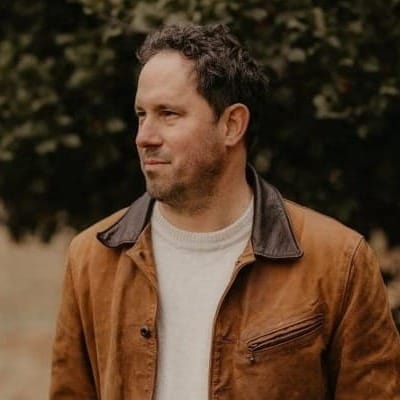
“Places oftentimes are like people, where you meet someone or go to some place, and they kind of leave marks on you, and they sort of affect you in ways that you don't expect,” Davis said. “The Black Hills certainly has been that for me. There’s a wonderful sense of history about them that I was very attracted to.”
Davis wanted to write the book after reading about President Donald Trump’s speech on July 3, 2020, at Mount Rushmore National Memorial. In that speech, Trump spoke about American history, manifest destiny and the memorials and monuments that are built to commemorate it, he said.
“I began to wonder why he gave that speech at Mount Rushmore. What was it about the four faces and the sculpture itself that both literally and figuratively framed his speech?” Davis said.
Davis, who has a master's degrees in nonfiction writing and another in international relations and international economics, did a deep dive into the history of Mount Rushmore and the Hills.
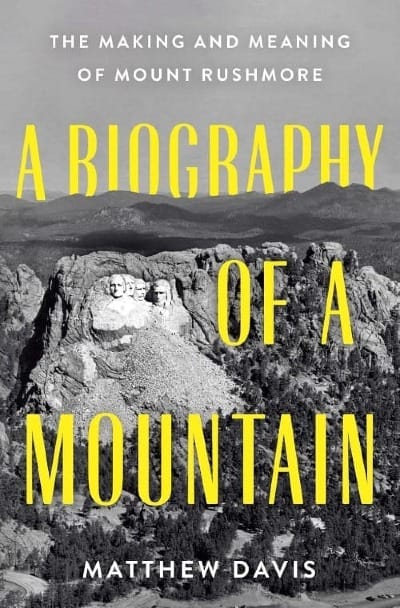
“I just found that it really represented so many of our different national myths, contradictions, conflicts. So in that way, it represented American history,” he said.
Davis first thought the book would be primarily historical. But as he was writing, the U.S. was going through major changes. Former President Joe Biden took office in 2021. When Trump was reelected in 2024, a lot of the issues that Trump raised in the 2020 speech “came to inhabit the present” again, Davis said.
“He began to sort of value and talk about the idea of manifest destiny, this interpretation of history that has impacted current institutions like the Smithsonian, or like national parks, or like humanities councils, for that matter. All that stuff is not passed. It's very much in the present day," Davis said.
“I think, you know, there was sort of a strange relationship there between engaging in a work of history but also being deeply aware of that relationship between the past and the present, and how they inform each other,” he said.
Get free, fact-based South Dakota news and information in a weekday email. No spam. Cancel any time.
As part of the One Book program, Davis went on a statewide speaking tour to talk in different communities about the book.
Rudnik went along on the seven-stop trip. He said it was interesting, as someone from West River, to hear varied perspectives on Mount Rushmore from people in different areas of the state.
“People recognize that it is a complicated history and that history is a part of what makes that memorial what it is today,” Rudnik said.
For a full list of featured authors and schedule of events, visit the Festival of Books website.
South Dakota News Watch is an independent nonprofit. Read, subscribe for free and donate at sdnewswatch.org. Contact reporter Emily DeCock: emily.decock@sdnewswatch.org.