
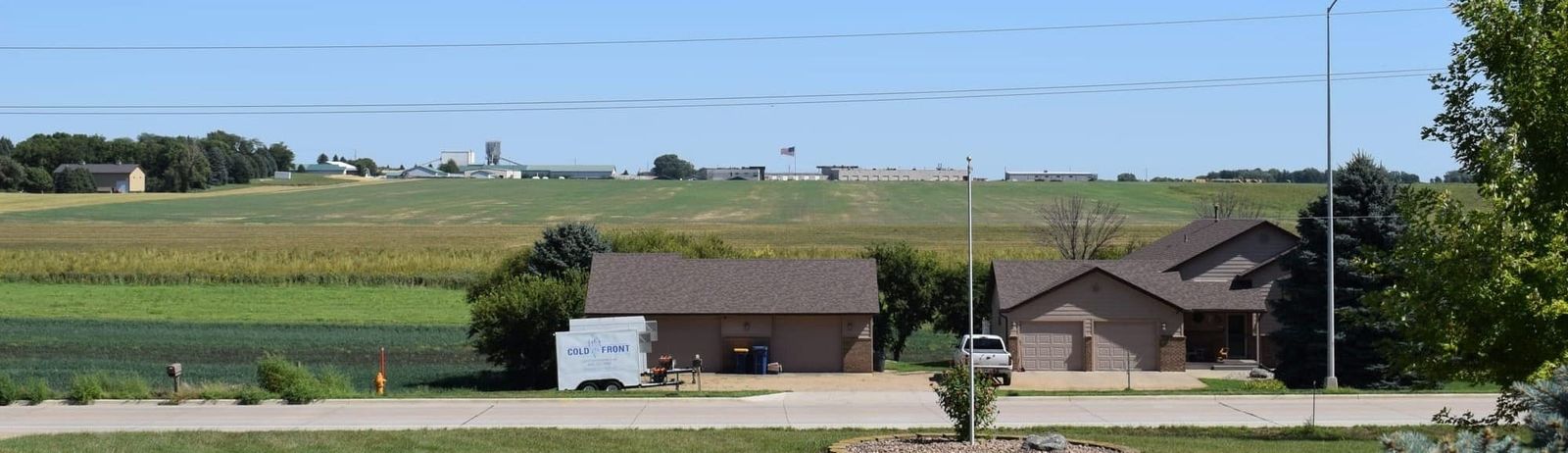
How the addition of a pork processing plant to the state's largest industrial park has sparked conversation about "responsible growth" in the Sioux Falls metro area.

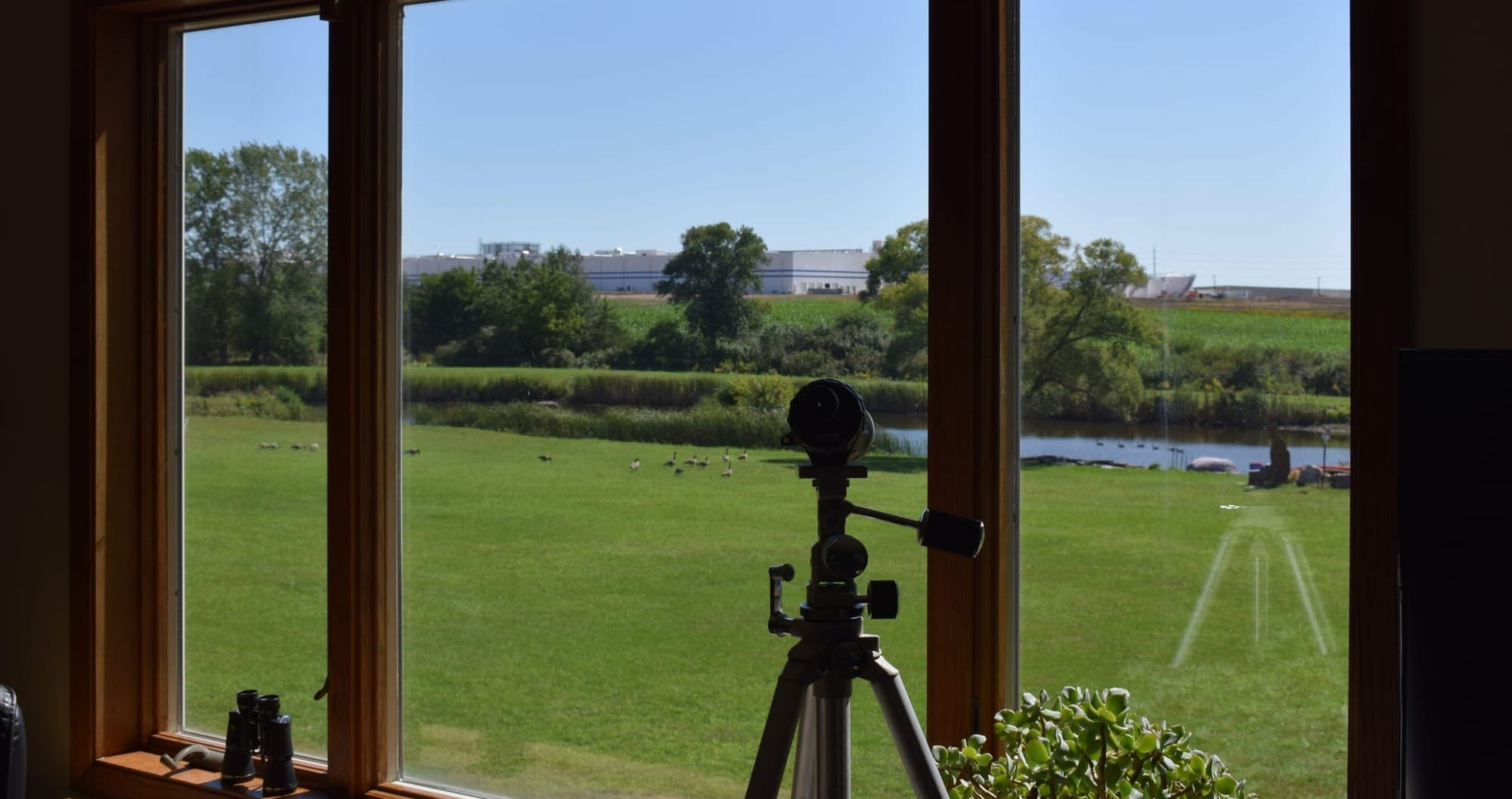
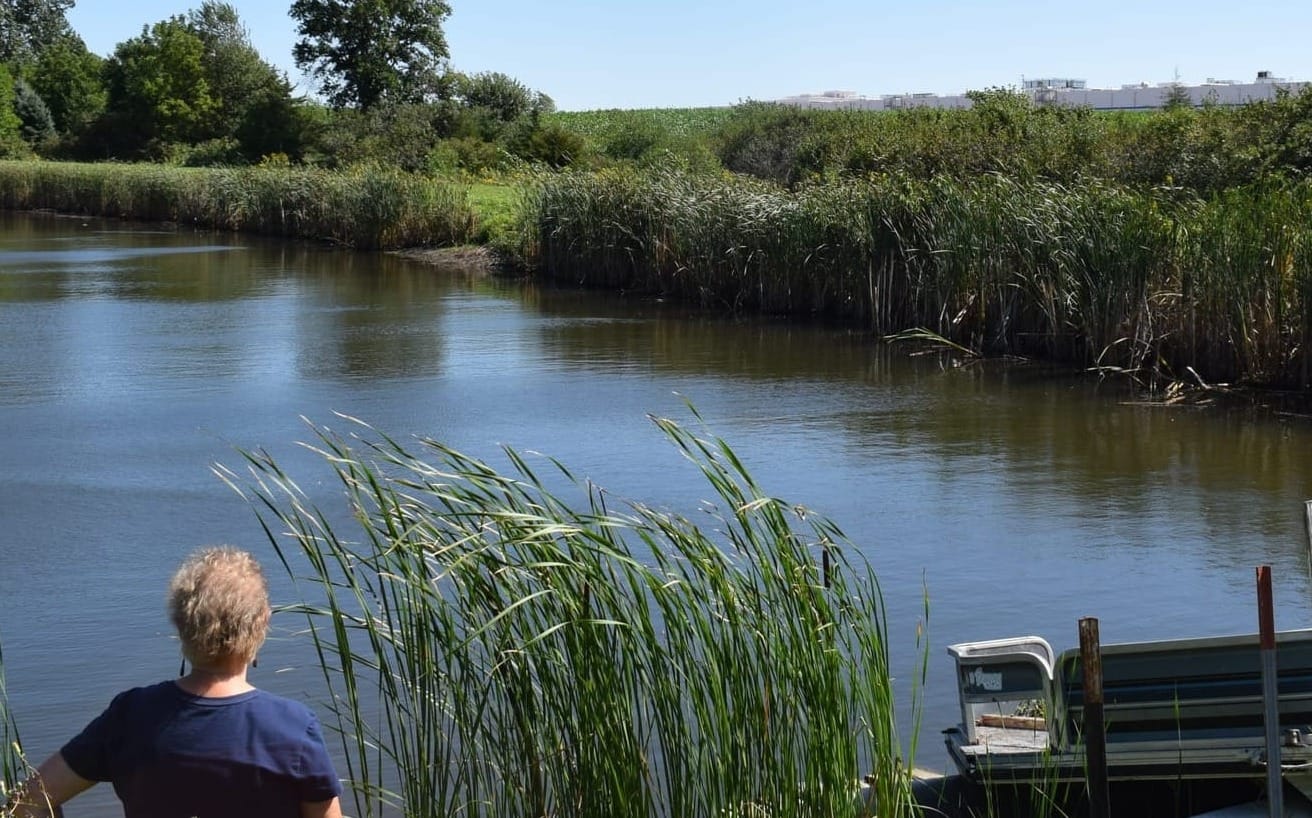
CROOKS, S.D. – When Patti Guthrie and her husband purchased the 20 acres north of Sioux Falls that would soon become their house in 1996, it was little more than an open field. Now, it's home to more than 2,000 native trees and shrubs, dozens of local wildlife creatures and a large pond, stocked with fish and complete with a pontoon-turned fishing dock.
Since they purchased that land, the population of Sioux Falls has nearly doubled. And major neighbors are moving into nearby Foundation Park, disrupting their once-rural lifestyle.
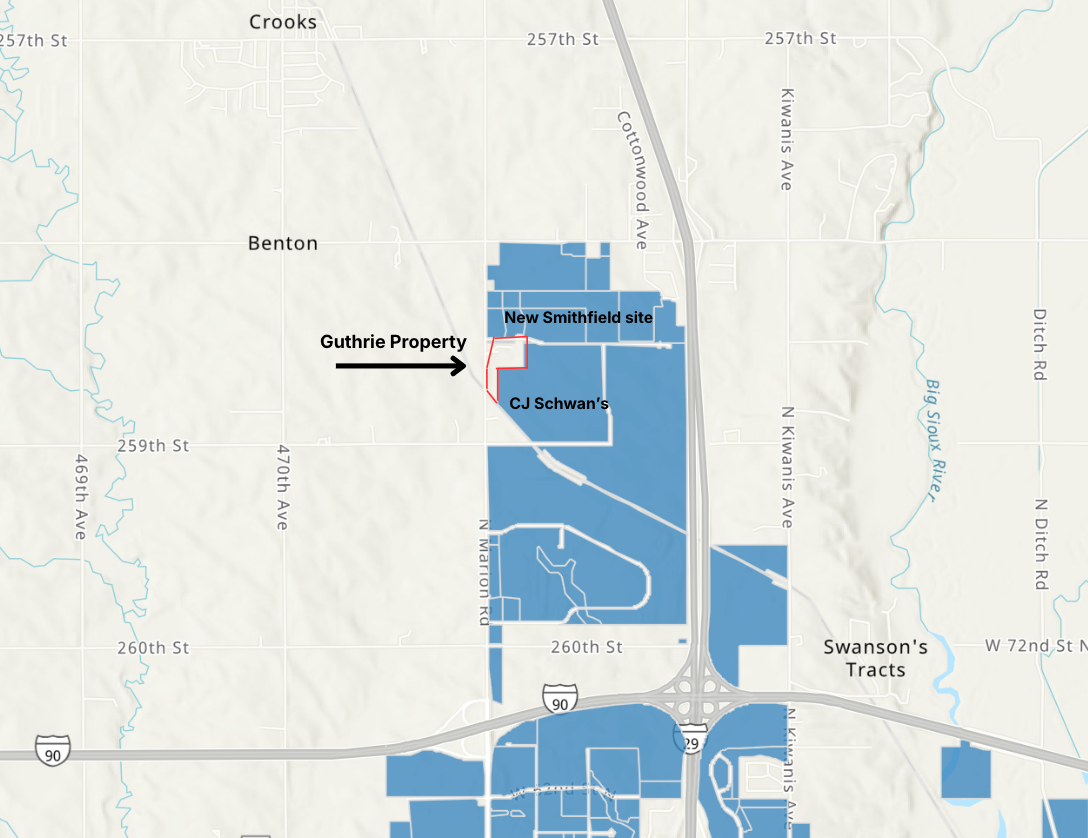
CJ Schwan's 700,000 square-foot Asian food production facility started construction just to the south of the Guthries' property in 2024. The building is now visible from their back window.
In February, it was announced that Smithfield Foods would be moving its pork processing plant from its hundred-year-old home in downtown Sioux Falls to the plot of land just north of the Guthries. That was the moment Guthrie knew for sure that the property she'd hoped to retire with wouldn't be the same anymore, she told News Watch.
"If Smithfield gets to build, we're leaving. I have safety concerns, odor concerns. I'm not going to live with flies in the backyard. I want to be able to be outside," Guthrie said.
Guthrie is part of a group of more than 20 plaintiffs suing the city of Sioux Falls for its approval of a conditional use permit (CUP) allowing Smithfield's facility to be built closer than 1,000 feet to residential areas.
 Molly Wetsch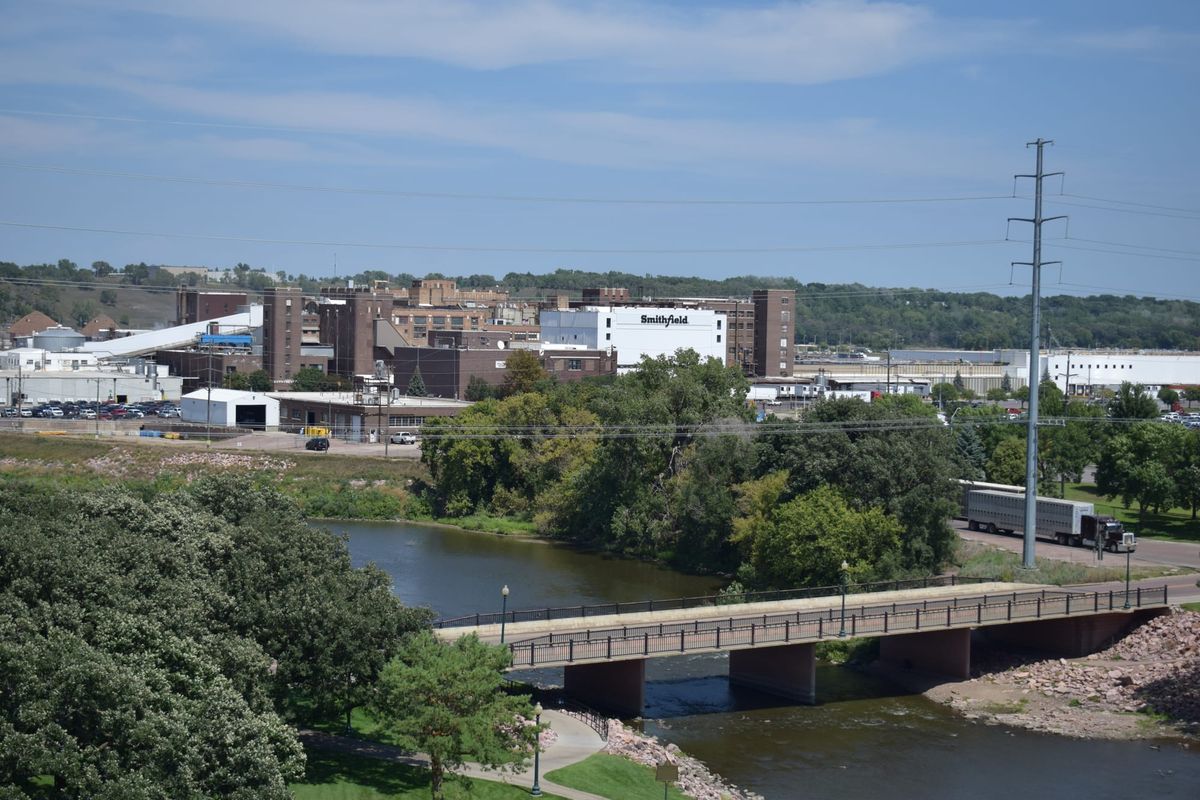
Mark Wilhelm, a representative from Smithfield, said in a March Sioux Falls City Council meeting that the company "understands the concern" and that the plant's status as a greenfield development –a built-from-scratch project on previously undeveloped land – means that "air-tight" and "air-balanced" designs will be in place to prevent and mitigate odor.
Smithfield is the latest in a long line of major developments in the Sioux Falls area that is tied to Foundation Park, the state's largest industrial park owned by the Sioux Falls Development Foundation. Other big-name tenants include FedEx, Amazon, which employs more than 1,500 people at its distribution facility, U.S. AutoForce, a tire and auto-part distribution company, and an Avera and Owens & Minor medical supply distribution center.
 Molly Wetsch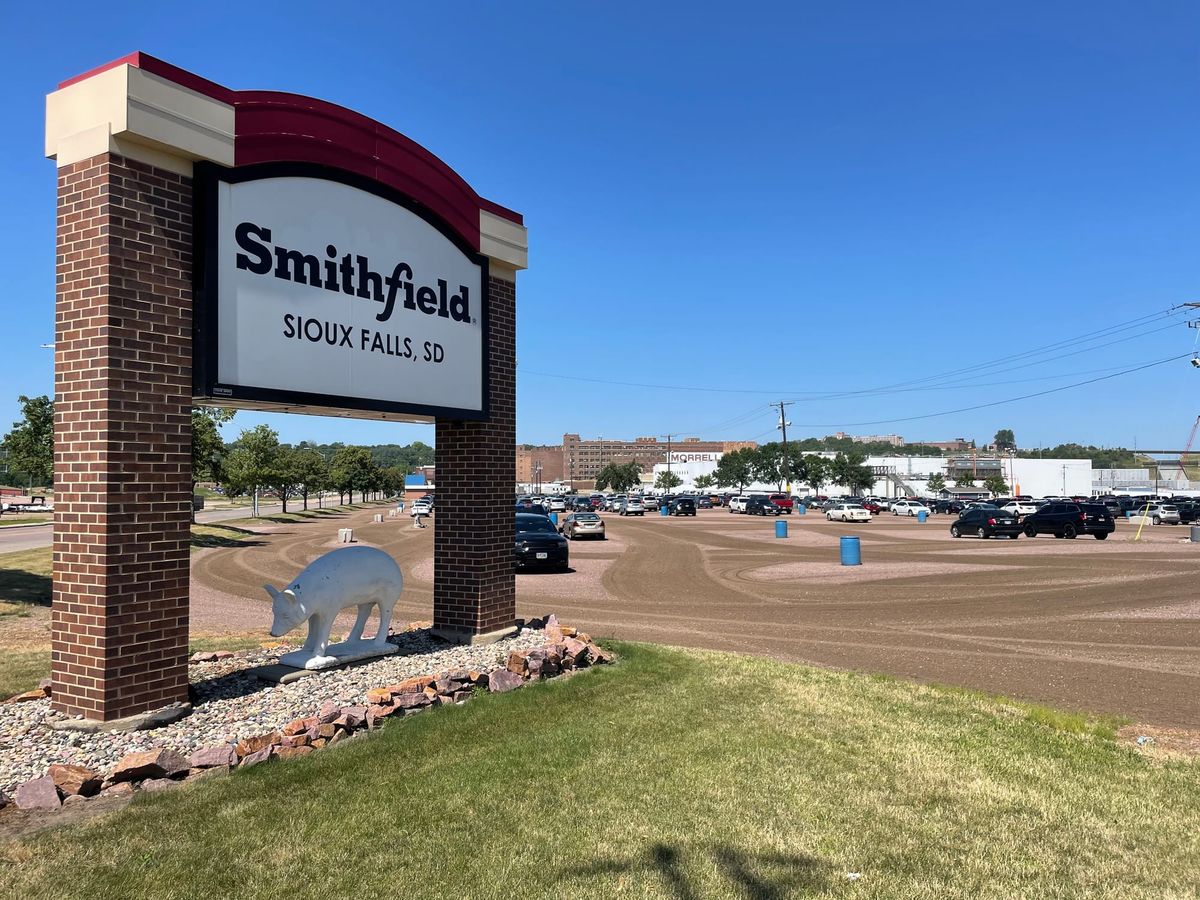
'Responsible growth' needed
Bob Mundt, president of the development foundation, told News Watch that while he understands the Smithfield relocation will impact those who live nearby, the city views Foundation Park as "responsible growth" that makes sense for Sioux Falls' business and residential community.
"I think we've looked at ramifications and impacts that we will have with some of the stuff that we're doing and we're trying to be very sensitive to the people that are around us. But at the same point we want to grow responsibly, and that's going to impact some of the folks around us," Mundt said.
This newsletter and all our stories are free because we believe that essential, fact-based information should be available to everyone, not just those who can pay for it. If you can afford it, please consider joining others and becoming a supporter. Thank you.
Guthrie's concerns about the development's impact on her property date back to when Foundation Park was announced in 2015, she said. But many of the nearby homeowners have lived in the area for several decades and weren't ready to consider leaving right away, including one couple that has owned their home on Marion Road since 1979, she said.
"The common comment is, 'How stupid were you to buy (property here) when you knew it was going to be heavy industrial?' Well it kind of wasn't that way," Guthrie said.
The Guthries' property, while it sits adjacent to city-zoned properties, is not formally zoned within city limits. All of the surrounding parcels, which are part of Foundation Park, are zoned for heavy industrial use, which according to Sioux Falls' zoning ordinances, "may create some nuisance and are not properly associated with, nor compatible with, residential, office, institutional, or planned or neighborhood commercial establishments."
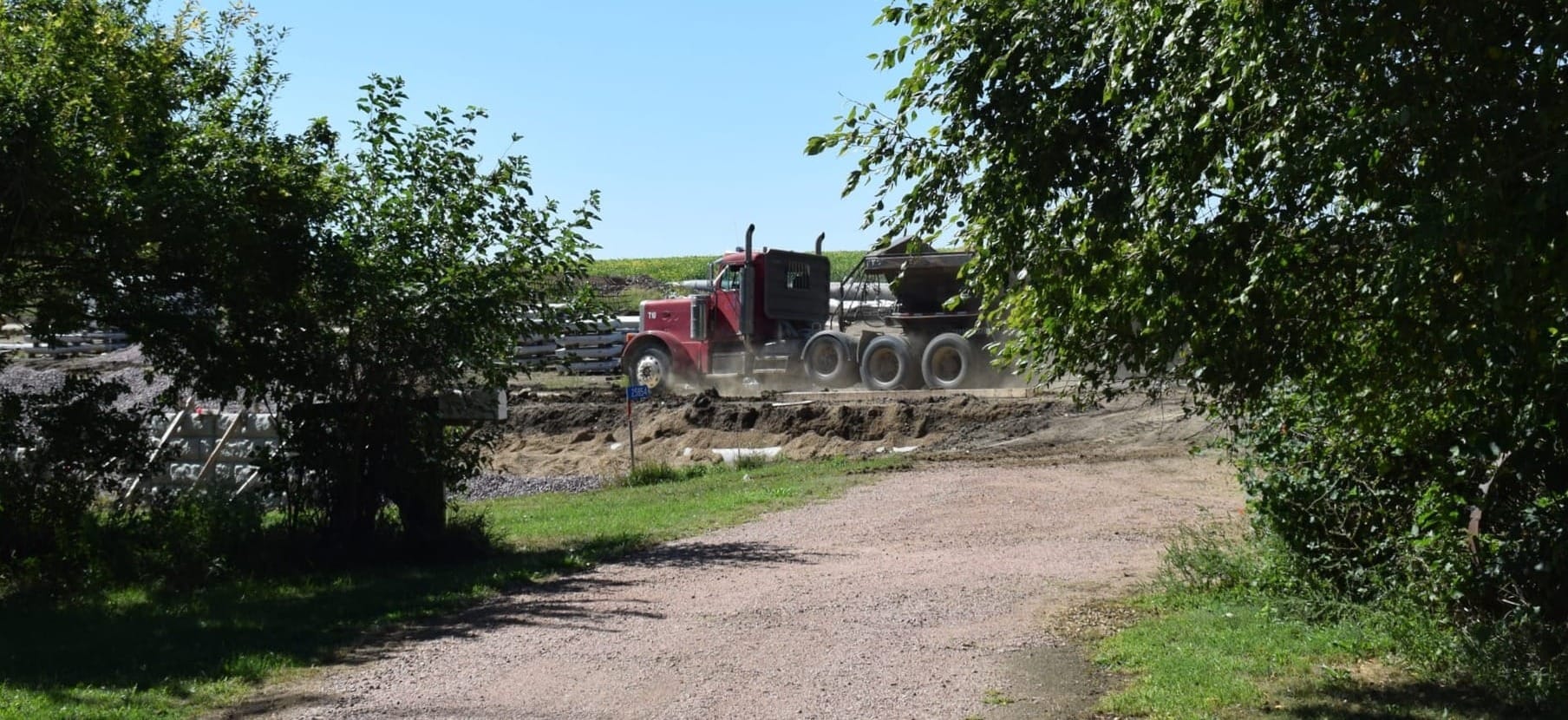
The development of the area has also shown its face beyond the tenants of Foundation Park, including a $16 million bridge project on Marion Road. Parts of that bridge, including a large wall, hug the Guthries' property line. They've had to carve out a new driveway, since Marion Road outside their door is closed.
Construction noise is near-constant during the day on the property. Guthrie fears it's scaring away the birds.
The City of Sioux Falls' website says that project will be completed in October of next year, and says the construction is "necessary to accommodate anticipated traffic increases due to development at Foundation Park."
Huge economic impact on region and state
Proponents of both Smithfield and the Foundation Park development as a whole say that the economic impact the developments bring to the area cannot be overstated.
In the announcement of the Smithfield relocation, then-mayor of Sioux Falls Paul TenHaken said that the company has an estimated $3.3 billion annual economic impact on the state. It currently employs 3,200 people at its downtown Sioux Falls location. And Foundation Park's intention was always to bring major companies to the city, Mundt said, with a hope that even neighboring communities would see the benefit.
"Most companies are locating in communities that have the ability to provide the services to them that they need," Mundt said.
"The larger communities lend themselves better to that than some of the smaller communities, especially when it comes to larger manufacturing and processing. The benefit to the communities around us certainly is that they still have the opportunity for some of those smaller developments and those types of things in the communities but also really to act as feeder communities for some of the businesses and industries that we have here. Not everybody's going to live in Sioux Falls. They're going to want to live in some of the smaller communities around us, rural settings, and drive to town."
Guthrie said she originally bought the property because of her affinity for Sioux Falls and what she loved about the region – that you could live in a rural setting and still benefit from the city's amenities.
"That was the beautiful thing about Sioux Falls, is you could have a place like this near everything you needed, but you didn't have to be part of it," Guthrie said. "I had my office in Sioux Falls (when we bought the property). My husband has a repair shop in Sioux Falls. We've got a church there, we shop there. I mean, every one of our neighbors is in Sioux Falls on a regular basis. It's not like we've isolated ourselves or aren't part of the economy."
Sioux Falls booms, suburbs see impact
The Guthries' new lifestyle is an example of how the state's largest city is beginning to reckon with its unique growth in an area with a largely rural, small-town culture: In 2025, South Dakota's only two metro areas – Rapid City and Sioux Falls – for the first time officially took up half of the state's population.
 Melissa Avelino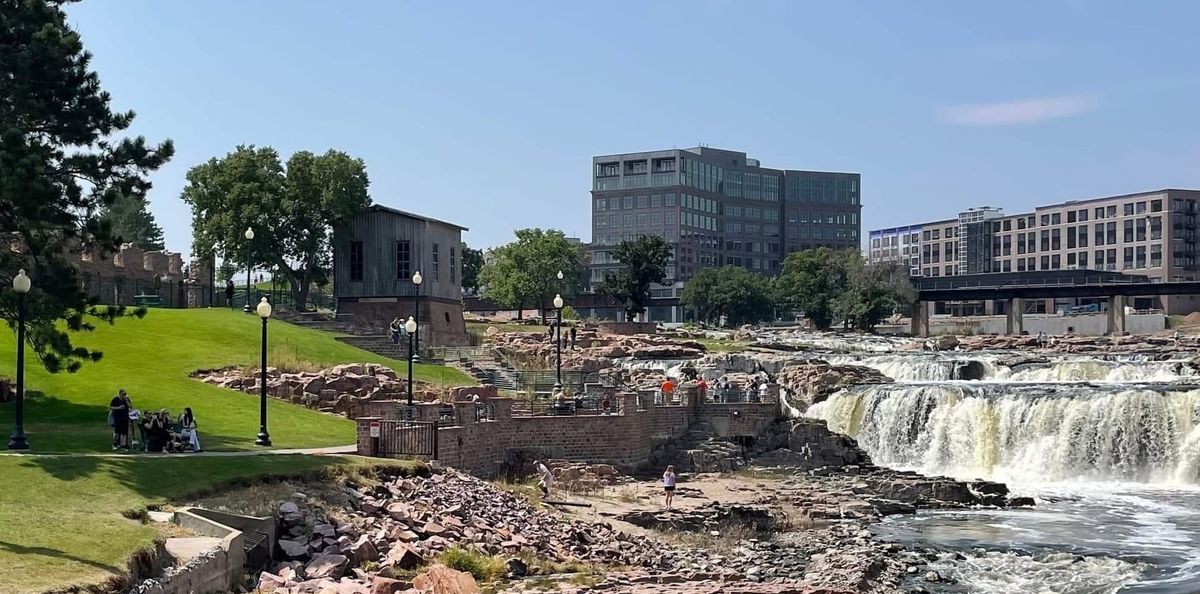
In the Shape Sioux Falls 2050 plan, one of the primary goals listed for the city's growth over the next several decades is rural preservation. That plan says the city has a priority to "protect the character of agricultural uses and neighboring communities by guiding growth in a way that respects rural character and avoids development before infrastructure is available."
Mundt said that some industrial developments like Smithfield have the opportunity to help maintain the state's agricultural and rural identity.
Get free, fact-based South Dakota news and information in a weekday email. No spam. Cancel any time.
"South Dakota is an ag state. We've always been an ag state. We will continue to be, in my opinion, an ag state. But there will always be larger pockets of commercial and industrial development that lend themselves to that market," he said.
It's a crucial consideration when beyond the edges of town, farm land and acreages spread wide. Sioux Falls' next-closest metropolitan area according to U.S. Census Bureau standards is 85 miles away in Sioux City, Iowa.
Sioux Falls' fastest-growing areas, in terms of population, are nearly all on the south side of town and have been for decades, according to data analyzed by News Watch in 2025.
Harrisburg, a bedroom community south of Sioux Falls, became South Dakota's fastest-growing city in 2024, with neighboring suburb Tea not far behind. Mundt said that the rapid growth of southern Sioux Falls has sparked more conversations with nearby leadership.
"Certainly we're running up against our borders," Mundt said.
"You can look to the south and you're running up against Harrisburg and Tea, and I think we have some mutual agreements with them on growth and expansion," he said. "We are cognizant of our neighbors around us and certainly want to work with them to grow the region. Sioux Falls itself has some growth boundaries and that northwest corridor is kind of where we're looking at more industrial growth."
Concern and opportunity for Crooks
The new Smithfield development, which will complete the north end of Foundation Park, runs right up to Sioux Falls and Crooks city limits. That sparked a conversation in a Crooks' city council meeting in March, where residents voiced concerns about the impact the new development would have on the town of 1,200.
Butch Oseby, who has been the mayor of Crooks since 2019, initially campaigned for office on the principle of "smart growth." He told News Watch that for Crooks, smart growth includes conversations with residents, who appreciate their home's small-town culture, and considerations of how to supplement the town's economy without overwhelming the infrastructure.
"We want to grow, but not 100 miles an hour. Thirty-five, 40 miles an hour is plenty good for us," Oseby said.
Oseby said that the development of Foundation Park provides both opportunities and concern for Crooks residents. He sees an opportunity for growth in retail, expanding the sales tax base for the town but is also concerned about fast population growth and the inability to support new housing. Mostly, though, the northwestern industrial growth of Sioux Falls has been a wake-up call.
"I guess you could say the developments in Foundation Park have made us realize we've got to put our 35-, 40-year plan out there and claim some of the land going south," Oseby said. "For the longest time Crooks, and small towns like us, we were quiet and didn't get engaged. Since Foundation Park, we saw the light, so we need to look at where we're at."
 Bart Pfankuch
Oseby also said that he attends an ongoing monthly mayor's meeting among towns and cities in the Sioux Falls metro area, which has helped establish the region's growth as a cohesive project rather than individual efforts.
"We're constantly talking about that, 35 years from now, Baltic will be close to Sioux Falls (metro area), as they grow north over there, and Hartford is the same way as things grow west," Oseby said. "Those are things we talk about as to, where do you think your city will be or should be? And where do we come up with the line that would be in between?"
South Dakota News Watch is an independent nonprofit. Read, subscribe for free and donate at sdnewswatch.org. Contact reporter/Report for America corps member Molly Wetsch: 605-531-7382/molly.wetsch@sdnewswatch.org.