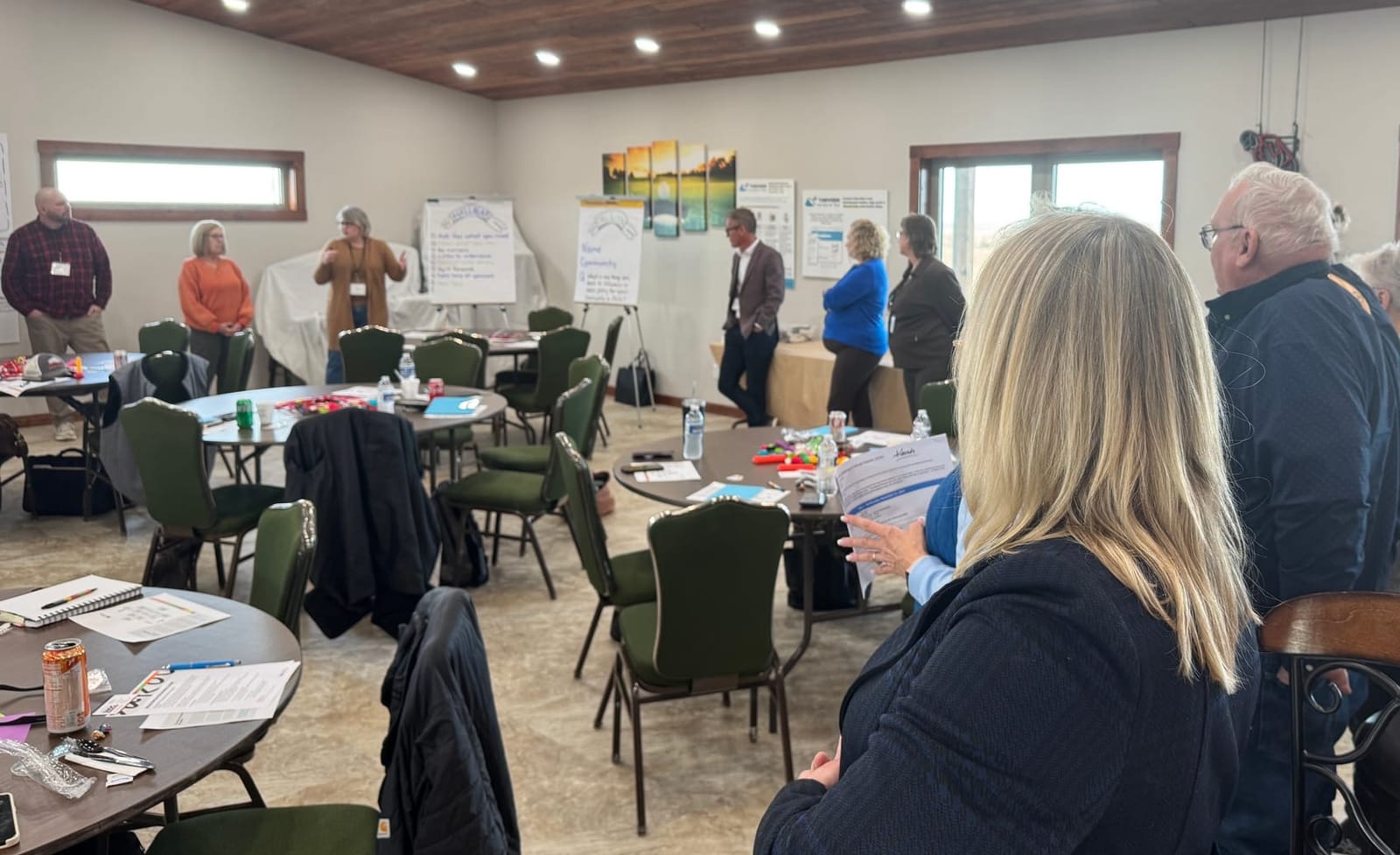

MURDO, S.D. – When a group of two dozen economic development leaders gathered in this central South Dakota city in November, they were asked to list the top challenges to growth and prosperity in their communities.
The concerns were as varied as the cities and towns they represent and ranged from pinpointing local problems to big-picture historical hurdles.
Some worried about how vacant or dilapidated downtown buildings were turning away potential new businesses and residents, while others sought ways to attract younger people who can build a community's future.
But one overarching issue hovered over all the local challenges: a need for more and better housing to accommodate new residents who will create the backbone of any economic development initiative.

"People don't follow jobs as much as jobs follow people," Brian Blackford, a Ball State University professor of community development, told the group.
One major takeaway of the Thriverr session hosted in Murdo by the nonprofit Dakota Resources community development group was that to attract those people, almost every community in South Dakota needs more housing.
That sentiment was a critical factor that drove a new, coordinated effort in 2025 to highlight successful housing development programs across South Dakota.
Solutions-focused storytelling shares best ideas
The need for more housing, and a desire to share what is working in individual communities, underscored a partnership South Dakota News Watch launched in 2025 with Dakota Resources.
Dakota Resources is a nonprofit Community Development Financial Institution that has provided support to local communities in South Dakota for more than 25 years.
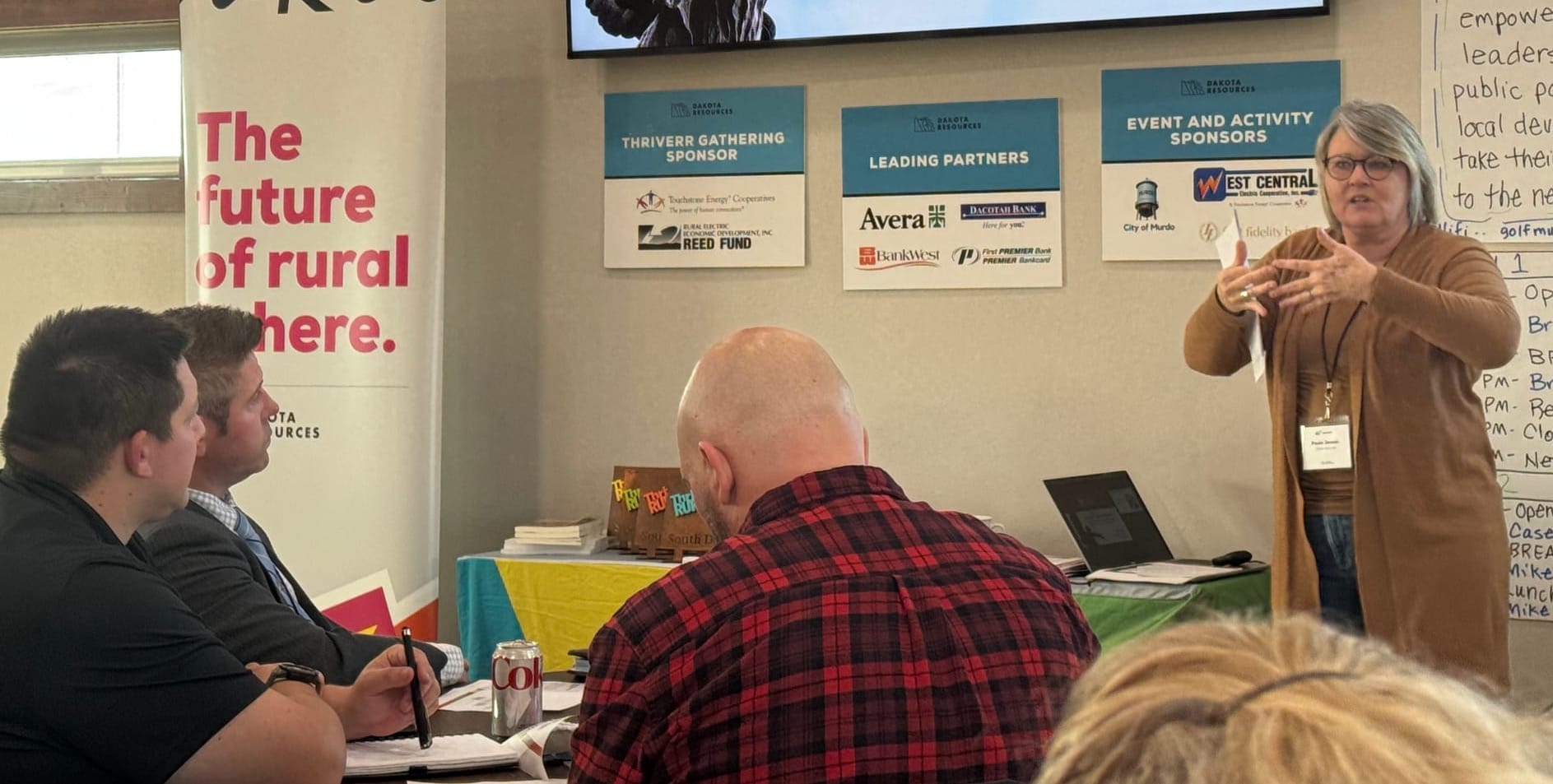
Paula Jensen, vice president of program development at Dakota Resources, told the Murdo gathering that idea sharing both inside and outside of communities is an important part of generating statewide momentum for continuing growth.
"So much of this just comes down to communication," Jensen said.
Throughout 2025, News Watch embraced that concept by telling stories of successful housing development efforts in Redfield, Wall, Chamberlain and Salem. It previously featured stories from Mitchell and Aberdeen.
Known as Engage South Dakota, the ongoing reporting project highlighted a strong spirit of innovation and idea sharing among local housing agencies and nonprofits that seek to generate new housing opportunities in communities across the state.
Driving the project forward were the tenets of solutions journalism, a rising philosophy among some American news outlets to not only report on problems but to also highlight successes and solutions that can hopefully be duplicated elsewhere.
The ongoing housing projects across the state are often bolstered by public-private partnerships and investments of money, time and energy by local nonprofit organizations.
The Engage South Dakota effort will continue in 2026 and beyond, fueled in large part by a $100,000 grant from the South Dakota Community Foundation.
 Bart Pfankuch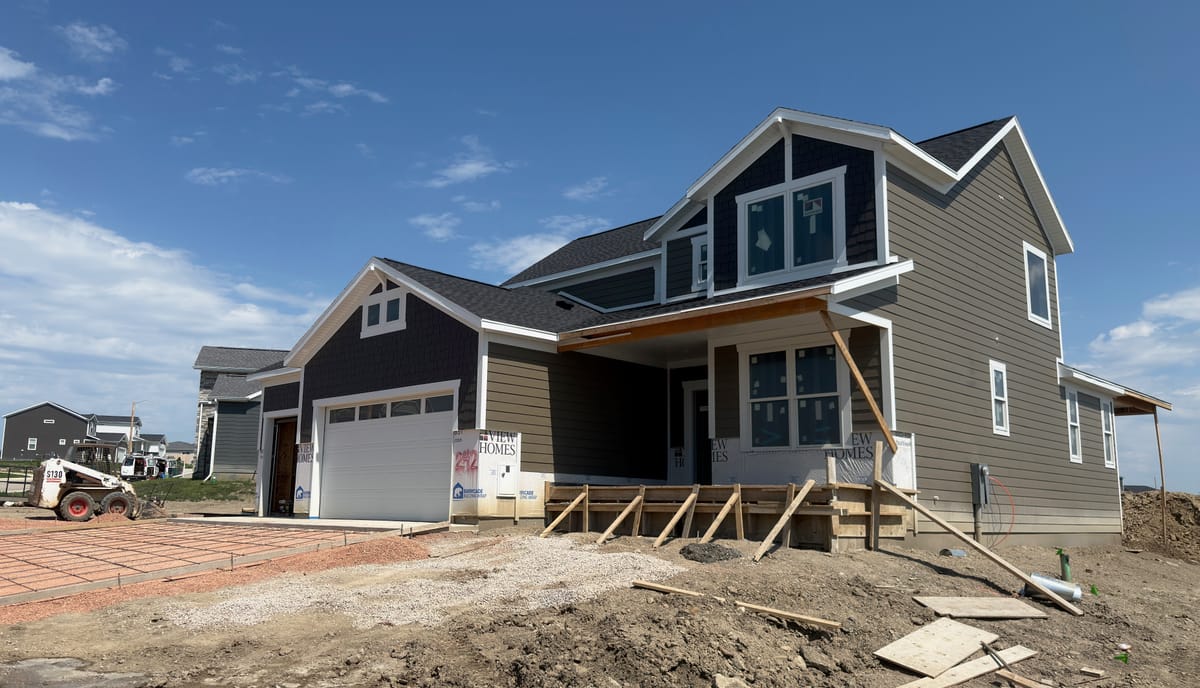
As part of that project, News Watch has developed an online landing page where published articles are posted along with a roster of resources that agencies and nonprofits can tap into to obtain funds, locate resources or get new ideas to spur further housing growth.
Focus is duplication of ideas that work
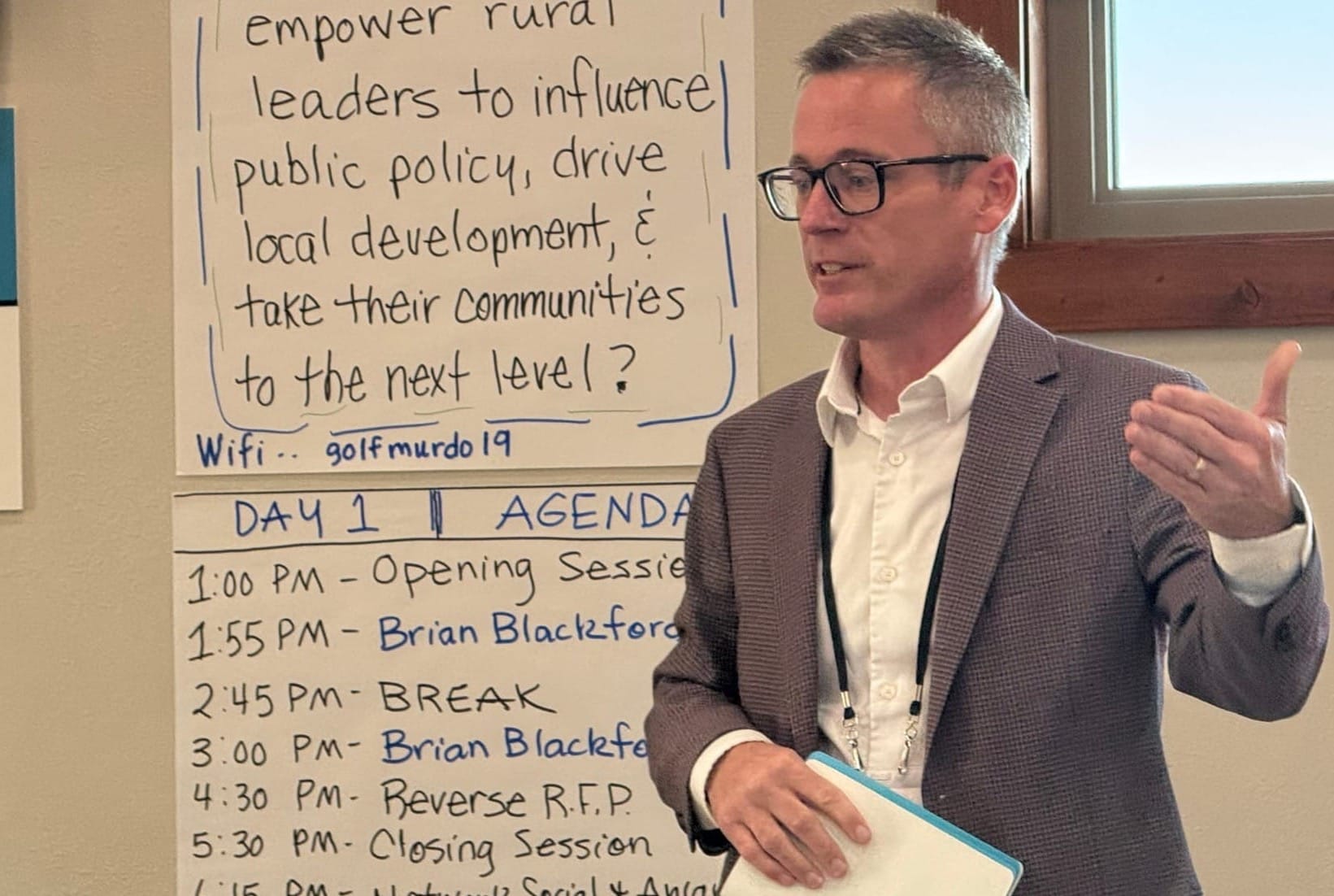
At the two-day meeting in Murdo in November, members of the Dakota Resources team provided attendees with a wealth of resources to generate new economic growth and housing opportunities.
Under the banner of "Using of Public Policy for Local Development," the group provided a slate of speakers and statewide experts on hand to share their research but also to answer specific questions posed by local development officials.
A handful of economic officials from rural communities were tapped to share their successes and answer questions on how their efforts can be replicated elsewhere.
For example, Republican state Rep. Mike Weisgram of Fort Pierre shared details of how his community was able to implement a local hotel, motel and campground occupancy tax of $2 per night that opened the door to increased tourism promotion and community enhancements in the city of 2,200.
Another presentation provided attendees a road map to enacting an ordinance that uses the threat of fines to urge owners of vacant downtown buildings to either renovate or sell their properties that can become eyesores.
"It takes partnerships, it takes patience and it takes a fair amount of capital," he said. "But (revitalizing) one building at a time can make a huge impact in your community." – Jared Hybertson, economic development coordinator in Centerville
Jared Hybertson, economic development coordinator in Centerville, a Turner County city of 900 located about 40 miles southwest of Sioux Falls, said the city's vacant building ordinance was aimed at preventing potential blight that can deter growth in a downtown district.
In 2014, before Centerville had the ordinance, there were 11 vacant buildings downtown, some of which had become eyesores due to long periods of vacancy.
Hybertson told the Murdo group that generating initial support for the ordinance among elected officials and the community at large is a big first hurdle.
"I know a lot of small towns struggle with this, and getting an ordinance off the ground is probably the hardest part," he said.
Hybertson said the ordinance has created a few tense moments with property owners. But it has ultimately led to redevelopment of several downtown buildings and storefronts that are now used as businesses, community hubs and residences.
"It takes partnerships, it takes patience and it takes a fair amount of capital," he said. "But (revitalizing) one building at a time can make a huge impact in your community."

This story was produced by South Dakota News Watch, an independent, nonprofit organization. Read more stories and donate at sdnewswatch.org and sign up for an email to get stories when they're published. Contact content director Bart Pfankuch at bart.pfankuch@sdnewswatch.org.