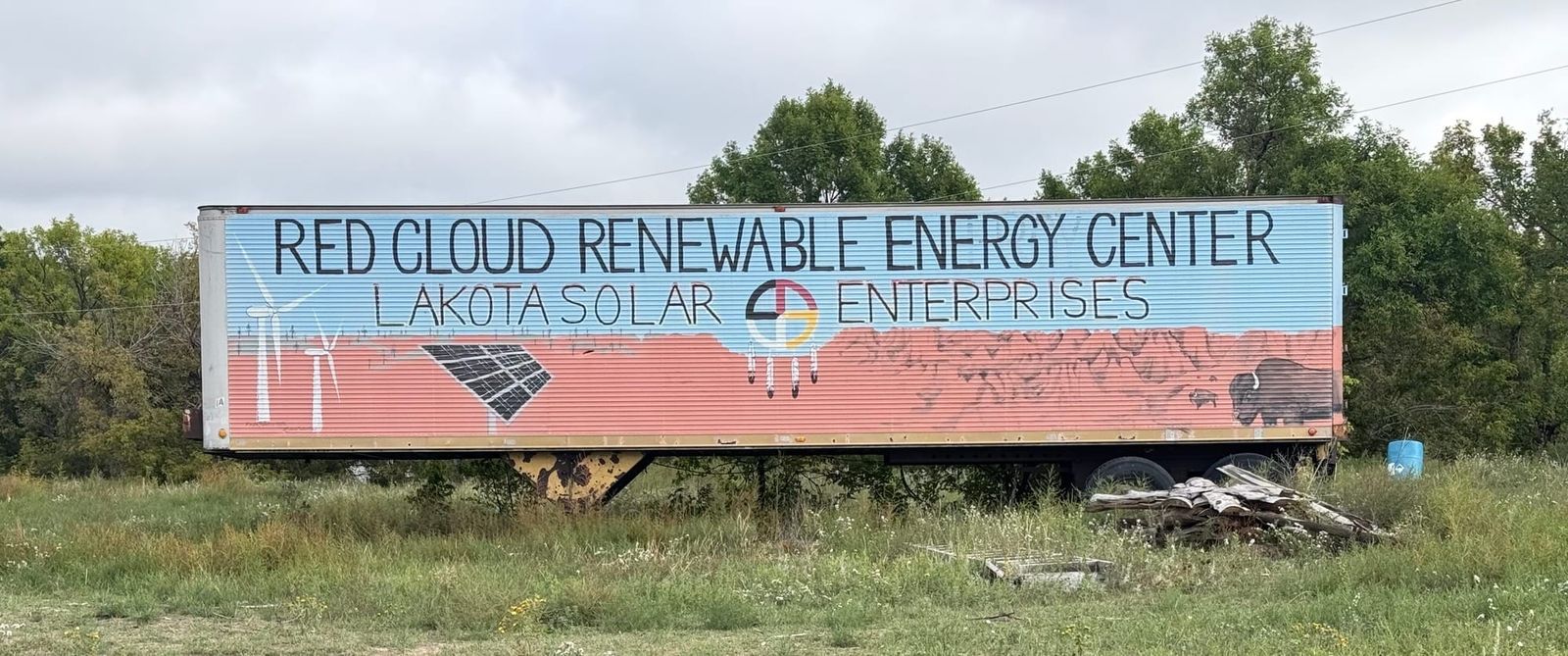
Red Cloud Renewable Energy Center houses and trains students to work in the solar power industry, and the nonprofit was recently given a national award for its efforts.

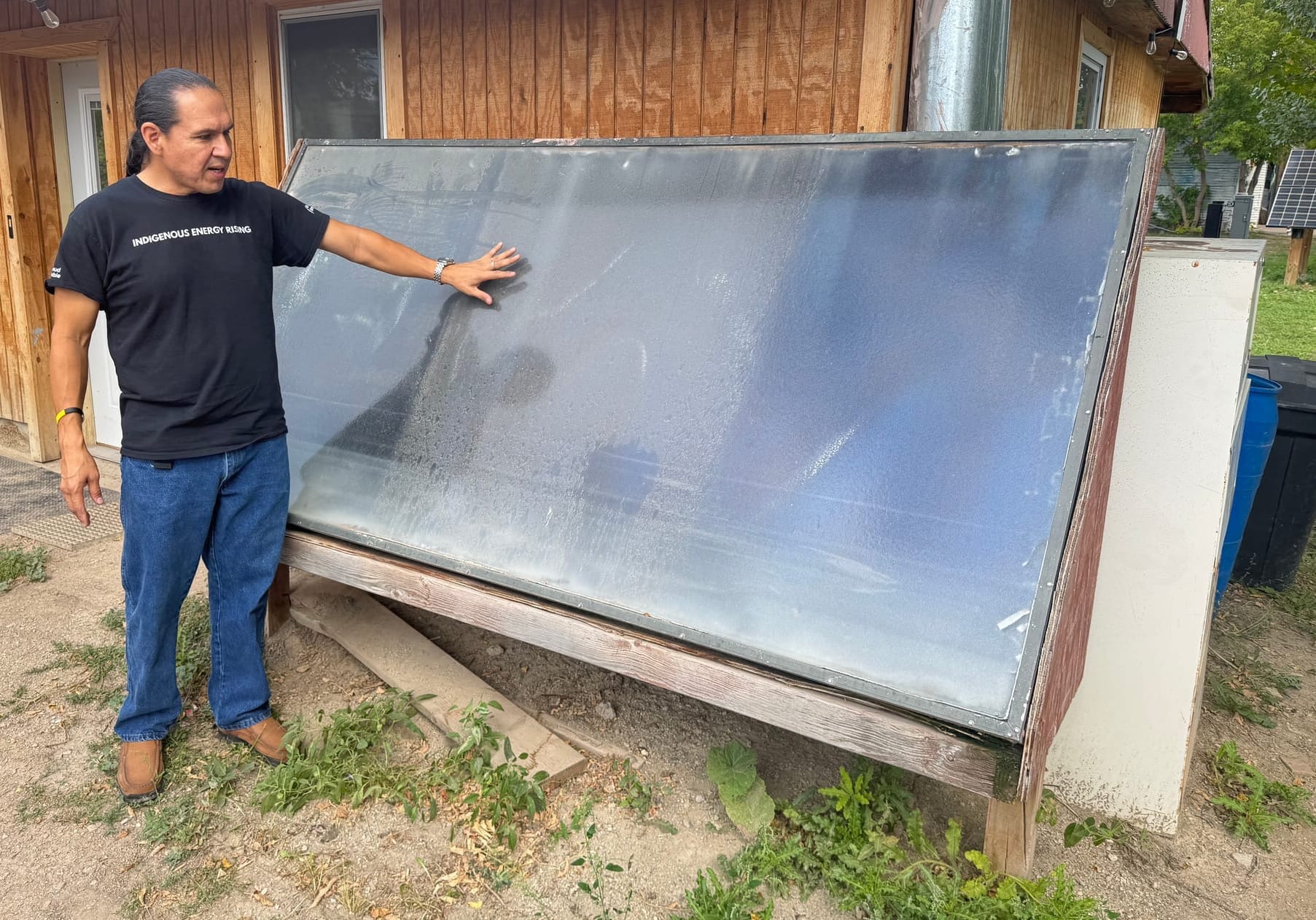
PINE RIDGE, S.D. – John Red Cloud wiped his hand across a large plastic panel held within a worn wooden frame that sits conspicuously just outside the door to the office of Red Cloud Renewable Energy Center, a solar education facility located on the Pine Ridge Indian Reservation.
For a moment on a sunny day in September, Red Cloud became a bit sentimental as he described the contraption and its unique place in the history of the nonprofit training center that prepares Native American adults for jobs in the sustainable energy workforce.
"This is where it all started, with just some tinkering by my father," Red Cloud said. "This was the solar hot air furnace that kicked off my father's vision."
Get free, fact-based South Dakota news and information in a weekday email. No spam. Cancel any time.
The somewhat makeshift yet inexpensive device contains a solar panel that generates hot air that is then circulated by a small fan. Red Cloud's father, Chief Henry Red Cloud, began to mass produce the furnaces in the early 2000s, ultimately bringing low-cost heat to about 1,200 homes on the reservation known for its frigid winters and high poverty rate.
After seeing the benefits of the furnace, and realizing the sustainable power of the sun, Henry Red Cloud launched Lakota Solar Enterprises, among the nation's first Native-owned renewable energy companies.
When word of his energy prowess spread, and as other individuals and tribal nations sought to replicate his success, Henry Red Cloud would eventually develop the Red Cloud Renewable Energy Center that has since taught solar functioning and installation to more than 1,100 people, mostly young Native Americans seeking a path out of poverty and into prosperity.
"There's a lot of doom and gloom on our reservation, but there's a few pockets of hope that are happening," said John Red Cloud, who serves as vice president of the training center that launched in 2006. "There's a few good things that are coming out of here because of the people responding to the call, and I believe we are part of that new hope."
 Bart Pfankuch
In late September, Red Cloud Renewable was honored as the Power for All winner of the National Electrical Innovation Award presented during Climate Week NYC in New York City.
The award was given to recognize the organization’s "unique model that pairs vital technical workforce training for Native Americans with the immediate deployment of green energy technologies in underserved neighborhoods," according to a news release.
To Red Cloud, the connection between his Indigenous beliefs and solar energy makes perfect sense and has created a symbiotic educational setting that seamlessly blends culture and education on 10 acres of wooded lands about 9 miles northwest of Pine Ridge.
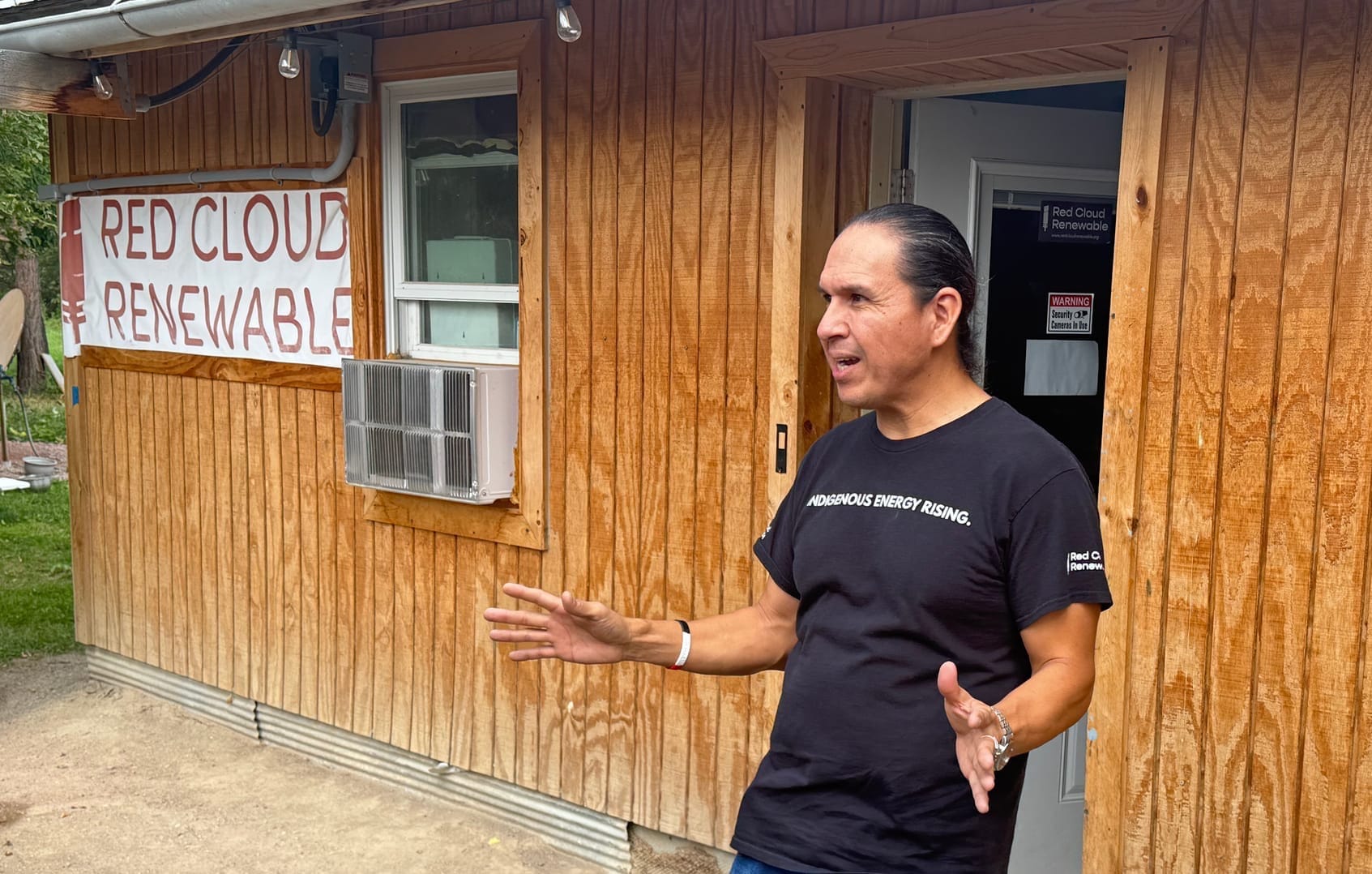
"If you know about the Lakota people, we use the Sundance to worship the sun and everything it brings,” he told a News Watch reporter during a tour of the campus in September. “We've always known the life-giving power of the sun, and now we can utilize it with these solar panels and turn it into energy.”
Then Red Cloud smiled and added, “I mean, how cool is that?”
Hybrid education model is online and hands-on
Roughly 1,100 students — more than 95% of them Native Americans — have completed the programming at Red Cloud Renewable and about 80% of graduates are working in the solar industry, Red Cloud said.
The graduates are referred to as "solar warriors" who can work in the field but also help bring other interested students to the center to obtain job training, said Red Cloud, who is a sixth-generation descendant of the famed Chief Red Cloud who was an influential Native leader in Nebraska and South Dakota in the 1880s and early 1900s.
The program consists of 60 hours of online training followed up by two weeks of hands-on, in-person training at the center near Pine Ridge. Some students live in on-campus dorms while at the center.
Students learn the basics of how solar energy is captured, stored and utilized, and then work with instructors on simulated rooftop solar systems and a model of an electrical metering system located on the campus. Upon successful completion of the program, graduates receive a certification that is recognized by the solar industry, Red Cloud said.
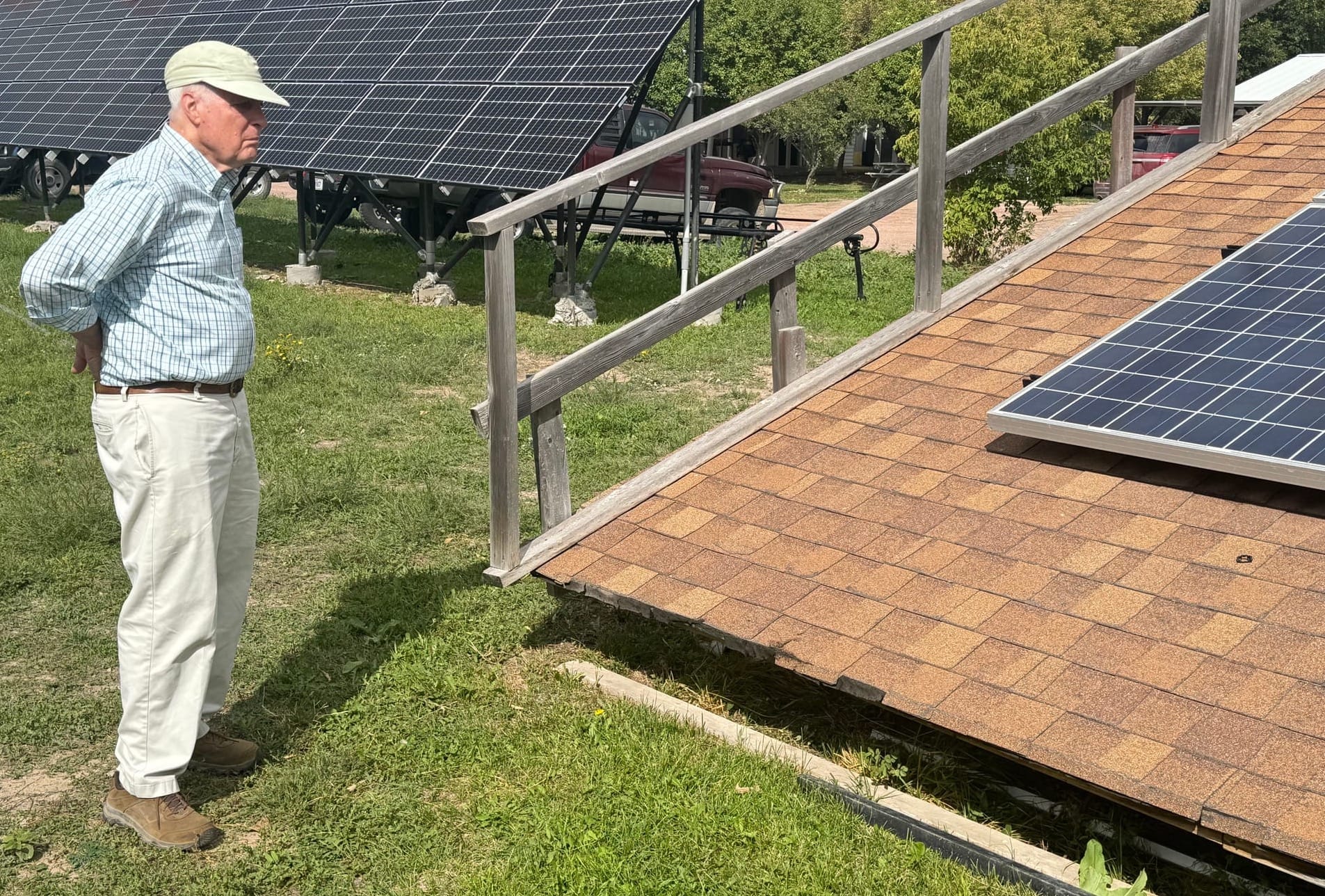
Most of the training is focused on the essentials of installation of home-based solar energy systems located on the ground or on roofs.
Red Cloud said industry contacts have told him that the graduates can easily be trained to work on installation of large-scale commercial solar fields, such as those now operating near New Underwood or under construction near Canistota, in southeast South Dakota.
Good jobs available in sustainable energy fields
The demand for skilled workers in the sustainable energy fields continues to rise, with a recent study by employment firm lemon.io placing solar energy as the field most likely to expand in the coming years.
 Bart Pfankuch
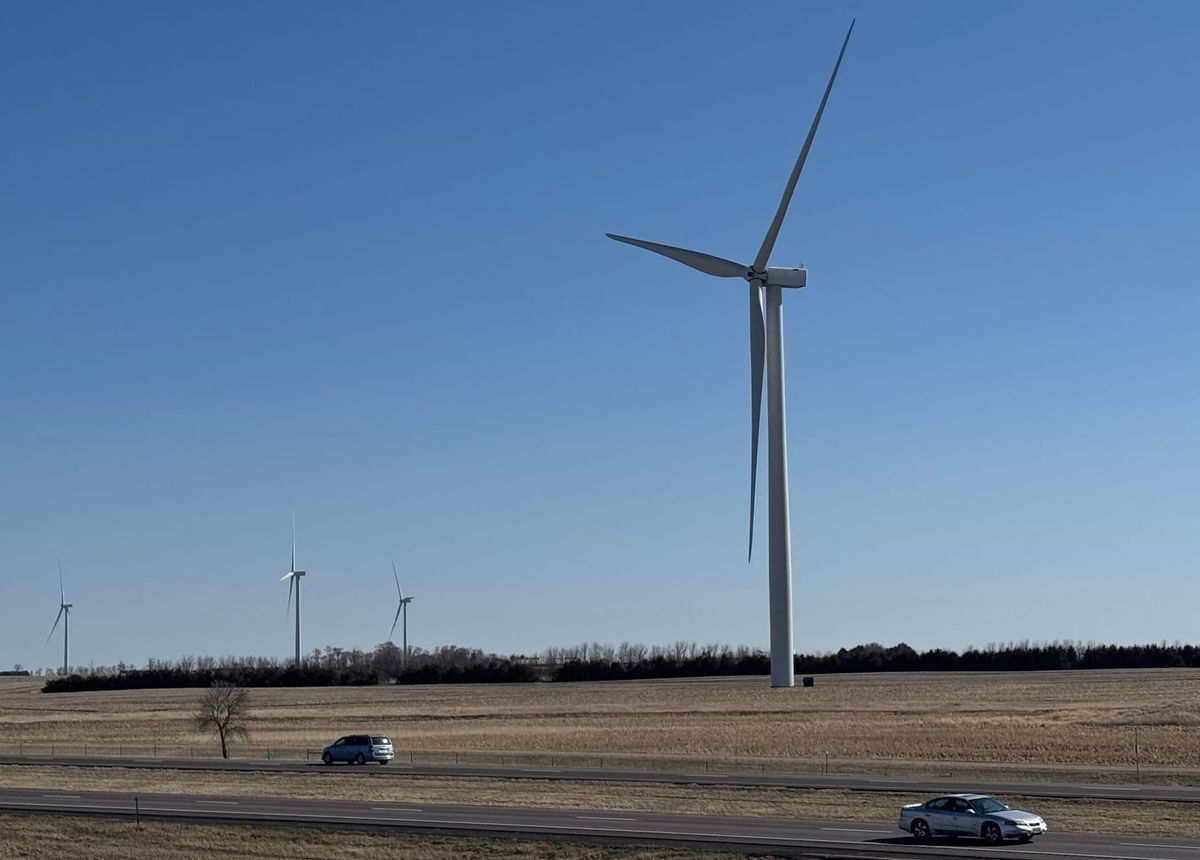
After reviewing the outlook for 40 industries, the firm ranked solar energy production tops, with 80% growth from 2022-24 and the expectation of adding 30,000 more jobs in the next decade at a media wage of $78,000 a year. Wind energy production was fourth in the ranking.
Keva New Holy took advantage of her training and certification from Red Cloud Renewable to land a good job serving as a traveling installer of home-based solar systems for a national firm. After roughly a year on the job in Florida and New York, she returned to Red Cloud Renewables this year to help others learn about solar as an employee of the center.
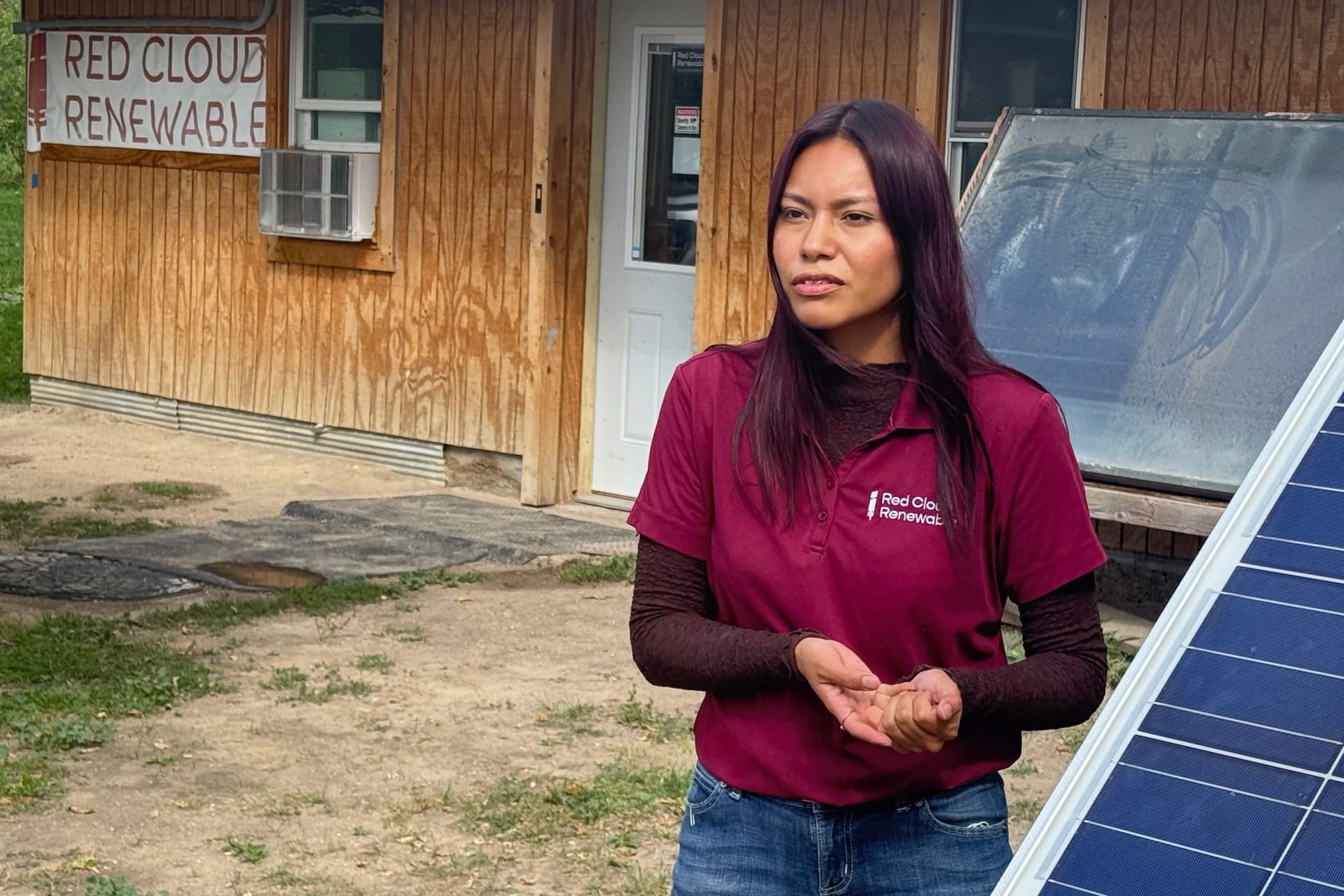
“A solar company came here and recruited me for a job,” New Holy told News Watch. “They had warehouses throughout the country, and we were one of the only ground mount crews.”
New Holy said her training helped her to land a promotion on the job and realize that solar installation is a way for other Native Americans to obtain a skill set that can help change their lives.
“Red Cloud opened their arms for me so I could return and help others,” she said.
Funding from several sources
Red Cloud Renewable is a nonprofit funded mainly by industry partners, grants, federal government employment program funding and donations by individuals.
The center does its best to tap a variety of funding sources for operations but also to keep tuition low or free for most students, Red Cloud said.
"The goal is to get people to come here and get the training and not impose any financial burden on them," he said.
In 2023, Red Cloud Renewable was given a $1.5 million grant to expand training opportunities in solar specifically for Native American women. The Biden-era grant was stalled by the Trump administration in 2025. But Red Cloud said the latest information from the federal government is that the grant reimbursement program will be funded.
Red Cloud lamented that outside of efforts by the center, no substantial or organized efforts exist to expand solar installation on the Pine Ridge Indian Reservation.
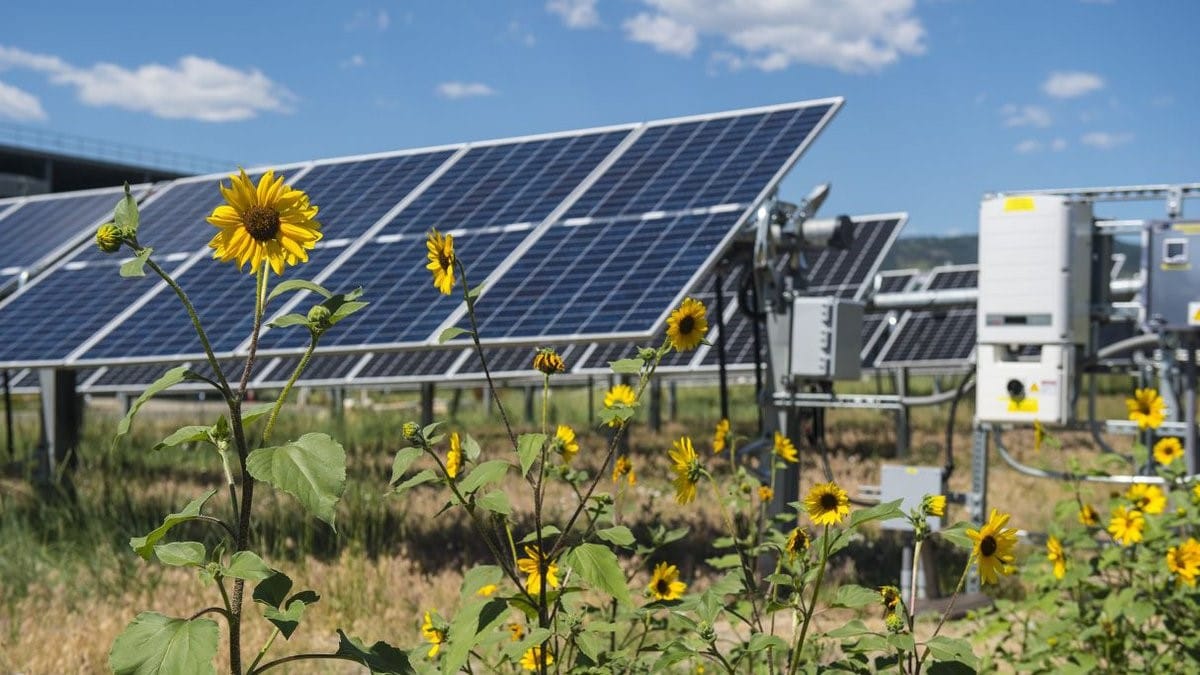
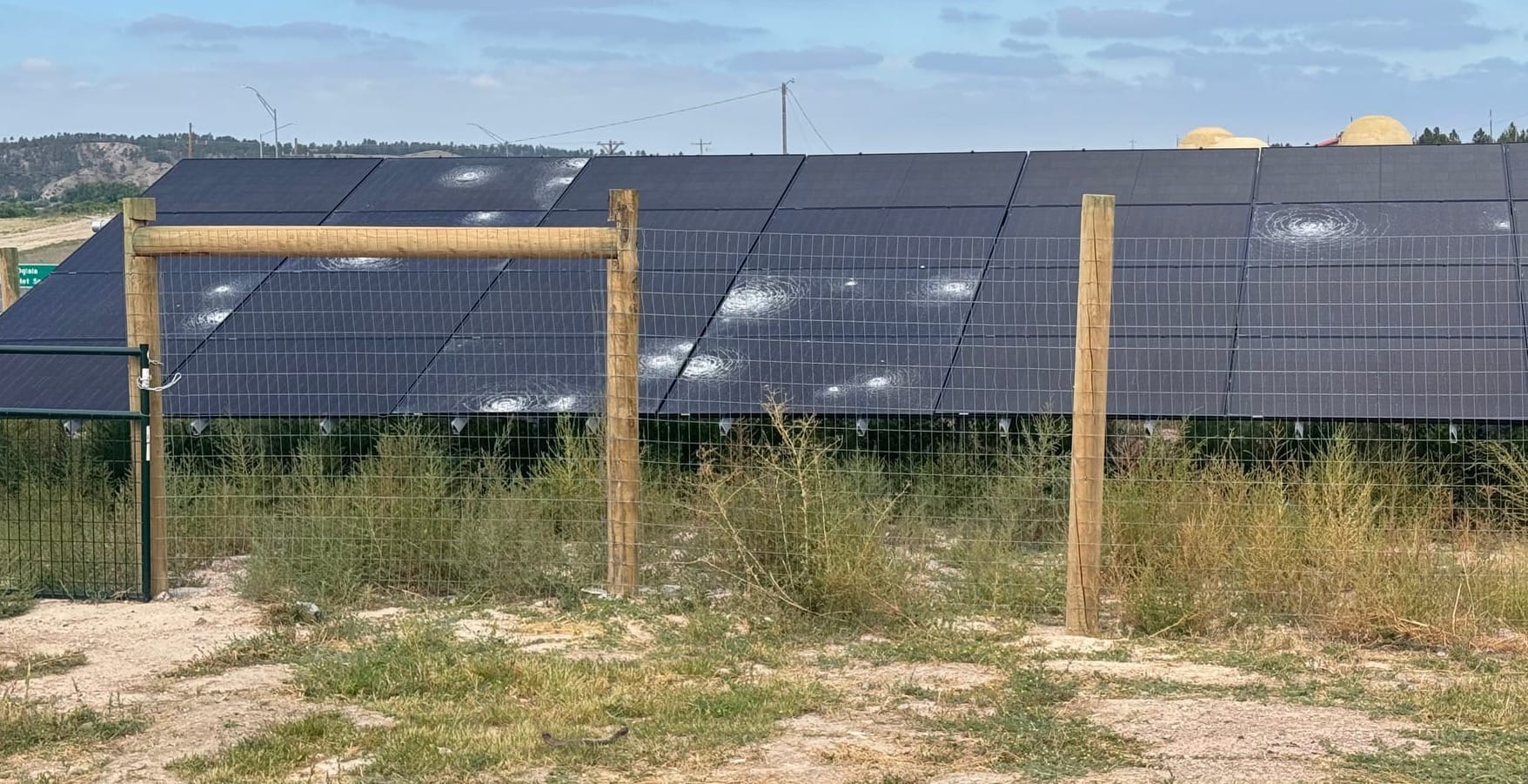
On a few occasions, however, instructors have taken groups of students to install solar arrays at some locations, including a functional solar field that helps power the Cohen Memorial Home for senior citizens in Pine Ridge.
On a sunny day in September, Red Cloud welcomed a pair of potential donors to the center for a tour of the facilities.
Potential donors David Martin of Virginia and Mid Tilghman of Maryland said they wanted to see first hand what Red Cloud Renewable had to offer to determine if they wanted to become investors in the center.
During the tour, Tilghman asked several questions aimed mostly at understanding how graduates could parlay their training into good jobs in the solar industry. He urged Red Cloud to expand placement efforts to speed the transition from student to employee.
"Without that, my fear would be that while your education is excellent, the application of the excellence gets lost or diminished over time without placement," Tilghman said.
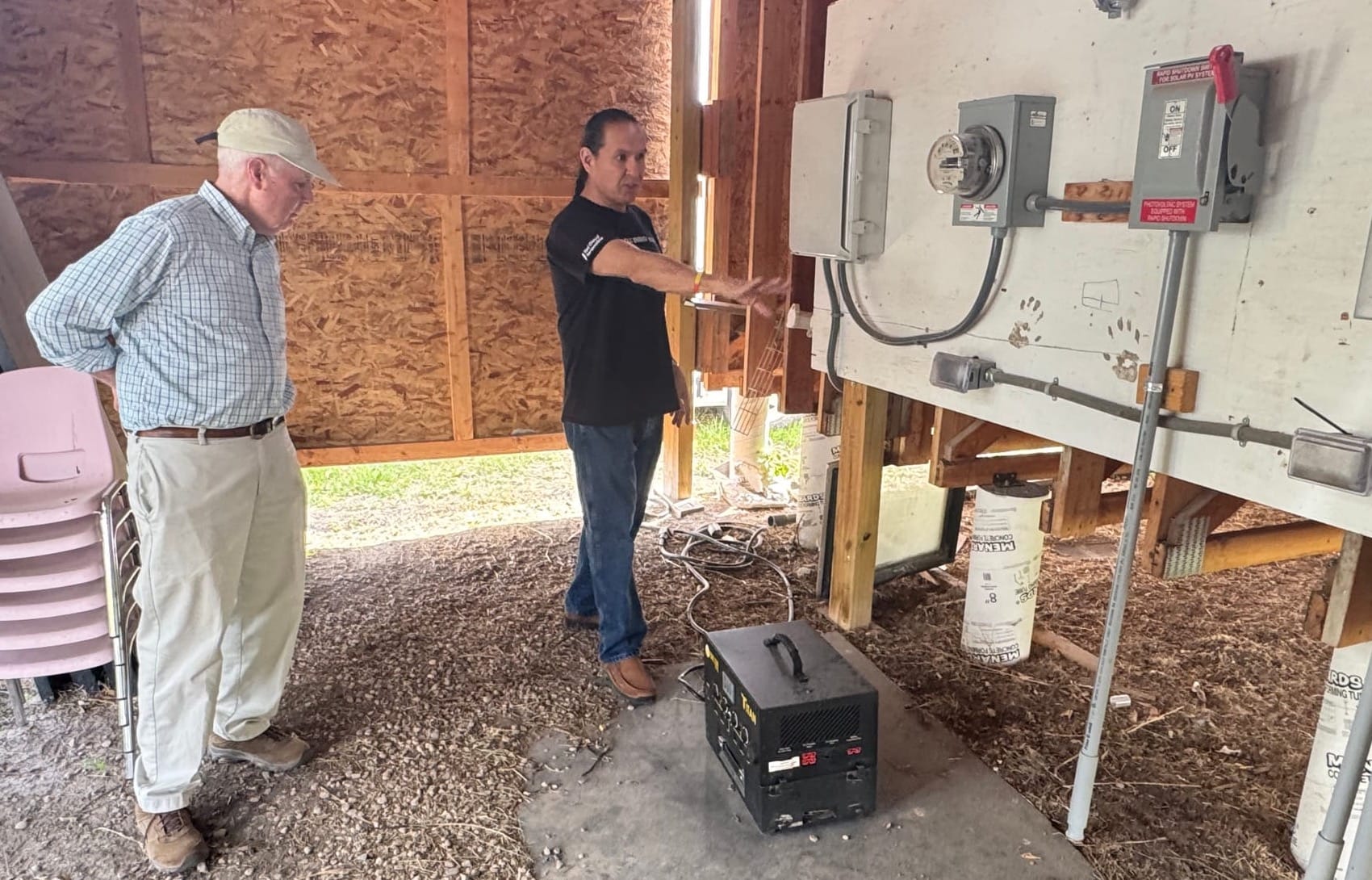
Red Cloud replied that the center has numerous contacts in the solar industry and the that center has become a frequent target for companies trying to hire for multiple openings. But he acknowledged that more could be done.
Spreading the concept beyond South Dakota
The main classroom building on the campus was abuzz with construction activity in September as the center tries to recover from a fire that damaged the building in April. Workers were on site installing new furnishings and also preparing new dormitory rooms where some students live during their training.
As he eyes the future, Red Cloud is working to expand the successful model he and his father have created in South Dakota. The team is pursuing an agreement to replicate the center's programming with the Confederated Tribes of Warm Springs, a tribal nation located southeast of Portland, Oregon.
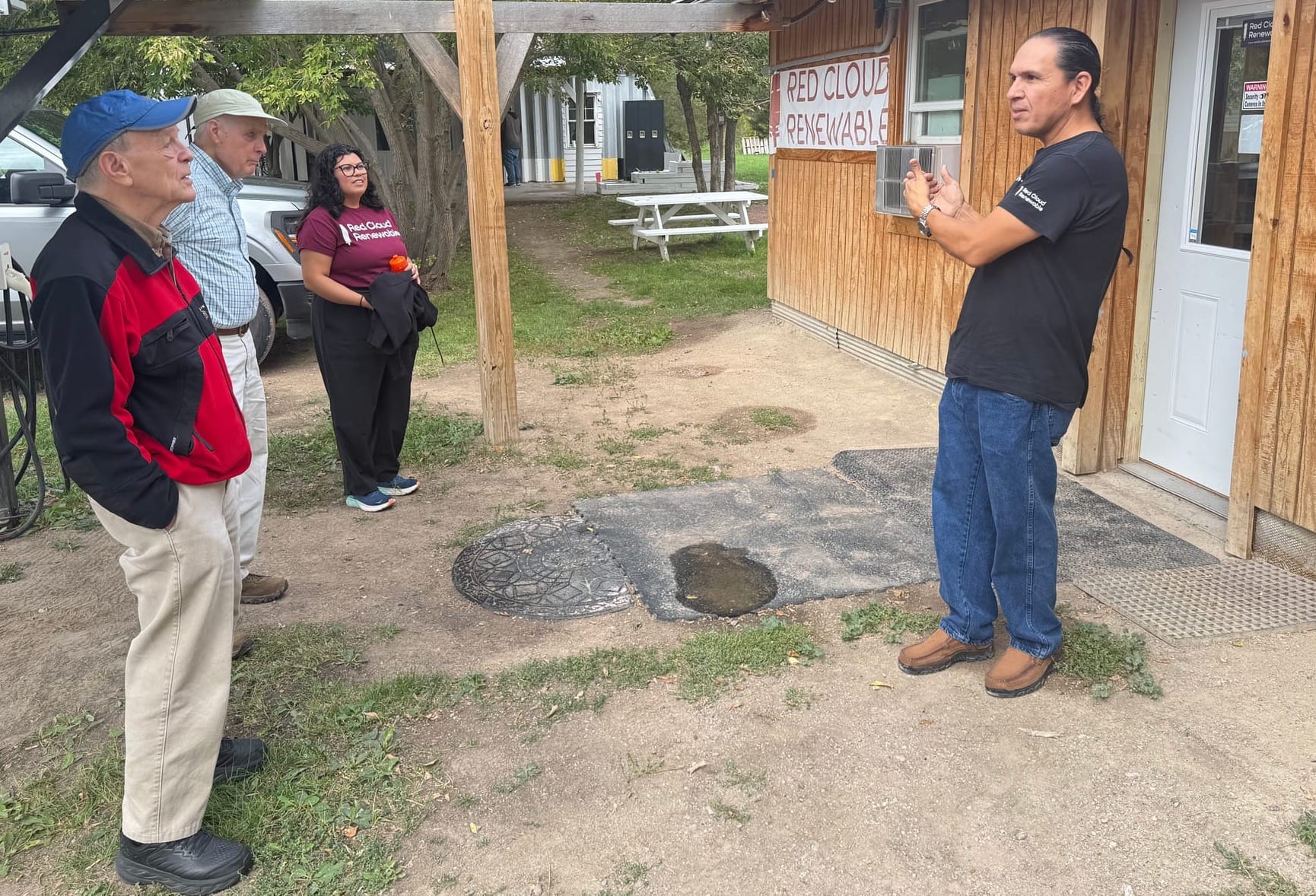
Regardless if the training takes place in South Dakota or some other state, the mission of the solar movement within Native American communities will remain the same moving forward, Red Cloud said.
"That's our whole goal, to get yourself out of unemployment and into a career," he said. "We think solar is going to become more ubiquitous in our society, so our graduates can go out and be on the forefront of tomorrow’s energy future."
South Dakota News Watch is an independent nonprofit. Read, subscribe for free and donate at sdnewswatch.org. Contact content director Bart Pfankuch: 605-937-9398/ bart.pfankuch@sdnewswatch.org.