
South Dakota's land has been home to Indigenous people for hundreds of years. Around 8.5% of the state's population identifies as Native American, and the nine reservations make up 12% of all land in the state – the fourth-largest percentage in the country.
This guide lays out the facts to know about the nine Native nations that call South Dakota home.
Cheyenne River Sioux Tribe
Governance
The Cheyenne River Sioux Tribe is governed by a chairman and a tribal council. The current chairman is Ryman LeBeau, who has served in the role since December 2022.
Geography
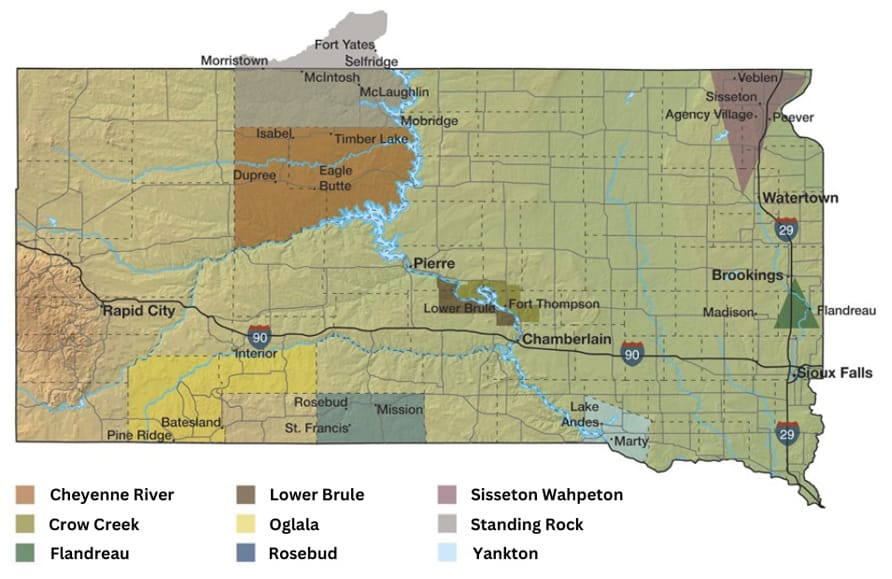
The Cheyenne River Indian Reservation is located in northwestern South Dakota, just west of the Missouri River and just south of the Standing Rock Indian Reservation. The trusted land base comprises 1.4 million acres.
People
Tribal enrollment in the Cheyenne River Sioux Tribe currently sits at an estimated 15,993 members; 8,594 people currently reside on the reservation – around 1,000 of which live in Eagle Butte, which houses the tribe’s headquarters. Four bands make up the Cheyenne River Sioux Tribe: the Mnicoujou, Siha Sapa, Itazipco and Oohenumpa.
Economy
The tribe is among the most prominent employers on the Cheyenne River reservation. Other businessses include The Cheyenne River Buffalo Co., which has one of the largest tribally owned buffalo herds in the country, and Missouri Breaks Industries, a health research organization.
Crow Creek Sioux Tribe
Governance
The Crow Creek Sioux tribe is governed by a chairman and a tribal council. The current chairman is Peter Lengkeek, who has held the position since 2020.
Geography
The Crow Creek Indian Reservation is located in central South Dakota, north of Chamberlain, on the eastern banks of the Missouri River and neighboring the Lower Brule Indian Reservation. The Crow Creek reservation comprises 125,000 acres.
People
Tribal enrollment in the Crow Creek Sioux Tribe currently is an estimated 4,600 members. Around 2,000 people currently reside on the reservation, with around 1,000 of them in Ft. Thompson, the tribal headquarters. The tribe's two bands are the Mdewakanton and the Ihanktonwan.
Economy
Prominent employers on the Crow Creek reservation include the Crow Creek Tribal School in Stephan and various agricultural enterprises.
Flandreau Santee Sioux Tribe
Governance
The Flandreau Santee Sioux Tribe is governed by a president, an executive council and a group of trustees. The current president is Anthony Reider, who has held the position since 2010.
Geography
The Flandreau Indian Reservation is located in eastern South Dakota and is the closest reservation to Sioux Falls. It's also the smallest in the state, at 3.68 square miles.
People
The Flandreau Santee Sioux Tribe has an estimated tribal enrollment of approximately 750, with around 450 living on the reservation. The tribe primarily contains descendants of the Mdewakantonwan, and its tribal headquarters is located in Flandreau.
Economy
Major employers on the reservation are the Royal River Casino and Flandreau Indian School. One of the tribe's most prominent businesses is Native Nations Cannabis, which was the first dispensary in the state.
Lower Brule Sioux Tribe
Governance
The Lower Brule Sioux Tribe is governed by a chairman and a tribal council. The current chairman is Boyd Gorneau, who was chairman from 2016-2020 and re-elected in 2024.
Geography
The Lower Brule Reservation is the western neighbor to the Crow Creek reservation, located on the western banks of the Missouri River. The trusted land base of the tribe is around 150,000 acres.
People
About 1,700 people live on the reservation, and there are around 3,400 enrolled members of the tribe. The Lower Brule Sioux Tribe, or Kul Wicasa Oyate, is part of the Sicangu band of the Lakota.
Economy
Major employers on the reservation include the Indian Health Service and Bureau of Indian Affairs as well as the tribe itself. Other businesses are the Golden Buffalo Casino and Lakota Foods, which produces popcorn.
Oglala Sioux Tribe
Governance
The Oglala Sioux, or Oglala Lakota, Tribe is governed by a president and a tribal council. The current president is Frank Star Comes Out, who has served in the role since 2022.
Geography
The Oglala Lakota Tribe is located on the Pine Ridge Indian Reservation in southwestern South Dakota and a small part of northwestern Nebraska. It neighbors the Rosebud Indian Reservation and is one of the largest reservations in the country, with 1.7 million acres of trusted land.
People
With around 52,000 enrolled members and nearly 20,000 living on the reservation, the Oglala Lakota Tribe is the largest in the state. Around 3,000 people live in the town of Pine Ridge, which is the tribe's headquarters.
Economy
Major employers are the tribe itself as well as Bureau of Indian Affairs and Indian Health Service. Others include educational institutions, like Oglala Lakota College and Red Cloud (Maȟpíya Lúta) Indian School.
Rosebud Sioux Tribe
Governance
The Rosebud Sioux Tribe is governed by a president and a tribal council. The current president is Kathleen Wooden Knife, who has served in the role since 2024. She is the tribe's first female president.
Geography
The Rosebud Indian Reservation is located in south-central South Dakota, neighboring the Pine Ridge reservation. The trusted land base, which includes off-reservation trust land, is around 890,000 acres.
People
Around 11,000 people live on the Rosebud reservation, with around 33,000 enrolled tribal members. The Rosebud Sioux Tribe members are from the Sicangu band of Lakota people and also go by the name Sicangu Lakota Oyate.
Economy
Major employers on the reservation include the Todd County School District and the Bureau of Indian Affairs. Other businesses include Siċaŋġu Propane and the Rosebud Farm Co.
Sisseton Wahpeton Oyate
Governance
The Sisseton Wahpeton Oyate tribe is governed by a chairman and a tribal council. The current chairman is J. Garret Renville, who's been in the role since 2023.
Geography
The Sisseton Wahpeton Oyate are located on the Lake Traverse Indian Reservation in northeastern South Dakota. The trusted land base comprises around 100,000 acres.
People
There are around 12,000 enrolled members in the Sisseton Wahpeton Oyate, and around 11,000 people live on the Lake Traverse reservation. The tribal headquarters is located in Agency Village, a few miles south of the reservation's largest town, Sisseton. The two Dakota bands that make up the tribe are the Sisseton and the Wahpeton.
Economy
Major employers on the Lake Traverse reservation are the Dakota Sioux Casino and the Bureau of Indian Affairs. The AYA Corp. is an economic development corporation owned by the tribe.
Standing Rock Sioux Tribe
Governance
The Standing Rock Sioux Tribe is governed by a chairman and a tribal council. The current chairman is Steve Sitting Bear, who was sworn into office in October 2025, replacing Janet Alkire, who was elected in 2021.
Geography
The Standing Rock Reservation is located in both North and South Dakota, in the respective southwestern and northwestern corners of the states. The trusted land base comprises around 840,000 acres, and the tribal headquarters is located in Ft. Yates, North Dakota.
People
The Standing Rock Sioux Tribe has an estimated tribal enrollment of around 16,000 people with around 8,500 people living on the reservation. Its bands are the Hunkpapa and Siha Sapa Lakota and the Ihanktonwan Dakota.
Economy
The largest employers on the reservation are Sitting Bull College, Prairie Knights Casino and Grand River Casino. Others include the tribe itself and the multiple schools.
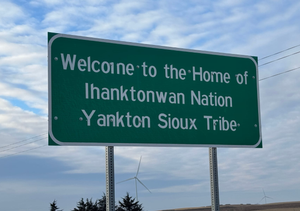
Yankton Sioux Tribe
Governance
The Yankton Sioux Tribe is governed by a chairperson and tribal council. The current chairwoman is Chelaine Knudsen, who was elected in Oct. 2025.
Geography
The Yankton Indian Reservation is located in southeastern South Dakota, on the eastern bank of the Missouri River. The trusted land base of the reservation is around 37,000 acres.
People
There are 12,000 estimated enrolled members of the Yankton Sioux Tribe, and about 7,000 people live on the reservation. Yankton Sioux tribal members are from the Ihanktonwan band of the Dakota and Nakota people.
Economy
Major employers on the Yankton reservation include the Ft. Randall Casino and Marty Indian School as well as the Yankton Sioux Housing Authority and Ihanktonwan Community College.
Sources include each tribe's website and the South Dakota Department of Tribal Relations
Support Native American storytelling. Help South Dakota News Watch tell stories from Indian Country that don't just focus on the problems but on the solutions and rich Indigenous culture.
This story was produced by South Dakota News Watch, an independent, nonprofit organization. Read more stories and donate at sdnewswatch.org and sign up for an email for statewide stories. Investigative reporter Molly Wetsch is a Report for America corps member covering rural and Indigenous issues. Contact her at molly.wetsch@sdnewswatch.org.