
On reservations in South Dakota and North Dakota, medical research led by tribal members is leading the way in filling health care gaps among some of the country's most vulnerable populations.
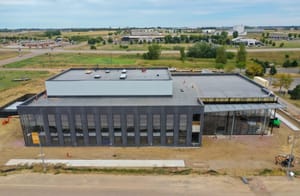
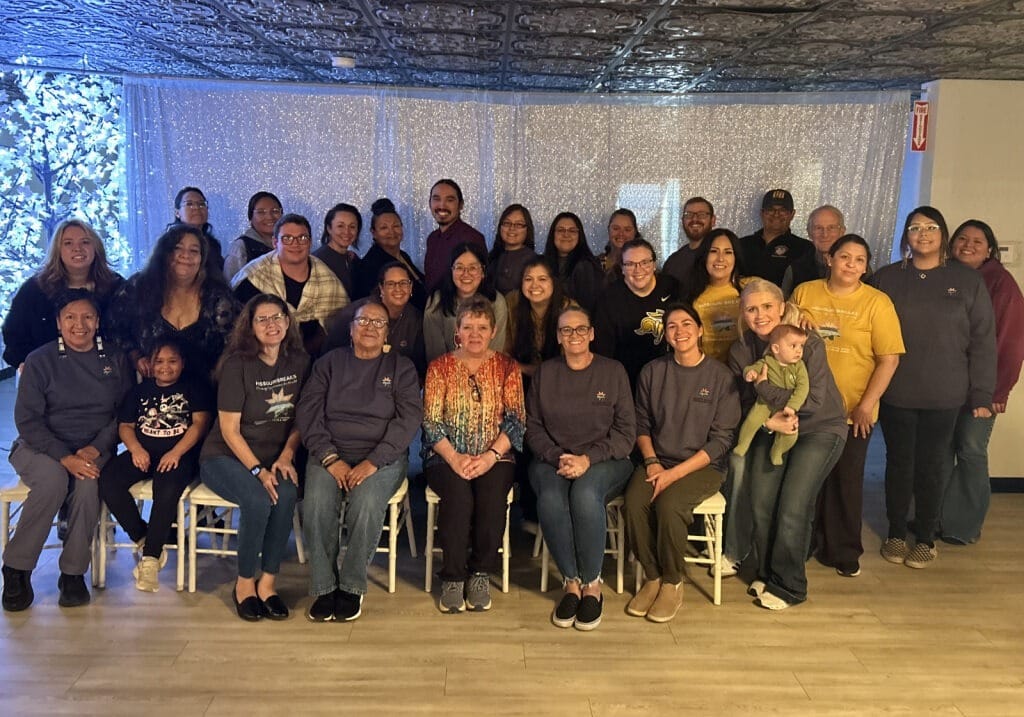
Missouri Breaks Industries Research manages medical research projects, hosts public health education and supplies critical medical equipment to Native populations.
The company was founded in Eagle Butte on the Cheyenne River Indian Reservation about 30 years ago. It now serves four tribes: the Oglala Lakota, Cheyenne River Sioux, Standing Rock Sioux and Spirit Lake Nation. It also has satellite research offices in Rapid City as well as Pine Ridge and Kyle on the Pine Ridge Indian Reservation.
In South Dakota, counties on reservations – like Oglala Lakota County on the Pine Ridge reservation – have some of the lowest life expectancies in the country, partially due to major gaps in health care and public health education access.
Marcia O'Leary, who is a registered nurse and founder of Missouri Breaks, told News Watch that Native-owned and operated research is a step in the right direction for tribal sovereignty and continued development.
 Molly Wetsch
"For things to change, people have to have knowledge, and they have to own their data in order to really have autonomy over it," O'Leary said. "Because it's all well and fine for me to say 'exercise and eat right.' But what does that even mean? You have to have real-life examples, and it needs to be appropriate to your community in order for it to resonate."
Building trust, local knowledge a priority
The company consists of about 45 staffers, more than 80% of whom are tribal members, O'Leary said. That number is critical to building trust among tribal communities – especially when it comes to health research, data collection and analysis, which often requires the disclosure of sensitive personal information and health conditions.
It's common for researchers to come from out-of-state or off-reservation to collect data on health disparities or conditions in tribal communities, O'Leary said.
"It's all well and fine for me to say 'exercise and eat right.' But what does that even mean? You have to have real-life examples."
-- Marcia O'Leary, a registered nurse and founder of Missouri Breaks
Many of the company's studies involve work with scientists from large, out-of-state universities who have vast research capabilities and resources. O'Leary said that having Missouri Breaks staff available to act as experts on the local community can help mitigate potential misunderstandings and miscommunications during research.
"It's not because of some evil intent or anything like that. It's just because people don't know the right questions to ask. And so it's really important there's research done that is interpreted locally," O'Leary said.
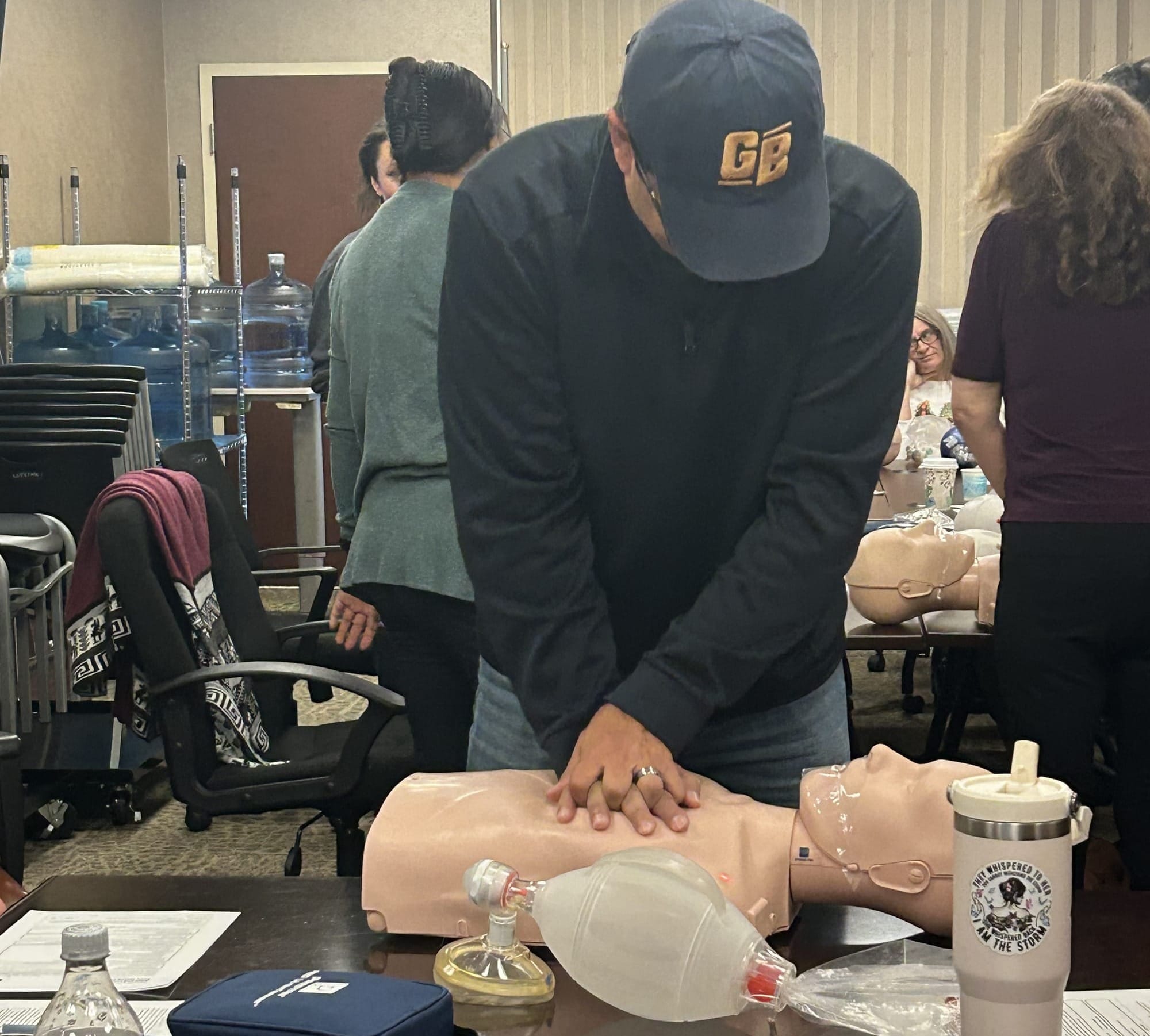
Researchers from out of state help gather critical data that can benefit communities, she said. But when professionals only come for short periods of time, the community does not see the same economic benefits as when they move to town and settle full-time.
Missouri Breaks hopes, through its continuous work in tribal communities, to create more opportunities for working professionals to stay on the reservation.
"They can't invest in our banks. They can't sit on the school board. They don't hire the next door neighbor's kid to mow their lawn," O'Leary said. "So consequently, that opportunity for exchange – cultural, economic, all of those things that change environments and communities – doesn't take place. Our hope is, is that if we can grow capacity, if we can grow the professionals here, that they will come and they will stay and that there will be opportunities for them to be here. That they will come to love this community as much as we all do."
The team prioritizes research participants' comfort and informed consent, O'Leary said, and focuses on research that will have a tangible impact on the communities they work in.
Work focuses on issues affecting Native communities
The company has, over its decades in operation, conducted studies on all matter of health issues affecting Native people, including diabetes, pre-eclampsia, and alcohol and tobacco use.
Missouri Breaks has been a partner of the Strong Heart Study, which is the largest and longest cardiovascular study of Native populations in the country, since its inception. O'Leary, who was a nurse in the early phases of the study in the 1990s, established Missouri Breaks as the overseer of the Dakota center for the study in 1995.
Trusted, independent sources of information are needed more than ever. Help us continue delivering timely, fact-based storytelling today.
Data from that study led to the creation of a risk calculator for coronary heart disease in Native populations. It found that in Native people, those with diabetes were 3 times more likely to suffer a cardiovascular event like heart attack or stroke. It also linked diabetes and depression, noting that higher HGbA1c levels increased depression risk in Native people.
O'Leary said that the tight-knit communities and commitment to Lakota values of family and heritage mean that the Dakota study has one of the highest retention rates in the country.
"We've retained up to 90% of our people in this study because they've just had a real commitment. I think there's a couple of reasons for that. But probably the most important thing is that people come into the study knowing that this isn't about themselves. This is about their children, their grandchildren, their Tiospaye (extended family and community), the future."
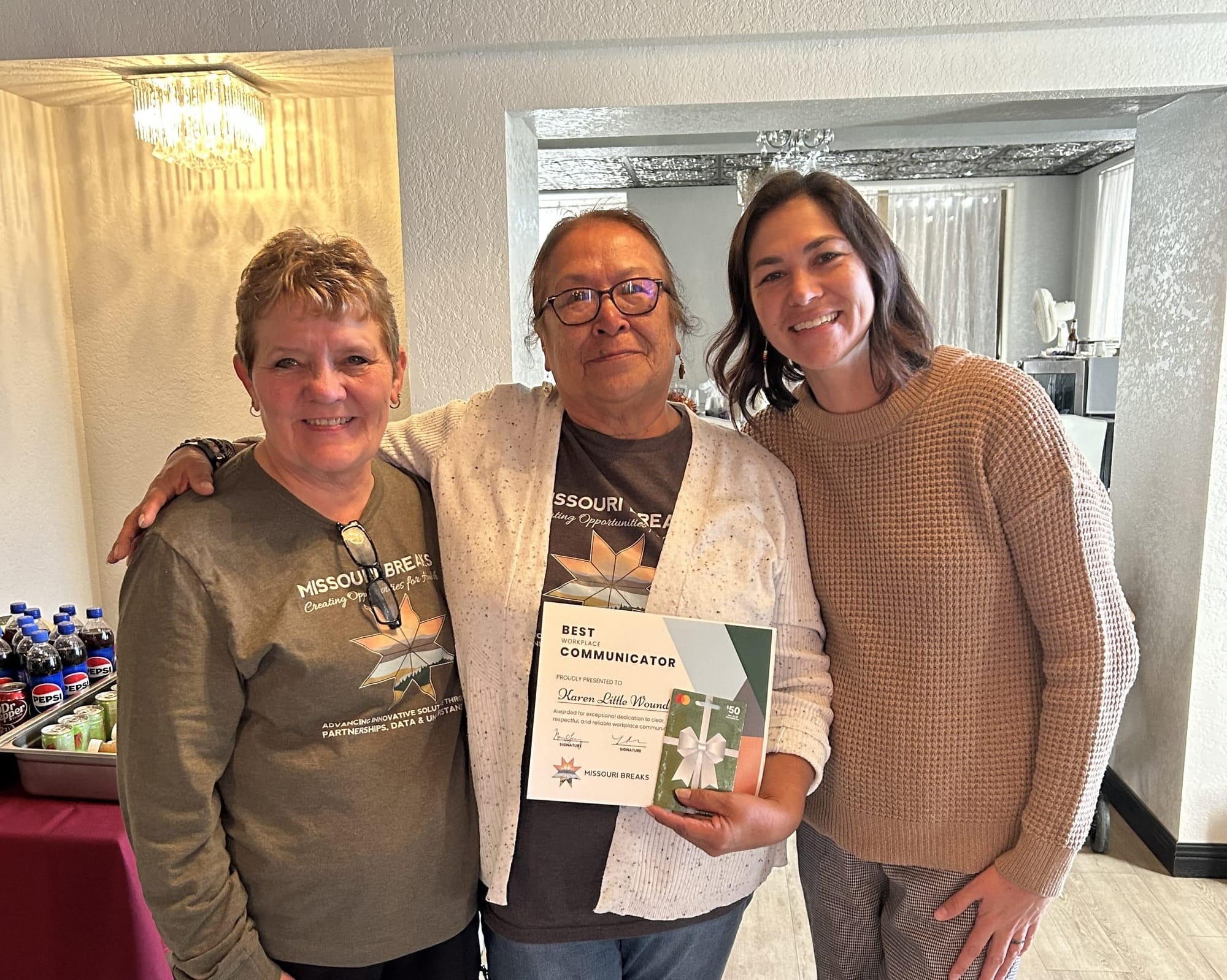
Karen Little Wounded, a researcher with Missouri Breaks, said that doing health research work on the reservations has unique benefits.
"We really work closely with our people. And it's just not the clinical research study that you know – it's more relaxed, patient informed. Missouri Breaks is well known here, and it's in a positive way," Little Wounded said. "I call them our regulars. They come back to Missouri Breaks or we get a lot of phone calls: 'Are there any new studies?' There's never a lack of participation."
Little Wounded is currently working on a sleep apnea study that she hopes will have up to 350 participants from the Cheyenne River Sioux and Oglala Lakota tribes. Native Americans generally have higher rates of obstructive sleep apnea, which is associated with other serious conditions like heart disease.
"We use motivational interviewing to help the participants with their PAP (positive airway pressure) devices, just trying to make them comfortable, trying to get them used to it. And so they become regular users," Little Wounded said.
"The pre-observations were that over 50% of our people have sleep health issues. There's various reasons why we don't sleep."
Research works in conjunction with Lakota principles
The company has made a commitment to ethical research in tribal communities, which manifests in methods that honor traditional values. A handout provided by the company to potential candidates discusses Lakota considerations to health research, like the seven generations principle and the people's connection to Unci Maka (Grandmother Earth).
The company will offer Lakota interpreters to any participant who requests one, which helps to keep the traditional language alive in multi-generational households, O'Leary said.
Support Native American storytelling. Help South Dakota News Watch tell stories from Indian Country that don't just focus on the problems but on the solutions and rich Indigenous culture.
The team is also working on a bilingualism study that studies bilingual households and the cognitive advantage that speaking Lakota at home can provide.
"It's been so fun and fascinating talking to people who have grown up in bilingual Lakota households," O'Leary said. "It gives us an opportunity to validate why it's so important for multiple languages to be not only spoken but to be accepted and to be enjoyed and relished."
Before the sleep apnea study, Little Wounded worked on Native CHOICES, a study that focused on alcohol-exposed pregnancy and risk in Native women. Little Wounded said during that study she saw big differences working with Native populations who had regular access to and contact with cultural values and traditions, especially when working with urban populations.
"A lot of the participants didn't have the cultural advantage or the spirituality. That's what they were lacking, and that's what they were wanting and needing, but they didn't have the human resources," Little Wounded said. "They didn't know who to go to, to reach out to – where here on the rez, it's a practice. And we have our human resources here. So that was a big difference for us."
 Molly Wetsch
O'Leary said she hopes that the ongoing work that Missouri Breaks does in cultural, health and education spaces will help both reservation residents and outsiders recognize how special the community is.
"This is a really amazing community and people are just really gracious and lovely here," O'Leary said. "There's a lot of really good things here and a lot of good people. We just really need to have folks to understand that and to engage in it."
South Dakota News Watch is an independent nonprofit. Read, donate and subscribe for free at sdnewswatch.org. Contact reporter/Report for America corps member Molly Wetsch: 605-531-7382/molly.wetsch@sdnewswatch.org.