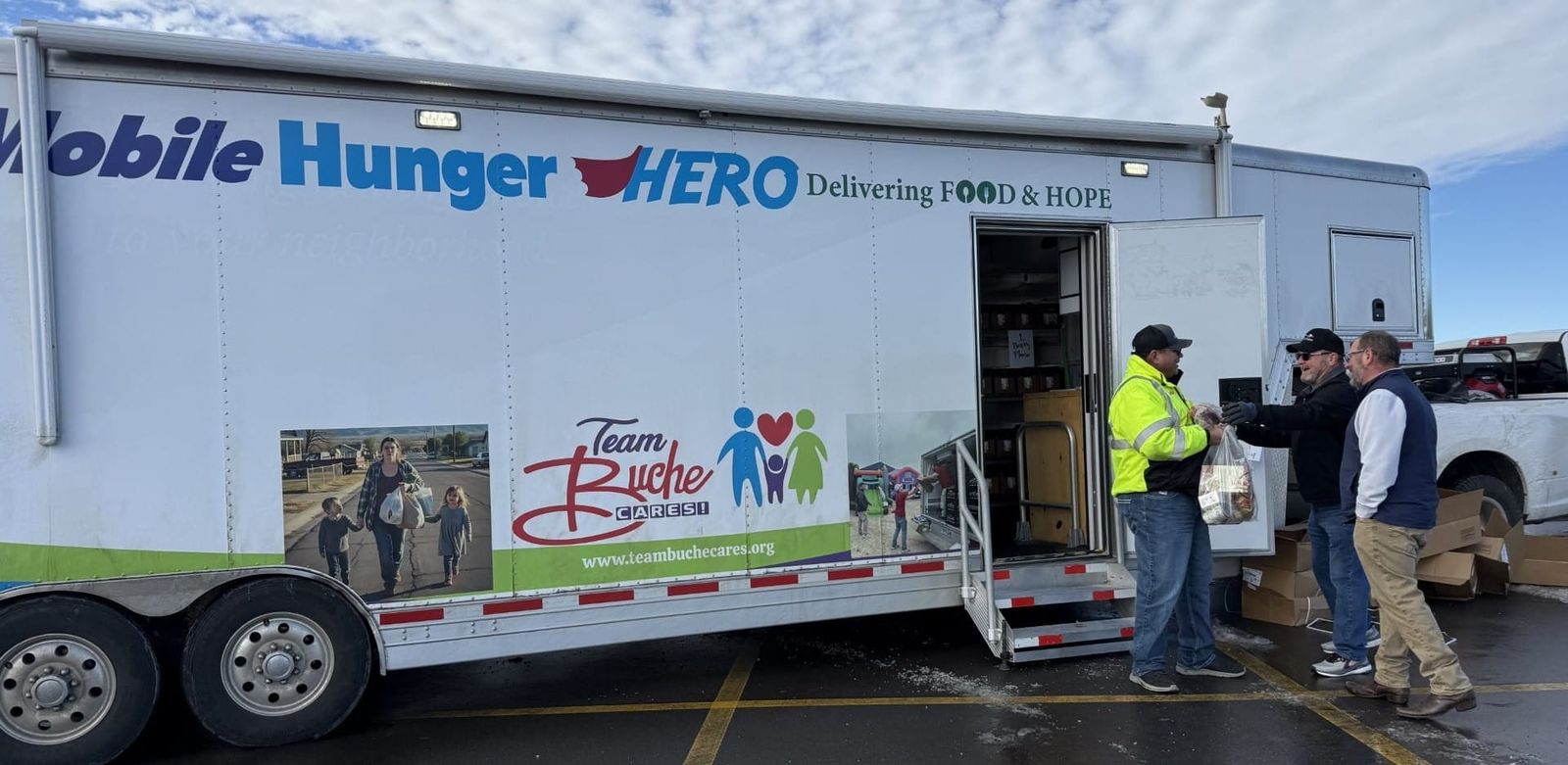
Mobile Hunger Hero, a food truck that delivers meals to remote locations, is increasing available meals to tribal communities across South Dakota.

SIOUX FALLS, S.D. – A grant program providing funding for community oriented projects is supporting a food truck operation to deliver meals to tribal communities.
Team Buche Cares - Underdog Foundation, the nonprofit arm of GF Buche Co., aims to serve families in need and offer meaningful change on behalf of the communities they serve. One way they do this is through the Mobile Hunger Hero, a food truck able to deliver a large number of meals to remote locations.
Carrie Sanderson, executive director of Team Buche Cares, said the idea came from an experience CEO and president RF Buche of the GF Buche Co. had two years ago. He was feeding about 5,000 children a day at the Pine Ridge Reservation by the end of the summer, which opened his eyes to the need for more accessible food.
"He knew he was going to make his life mission to continue to fight food insecurity across rural and tribal areas," Sanderson said. "He said, 'We need a food truck. We need to be able to get a mobile pantry out to the people.'"
Team Buche Cares purchased the Mobile Hunger Hero in 2025 that currently serves about 121 rural and tribal communities across the state. In 2026 alone, there have been 38 food distributions detailed in the graphic below.
Sanderson said as their operation was growing, they recognized a grant was a needed area for them to tell their story and show proof of concept with the Mobile Huger Hero.
Partnering with the Bush Foundation based in St. Paul, Minnesota, South Dakota Community Foundation will award $1.2 million each year for six years to eligible nonprofits in South Dakota. This marks the fifth year of the initiative.
Get free, fact-based South Dakota news and information in a weekday email. No spam. Cancel any time.
The Underdog Foundation was selected as one of 13 nonprofits chosen as a 2025 recipient from a pool of 143 applicants. (South Dakota News Watch received $100,000 for its housing solution stories.)
Ginger Niemann, senior program officer at South Dakota Community Foundation, said the Beyond Idea Grant Program was designed to fund established or early stage projects that are in the process of developing, testing or spreading ideas that can make the region better for everyone.
"Being able to get the food in the hands of those who really need it through a food truck was really an important initiative that the reviewers saw that met all the criteria that the Beyond Idea Grant Program wishes to see," Niemann said.
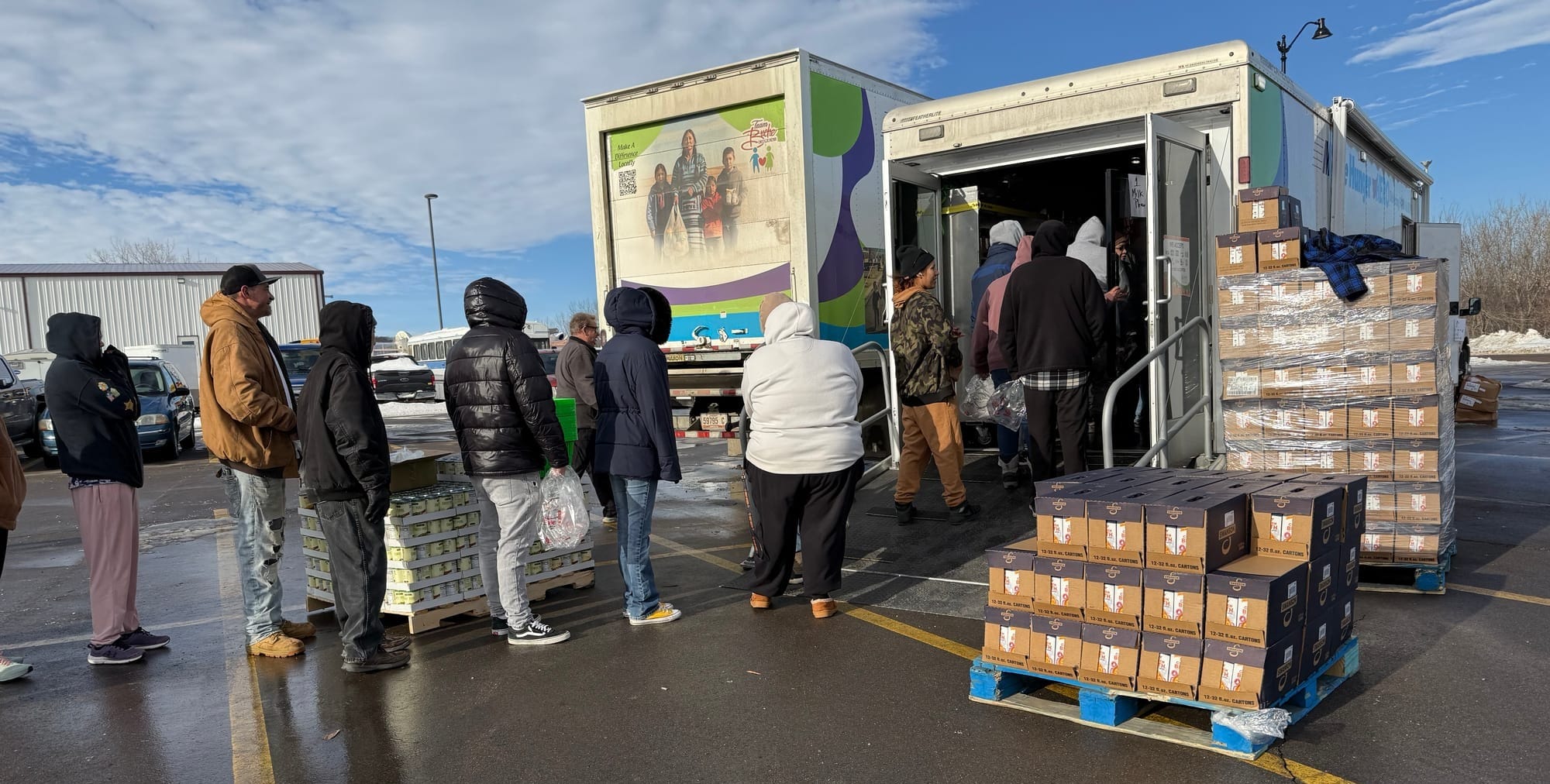
Since receiving the grant six months ago, they have been able to improve their tracking systems as well as coordinate outreach and communication regarding when the distributions are occurring.
As of now, Team Buche Cares has been able to complete monthly distributions in addition to holiday meal giveaways. The goal is to continue completing at least one distribution a month.
Food insecurity in South Dakota
According to 2023 Feeding America data, approximately 113,750 people are food insecure in South Dakota, meaning they have limited or unstable access to adequate food.
Those experiencing food insecurity often deal with high living costs, expensive housing, unemployment and low-wage jobs. Taken together, this can lead to poor physical and mental health and negative educational and occupational outcomes.
Rates of food insecurity range from 8.5% in Hanson County to 28.2% in Oglala Lakota County, which comprises part of the Pine Ridge Indian Reservation. Todd County, Oglala Lakota County and Corson counties have the highest percentage of individuals experiencing food insecurity shown in the graphic below.
People who are food insecure are also more likely to be malnourished. Malnutrition can lead to numerous adverse health outcomes. These include but are not limited to poor growth, intellectual impairments, perinatal complications and increased risk of morbidity and mortality.
Native Americans in South Dakota have the highest rate of deaths from avoidable causes in the nation. The 2026 State Health Disparities Report from the Commonwealth Fund found deaths from avoidable causes among Native Americans was 1,089 deaths per 100,000 people. That's 5 times the rate of white South Dakotans.
Sanderson said that for people living in some of these communities, accessing a grocery store can be difficult. Some people may have travel long distances the nearest grocery store, and if there is a lack of transportation, this becomes even harder.
"When we talk about food deserts in Sioux Falls, we're talking about not having a grocery store within a mile- or 2-mile radius," Sanderson said. "In many of our communities, grocery stores are in that 25- to 50-mile range."
However, even for those who can access a grocery store, they may not have proper ways to store their food or be able to afford healthy options, Sanderson said.
 Molly Wetsch
Looking forward, she said they hope to buy an additional truck to further expand distributions within the nine tribal reservations.
"It's a fun project to be a part of, and I think the the best thing is seeing change at every time you're able to do a food distribution. How grateful people are, and just knowing that access to food will create stronger students, stronger community workers and relieve some burdens on health care and even law enforcement by having access to good food," Sanderson said.
South Dakota News Watch is an independent nonprofit. Read, subscribe for free and donate at sdnewswatch.org. Elena Tittel's internship was funded with support from the Nonprofit Newsroom Internship Program created by The Scripps Howard Fund and the Institute for Nonprofit News. Contact: elena.tittel@sdnewswatch.org.