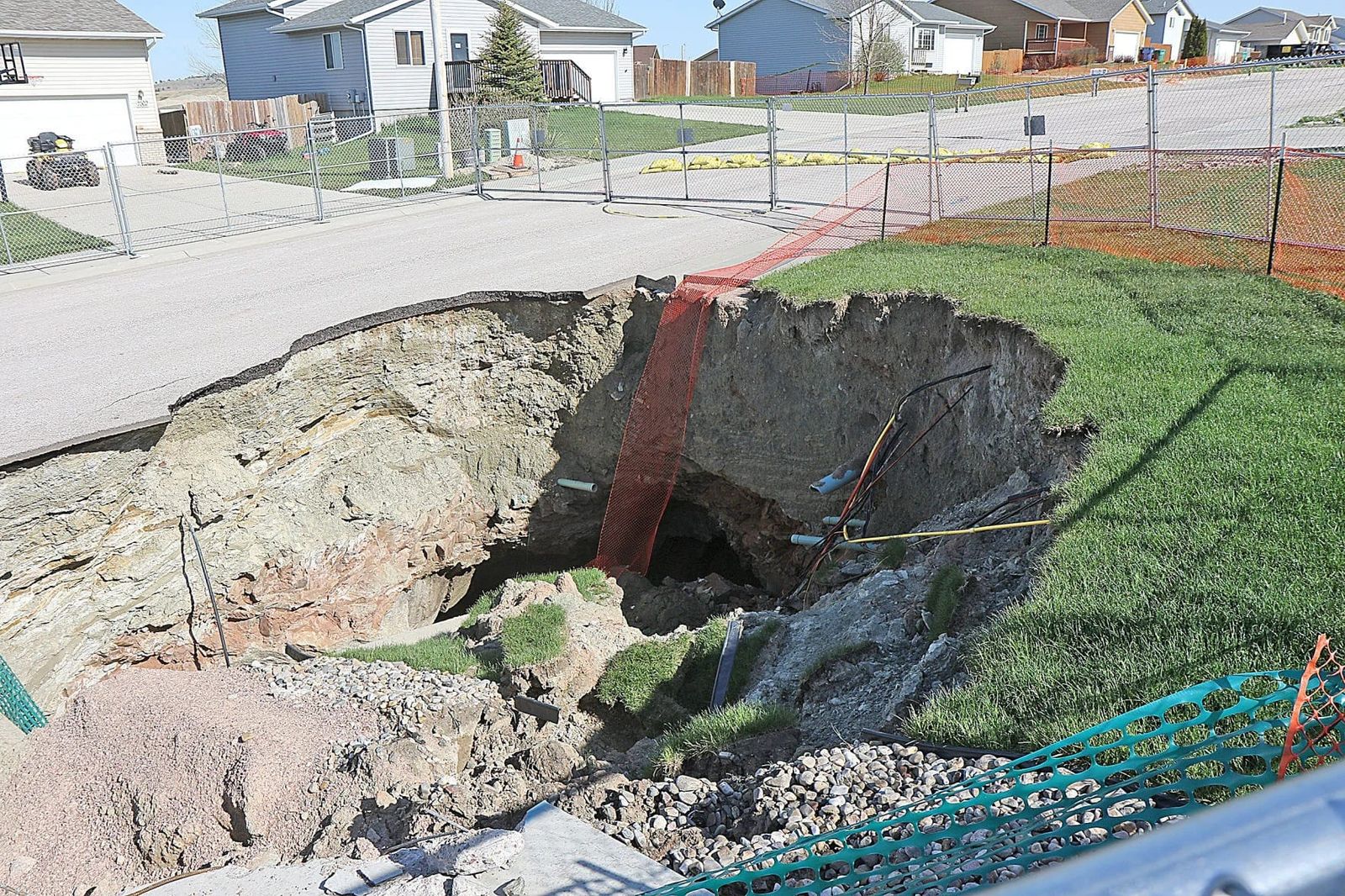
The ruling against a group of 160 homeowners affected by a large sinkhole that opened into an underground mine is the latest and perhaps last rejection they've faced in the six-year legal case.

BLACK HAWK, S.D. – A group of homeowners whose properties were impacted by a large sinkhole just west of Rapid City have lost a major legal battle now that the South Dakota Supreme Court has ruled against them in their lawsuit against the state.
The court issued a unanimous decision on Thursday in favor of the state, which argued it was not responsible for damages caused by the opening of the large sinkhole above a former underground gypsum mine in April 2020.
Roughly a dozen homes in the Hideaway Hills subdivision in Black Hawk were condemned and still sit vacant in the neighborhood. Those property owners were joined by about 150 other homeowners in Hideaway Hills in filing a $60 million class-action lawsuit against the state.

Get free, fact-based South Dakota news and information in a weekday email. No spam. Cancel any time.
In its ruling in the case of Morse V. State, the high court affirmed the ruling of a circuit court judge who said the state had sovereign immunity and, therefore, could not be sued by the homeowners.
The plaintiffs had argued the state was responsible for damages because it operated a gypsum mine on the site for more than 60 years before selling it to a private owner in 1994, after which the land was developed into a subdivision. They also said the state was responsible because it retained the underground mineral rights after the sale.
The origins of the sinkhole date back to the early 1900s when a company called Dakota Plaster dug underground mine shafts in search of gypsum, which slows the hardening of concrete.
When the state of South Dakota opened its own concrete plant in Rapid City in 1925, it began mining for gypsum, including on the future subdivision site. Lawyers for the state said mining was done only on the surface and that no underground mining was undertaken, though blasting did occur.
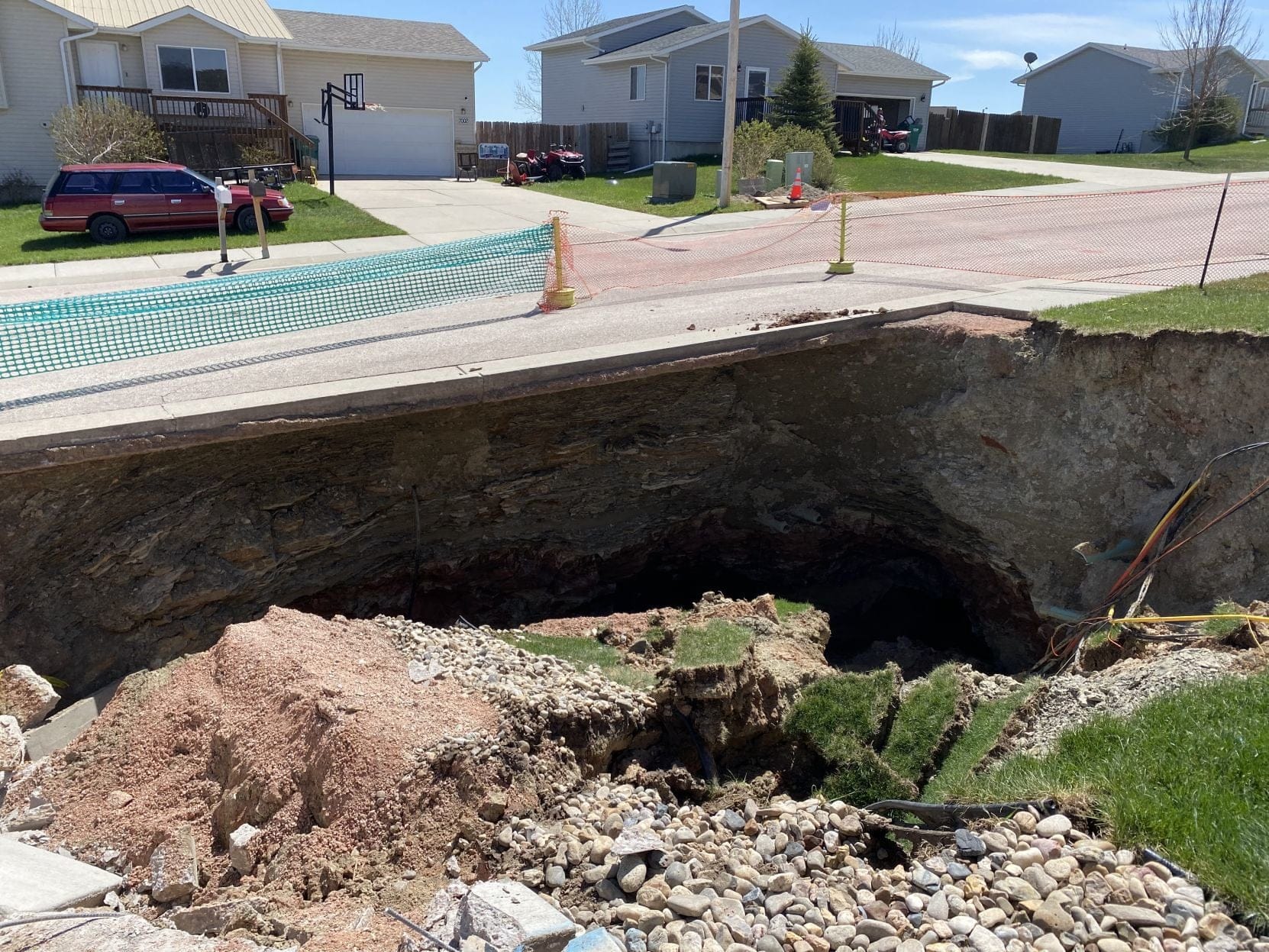
In the 1990s, the state ended mining operations, reclaimed it for grazing and sold it in 1994 to a private owner. That owner lived and ranched on the land before selling it to a developer who obtained permission from Meade County to build a subdivision in the early 2000s.
In July 2024, a class-action lawsuit was filed against the state, arguing that the gypsum mining operation was not properly reclaimed by the state when it sold the land. A circuit judge ruled in favor of the state in September 2024, and the homeowners appealed the case to the Supreme Court, making oral arguments in fall 2025.
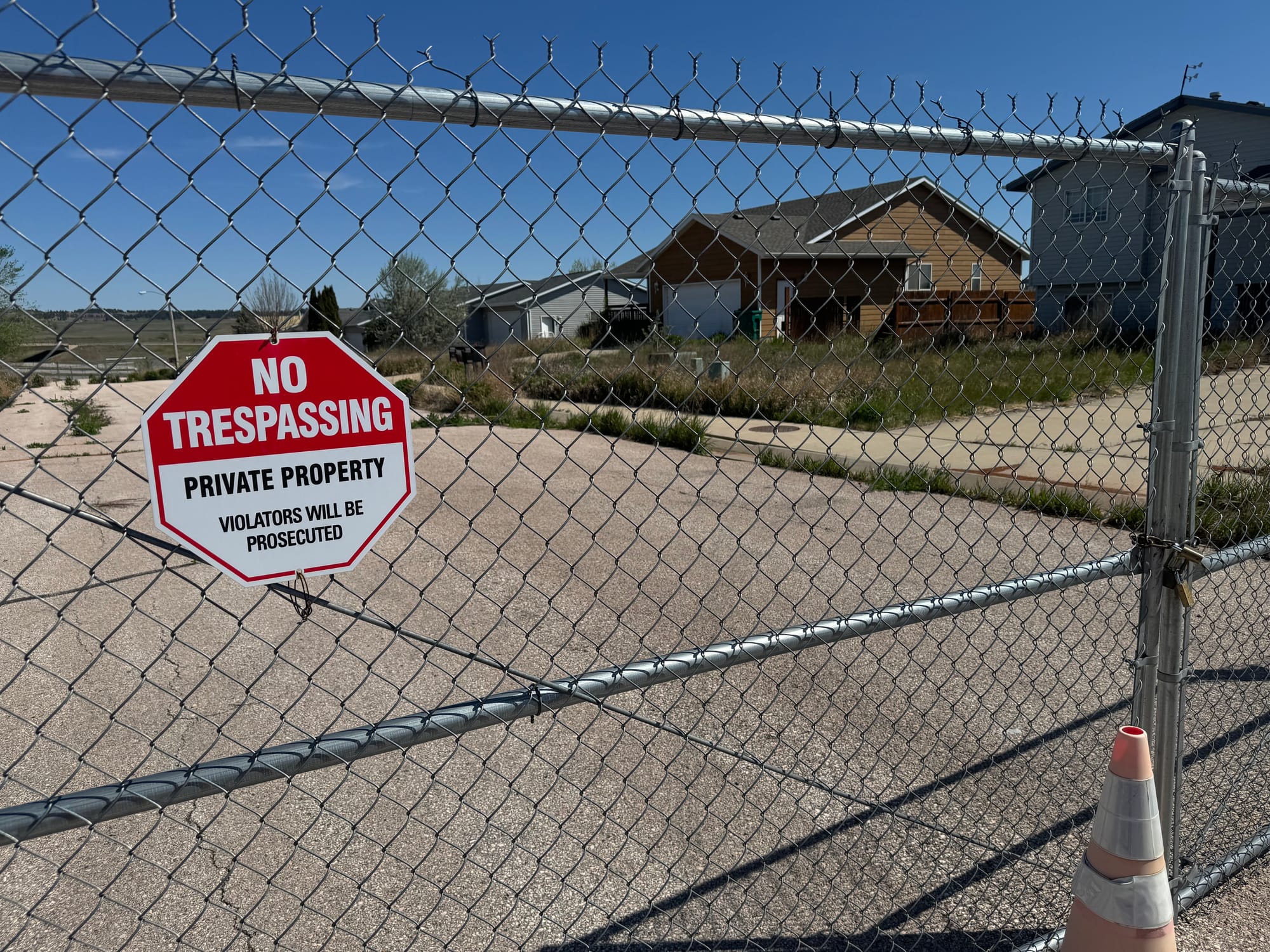
With representation by the national law firm of Fox Rothschild, the homeowners argued that the state improperly filled in areas where it had mined with overly soft materials that have worn away and led to the sinkhole. They argued that the state's failure to properly close its mining operation is akin to an "inverse condemnation," or a taking of their land similar to the use of eminent domain.
Other attempts by the homeowners at legal remedies over the past six years have been unsuccessful.

Read South Dakota News Watch on Apple News
Lawyers for the state had argued that the prior owner’s underground mining on the site led to the sinkhole, and that the state had only mined for gypsum on the surface. They also said the developer knew of the underground mine before building the homes, but did not alert the homeowners before they moved in.
Retired Supreme Court Justice Janine Kern, who wrote the court’s opinion, said the state’s position was supported by previous case law and the state Constitution.
“Plaintiffs maintain that selling the surface property to private owners while retaining the mineral rights to the property to the present date renders the State strictly liable for any damage to their private property that has occurred or will occur in the future as a result of the prior mining activities on the property,” Kern wrote.
“The Plaintiffs have failed to establish that the State’s retention of the mining rights to the property is a 'public use' under the damaging clause of the South Dakota Constitution.”
 Bart Pfankuch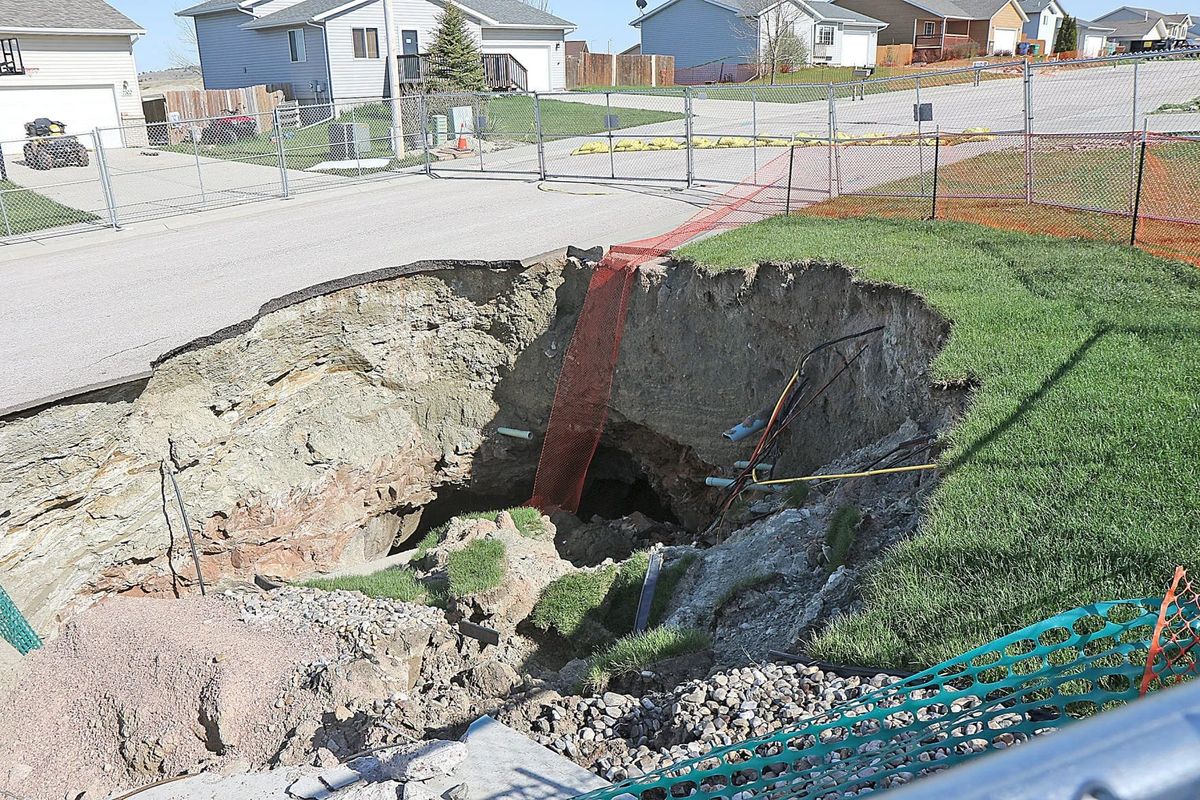
Near the end of the 23-page ruling, Kern sympathized with the homeowners but said state law did not support their arguments.
“While we acknowledge the devastating and sympathetic circumstances in which Plaintiffs find themselves, our review is limited to the claims before us, and Plaintiffs have not presented viable claims against the State in the present action,” Kern wrote.
Attorneys with Fox Rothschild did not immediately respond to News Watch contacts seeking comment.
South Dakota News Watch is an independent nonprofit. Read, subscribe for free and donate at sdnewswatch.org. Contact content director Bart Pfankuch: 605-937-9398/bart.pfankuch@sdnewswatch.org.