While mental health concerns exist among agricultural communities in South Dakota, barriers such as stigma and distance make it harder for farmers and ranchers to access care. Virtual care services may provide a promising solution to this.

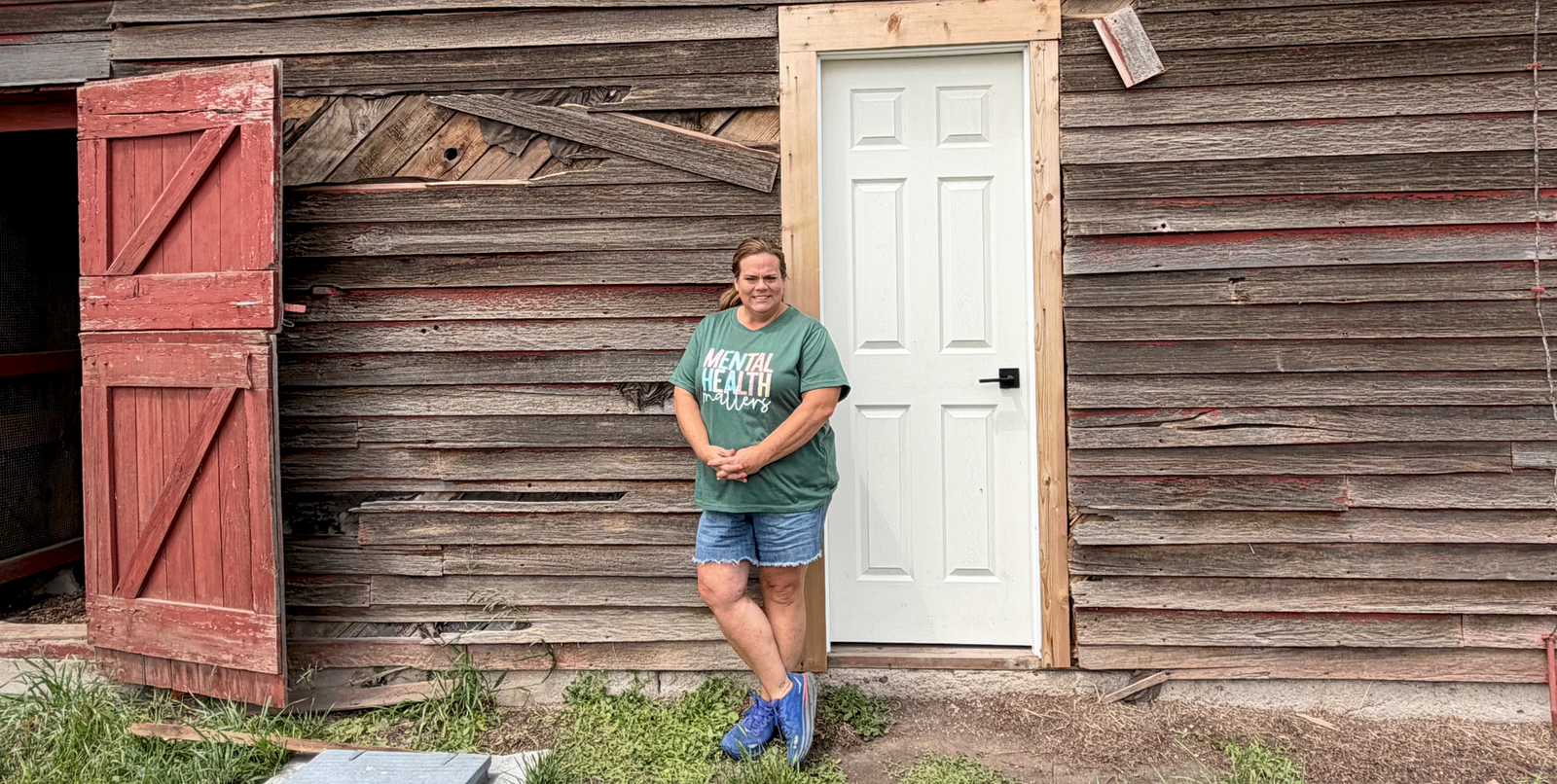
MT. VERNON, S.D. – About 20 miles from Mitchell sits a 100-year-old barn. Merely driving by, it looks like nothing out of the ordinary: just one of many such farming landmarks off of I-90 surrounded by fields of crops and tall grass.
That barn belongs to Colleen Stegenga, a licensed clinical social worker and therapist who runs Embracing Change Counseling Services.
Stegenga grew up on a cattle farm about 5 miles from where she currently lives. While peaceful, growing up on the farm was not always easy. She never imagined coming back once she left for college.
However, when one of her family members who ran the family farm had a health crisis three years ago, she and her siblings came together to help out.
"It was a crazy few weeks because it was planting season, the cows still needed to be milked and he still had bills to pay. And so that's when I started to realize farmers have a lot of stuff they have to deal with," Stegenga said. "I got a really brief snapshot when I was working with my family. Like how do these people do this?"
Join other South Dakotans and support statewide, fact-based news and information.
Shortly thereafter, she decided to put more focus into helping the agricultural community by transforming an old barn to house therapy animals, so as to offer therapeutic services to farmers. Once the barn is finished, she hopes to get horses, mini highland cows and babydoll sheep.
According to Stegenga, work on the farm never ends. This may increase the risk of anxiety, depression, stress, relationship or family issues and suicide.
"(People tell me) how do I keep going? I'm not sleeping, the bank is telling me I have to come up with more collateral and I don't know what I'm going to do," Stegenga said.
Stigma, distance create barriers in ag communities
Mental health concerns are not a new issue among agricultural communities. However, accessing care remains an obstacle.
Karl Oehlke, a physician assistant on the Avera Behavioral Health team, said there is a longstanding history of stigma surrounding mental health among not just agricultural communities but Midwesterners in general.
"It's a lot of a Midwestern culture, that perception that you should just pull your bootstraps up or rub some dirt on it."
– Karl Oehlke, physician assistant
Because some farmers feel pressure to tough it out, they may fear being recognized while using in-person services such as seeing a live therapist, attending an alcoholics anonymous meeting or even picking up a psychiatric prescription at the local pharmacy.
"I heard a number of folks say that their primary care providers are the same person they see at church or go to a basketball game at the high school with," Oehlke said. "They're quite comfortable talking about a plan for cholesterol or diabetes or a broken arm. But divulging that they are having issues psychiatrically is even harder in that situation."
 Molly Wetsch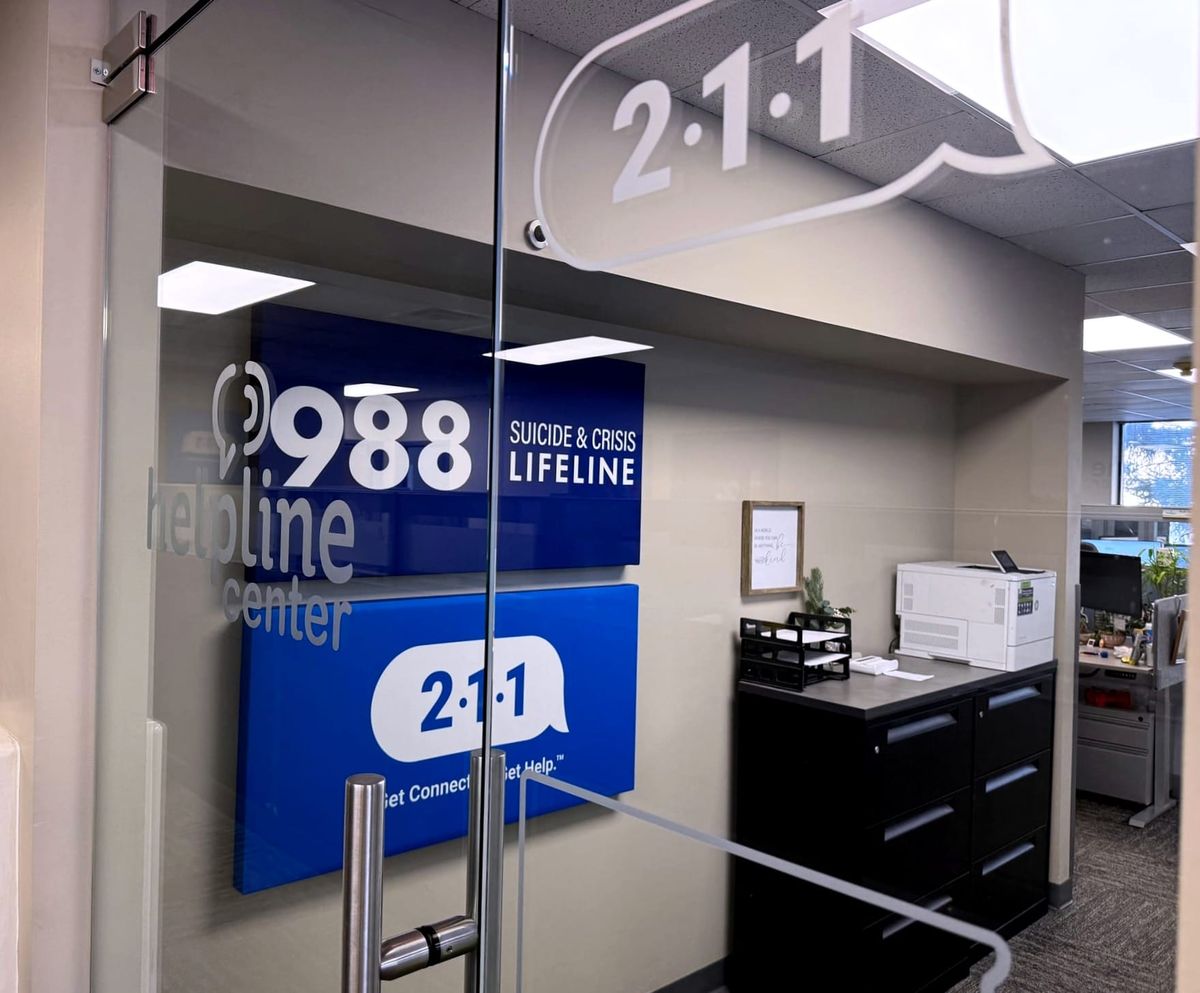
However, many of those who feel comfortable going in person often can't.
South Dakota currently has a statewide mental health care provider shortage. Of the state's 66 counties, only four – McCook, Minnehaha, Turner and Lincoln – do not have a geographic shortage of mental health care providers. Those four counties instead have a population shortage. A population shortage refers to a shortage of providers within a defined geographic area for a specific group of people, such as those who are low-income or face cultural or social barriers.
A contributing factor is a lack of provider training in rural areas.
Dr. David Newman, chief medical officer of virtual care at Sanford Health in Sioux Falls who is based in Fargo, North Dakota, said that while training programs exist, they typically are for those wanting to practice within urban areas.
"It's very, very tricky to get somebody to move to rural America that isn't from rural America," Newman said.
Olivia Bury, a licensed professional counselor and behavioral health coordinator at AgriSafe Network – a nonprofit dedicated to improving health care disparities in agricultural communities – said a shortage of providers outside of urban areas creates barriers for farmers in isolated places.
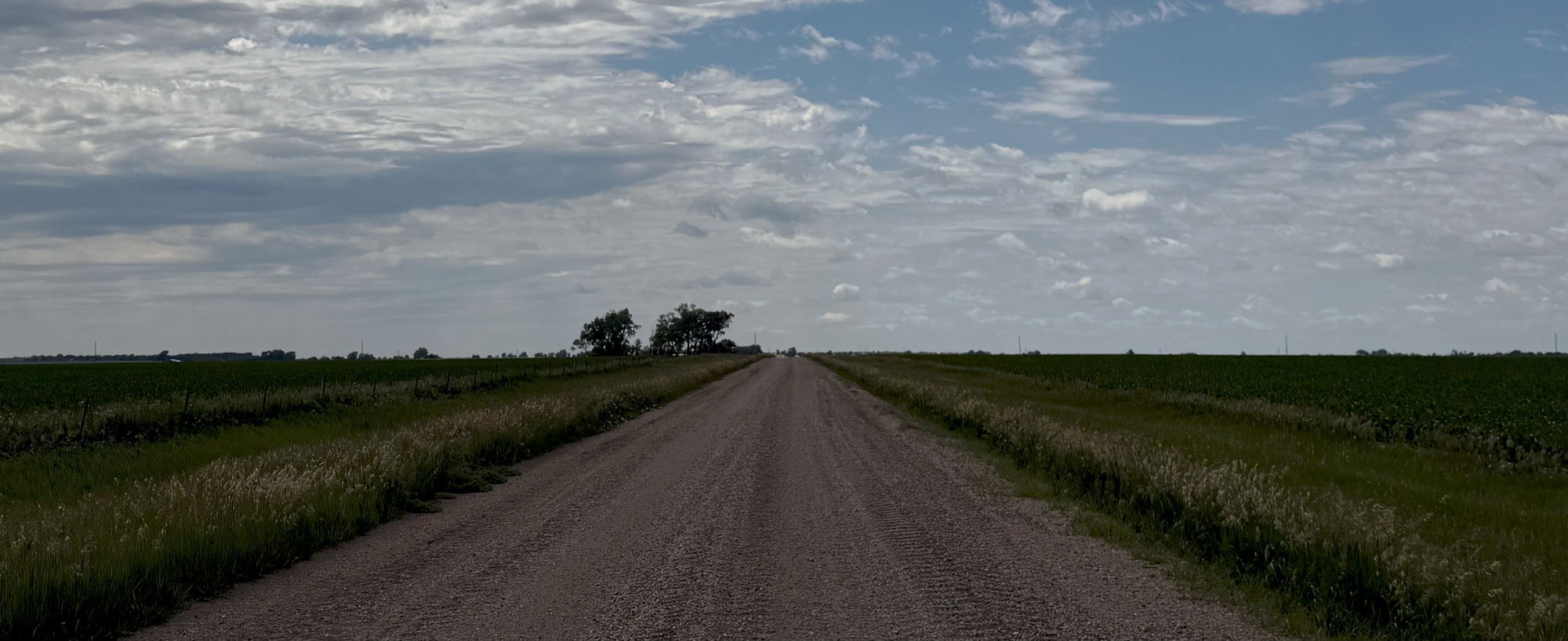
"(Agricultural workers) also have to work those long, demanding hours, which could leave very little time to prioritize their own personal health care, especially during those planting, harvests or calving seasons. They probably don't want to drive an hour or two to go to therapy or an appointment," Bury said.
Solution: Virtual mental health services show success
For patients of Stegenga's who cannot easily get to her in-person offices, have fear of being recognized or cannot step away from work, she has found virtual services – whether a phone call or a video chat – to be just as successful.
"I do have people that just step out into their car on their lunch break, and we can do therapy that way," Stegenga said. "You don't have to leave work, or for my farmers and ranchers, 'Hey, if you're in the field, just get your phone propped up, and we can talk,' so it is really helpful."
Newman said virtual services such as telehealth appointments have been widely accessible at Sanford Health, too. The health center's virtual care system took off in 2021 after receiving a $350 million virtual care investment.
"When we first started the virtual perination, we thought that broadband access was going to be a problem. It hasn't been a problem surprisingly, (and) we found that 99% of our patients have access to a telephone or broadband connection," Newman said.
In 2025, patients at Sanford Health who used virtual services saved an estimated $41 million by reducing the need to take off time from work and pay for travel-related expenses.
For patients of Horizon Health and Monument Health – two other large health care systems in South Dakota – in-person and virtual services are also available. Patients at Horizon Health can go to one of its 27 clinics at one of their 19 locations or, based on circumstance, see a provider via telehome. Patients at Monument Health can also see providers in-person or virtually, depending on their circumstance and if their specific provider offers virtual services, a representative told News Watch.
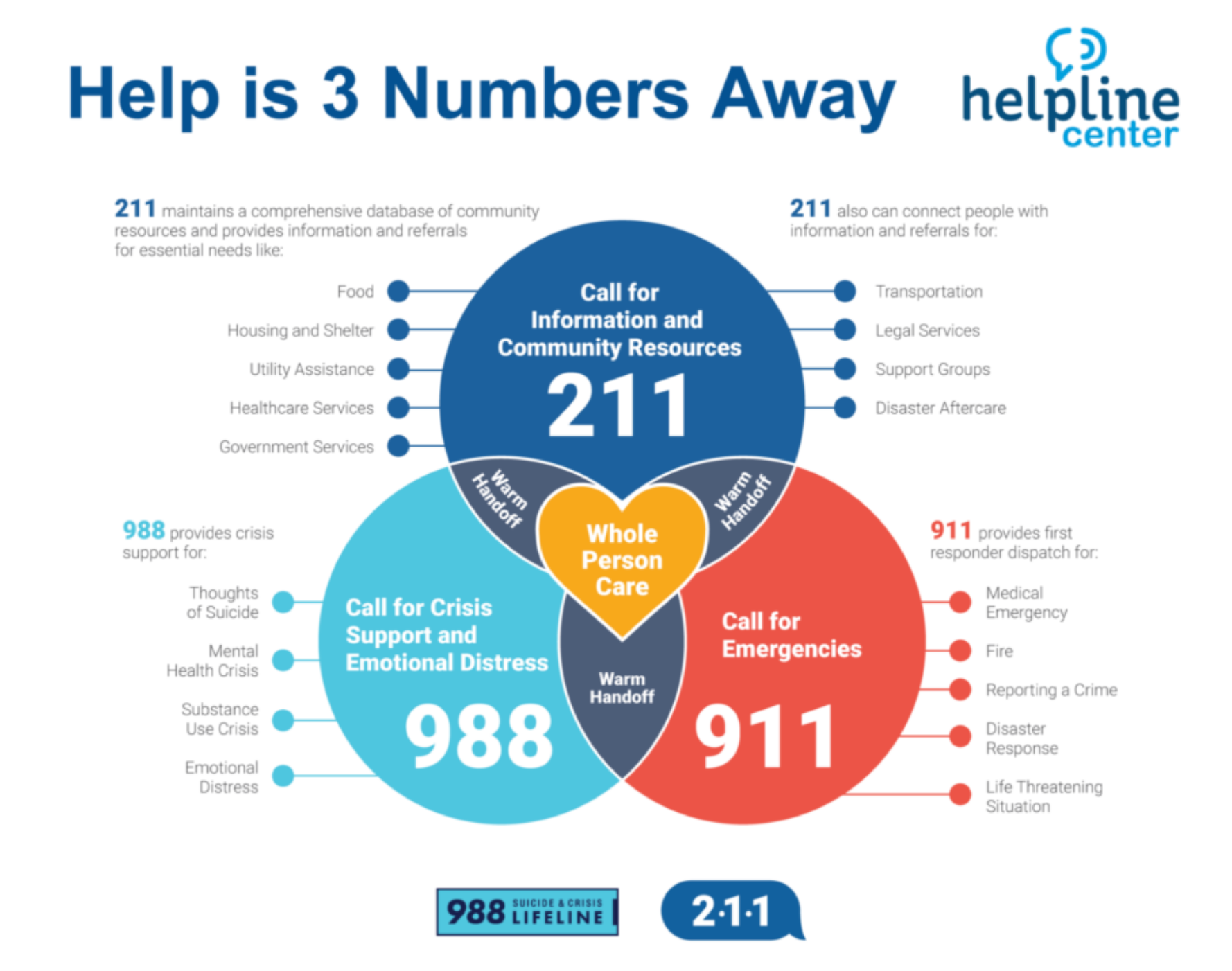
Telehealth appointments are not the only virtual behavioral health resource. Those wanting immediate support from a mental health professional can utilize 24/7 hotlines such as 988 (formally the National Suicide Prevention Line) and the Farm and Rural Stress Hotline (800-691-4436).
Oehlke, a farmer himself, helped champion the Farm and Rural Stress Hotline in 2019 following an especially tough fall.
"The hotline was kind of a manifestation of a number of issues that were transpiring in the fall of 2018, even myself was struggling with some depression and anxiety concerns," Oehlke said. "I knew that other producers in the area certainly were experiencing those same things but maybe struggled with the stigma of mental health or that inability to know that there were programs and individuals out there that could potentially facilitate some help for them."
Jordan Mounga, program manager for Suicide Prevention & Crisis Services at the South Dakota Department of Social Services, said hotlines are not solely reserved for people in immediate crisis.
"(It is important) knowing that you don't have to be in a crisis to be able to reach out, so when that emotional distress or those relationship issues are coming up, that they absolutely can reach out to a platform like 988 or reach out to those community mental health centers," Mougna said.
What makes this topic vital right now is letting people know they are not alone, she said.
"There is help and that there are ways no matter where you're at, whether it's the use of telehealth services, being able to call, text or chat 988 or accessing short-term crisis services."
Correction on July 1, 2026: An earlier version referred to the barn as a clinic. The latest version has been updated to clarify the purpose of the barn.
South Dakota News Watch is an independent nonprofit. Read, subscribe for free and donate at sdnewswatch.org. Elena Tittel's internship was funded with support from the Nonprofit Newsroom Internship Program created by The Scripps Howard Fund and the Institute for Nonprofit News. Contact: elena.tittel@sdnewswatch.org.