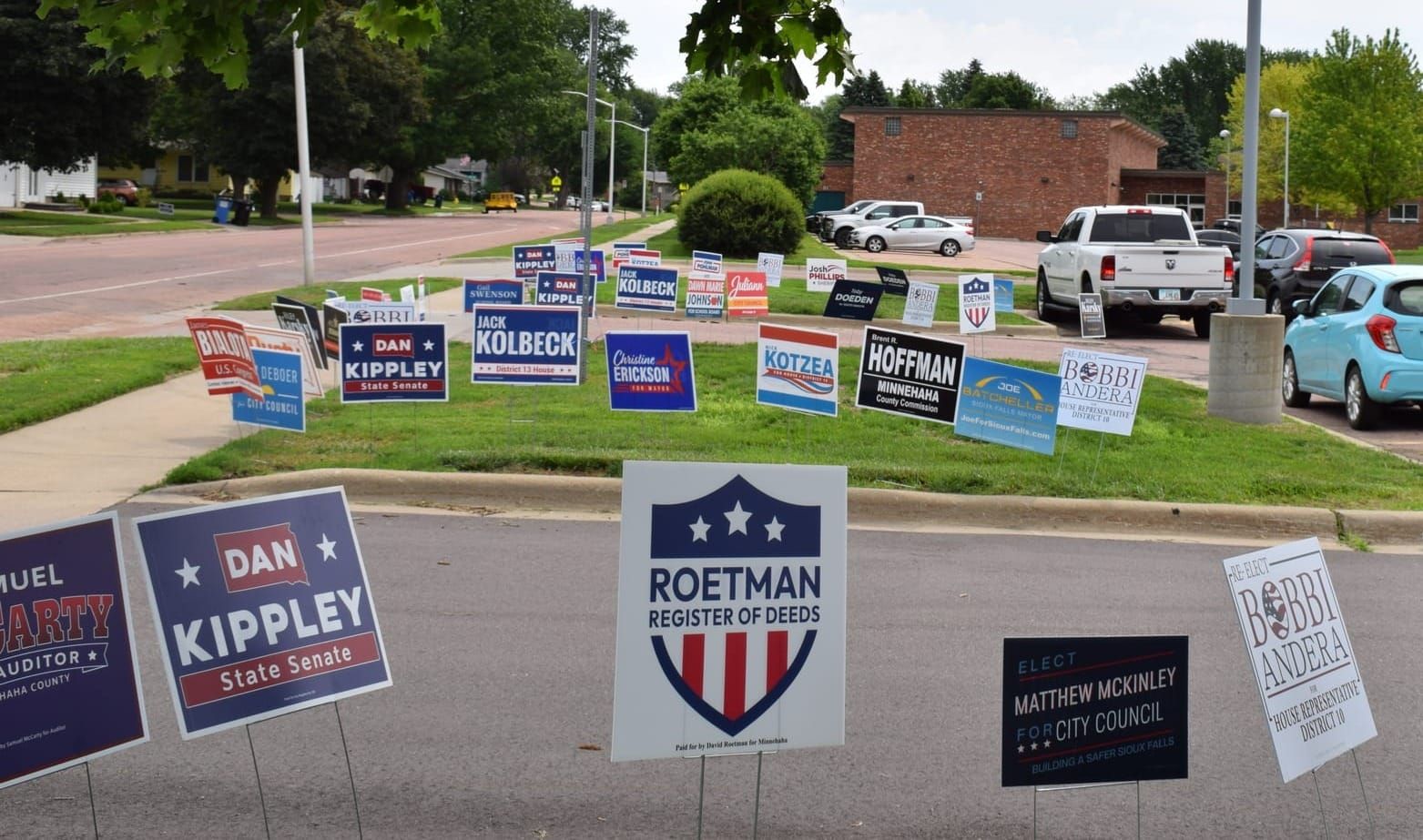
A law change added numerous local nonpartisan and political races to the statewide Republican and Democratic primaries.

SIOUX FALLS, S.D. – Just as the red-hot race for governor will go to a runoff on July 28 between Toby Doeden and Gov. Larry Rhoden, voters in Sioux Falls will also return to the polls later this month.
Mayoral candidates Christine Erickson and Jamie Smith, who received 37% and 28% of the votes, respectively, were the top two candidates in Tuesday’s race and will face off on June 23.
Just one of five municipal races in Sioux Falls was decided on election night.
Incumbent Rich Merkouris kept his At-Large B City Council seat, defeating Samantha Scarlata with 60% of the vote. The Central, Southeast and At-Large A districts for City Council did not see a candidate earn 50% of the vote and will head to a runoff election on the same day as the mayoral election.
It reflects an election day that was heavily contested statewide, even for down-ballot local races.
Sheriff’s races: In Brown County, high voter turnout ousts incumbent
The primary race for Brown County sheriff saw four Republican candidates fighting for a place to face Democrat Anthony Sorenson in November. Director of the South Dakota Office of Highway Safety Rob Weinmeister won that race with 48% of the vote, ousting incumbent sheriff Dave Lunzman. Lunzman placed third, receiving just 14% of overall votes.
Voter turnout in Brown County increased greatly compared to the 2024 primary election: 48.43% of registered Republican voters cast ballots Tuesday, with just 17% on the same election day in 2024.
There were other notable sheriff’s races decided Tuesday night.
Josh Phillips beat Bobby Smith with 84% of the vote in Minnehaha County, where he will take over from longtime sheriff Mike Milstead. Milstead’s 60-year career in law enforcement and 29-year tenure as Minnehaha County sheriff will end as he retires in January.
Southeast of Sioux Falls, in Turner County, the auditor's office will be conducting a recount as incumbent Sheriff Dan Glover won over Robert Kervin by just three votes. Turner County Auditor Misty Dahl told Sioux Falls Live that the situation is new to the county.
“I’ve never been through this before,” Dahl said.
In Perkins County, Matthew Kindsvogel defeated other Republicans Gregory Karels and Timothy McCartney for the sheriff’s position.
Auditor races: Fall River County sees victory for 1 Republican candidate among 4
In far southwestern South Dakota, Bobbie J. Janis won the Republican nomination for Fall River County auditor amid a crowded field of competitors. She earned 48% of the vote, ousting three other candidates looking to fill the spot. Janis will face independent candidate Lily Heidebrink in November.

In Sioux Falls, incumbent Minnehaha County Auditor Leah Anderson held onto her seat, defeating challenger Samuel McCarty with 73% of the vote. Anderson won among a busy election season: her office reported preparing 324 different ballot styles for Tuesday's election.
School board races: Contentious Oldham-Ramona-Rutland district gets 2 new members
The Oldham-Ramona-Rutland school district, which narrowly avoided dissolution in December, elected two new members to its school board. Challenger Mitchell Maher defeated incumbent Amber Malisch with 76% of the vote in the Rutland district, and Ashlee Roling came out on top against Jennifer LeBahn in the Oldham-Ramona district with 54%.
The Britton-Hecla school district, which was looking to elect three members from six total candidates, was marked as a "possible recount" on the South Dakota Secretary of State's website Wednesday morning. Amy Jo Vietor, Jeff Christenson and Angela Grupe came out on top, with 27%, 20% and 18% of the votes respectively. Just 36 votes separated Grupe and Heather Landreth, who received 17% of the vote.
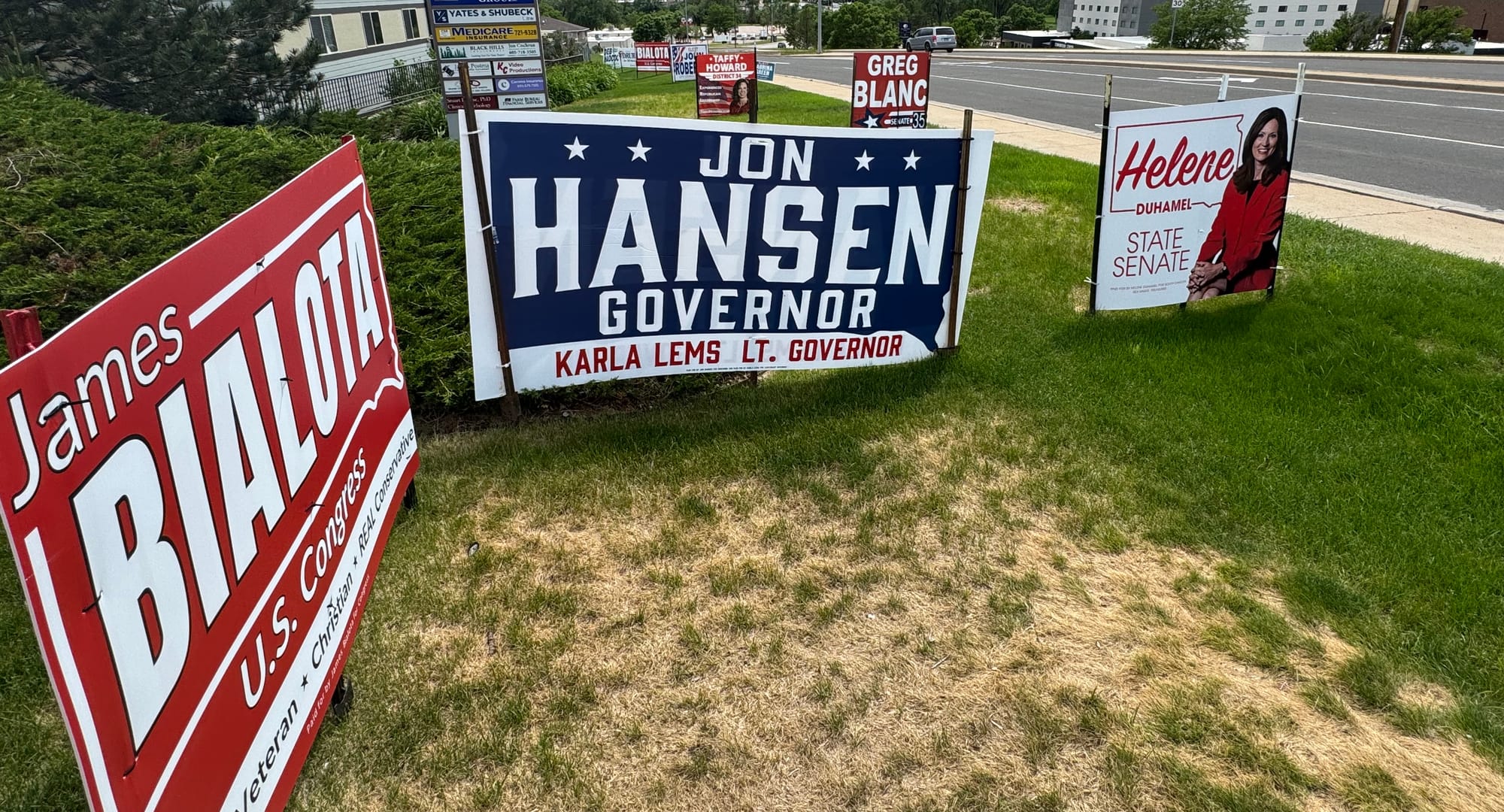
Crowded ballots, big decisions
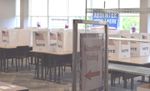
As of May 26, 34,517 ballots had been cast in early voting, according to the Secretary of State. That includes absentee ballots, walk-in voting, and military personnel and South Dakota residents living overseas.
Because of a new state law, several elections that were open to all voters took place the same day as closed Republican primaries for offices like governor.
Michael Haugen, of Sioux Falls, said that while he believes it is his “civic duty” to vote, this election was particularly important due to the high number of open offices.
“There’s a lot of things on the ballot, both from a state perspective and local perspective,” said Haugen, 67, adding that he let his own experiences guide his voting and didn’t vote for candidates in certain races if he didn't think he knew enough to cast a vote.
“Quite frankly, if I didn’t know a candidate or if there was a spot that I didn’t feel comfortable putting (a candidate down), I didn’t fill the square. If you know your candidates – and I went to several forums with the people and listened to what they had to say – I was pretty comfortable with how I voted and why I voted the way I did,” Haugen said.
 Alexander Rifaat
Across the state, Democrat Ron Fisher, of Rapid City, was determined to vote on Tuesday, even if he had to take public transit to the downtown library to do so and even if he could only vote in one City Council precinct.
A retiree who uses a walker, Fisher, 78, said he felt it was important to exercise his right to vote. But he was disappointed in the state’s closed primary rules that cut him off from voting in the GOP primary for statewide offices.
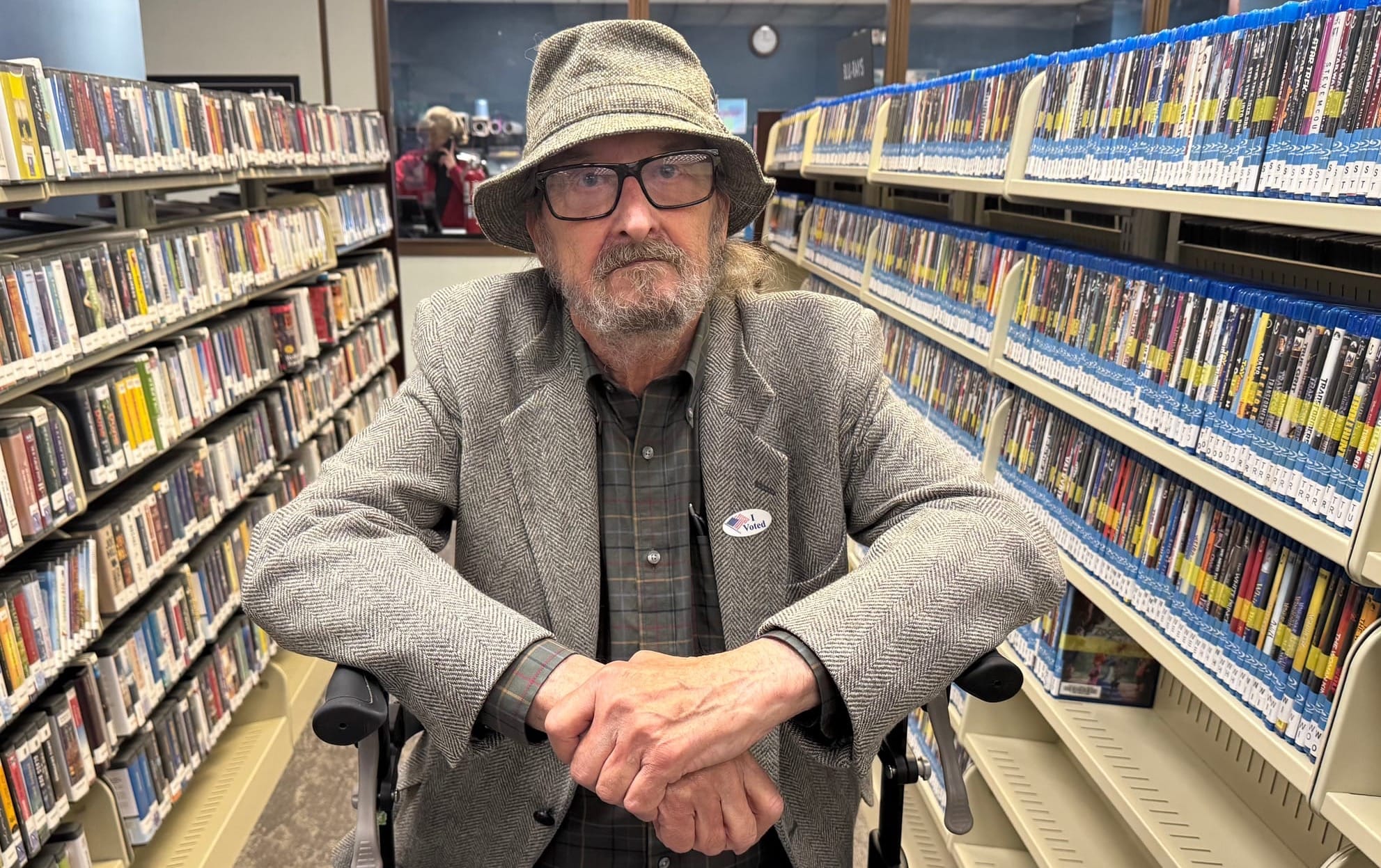
“That’s a bunch of hooey,” said Fisher, an Army veteran. “I should be able to have a say in who makes it through the primary.”
Fisher also expressed great disappointment in how Rapid City, the state and the federal government are being run. He said he reflexively voted against the incumbent in the City Council race in hopes that a new candidate could get a chance to govern.
“It’s just pathetic how this state and Washington are being run,” he said. “I can’t believe that people are starving to death and paying exorbitant prices for gas, yet they are still supporting the current administration."
Get South Dakota news and information in a free email on weekdays. Cancel any time.
Fisher said he will vote for Democrats in the general election in November, including Dan Ahlers for governor.
Lack of resources on the candidates
Ayden Gage, a 21-year-old from Sioux Falls, told News Watch outside of All Souls Church that she felt there “weren’t a lot of resources out there” to find information about candidates for local and county offices in Sioux Falls and Minnehaha County.
She said that she had to do quite a bit of individual research to determine each candidates’ platforms on the issues, which included visiting individual campaign websites and social media pages.
Lloyd McKibban, 57, stepped out of the voting booths around noon at Harvey Dunn Elementary School in Sioux Falls.
He had similar feelings to Gage about the quantity of votes he needed to cast. McKibban told News Watch that an “overwhelming number of candidates, and not really an explanation of what they stand for and what they’re about” made the process complex, but that he felt he had made informed decisions.
Reporters Bart Pfankuch and Alexander Rifaat contributed to this story. Molly Wetsch is a Report for America corps member who writes about rural and Native American issues for South Dakota News Watch. Contact Molly: 605-531-7382/molly.wetsch@sdnewswatch.org.