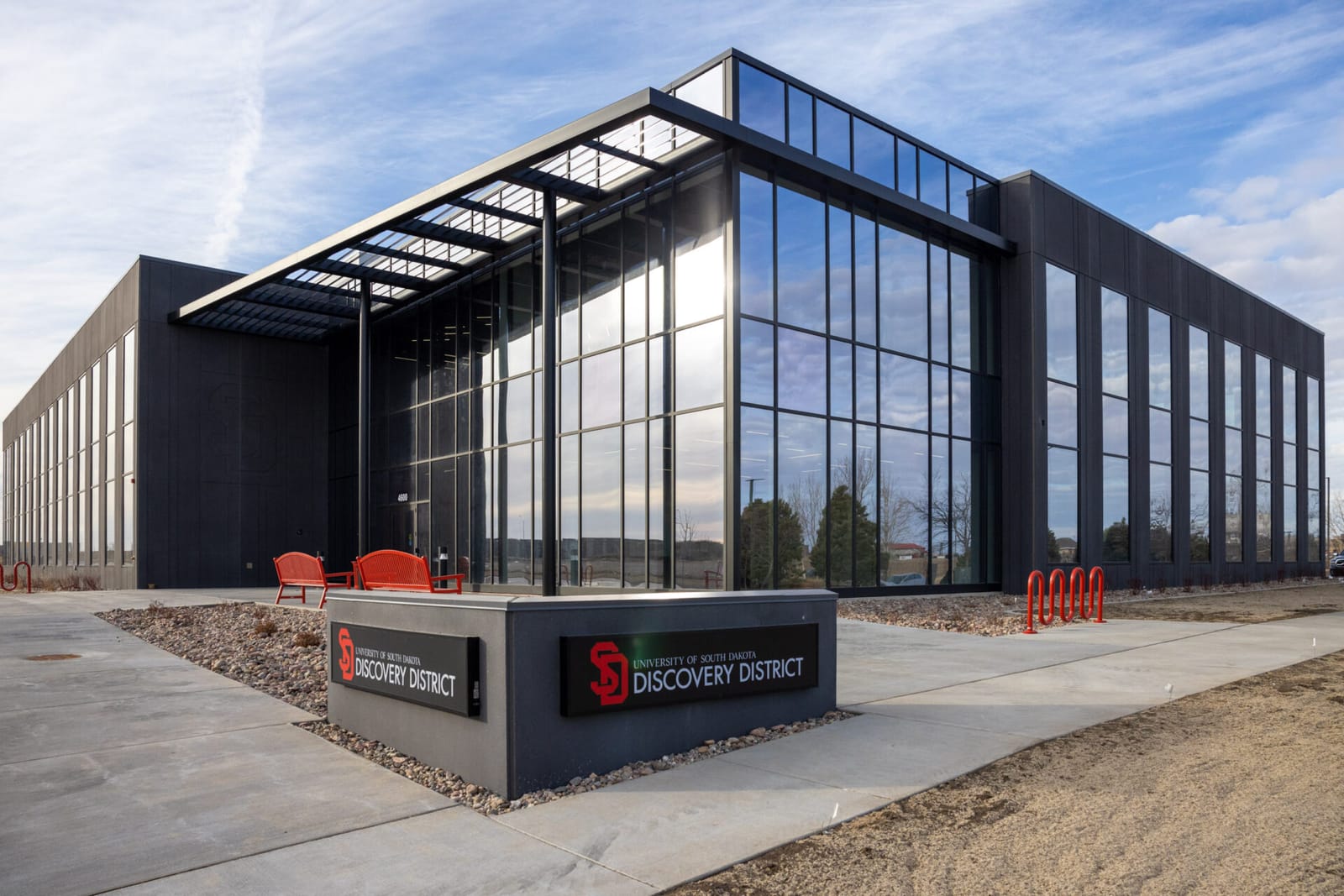

SIOUX FALLS, S.D. — In the northwest corner of Sioux Falls, an 80-acre campus opened its first building this year dedicated entirely to expanding the state's life science and biotechnology research industry.
After nearly 30 years of planning and development, the University of South Dakota Discovery District now provides flexible core and shell space for companies to design and build their own labs and offices.
It's representative of the collaboration among major entities across the state working to ensure that, as these emerging technology fields seek to expand nationwide, South Dakota is atop the list.
Dozens of companies and universities are part of the budding industry, including health care giants Sanford Health and Avera Health and Rapid City-based innovation company Phylloceuticals.
 Molly Wetsch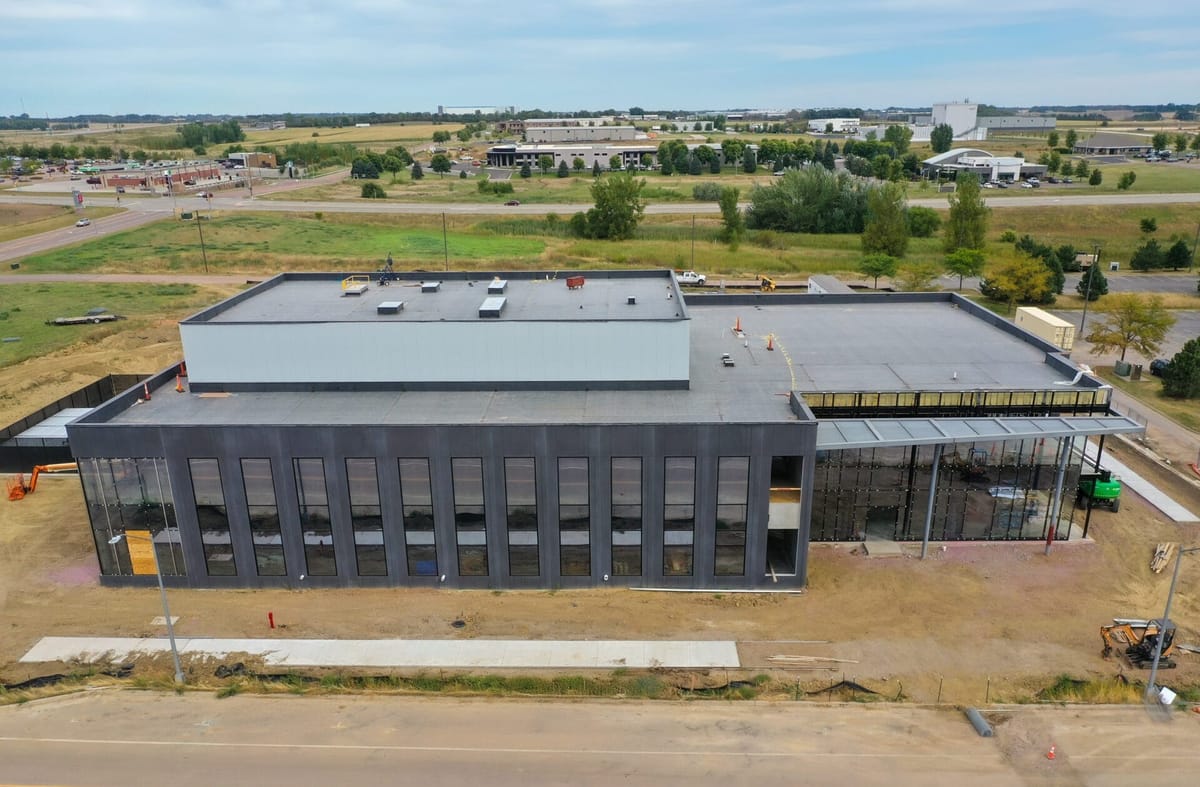
According to Built In, an online tech community, "biotech is the intersection of biological, engineering and computer sciences, which uses living organisms (or parts of them) and biological systems to create products and services with a wide range of applications."
Those include pharmaceutical research, food and fuel production, chemical manufacturing, breeding for biodiversity, and the production of hazardous materials and weapons.

Joni Ekstrum, executive director of the South Dakota Biotech Association, told News Watch that interest in the industry is only increasing as the technology develops.
"Membership (of the association) has grown in size. We've gotten new, not just biotech members, but people that are interested in the biotech industry, such as law firms, such as construction companies, architecture firms. They want to be part of us. They want to see it grow. They are excited about what their future can be," Ekstrum said.
Market study illustrates a growing, but young, industry
The Discovery District's 2025 Market Study provides an overview of the biotech industry in South Dakota and nationwide.
Tung Nguyen, who handles marketing, developed the study, which is now in its third year. For the 2025 iteration, he traveled to the BIO International Convention in Boston and spoke to major players in the biotech and life sciences industries about their focuses for the coming year and what South Dakota may offer to them.
Emerging themes from the market study are the convenience of South Dakota's interstate and highway system, growth of health care and pharmaceutical imports and an affordable environment for early-stage business development.
The study quotes one international life sciences company as saying, “A business may have five years of runway in Boston, but for the same capital, that business can have a 10-year runway in South Dakota.”
Nguyen said that for many companies, South Dakota's smaller industry, easy access to major legislative and industry players and collaborative nature can also be a draw.
"I think in South Dakota, considering our small population size, sometimes we kind of naturally collaborate," Nguyen told News Watch. "I think naturally, we just know who the people are. And the circle's relatively small in that regard."
Former Gov. Mike Rounds established funding for specialized research centers at public universities in 2004, so South Dakota entered the bioscience and research space relatively recently. That means ongoing collaboration will be necessary into the future, Ekstrum said.
 Emily DeCock
"If we look at where we came from in the past 20 years, we've come a long way, honestly," she said.
"We do need to have the state's help with some of those operations because we are small, because we're trying to grow this industry. So it will take ongoing state dollars."
Several states offer tax credits or other incentives to support bioscience development, like research and development tax credits or grant matches through the federal Small Business Innovation Research (SBIR) program. South Dakota is one of two states without any incentive programs for the biotech industry, according to BIO’s Best Practices 2025 report.
South Dakota’s Established Program to Stimulate Competitive Research (EPSCoR) published the South Dakota Science and Technology Plan in March. That report says that the state’s business research and development and academic R&D efforts rank 47th and 50th in the country, respectively. Those rankings have gotten lower in the past decade, as neighbors Wyoming and North Dakota moved up.
Nguyen said that while the state's rankings are "humbling," they do not mean certain death for the biotech and life science industries, which rely heavily on research in the state.
"What I was trying to demonstrate in the market study is how can we look at the numbers differently? Since we ranked so low, that doesn't necessarily mean we are bad at academic research or our students aren't capable of doing these things," Nguyen said.
State-specific opportunities are the future of biotech
Nguyen said that he hopes to see companies come to South Dakota because of the state's unique qualities, which have the opportunity to set it apart from tech hubs like Silicon Valley or nearby major metropolitan areas like Minneapolis.
“The question I always ask myself is, 'What's the point of replicating another cluster in America?' What's the point of that? Because I think if we do that, we risk kind of losing our own identity in some ways. Our own unique differentiators, that other places may not have," Nguyen said.
Ekstrum said that some of those differentiators lie in the state's success in other industries, many of which have begun to see biotech applications to their practices.
"Valued-added ag is a big thing for us. How do we do more processing here in our state to make it more profitable for those farmers?"
-- Joni Ekstrum, executive director of the South Dakota Biotech Association
"Yes, we do have great strengths, like a low tax environment. That is a huge draw for many companies wanting to come here. That's the big thing. So then building upon that, what other resources do we have? We've got a tremendous amount of commodities in ag. We're rich in that space," Ekstrum said.
"Valued-added ag is a big thing for us. How do we do more processing here in our state to make it more profitable for those farmers? Rather than just exporting their corn, how can we process it here to make it something better, something different?"
Part of the reason Nguyen is hopeful for the industry's future is the state’s close relationship to the Department of Defense, including through Ellsworth Air Force Base near Rapid City and Dakota State University in Madison.
Biotech has risen to the top of mind in the White House as a national security issue, which elevates South Dakota's ability to adapt to future regulation or collaboration with federal agencies, he said.
“South Dakota has a really rich and strong history in military defense. But I think, as the federal and the macro picture is biotech becoming more of a national asset, I think that's going to also increase collaboration within our state. It's going to be more of a talking point,” Nguyen said.
Discovery District begins attracting companies in first year of operation
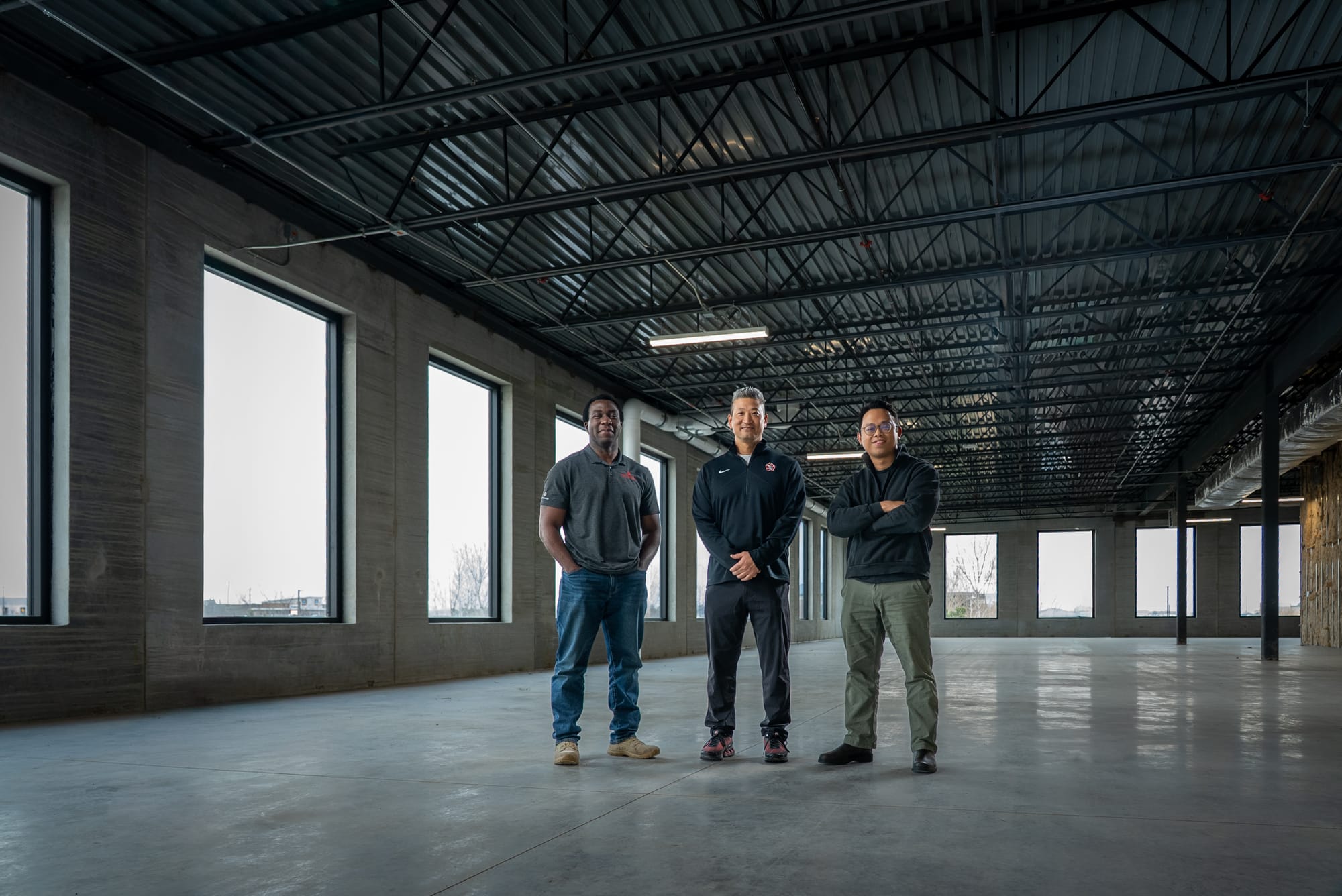
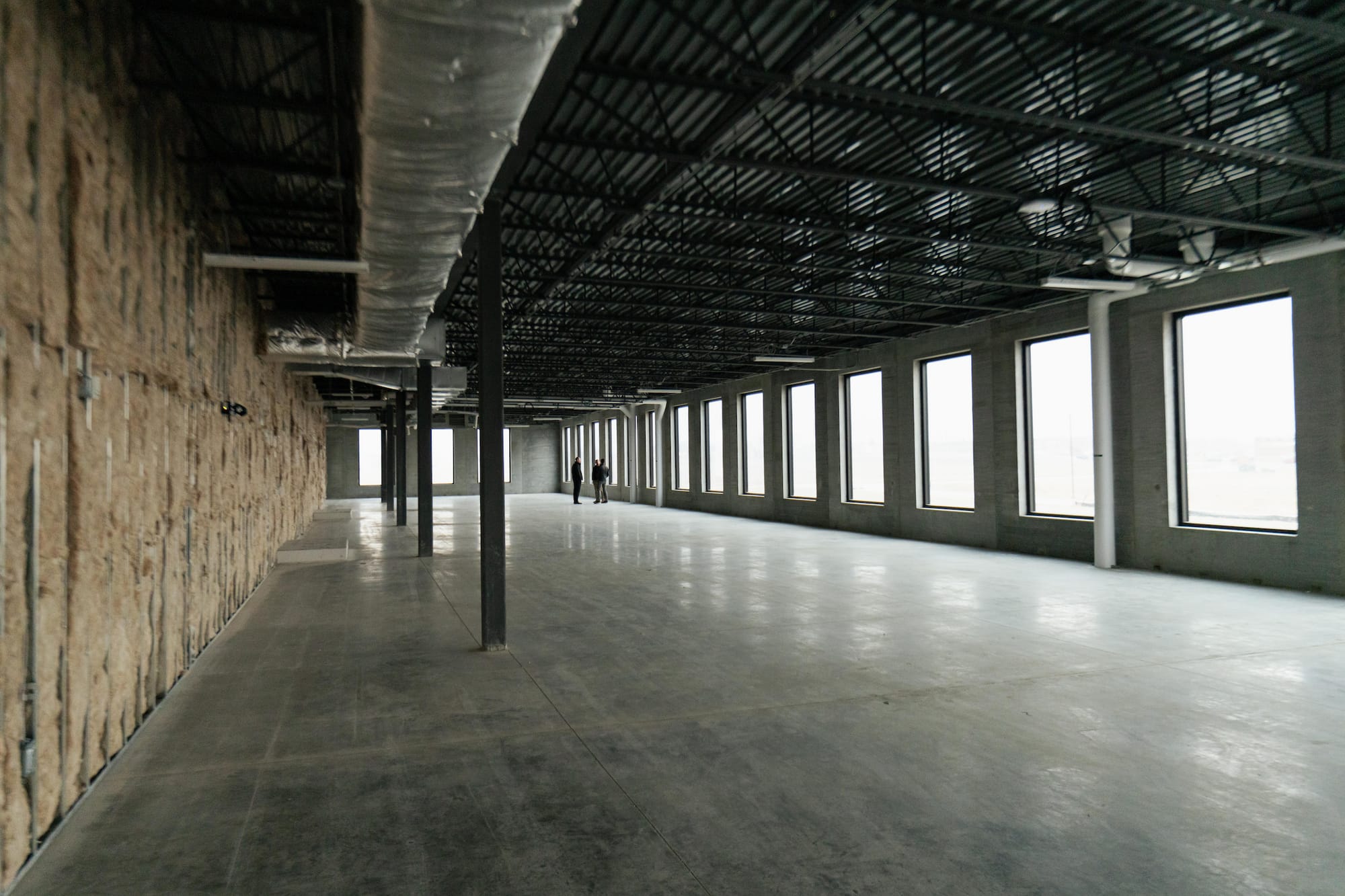
The first building in the Discovery District has three tenants already operating in the space, including OmegaQuant LLC, a nutritional analytics company. That leaves 25,000 square feet of space still available.
Discovery District President and CEO Ryan Oines said one of the benefits of the research park is job creation. The district projects 2,800 new workers in the biotech and life science industry by the time of its completion, which is currently estimated on a 25-year timeline.
"I always look at it from, 'Can we help the existing ecosystem, meaning add jobs, add tax base, but also can we bring opportunities for the student workforce that's just across the parking lot (at USD's Sioux Falls campus)?' And hopefully feed some of those companies with opportunities to fill empty positions or grow research," Oines said.
And as more companies begin to join the space, there will be a domino effect, Oines said, bringing more industry players into the state, which will take time.
"Each organization that we talk to, it builds momentum. And so being able to bring in another biotech company will build momentum to a product or a service provider, a consultant that works with that company," Oines said.
"In the research park world, we always say it's a 20-year overnight success."

Correction: The second paragraph of this story was corrected at 1:41 p.m. Dec. 11, 2025, to clarify the type of space available in the building.
This story was produced by South Dakota News Watch, an independent, nonprofit organization. Read more stories and donate at sdnewswatch.org and sign up for an email for statewide stories. Investigative reporter Molly Wetsch is a Report for America corps member covering rural and Indigenous issues. Contact her at molly.wetsch@sdnewswatch.org.