
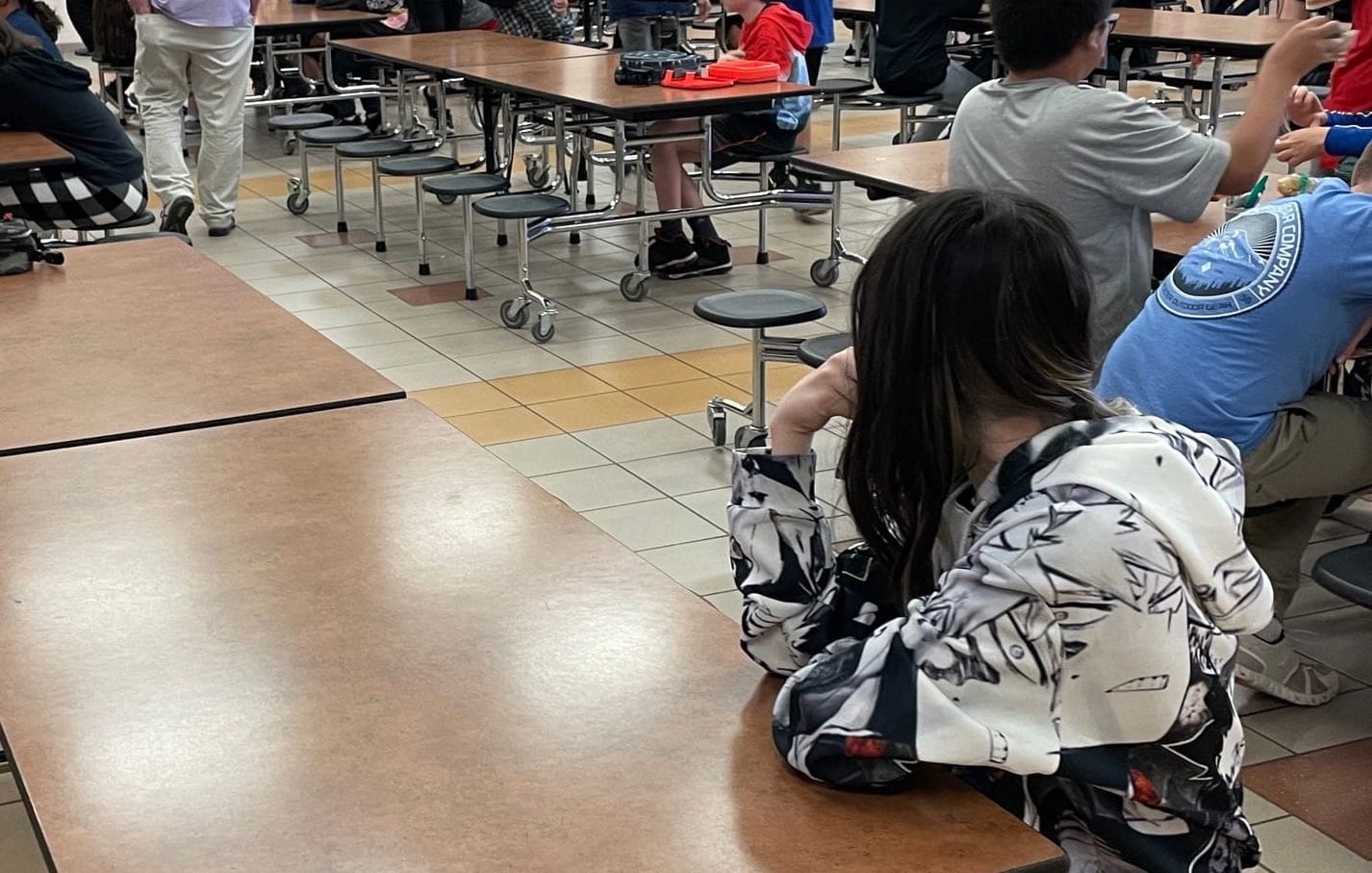
Whether caused by the pervasiveness of social media, an increase in "soft" parenting without consequences or lingering trauma from the COVID-19 pandemic, South Dakota's top education official said more public school students are being violent or aggressive in the classroom.
In addition to an increase in the number of disruptive incidents, Department of Education Secretary Joseph Graves said the level of violence exhibited by students against teachers, administrators and other students has also intensified in recent years.
"We're not talking about the kind of misbehavior many of us might think of when we think of our schools," Graves told News Watch. "This is nothing like we have experienced in American education, so it’s new territory and it’s scary and we need to get a handle on it."
Graves said he does not have data on how often violent behaviors are occurring in South Dakota schools, and a spokeswoman for the Sioux Falls School District said the vast majority of schools are peaceful and that student outbursts remain rare.
And yet, Graves said the anecdotal information he is receiving strongly indicates an increase.
Without providing specifics on the date, school name or location, Graves shared with News Watch a few examples of the dangerous and disruptive behaviors of school students he has been told about recently:
- An elementary student receiving one-on-one instruction got angry, smashed a computer against a wall and threw an object through a window, sending shards into an adjacent classroom full of students. The child then assaulted the teacher, who required medical attention.
- A high school student was accused of sexually assaulting a classmate and then was allowed to return shortly thereafter to the same classroom where the victim was present.
- A student in an elementary classroom threw a desk at another student and attacked teachers and administrators who responded, severely biting one adult and knocking down another who received a concussion.
"It's pervasive and what started in our urban centers has spread to our smaller, rural districts," Graves said.

Graves said the main effect of those incidents, in addition to any acute injuries or resulting trauma, has been the interruption of the education of other students. Furthermore, the rise in student violence is causing many teachers, especially those new to the field, to leave the profession at a time of a long-range, ongoing teacher shortage in South Dakota, he said.
"Those other 24 kids in the class matter and these teachers matter," Graves said. "We already have a hard time hiring people now, and teachers are starting to say, 'This isn't part of the bargain, this isn't what I signed up for.'"
Bill filed to remove unruly students
In response, Graves has brought forward House Bill 1017 this legislative session, a measure that seeks to empower school boards to quickly remove disruptive students from their school and require them to continue their education elsewhere.
Removed students could be taught either virtually or in person at home, at a behavioral health facility or at some other agreed-upon location either inside or outside the school.
"We're not talking about the kind of misbehavior many of us might think of when we think of our schools. This is nothing like we have experienced in American education, so it’s new territory and it’s scary and we need to get a handle on it."
-- Department of Education Secretary Joseph Graves
Gov. Larry Rhoden has expressed his support for the legislation. The bill had its first hearing in the House Education Committee on Friday, Jan. 16, where it received both support and opposition from those who testified and the legislators on the committee.
Opponents included Rob Monson, executive director of the School Administrators of South Dakota, who told lawmakers that schools already have policies and procedures in place to effectively remove disruptive students from classrooms.
Monson also said the measure would increase the likelihood of costly legal challenges and could become an "unfunded mandate" for school districts already operating with tight budgets.
Choose how to give. Click the Donate button to see the different ways you can give and help make stories like this one possible. And tell us why you support our work.
Lobbyists for the state's largest school systems and the Children's Home Society also testified against the bill. Both noted that there are waiting lists for acceptance into school and community programs that help children with behavioral problems, so options for removed students may be limited.
Lawmakers said they understood the need to address the problem, and some supported the concept in general.
Republican Rep. Roger DeGroot, a retired educator from Brookings, said the bill would give administrators and school boards "a little bit of a hammer" they need to quickly and effectively remove violent students from schools.
 Bart Pfankuch
But other lawmakers said the bill language was not specific enough in terms of what threshold of actions would be considered violent, what forms of alternative education would be allowed or who would pay for it. Some also wondered if the education of students removed from class would suffer, and why expulsion couldn't be used to remove violent students.
Ultimately, after a robust hourlong debate, lawmakers vote 15-0 to defer action on the bill until later in the session in hope that several questions could be answered.
Social media, parenting skills eyed as causes
Graves told lawmakers that elements of the bill were left intentionally broad to allow school boards to make case-by-case decisions that work best for the districts and the students involved.
He said parents would likely have to pay for alternative education and noted that while disruptive students probably would not get the same level of classroom instruction once removed, it's less fair to expose dozens of other students to learning disruptions caused by unruly students.
Expulsion is a rarely used method of dealing with serious student misconduct that not only takes weeks to months to litigate but which also does not provide any future educational programming for students, Graves said.
Graves told News Watch he believes student aggression is on the rise for a variety of reasons. Intense use of cellphones is districting children from their education, and that the "filth" available to them on social media is reducing their capacity to learn and grow, he said.

He also pointed to an increase in hands-off parenting in which adults do not enforce rules for children who often do not face consequences for negative acts. Graves said a school punishment system that does not fully hold violent children accountable exacerbates the lack of consequences that enables negative behaviors to continue.
"There's been a change in parenting, and we're seeing kids who are basically given no bed time and allowed to play video games and play with (their) smartphone all hours of the day," Graves said. "By basically giving in to whatever your child demands, that is not a great way to parent. Children begin to think that, 'There's no consequences for what I do, and whatever I want is what should happen.'"
A growing national problem
Graves told lawmakers that surveys of South Dakota's roughly 10,000 teachers showed that 7.5% left the profession for good in 2015 for reasons that did not include retirement. Ten years later, that number rose to 17.3%, Graves said.
National survey data shows similar impacts on teachers and the education system.
A 2024 poll of nearly 3,000 teachers and paraprofessionals by the National Education Association, America's largest teacher's union, found that 80% considered student misbehavior a "serious problem."
A recent study by Pew Research also found that 80% of teachers reported they must address students' behavioral problems several times per week, with nearly 60% saying it happens every day.
A 2024 survey by the RAND Corp. found that nearly half of educators said student misbehavior was the top source of job-related stress and that aggressive student behavior was the second-most common job complaint behind low wages.
"School aggression and violence have negative effects on school personnel health and retention and on student achievement and development," according to a 2024 research paper published by the American Psychological Association.
State's largest district seeks solutions
The Sioux Falls School District has been working to manage an increase in student behavioral problems for the past several years, mostly by trying to get students the help they need to function well, said DeAnn Konrad, spokeswoman for the district.
While the overwhelming majority of the district's 25,000 students remain well behaved, and incidents of violence are rare, administrators are aware that student behavioral health problems are on the rise, she said.
"We’ve definitely seen an increase in the needs and severity of students who are deeply troubled," Konrad said.
 Molly Wetsch
Konrad said the district works to provide counseling and education for students and parents through partnerships with outside agencies such as Avera Health, Lutheran Social Services and Southeastern Behavioral HealthCare. The district also has behavioral health specialists at all of its schools, including at Axtell Park Middle School where specialized help is provided to students with both behavioral and learning disabilities.
The district's approach has largely focused on helping students manage behavioral issues while educating parents on how to help their children be mentally ready to learn.
"For example, if kids aren’t getting enough sleep they can be dis-regulated when they come to school and are unable to focus on learning," she said. "We look to support and educate parents about making those hard decisions because kids are only with us for seven hours, and then if they go home and there are no rules, we basically start back over the next morning."
1. Subscribe for weekday emails with story summaries and links to the full version.
2. Share that email with friends and family and encourage them to sign up, or click the gold Share button in the bottom left of this page and send it via text or social media.
3. Support us with a one-time or recurring donation and become a partner in reporting important stories.
This story was produced by South Dakota News Watch, an independent, nonprofit organization. Read more stories and donate at sdnewswatch.org and sign up for an email to get stories when they're published. Contact content director Bart Pfankuch at bart.pfankuch@sdnewswatch.org.