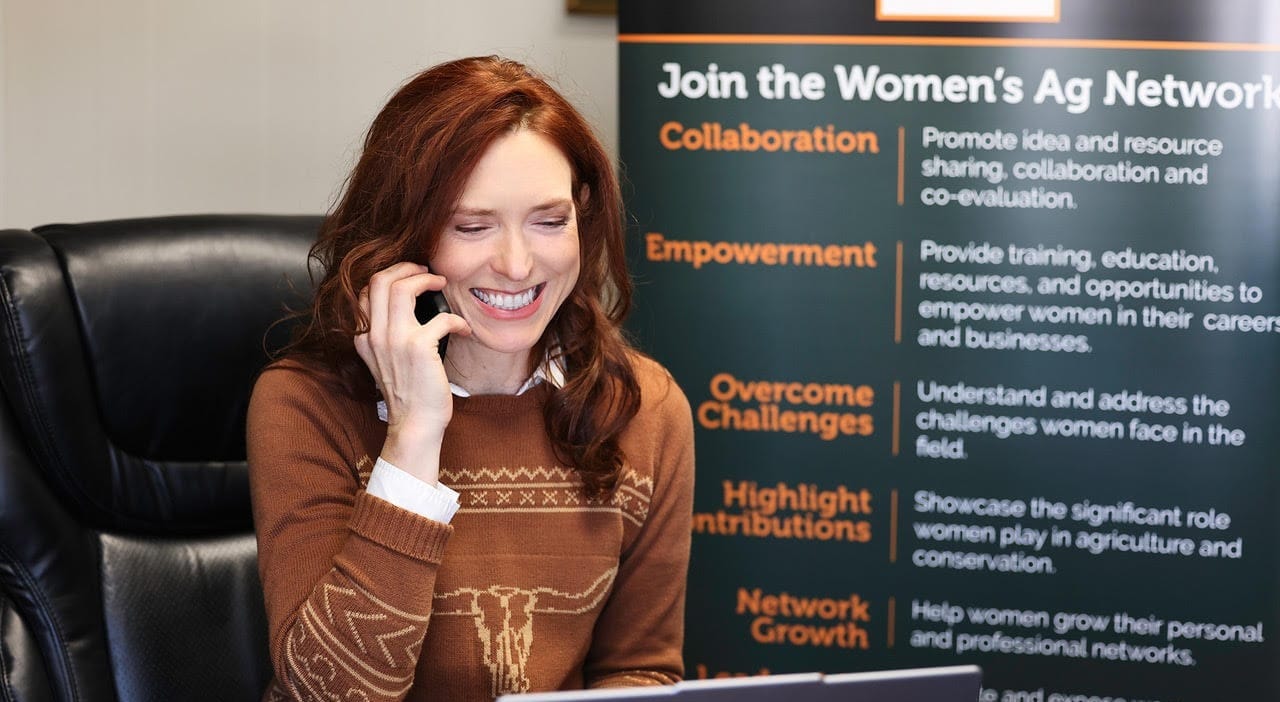

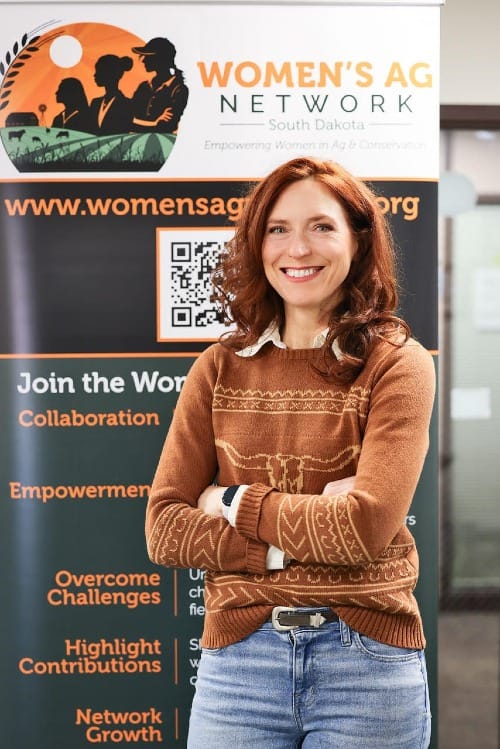
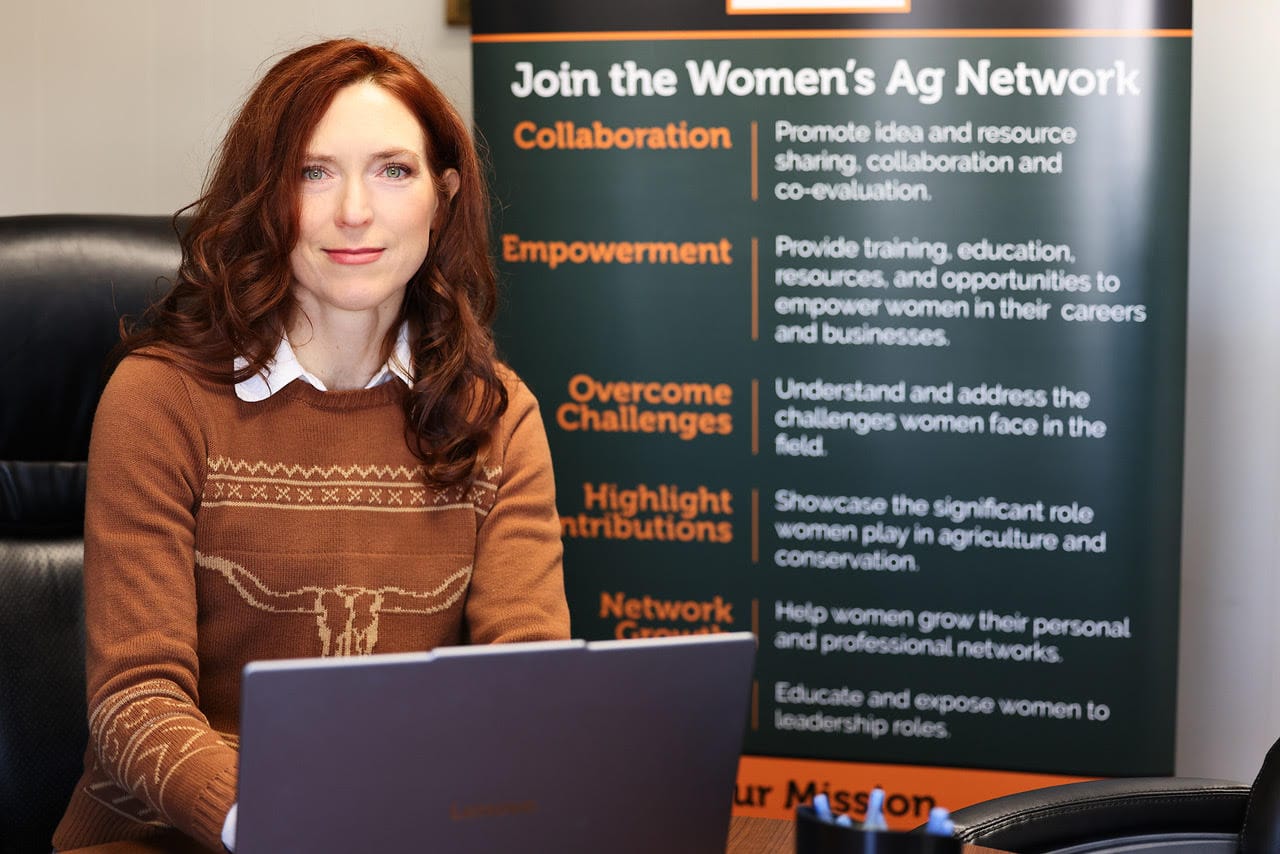
HURON, S.D. – When Rebecca Blue first began asking South Dakota women in agriculture what they were missing, the answers felt familiar.
Connection. Community. A sense that they weren’t navigating their careers and livelihoods alone.
What Blue didn’t know at the time was whether those instincts were widely shared, or whether they reflected only her own experience.
Now, after a year of statewide data collection from nearly 370 surveys and more than 100 focus group participants, the answer is clear. Women across South Dakota overwhelmingly said they want the same thing Blue was searching for: meaningful relationships, peer support and networks that help them grow into leadership.
 Kristi Hine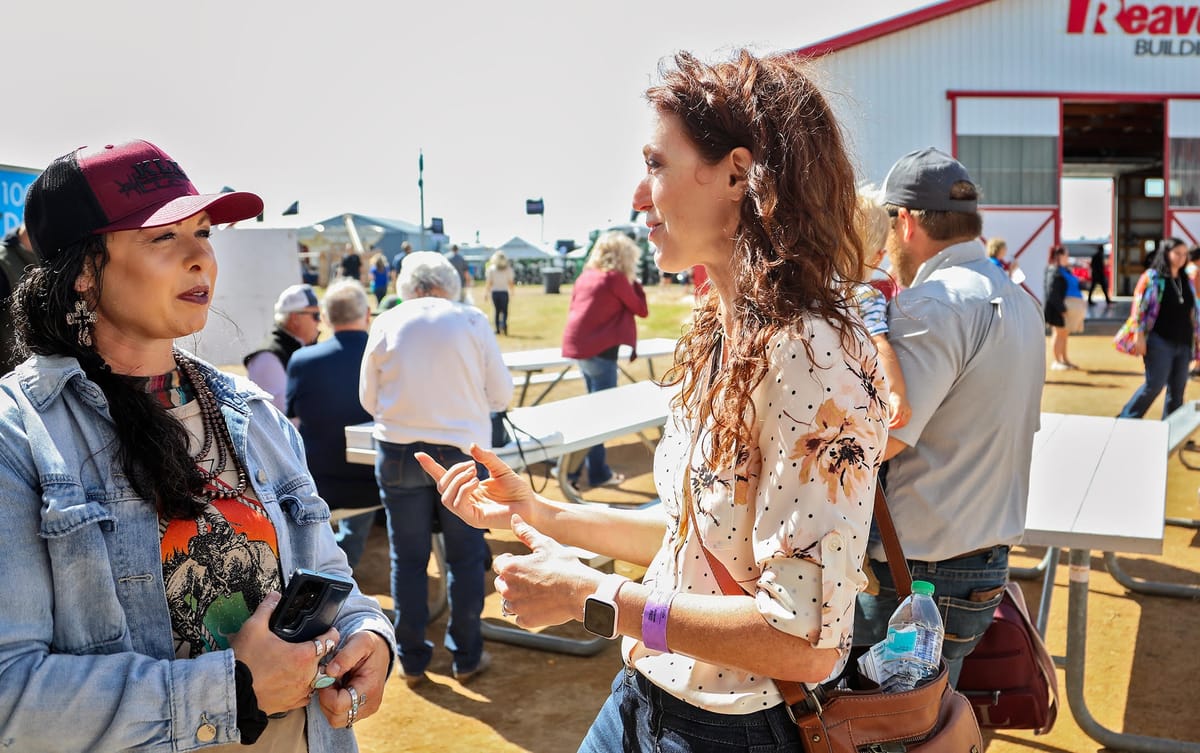
“I suspected other women were feeling the same need I was,” Blue said. “But to see the data come back and confirm that connection and relationships rose to the top, that was powerful.”
That confirmation comes from one of the most comprehensive research efforts focused on women in agriculture ever undertaken in the state that will guide the first full year of the Women’s Ag Network.
From idea to statewide effort
The idea for the Women’s Ag Network grew out of a simple realization Blue kept hearing again and again while talking with women across South Dakota: many felt isolated and lacked the professional networks they wanted.
“When I shared the idea of creating a place to connect, learn and collaborate, it immediately resonated,” she said.
In 2023, using her personal savings, Blue launched "The Best Job in South Dakota" podcast featuring women working in agriculture and related fields across the state. As the interviews accumulated, a pattern emerged.
“I went out on my own and realized I was not alone,” Blue said. “There were all these women going through the same thing.”
One of those early conversations with Rachel Lawton, an urban conservationist with the Natural Resources Conservation Service (NRCS), helped turn an idea into a larger initiative. That interview led to discussions with NRCS staff about potential funding opportunities and ultimately to a partnership with the South Dakota Association of Conservation Districts.
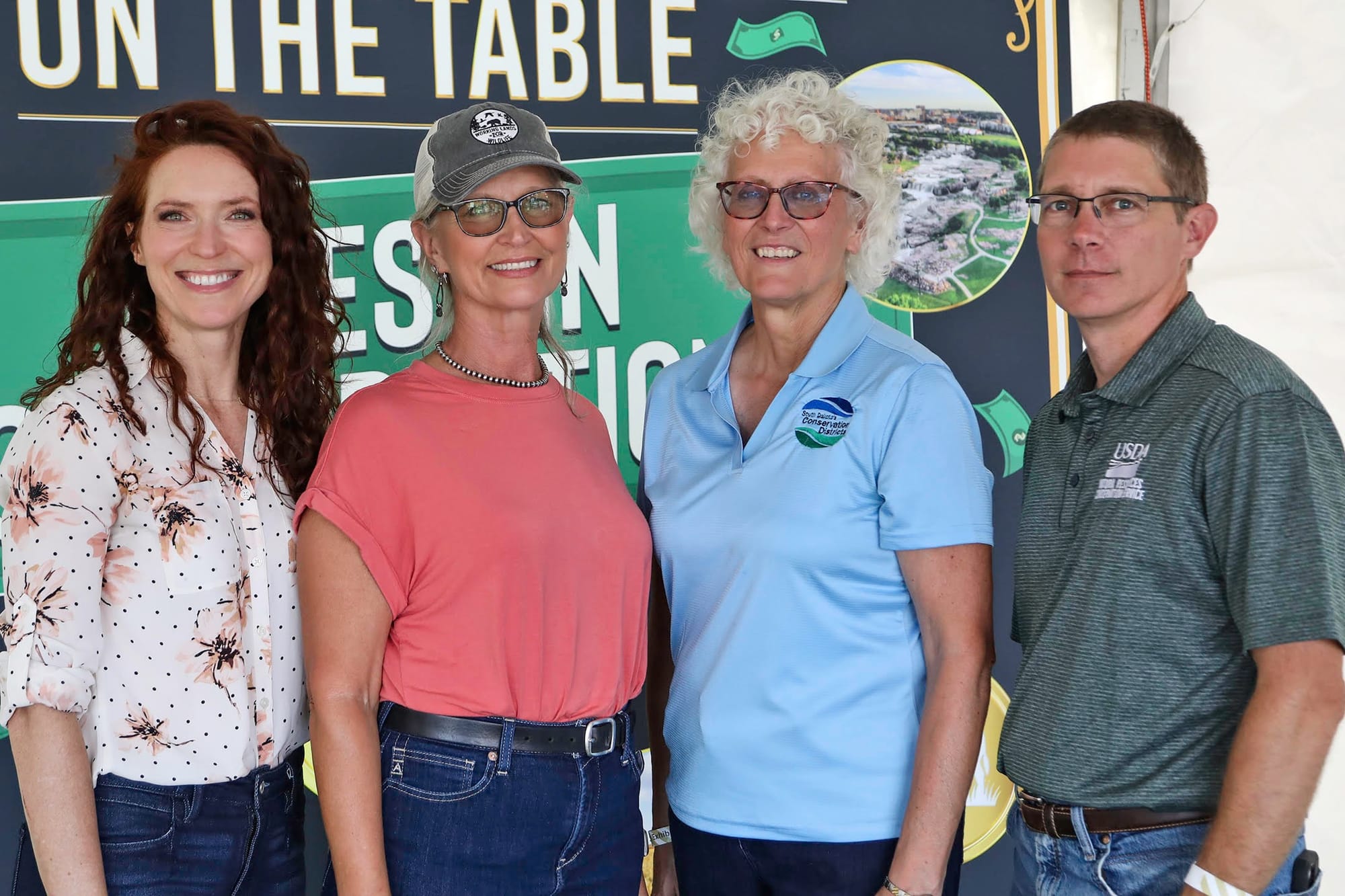
Angela Ehlers, executive director of the association, said the concept aligned with long-standing concerns about the underrepresentation of women in agriculture and conservation leadership.
“The point of this project is connection, and it starts at the local level,” Ehlers said.
With guidance from Ehlers and Colette Kessler, NRCS assistant state conservationist for partnerships, the group identified the South Dakota Conservation Collaboration Cooperative Agreement as a fit.
In June 2024, NRCS, the Jones County Conservation District and the South Dakota Association of Conservation Districts finalized a $1.17 million agreement to support a statewide effort to connect, engage and educate women in agriculture and conservation.
The project team, led by Blue, includes Ehlers, Kessler and Valerie Feddersen of the Jones County Conservation District. Their goal is to build a relationship-driven network that helps women expand leadership opportunities, strengthen peer connections and shape the future of agriculture and conservation, guided not by assumptions but by data.
From Dakotafest to data
The Women’s Ag Network formally launched in August 2024 at Dakotafest in Mitchell, where Blue and her team introduced the concept alongside a QR-code survey designed to gather input from women working across agriculture, conservation and related industries. At the time, the idea was still taking shape.
Since then, the network has gathered responses from more than 400 women statewide, conducted focus groups with more than 100 participants and contracted with the Sioux Falls marketing firm Paulsen for professional analysis.
 Bart Pfankuch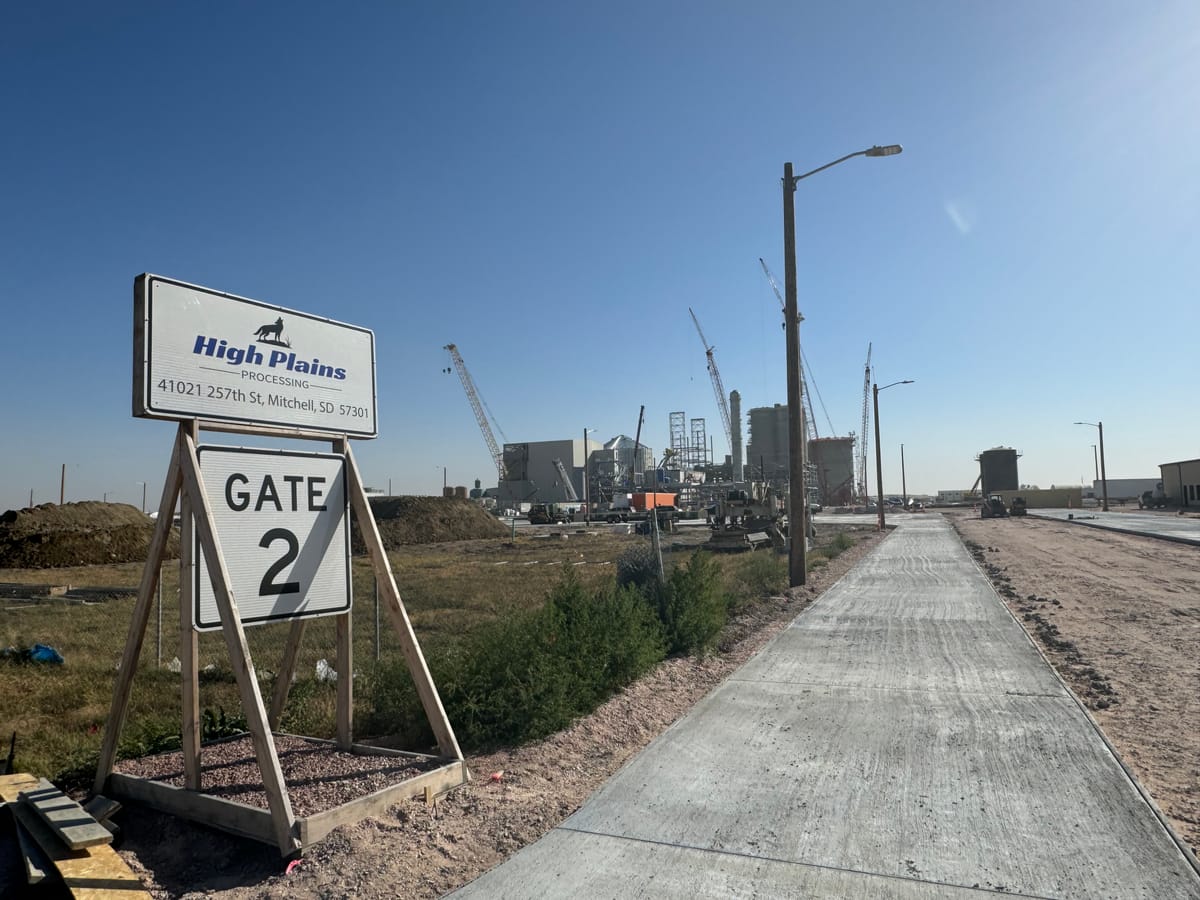
Women’s Ag Network also layered in a second, independent review through a semester-long collaboration with University of South Dakota students in the Coyote Business Consulting program.
Together, the findings offer both validation and direction.
“This wasn’t about confirming what we already believed,” Blue said. “It was about meeting women where they are and letting the data steer what comes next.”
The women behind the data
Survey responses skewed heavily toward early- and mid-career women, particularly those between the ages of 25 and 50. While women over 65 were less represented, Blue said that outcome was expected, and intentional outreach ensured voices of all ages were still included in focus groups and discussions.
“Later in life, you’ve often had the advantage of time to build your network,” she said. “When you’re in those earlier stages, that connection maybe hasn’t come as easily yet.”
Blue said the survey was promoted at events ranging from the South Dakota State Fair to Dakotafest and regional conferences, where women of all ages were present.
“It was important to make sure there was never a group that wasn’t included in the discussion,” she said.
What emerged was a portrait of a highly educated, deeply engaged group of women, many of whom found their way into agriculture through non-traditional paths.
Nearly half of respondents hold a bachelor’s degree, and more than three-quarters have completed post-secondary education. At the same time, roughly half did not formally study agriculture.
“That tells us something important,” Blue said. “When I say a woman with a career in agriculture, I’m not just talking about an executive director of a commodity group.”
She pointed instead to the women managing farm finances, coordinating with lenders and crop insurance agents, raising families and working alongside spouses or partners on operations.
“They’re the executive director of the farm,” she pointed out. “They just don’t give themselves the title.”
Others work in engineering, finance, tax preparation or technical fields that intersect with agriculture.
“In South Dakota, you’re hard-pressed to find an industry that doesn’t touch ag in some way,” Blue said.
What rose to the top of the data
Across every region of the state, one theme dominated the data: women want connection.
Networking and relationship-building ranked as the top priority statewide, surpassing technical training, leadership workshops and formal presentations.
That finding echoed through focus groups and forced organizers to rethink long-standing assumptions about professional programming.
“It’s that shared experience that really shapes how women think about their next steps.” – Rebecca Blue
“One of the most surprising things was that small-group breakout sessions ranked higher than motivational speakers,” Blue said. “The least popular thing was a big speaker on a stage.”
That realization has already changed how the network plans events.
“Sure, speakers have a place,” she said. “But maybe not as often as we thought.”
Instead of keynote-driven programming, Blue envisions gatherings that begin with shared stories, often from women within the community, before moving into facilitated, small-group discussion.
“It’s that shared experience that really shapes how women think about their next steps,” she said.
Where leadership and opportunity miss each other
While more than a quarter of respondents said they currently serve in leadership roles, nearly 60% of those positions are outside agriculture and conservation. That disconnect stood out to Blue.
“We knew leadership participation was underrepresented,” she said. “But it was striking to see how many women were serving on boards unrelated to ag.”
The implication, she said, is not a lack of qualified women, but a lack of connection.
“We hear boards say all the time, ‘We’d love to have more women,’” Blue said. “But if they don’t know Jane Doe exists, they can’t go after her. And if Jane Doe doesn’t know there’s an opportunity, she can’t pursue it.”
That disconnect, she said, is exactly where the Women’s Ag Network intends to operate.
Barriers that can be addressed
Focus group data also challenged assumptions about the obstacles women face.
Time and confidence ranked as the top barriers to advancement, followed by cost and access. Gender bias ranked lowest.
“That was actually encouraging,” Blue said. “Time and confidence are things we can work on.”
Support stories about rural South Dakota with a tax-deductible donation.
Rather than pushing women toward a single definition of leadership, Blue said the network will emphasize meeting women where they are.
“For some people, leadership means being president of a board,” she said. “For others, it’s volunteering, mentoring or stepping into something when they’re ready.”
Often, she added, it takes someone else recognizing potential before a woman recognizes it herself.
“That’s why these hubs matter,” she said. “Often it's way easier for someone else to see your potential much clearer than you can, right? Someone can say, ‘You’d be amazing at this,’ which is likely to encourage positive next steps.”
Digging into the data
Survey responses showed clear regional patterns both in participation and in what women in ag said they needed most.
The southeast (17.72%) and east-central (18.69%) regions reported the highest participation, together accounting for more than one-third of all responses. Organizers see that strong engagement as both validation and opportunity, signaling areas where momentum already exists and where targeted outreach could deepen impact statewide.
Across all regions, women consistently ranked networking, leadership development and business education as top priorities. But the emphasis shifted depending on geography.
In western South Dakota, respondents placed greater importance on community connection and leadership development. Eastern regions leaned more heavily toward business skills, technical education and U.S. Department of Agriculture program knowledge. Women in urban centers such as Sioux Falls and Brookings emphasized career growth, communication skills and crossover roles that intersect agriculture with other industries.
Despite those differences, the underlying message was consistent: women want inclusive networking, mentorship and confidence-building opportunities. Programs that blend relationship-building with practical skill development resonated most strongly across the state.
While the survey provided a broad snapshot, focus groups added depth, particularly around barriers and preferences.
Time emerged as the most significant challenge, cited by 38.8% of participants, followed by confidence (12.7%), cost and location. Gender bias ranked lowest among perceived barriers, a finding organizers described as both encouraging and instructive.
“Focus group participants also offered clarity on how they want to connect. Small-group breakout sessions (22%), icebreakers (18%) and informal, conversation-based settings ranked far higher than speaker-heavy or lecture-style events. Many participants said large, unstructured networking environments felt intimidating or unproductive, while guided conversations helped foster genuine connection.
Those insights are now shaping how the Women’s Ag Network designs its programming.
Participants also expressed a desire for continuity beyond single events. In response, the network created an online community via social platforms (Facebook, Instagram and LinkedIn) for ongoing discussion to sustain engagement between in-person gatherings.
While regional differences highlight the need for tailored approaches, the shared emphasis on relationships and community-building provides a unifying framework for a statewide network designed to meet women where they are.
A second set of eyes and deeper validation
In addition to the Paulsen analysis, the Women’s Ag Network partnered with USD’s Coyote Business Consulting program. Students Dawson Aberson and Abby Pinkerman independently reanalyzed the survey and focus group data and evaluated program design and sustainability.
The students’ findings closely mirrored Paulsen’s conclusions, reinforcing the emphasis on networking, leadership confidence and regional nuance.
“That second layer of analysis was incredibly valuable,” Blue said. “It confirmed we were on the right path and helped sharpen how we move forward.”
A network built on co-elevation
At its core, Blue said, the Women’s Ag Network is not about competition or individual advancement.
“It’s about co-elevation,” she said. “How are we rising together?”
She believes that shift in mindset reflects a broader change in how women view networking itself.
 Bart Pfankuch
“A few years ago, ‘networking’ had a negative undertone,” she said. “I don’t think that’s the case anymore. People are realizing opportunity comes from relationships.”
For Blue, the first year of data collection did more than validate an idea. It provided a roadmap.
“From the beginning, the goal was to let the data steer our decisions,” she said. “This gives us clarity we didn’t have before.”
Building the network, region by region
With the research phase complete, the Women’s Ag Network is moving into implementation through a series of regional hubs, each led by a local hub manager selected for their ties to agriculture, leadership experience and deep community connections.
While the network launches with a shared framework, Blue said each hub is expected to evolve based on regional input.
“What works in Spearfish may not work in Eagle Butte,” she said. “The data showed us how regional this really is.”
 Kristi Hine
Early events will emphasize structured networking, a response to widespread feedback that unstructured introductions are intimidating.
“If I walk into a room where I don’t know anyone, I’ll sit on my phone pretending to send really important messages,” Blue said with a laugh. “We heard loud and clear that format doesn’t work.”
The plan is to meet monthly, creating consistency that many women said has been missing from other professional programs.
“So often, women’s programming is once a year, or a short series, and then it disappears,” Blue said. “This is about being present in communities, consistently and over time.”
The first hub event is scheduled for 5 p.m. Wednesday, Feb. 25, at Corner Post in Huron.
“What women need in one community isn’t always the same as in another,” Blue said. “This network gives us a way to honor those differences without losing the collaboration and support of a statewide connection.”
Correction: This story was corrected Jan. 29, 2026, to fix the day of the week of the Feb. 25 event.
This story was produced by South Dakota News Watch, an independent, nonprofit organization. Read more stories and donate at sdnewswatch.org and sign up for an email to get stories when they're published. Contact: info@sdnewswatch.org.