
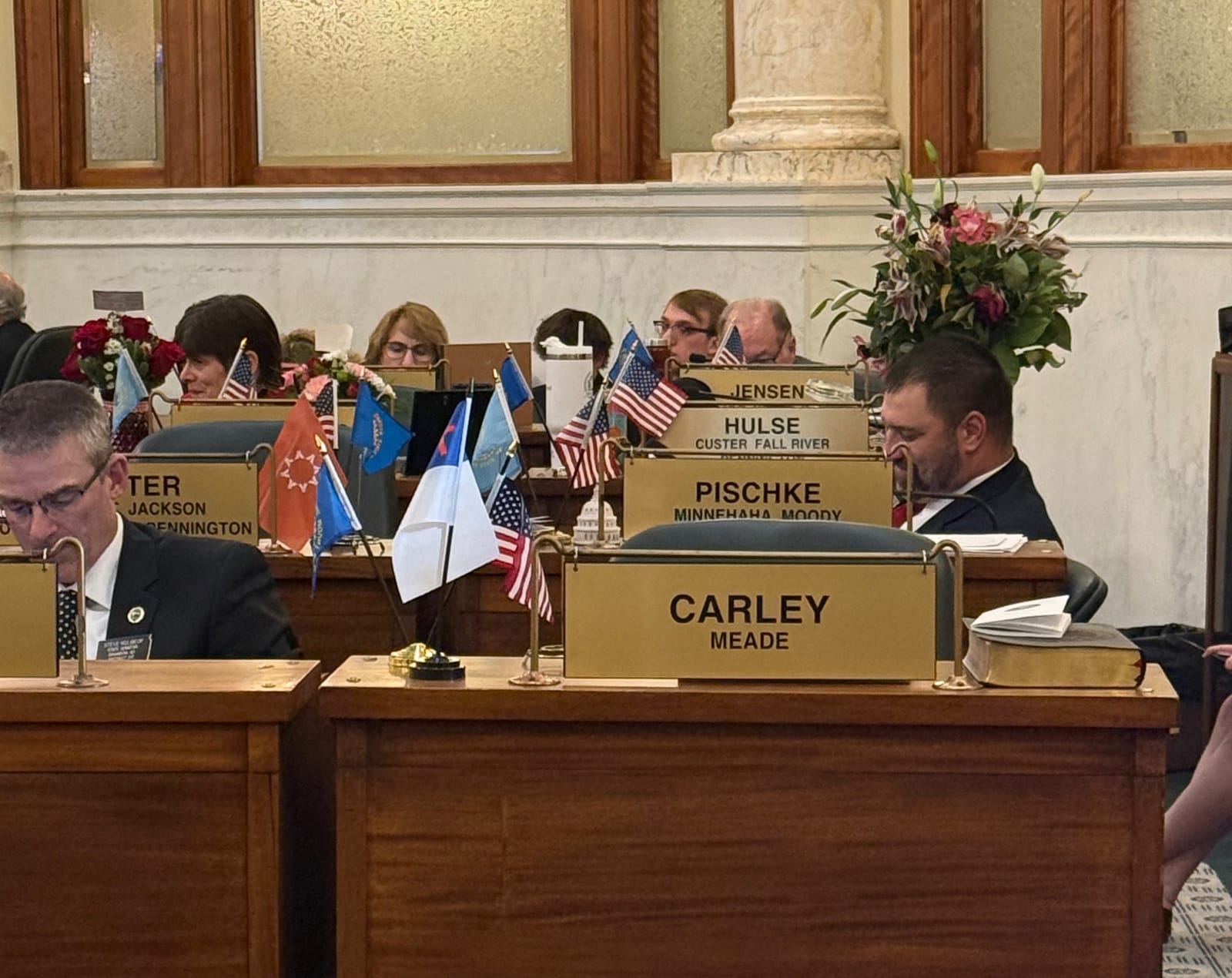

PIERRE, S.D. – The fate of a bill tied to one of the most contentious subjects in the South Dakota Legislature this year – data centers – ended up in the hands of a senator that couldn't be located.
Senate Bill 239 would have provided relief for companies such as those operating data centers by allowing them to write off a certain percentage of the cost of purchasing large equipment. It failed its vote to be reconsidered 16-17 a day after it lost its first vote by the same margin.

The Feb. 24 vote was held up for nearly 40 minutes after the Senate voted to wait until they could find Republican Sen. John Carley of Piedmont, who could have potentially given the tying vote and leave Lt. Gov. Tony Venhuizen with the task of casting a tiebreaker.
"Several senators have tried to call him and he is not answering the phone. The governor tried to call him and he did not answer the phone," Venhuizen said, reading out the report from the sergeant in arms.
Carley drew derision from his Senate colleagues.
"This is just proof that we should be in our seats and represent our districts and not disappear," Republican Sen. Randy Deibert of Spearfish said.
The bill, spearheaded by Republican Sen. Casey Crabtree of Madison, underscores the division within the chamber between those who favor giving data center companies additional economic incentives to move to the Mount Rushmore state and those who believe more guardrails should be put in place and greater fiscal restraint exercised.

As the bill was presented to the Senate floor Feb. 23, Crabtree and other supporters argued the measures were a necessary step to bring South Dakota in line with other states. Detractors, headed by Republicans Senate Pro Tempore Chris Karr of Sioux Falls and Sen. Taffy Howard of Rapid City, said it would create government overreach and allow Pierre to essentially pick winners and losers.
Ryan Budmayr, CEO and president of the South Dakota Chamber of Commerce and Industry, believes the concerns over the bill are misguided, pointing out South Dakota is one of eight states that tax manufacturing equipment and that each project would still face scrutiny from the South Dakota Governor's Office of Economic Development (GOED).
"What the bill would basically allow is for GOED to look at each one of these projects on a case-by-case basis and grant a rebate of zero to 100% on the purchases of equipment up to 30 years," Budmayr told News Watch. "The truth is these projects, one of the largest areas of investment we've ever seen across the country, are popping up everywhere but ... they will not come to South Dakota unless we are competitive."
Budmayr, along with other proponents of data centers, have made the case that, when it comes to data centers, South Dakota is missing out on a large source of tax revenue, just as complaints on property taxes in the state have risen in recent years.
"We're just not going to get any of the tax revenue from it. ... (We've) got to be smart and strategic to make sure we have the proper safeguards in place. But $500 billion of investment went into these projects last year alone, and South Dakota didn't see a dime of it," Budmayr said.
$800,000 in bitcoin revenue to schools
As an example of the potential benefit, he pointed to a bitcoin mining operation north of Pierre, which provided more than $800,000 of tax revenue to the local school district last year.
However, for Liz Tiger of Dakota Rural Action, a conservation group, the promise of data center riches comes with significant drawbacks, even for those communities that may be inclined to welcome data centers with open arms.
"We have seen some other large scale projects go in that had promises of economic development ... and then that didn't seem to materialize," Tiger told News Watch, citing the surge of wind energy development that has brought in significant revenue in areas where turbines operate but has been offset by a decline in the state funding due to its allocation formula.
"Big projects come in and they promise all these gains through additional revenue without disclosing, 'Well, you know, you might not feel that benefit because you're going to get less state funds because we're going to bring this money in,'" Tiger said.
"South Dakota is always going to be looking for economic development. ... I think what you're hearing from communities is we want to see thoughtful economic development," Tiger said. "You want to bring revenue into the state, but you want to balance it with community needs."
Local control vs. state regulation
The events in the Legislature the past few days reflect a larger battle going on over what action, if any, lawmakers should take in regulating and incentivizing an industry that could prove to be financially beneficial for the state.
In addition to questions over what sort of economic and tax benefits South Dakota should offer large data center companies, residents have raised concerns over potential air and noise pollution, increases in utility bills and the erosion of property rights.
Several bills introduced last week by Sen. Howard sought to address some of those misgivings but were rejected by the Senate State Affairs Committee, with many of those opposing her bills saying the matter of regulating data centers should be driven by local municipalities and not the state.
"The question you have to ask is, 'Do the people come first in this state or does money come first?' Is that always going to be our top priority or are we going to think about the quality of life and health of our citizens?" Howard said.
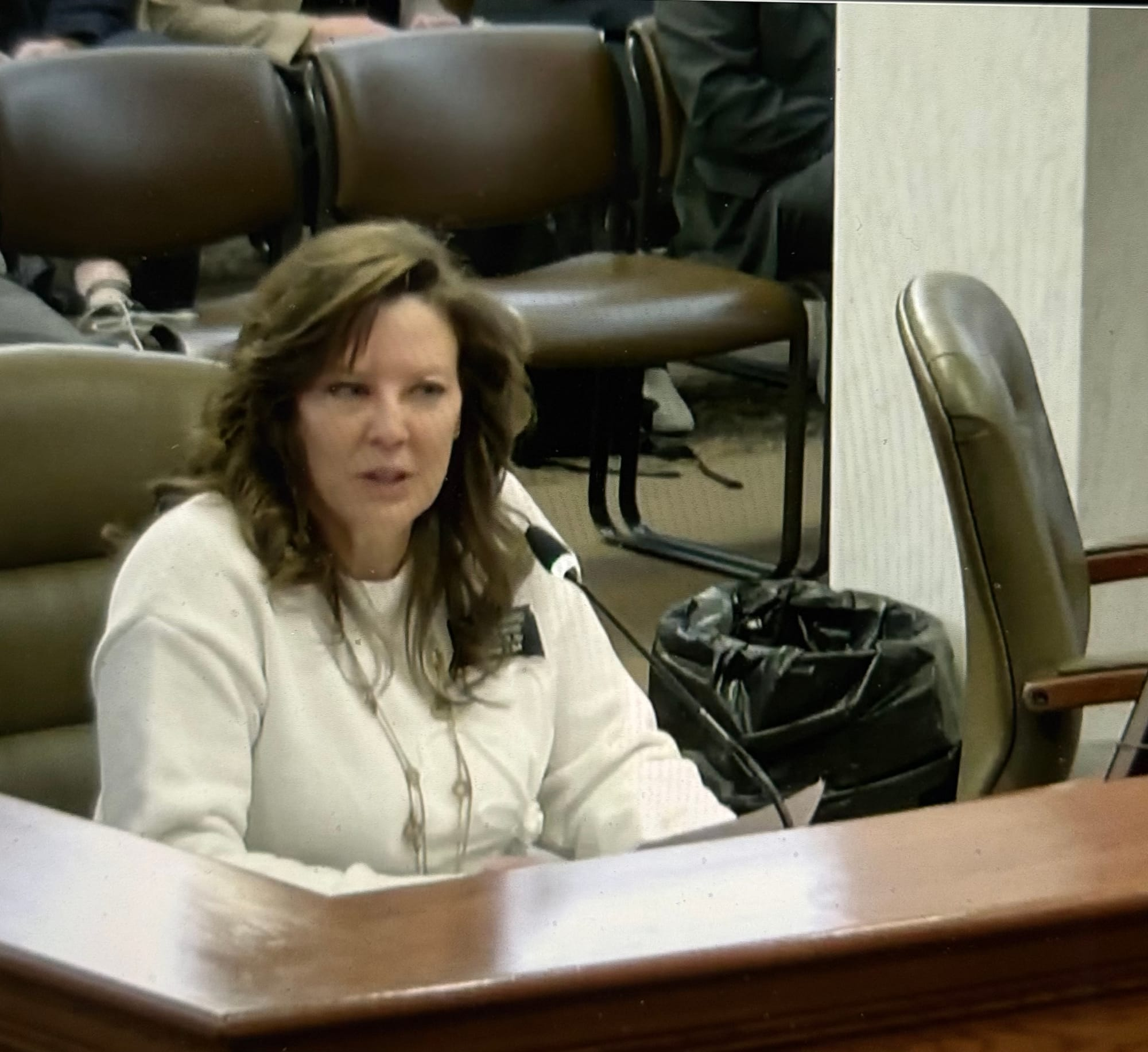
Tiger argues it is precisely the lack of trust and accountability at the local level that is spurring residents to seek out state intervention.
"Generally the folks I talk to are very much for smaller government and very much for local government, but you're seeing this level of distrust because other projects ... have been misrepresented," she said.
"When you don't have trust in your local government, you start looking elsewhere, and I think that's what we're seeing this year. People are starting to look towards state legislation because they don't have a lot of confidence in their city and county government," Tiger said, referring to the large turnout for a Jan. 6 Sioux Falls City Council meeting that led to a rezoning of an area to make way for a data center.
"They voted one way on part of this measure with the rezoning, then after folks left, they brought it back and took another vote. That didn't help instill any type of confidence in local government for the people that live in Sioux Falls," Tiger said.
As you were?
At the moment, it appears neither supporters nor skeptics of data centers have gotten what they wanted, with the vast majority of the proposals put forth in this year's legislative session being defeated.
Only two bills – one related to assessing the cost of data centers and another aimed at protecting residents from an increase in utility prices – have made it out of either chamber thus far.
Budmayr understands the apprehension toward data centers but believes that rather than being a threat to South Dakota's traditional economic structure, the new facilities would be complementary.
Play a bigger role in our storytelling. Join us as a partner in telling stories that are important to all South Dakotans with a tax-deductible donation.
"There's a bit of a sentiment in the Legislature that wants to preserve the South Dakota way of life, and I completely respect that. But I think the way we can do that is to continue to allow communities and our state to grow. ... That doesn't mean we're going to get thousands of new people to move to South Dakota. It means we're going to be able to provide for the communities that we have," he said.
"I'm not saying we should put all our eggs in the data center bucket. But we should let the counties and communities decide if one is right for them."
Meanwhile, Tiger argued, given the lessons learned from recent experiences, it is important for state government to ensure it has sufficient support from South Dakota residents by addressing any lingering concerns before projects are given the green light.
"More public education and understanding on how these types of buildings work would be beneficial to the people of South Dakota. We're talking economic development with a group of people that have felt taken advantage of before. Now is probably the time to have a better conversation," she said.
Proposed legislation
Here is an overview of proposals pertaining to data centers introduced in this year's Legislature, what they would do and their status:
- House Bill 1005 – Provide a sales and use tax exemption for goods and services related to data center operations: failed (deferred)*
- House Bill 1038 – Allow the Public Utilities Commission to assess actual costs to data centers: passed House; sent to Senate Commerce and Energy committee for consideration
- House Bill 1246 – Prohibit nondisclosure of certain agreements related to data centers: failed
- House Bill 1301 – Limit costs and risks associated with electricity use by data centers and impose a moratorium: failed (deferred)
- Senate Bill 127 – Limit nuisances caused by data centers: failed (deferred)
- Senate Bill 135 – Protect residents from increased utility costs and utility shortages caused by data centers and clarify authority to regulate data centers: passed Senate; sent to House State Affairs Committee for consideration
- Senate Bill 232 – Impose a one-year moratorium on the construction or expansion of hyper-scale data centers: failed (tabled)
- Senate Bill 234 – Modify provisions pertaining to the purchasing of goods and services related to data center operations: failed (deferred)
- Senate Bill 235 – Protect residents from increased utility costs and utility shortages caused by data centers, to clarify authority to regulate data centers, and to modify provisions pertaining to the purchasing of goods and services by a data center: failed (deferred)
- Senate Bill 239 – Modify provisions relating to the reinvestment payment program, and relating to the purchasing of goods and services used by projects approved for the reinvestment payment program: passed Senate State Affairs committee; failed in Senate
*Note: in addition to failing to pass in an outright vote, a bill can also be defeated, in effect, when it is deferred to the 41st day of the legislative session or "tabled," meaning it is removed from the agenda. Find the full text for each bill here.
South Dakota News Watch is an independent nonprofit. Read, donate and subscribe for free at sdnewswatch.org. Contact politics and statehouse reporter Alexander Rifaat: 605-736-4396/alexander.rifaat@sdnewswatch.org.