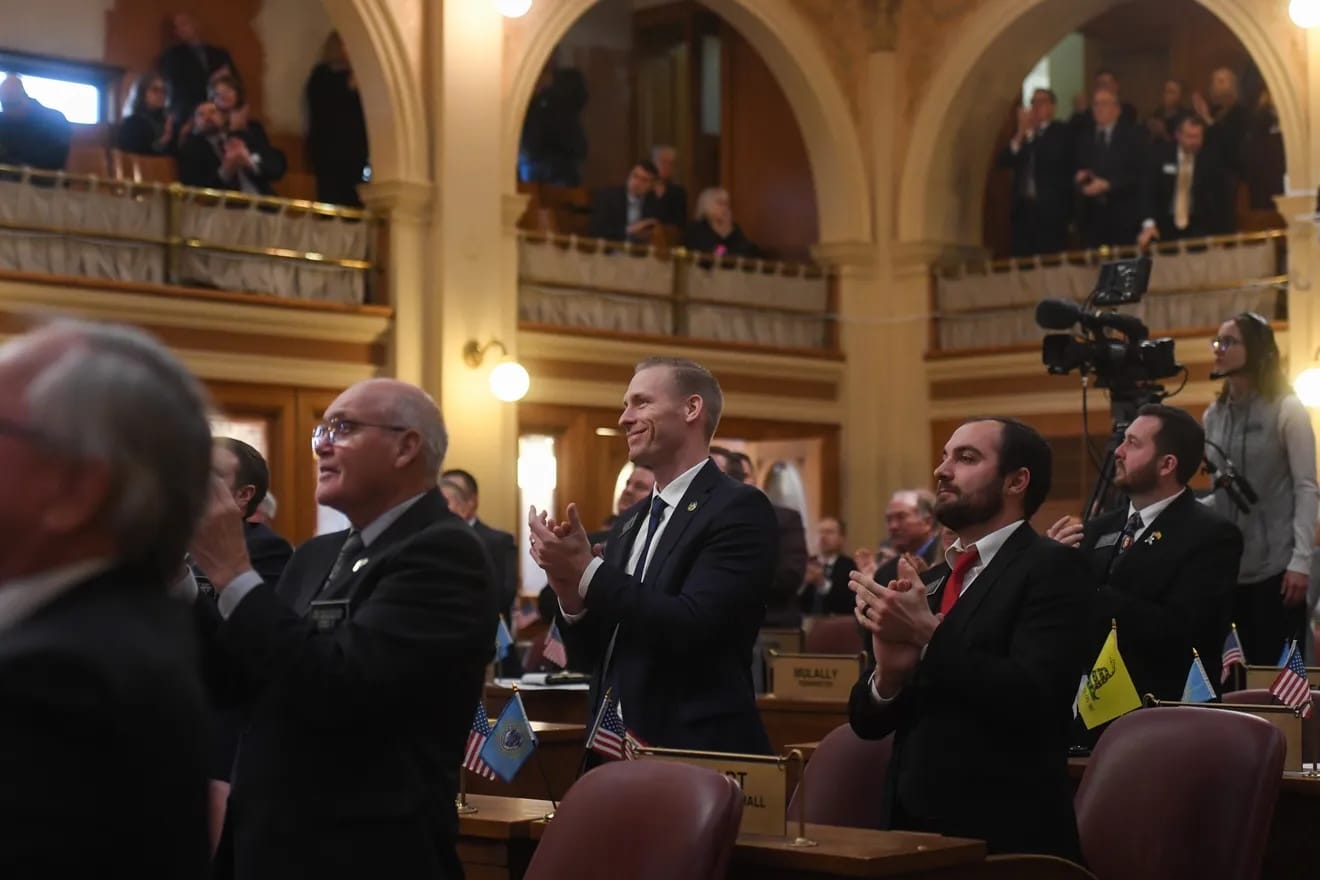

PIERRE, S.D. – The main run of the South Dakota Legislature came to a close last week with lawmakers passing a state budget for the upcoming fiscal year that starts July 1. Here are key storylines to come out of the 2026 session.
Revenue increase allows modest pay bump for 'big 3'
After negotiations helped by a rosier prediction on revenues, lawmakers were able to agree on a $7.5 billion budget for fiscal year 2027, which includes a 1.4% increase in resources for the "big three:" state employees, pre-K through 12th grade education and Medicaid health care providers. Overall, the budget is a 2.4% increase from last year.
Gov. Rhoden gets property tax bills over the line
Amid the plethora of different proposals put forth this session by different lawmakers to tackle the issue of rising property taxes in some parts of the state, Gov. Larry Rhoden was able to claim victory with the passage of two key proposals he championed. Senate Bill 96 gives counties the option to implement a half-cent sales tax increase in exchange for lowering property taxes. Senate Bill 245 will create an owner-occupied property tax relief fund using revenue generated from the scheduled 0.3% increase in the statewide sales tax due to come into effect July 1. The passage of both bills came after Rhoden negotiated with House Speaker (and fellow gubernatorial challenger) Jon Hansen.
 Alexander Rifaat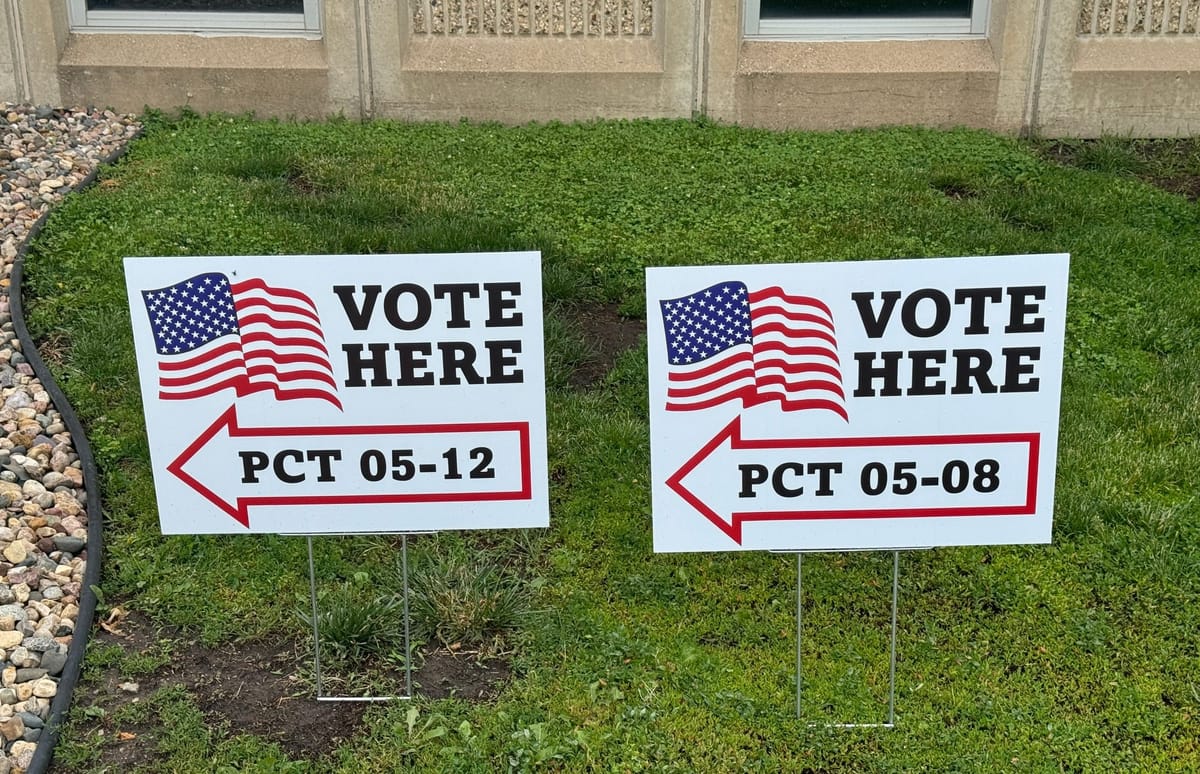
Data center skeptics win out (for now)
The battle brewing in South Dakota between attracting economic development opportunities and protecting the rural character of the state played out in the Legislature over the issue of data centers. While proponents in favor of data centers touted the potential economic benefits, several bills introduced by lawmakers aimed at providing favorable tax incentives to that industry failed to make it to the governor's desk. Those skeptical of data centers had several proposals fail to make it pass the finish line, but they were successful in the passage of Senate Bill 135. The bill, dubbed the "Data Center Bill of Rights," was championed by Hansen and Senate President Pro Tempore Chris Karr, a Sioux Falls Republican, which provides guardrails against data center electricity and water usage.
Voter identification and immigration
The Legislature enacted tougher voter identification requirements but declined to force businesses to implement stricter immigration verification measures. Lawmakers amended Senate Bill 30 to allow citizens to challenge the eligibility of a voter based on whether they are a U.S. national. South Dakota already provides the ability to challenge someone's voter eligibility based on questions over whether a person holds South Dakota state residency or is registered to vote in another state. Meanwhile, the Senate nixed House Bill 1209, which would have required firms with 25 or more employees to use the government E-Verify website to confirm a new employee's work authorization status.
Lab-grown meat ban
South Dakota is now the eighth state to hit pause on lab-grown meat. After Rhoden vetoed a bill that would, in effect, ban artificially grown meat, the Legislature reached a compromise with Senate Bill 124, imposing a five-year moratorium on the sale, manufacturing and distribution of such products. While Rhoden said he personally was not a fan of lab-grown meat, he thought an outright ban was a step too far and believed the new law will allow for more studies and testing to be done. South Dakota joins Alabama, Florida, Indiana, Mississippi, Montana, Nebraska, and Texas as states that have introduced some form of restriction or ban on the product thus far.
Medical marijuana oversight committee lives on
The legislative committee in charge of overseeing South Dakota's medical marijuana industry survived an attempt by Republican Rep. Tim Goodwin of Rapid City to move the entity under the jurisdiction of the state Department of Health. The medical marijuana oversight committee currently consists of two senators, two representatives and seven members from different backgrounds in contact with the industry. However, people in the state's medical marijuana industry have clashed with the committee over what they believe is the its bias against the program, which has culminated in a series of tighter restrictions. House Bill 1160 failed in the Senate.
 SD News Watch
Proponents of eminent domain reform come up short
South Dakotans will not be asked whether to cement further restrictions in the state constitution on eminent domain, which allows governments to seize private land for public use and compensate the owner. House Joint Resolution Bill 5001 would have put forth a ballot measure asking voters if the use of eminent domain should not include as justification an increase in tax base, tax revenue, employment or general economic health. However, that bill failed in the Senate 14-19.
South Dakota leans into 'most 2nd Amendment-friendly state' claim
South Dakota became the first state to declassify gun silencers as a controlled weapon. The Legislature passed Senate Bill 2, which was sponsored by Republican Sen. Casey Crabtree of Madison. With the bill's passage, South Dakotans will no longer be required to register their purchase of gun suppressors. “South Dakota is the most Second Amendment-friendly state in America, and this is yet another opportunity for us to pave the way and set an example for the rest of the nation,” Rhoden said in a statement when he signed the bill last month. Crabtree and other supporters of the bill argued gun suppressors were for hearing protection and not weapons.
Campaign postering begins
While the dust settles in Pierre, the political ramifications for the bills that did (and didn't) make it past the finish line are beginning to emerge as we enter a contentious Republican primary season. In addition to the passage of his property tax proposal, Rhoden also signed Senate Bill 113, which imposes stricter penalties on those threatening to disrupt religious services. Rhoden had pushed for the legislation in response to an anti-ICE protest that occurred in a church in Minneapolis in January.
Meanwhile, his GOP challenger Hansen, who could also claim a win on addressing property taxes, had his bill on gender definitions make it through the Legislature. However, Hansen's gender terminology bill and the data center bill he worked on with Karr still require Rhoden's signature. While Crabtree was able to garner support for his gun silencer bill, he saw several of his other proposals aimed at economic development and tax reform fail to materialize. He also dropped his bid for the GOP nomination for South Dakota's lone U.S. congressional seat. Crabtree cited his desire to focus on fixing the "dysfunction" in the state Senate as one of the reasons for leaving the race.
Veto day
While the main run of the legislative session is over, lawmakers are scheduled to return to Pierre on March 30 for veto day when they take up any bills vetoed by Gov. Rhoden.
Trusted, independent sources of information are needed more than ever. Partner with us to produce fact-based news.
South Dakota News Watch is an independent nonprofit. Read, donate and subscribe for free at sdnewswatch.org. Contact politics and statehouse reporter Alexander Rifaat: 605-736-4396/alexander.rifaat@sdnewswatch.org.