
There are an estimated 113,000 food insecure people in South Dakota, meaning they sometimes don't get enough to eat, according to 2023 Feeding America data.
Statewide, food resources coalesce to create both short- and long-term solutions for access to food, from the large cities of Sioux Falls and Rapid City to the state's most rural areas.
This story includes an initial list of some of those solutions. Email other solutions to info@sdnewswatch.org for consideration in inclusion.
Statewide resources
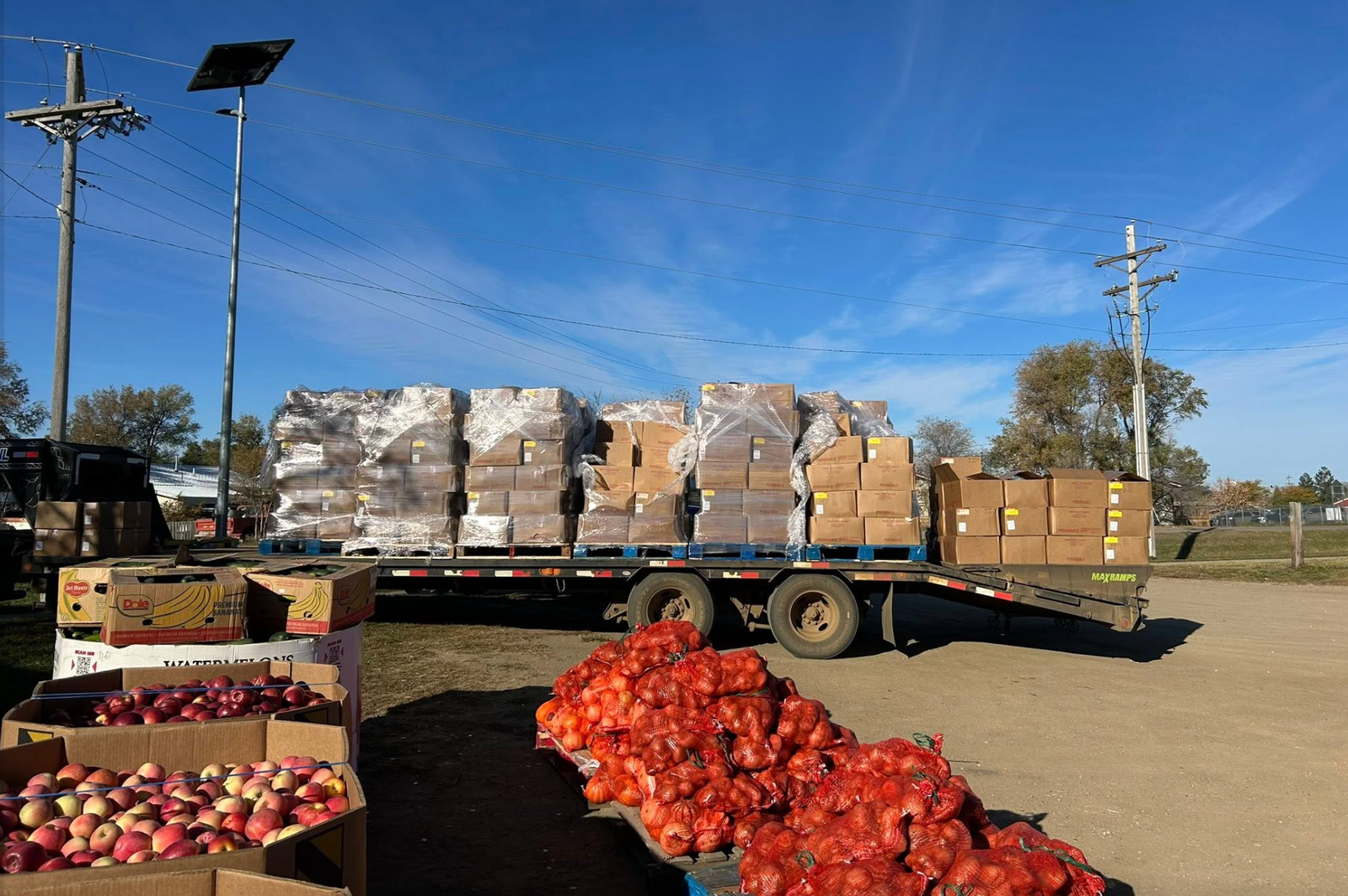
- Feeding South Dakota is the state's largest food relief network, and operates out of three distribution centers in Rapid City, Pierre and Sioux Falls. Through its programs and partnerships, it distributes food to pantries in all 66 counties, Feeding South Dakota representative Stacey Andernacht told News Watch in 2025.
- Meals on Wheels delivers homemade meals to seniors in communities across the state.
Sioux Falls programs
- Bread Break is a Sioux Falls-based nonprofit that collects unused food and ingredients from more than 30 businesses in the area. After the food is collected, Bread Break distributes it to their various partner food agencies.
Sioux Falls Hunger is an effort to coordinate programs and communicate when food is available. Here are its members:
- Bishop Dudley Hospitality House, a homeless shelter that provides showers, laundry services and serves lunch
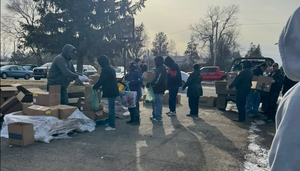
- Faith Temple Food Giveaway is the largest one-day food giveaway in the state, according to lead pastor Jeff Hayes. Volunteers gather food into boxes and put them in people's cars every Friday, serving more than 4,000 every week.
- Feeding South Dakota
- Food to you is a mobile food pantry that runs on the first four Thursdays of the month.
- Messiah New Hope is a food pantry that runs from 3-5 p.m. on Thursdays.
- Nightwatch serves meals on Sundays, Mondays and Tuesdays.
- Red Door Church serves breakfast on Sundays.
- The Banquet serves breakfast and dinner Monday-Friday and lunch Saturday.
- The Salvation Army
- Union Gospel Mission is a homeless shelter that offers three meals a day seven days per week.
School programs
Farm to school programs have grown in popularity across the state, especially in rural areas where farms are nearby. Farmers partner with schools to provide fresh produce, meat and dairy at lower costs; the Department of Education has a list of all farm to school programs in the state.
Many colleges and universities also run food pantries for student use. Charlie's Cupboard at the University of South Dakota in Vermillion is a student-run pantry that also offers food services at the college's Sioux Falls location. Jack's Cupboard at South Dakota State University in Brookings provides food to students. SDSU also utilizes the Food Recovery Network, which offers meals, and Swipe Out Hunger, which allows students to donate meal swipes to others.
Other food solutions
There are several food security programs across the state that do not operate as food pantries, banks or distribution programs but instead offer other solutions to food insecurity and nutritional health issues. Here is a non-comprehensive list of those organizations:
- Food prescription (PRx) programs have grown in popularity nationwide, and have begun slowly rolling out throughout the state, usually in pilot phases. In 2024, SDSU Extension piloted Dakota Food Rx, a program that allowed patients to receive 'prescriptions' from their primary care provider that could then be redeemed for fresh, local produce. The Avera Food as Medicine program, which was funded by the U.S. Department of Agriculture, provided low-income people in the Sioux Falls area with $25 weekly – and $50 for families – to purchase fresh produce and nutritious goods.
- The Cheyenne River Buffalo Authority Corp. regularly distributes fresh produce and bison meat across the Cheyenne River Indian Reservation. The organization also operates a farm-to-school program that offers subsidized bison meat to schools across the reservation.
- Siċaŋġu Co. is based on the Rosebud Indian Reservation and is a community development organization that runs several food sovereignty and agriculture programs, including the Siċaŋġu Harvest Market and the Wolak̇ota Buffalo Range.
- SDSU Extension operates a number of initiatives to enhance food access across the state, including research in nutrition, preservation and food safety.
South Dakota News Watch is an independent nonprofit. Read, donate and subscribe for free at sdnewswatch.org. Contact reporter and Report for America corps member Molly Wetsch: 605-531-7382/molly.wetsch@sdnewswatch.org.