

RAPID CITY, S.D. – As worldwide demand for rare earth elements and other similar minerals rises – as do tensions among the United States, China and now Greenland – South Dakota is experiencing its own debate over its reserves of what are known as "critical minerals."
Rare earth elements are naturally occurring metallic materials found in sub-surface rocks that have been found to possess unique properties that make them highly valuable and highly useful, particularly in a variety of new technologies.
While 17 elements are classified as rare earth, the U.S. government has identified 50 minerals overall that are labeled critical minerals, which also includes a number of other minerals that are seen as essential to economic and military strength of the nation.
 Bart Pfankuch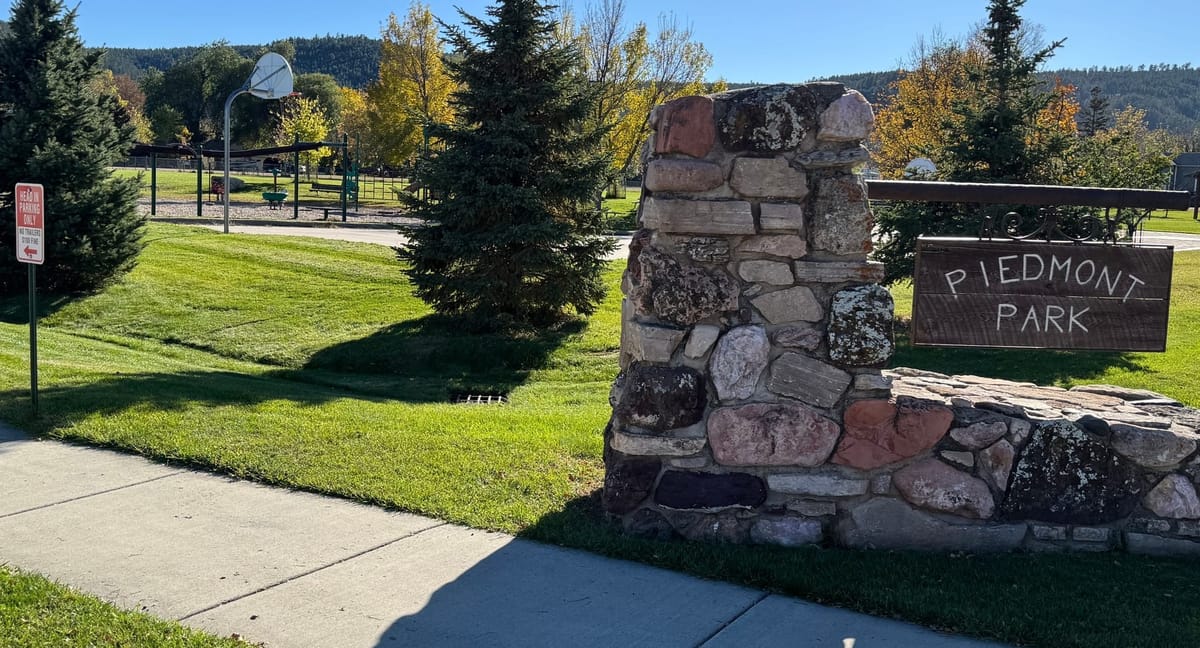
Of those 50 critical minerals, South Dakota is known to host reserves of 15 of them, none of which are rare earth minerals but which contain some of the same properties that make them valuable for industry and technology.
Critical minerals present in South Dakota
Critical minerals in the state include antimony, arsenic, barite, beryllium, cesium, fluorspar, graphite, lithium, manganese, niobium, tantalum, tellurium, tin, tungsten and vanadium, according to the U.S. Geological Survey.
Those minerals are located in the western South Dakota counties of Custer, Fall River, Harding, Lawrence, Pennington and Perkins as well as the central counties of Buffalo and Lyman, according to a 2024 analysis by the state Legislative Research Council.
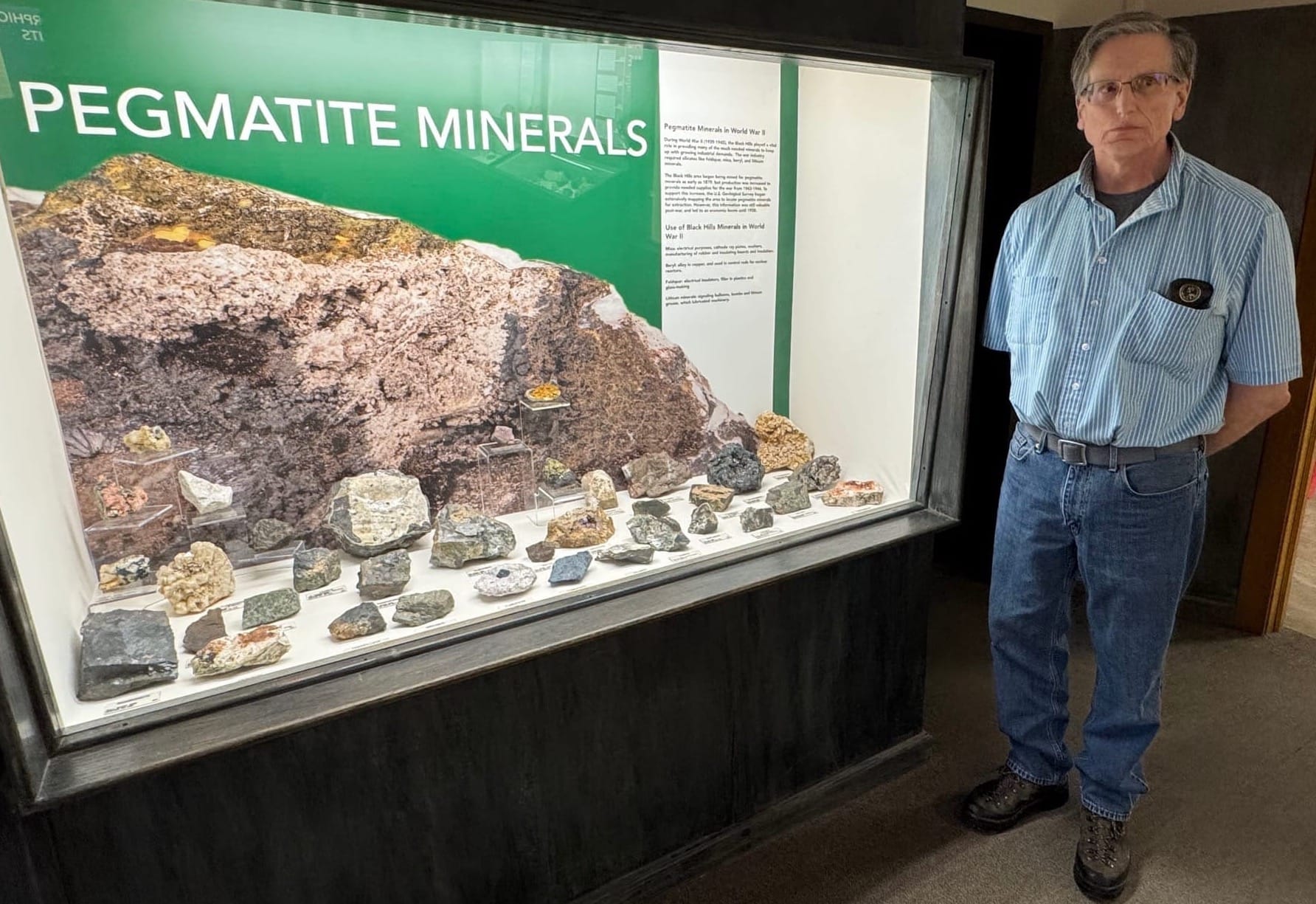
Given its long history of mining, and based on new studies, the Black Hills region is well-known as a place where usable critical minerals are present, which is attracting exploratory mining, said Christopher Pellowski, a geology professor at South Dakota Mines in Rapid City.
Rare earth elements and other critical minerals can be abundant but are difficult to extract because they tend to lie within other minerals that must be mined and separated through chemical processes.
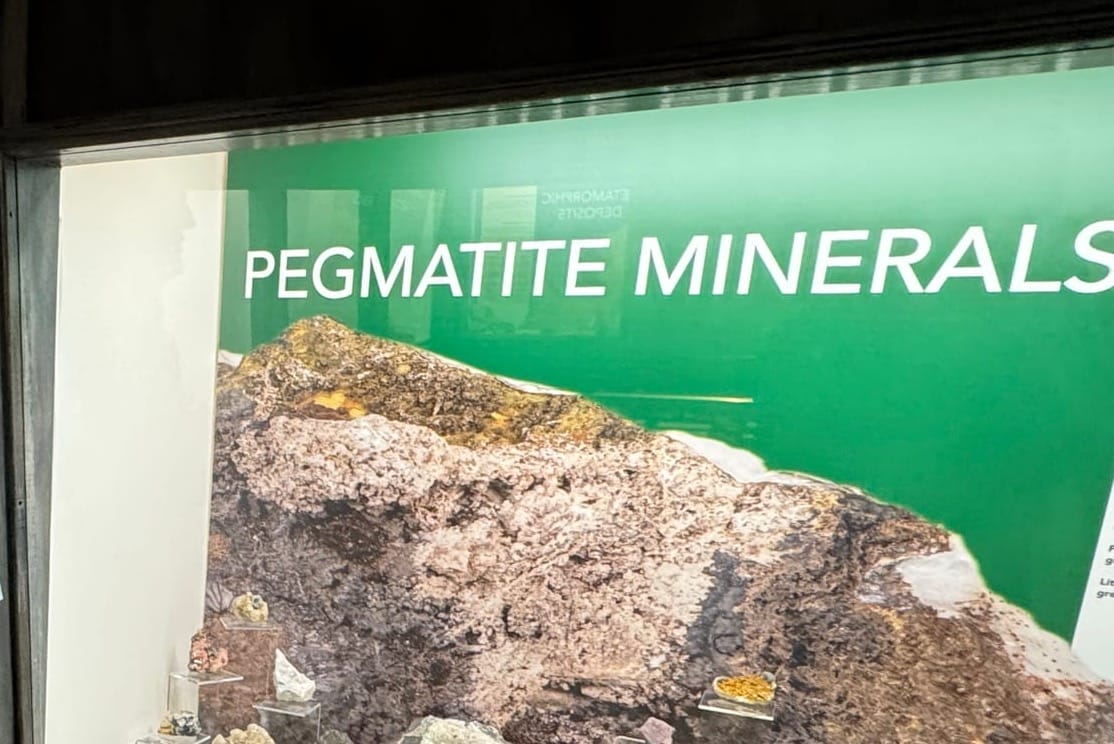
One example, Pellowski said, is that the common Black Hills igneous rock pegmatite can hold deposits of lithium. Pellowski said he doesn't expect large-scale mining to occur in the Black Hills unless and until companies can find substantial levels of critical minerals that can be monetized.
"What they’re doing now is the homework to get their heads wrapped around what’s there." – Christopher Pellowski, geology professor at South Dakota Mines
"Mining is important and it’s a real economic driver. ... But I don't see us at a point where we're ready for a large commitment (of money and resources)," he said. "They’re just going to have to do this in steps. And what they’re doing now is the homework to get their heads wrapped around what’s there."
Pellowski said modern mining can also be done with far less intrusion on the land than in the past when open pit and strip mines were the norm.
"Mining today is not the mining of 100 years ago," he said. "It’s new and improved."
Exploration underway in Black Hills
According to the LRC report and other state records, mining and exploration efforts are underway at several sites in South Dakota, including for graphite, lithium, niobium, tantalum, tellurium, tin and tungsten.
Exploration for lithium has seen the most activity in pegmatite ore near Hill City and Keystone. South Dakota was mined for lithium in the mid-20th century for use in glass, ceramics and grease. But the target products have shifted as technology has evolved.

Lithium is increasingly in demand for use in lithium-ion batteries in handheld technologies such as smartphones and laptops as well as in electric vehicles and for energy storage from wind farms and other electricity sources.
Four lithium exploration projects are now underway in the central Black Hills, the LRC report said.
A licensed pegmatite mine in Lawrence County is seeking ore that could contain critical minerals to include niobium, tantalum, tellurium tin and tungsten, according to the LRC report. Tantalum, tin and tungsten are also being sought in a separate exploration effort in the central Black Hills, the report said.
The most recent critical mineral exploration is being undertaken by Rapid City-based Pete Lien and Sons, which hopes to find reserves of graphite by drilling 18 holes roughly 1,000 feet deep on federal lands about 3 miles southwest of Rochford, according to U.S. Forest Service documents.
Graphite can be used in lithium-ion batteries for electric vehicles, and in lubricants, brake linings, pencils and other products.
South Dakota lawmakers have made recent efforts to further regulate lithium mining, though none has been successful.
 Bart Pfankuch
In 2023 and 2024, bills were filed to reclassify lithium and add taxation to its production. In 2025, lawmakers tried but failed to increase permitting requirements on lithium mines.
Under current law, lithium mines can be classified the same as sand and gravel mines, which require far less public notification and input and do not require environmental and cultural impact studies that are mandatory for hard rock mines.
That same debate is raging now in Piedmont, where a proposed limestone mine fell under the sand and gravel permit laws and therefore required no notification of the city or its residents that a mine is coming.
Environmental concerns and opposition
A handful of Native American and environmental groups have taken strong stances against further mining in the Black Hills, be it for critical minerals or for uranium at proposed mine sites in the southern hills region.
Native American tribal officials and the NDN Collective political organization have registered opposition to uranium and lithium mining and the efforts by Pete Lien and Sons to hunt for graphite.
The proposed Lien mine site is very close to Pe' Sla, a Lakota ceremonial site in the central hills. NDN has sponsored billboards in the Rapid City area urging the company to end its mining efforts.
Trusted, independent sources of information are needed more than ever. Help us continue delivering timely, fact-based storytelling today.
The potential negative effects of mining on drinking water supplies is a major concern of the Black Hills Clean Water Alliance, which opposes further mining of any sort in the region.
Lilias Jarding, executive director of the alliance, said more than 250,000 acres of the Black Hills are already under active federal mining claims and can therefore be mined almost at any time.
"It’s an issue of both quantity and quality of water," Jarding told News Watch. "We're in a semi-arid area and mining uses huge quantities of water and makes the quality of the water worse."
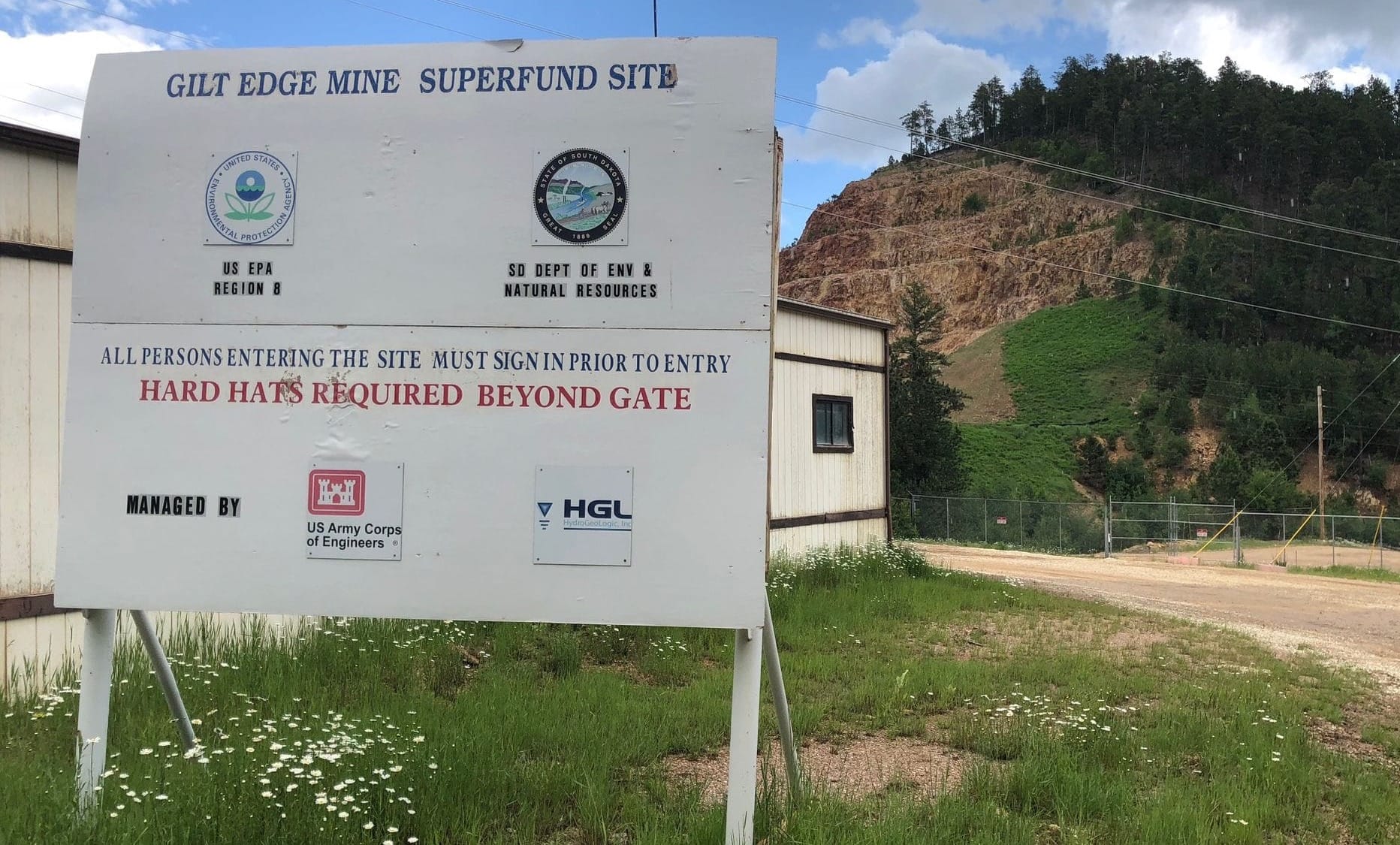
Any type of mining can be destructive to the Black Hills, she said.
"Wildlife is displaced and people can be displaced," she said. "An open-pit mine destroys the landscape and contributes to global warming because mining creates 10% of the total carbon emissions worldwide."
Jobs and revenue in eastern Wyoming
While direct comparisons to South Dakota aren't suitable – because the state so far isn't known to have rare earth elements – a project underway in eastern Wyoming shows the potential interest and investment associated with discovery of a strong reserve of a highly valuable material.
With funding from the U.S. Department of Energy, the state of Wyoming and private investors, the firm Rare Element Resources has invested $170 million into a project to extract and separate rare earth minerals from rocks found in the Black Hills just west of the South Dakota border.
"As ridiculous as it sounds, this is Upton and Sundance, Wyoming, versus Beijing." – Paul Bonifas, RER director of business development
The company has spent $100 million and is seeking final federal permitting to mine rocks from the Bear Lodge region of northeast Wyoming that it believes contain an "incredibly rich deposit" of NdPr oxide (Neodymium-Praseodymium oxide). The mineral is a key component of high-strength permanent magnets.
The company has obtained a 1,000-pound sample of rock from the Bear Lodge area that it will process soon to confirm its predictions, Paul Bonifas, RER director of business development, told News Watch.
To separate the NdPr oxide, RER has built a $70 million demonstration plant in Upton, Wyoming, where more than 20 full-time employees have been hired to process the minerals.
The mineral NdPr oxide is used in magnets that are part of a wide range of consumer and military machines and products, including electric vehicles, robotics, electricity turbines, computers and medical devices such as MRI machines.
"It’s no secret that China controls roughly 90% of rare earth processing, separation and production," Bonifas said. "Because all of these things are essential to national defense, it is absolutely a national security imperative that we domesticate the rare earth supply chain."
As proof of concept, and evidence of the high value of rare earth element and critical minerals mining, Bonifas pointed out that RER's market value in January 2026 was nearly $440 million.
"This is much bigger than the Black Hills and just trying to get these projects going," he said. "As ridiculous as it sounds, this is Upton and Sundance, Wyoming, versus Beijing."
This story was produced by South Dakota News Watch, an independent, nonprofit organization. Read more stories and donate at sdnewswatch.org and sign up for an email to get stories when they're published. Contact content director Bart Pfankuch at bart.pfankuch@sdnewswatch.org.