Nearly half of South Dakota children under the age of 5 are not on the right track to start school and find early success in the classroom, a rate that puts the state near the bottom in school readiness across the country.
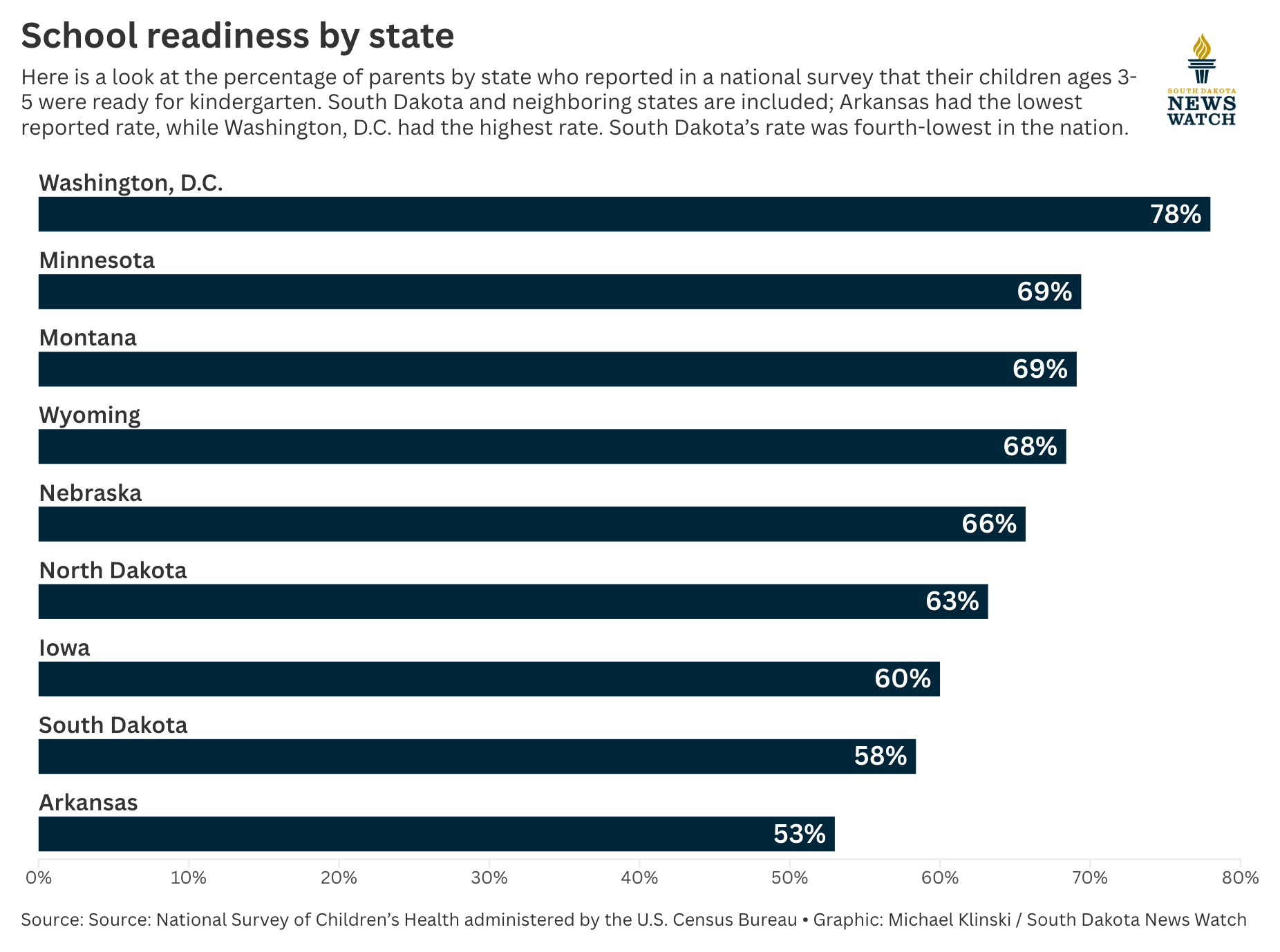
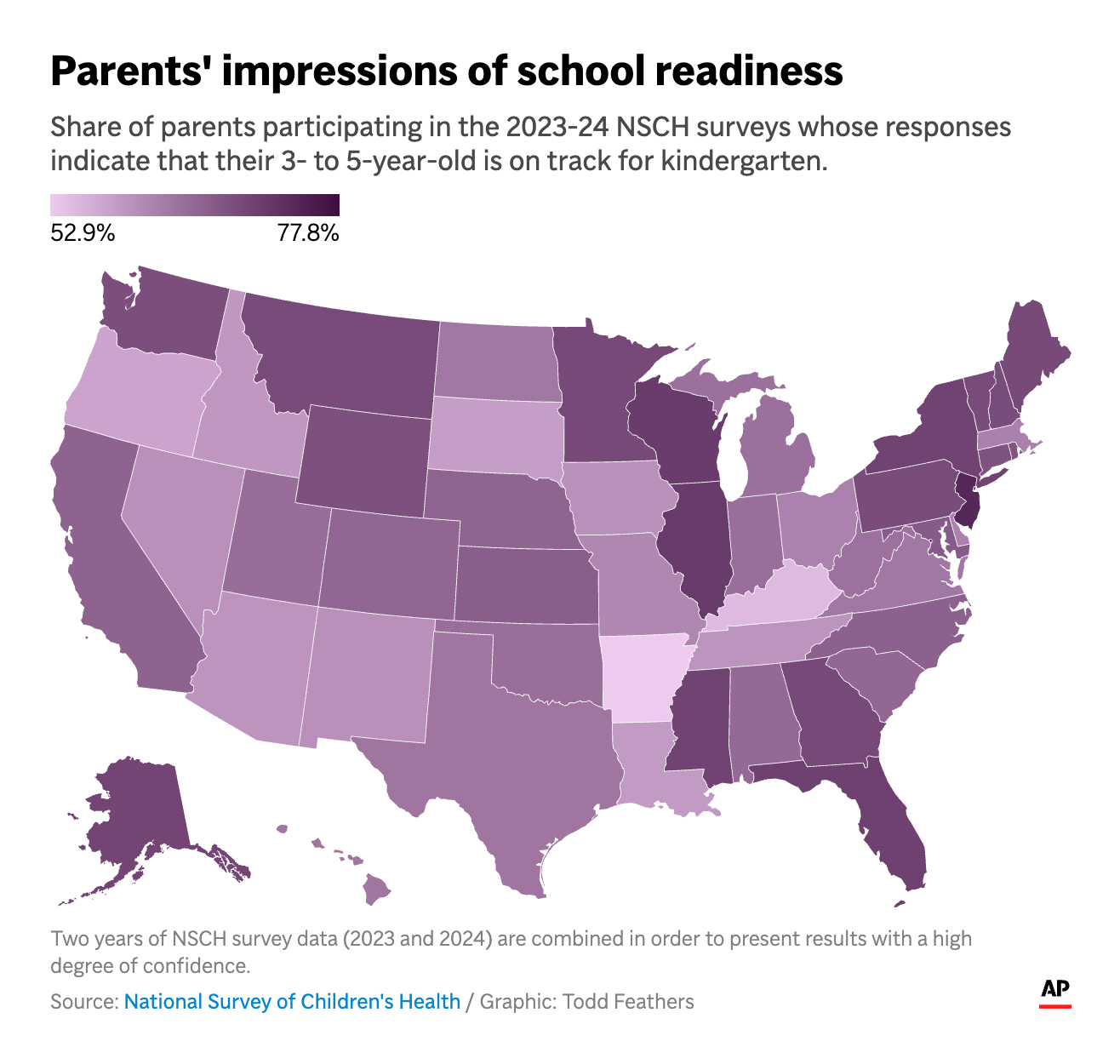
Data from the most recent National Children's Health Survey, administered by the U.S. Census Bureau, shows that only 58.4% of South Dakota parents report that their children ages 3-5 are prepared to start school.
South Dakota's rate was the fourth-lowest in the nation and the lowest among all Great Plains states, according to data from 2023 and 2024, the latest years the survey was conducted. Arkansas had the lowest school readiness rate at 53% and Washington, D.C., had the highest at 78%.
Darbi Hunt, deputy director of the Community & Family Services division of the Black Hills Special Services Cooperative, said the first five years of child development are critical to later success.
“The more research we get around this subject, the more we know that so much of what happens in those first five years is a strong indicator of how they’re going to do in terms of school success but also in terms of life success,” Hunt said.
The special services cooperative seeks to connect parents, schools and other community groups to strengthen families and improve educational outcomes, mostly in western South Dakota but also statewide.
Specific challenges in South Dakota
Hunt said she isn’t surprised by the state’s low school readiness ranking because South Dakota families face several challenges in preparing children for school.
“In talking to families, teachers and child care providers, we still hear the same feedback that children are entering schools without the experience and exposures they need to be ready to learn,” Hunt told News Watch.
South Dakota does not provide state-funded preschool programming, and pre-K resources can be limited in some areas, she said.
Additionally, the state has a high percentage of families with both parents working outside the home, Hunt said. That can limit the time and energy parents have to support their children’s early development.
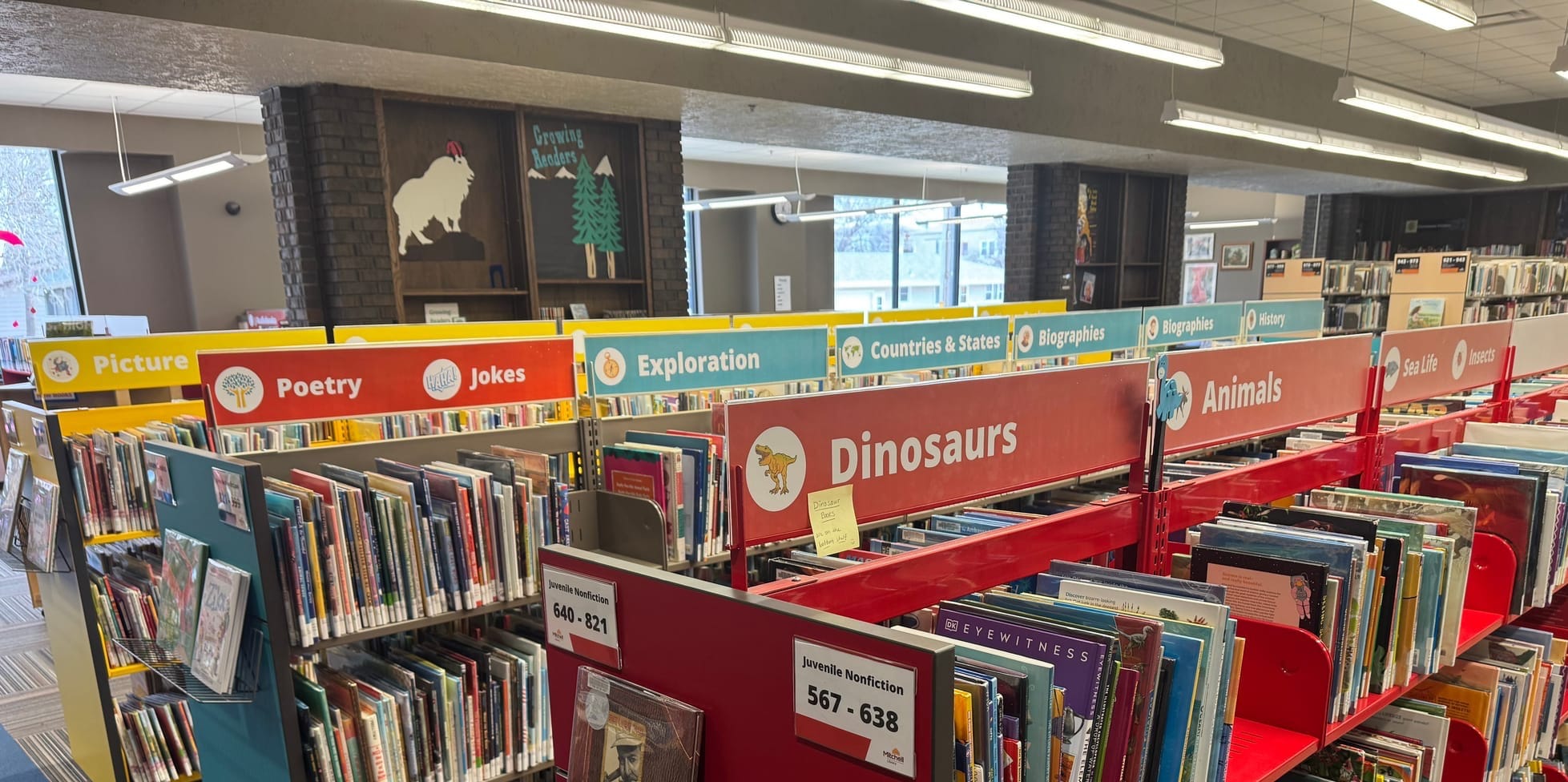
While children need to be physically and emotionally ready for school, the early ability to read and comprehend is a critical component of educational success that is missing for some children, Hunt said.
“You learn to read until second or third grade and after that you’re reading to learn,” she said. “If you’re not at grade-level reading skills, you fall behind not only in literacy but in all the subject areas.”
Poverty plays a role in lack of readiness
Disparities exist in whether parents across the country report their child as ready for kindergarten, new data from the National Survey for Children’s Health shows.
Administered by the U.S. Census Bureau, the federal survey offers a glimpse into school readiness by collecting responses annually from thousands of parents and guardians on their children’s early learning, social-emotional development, self-regulation, motor development and health. The latest results were released in December.
Nationally, nearly two-thirds of children were reported in the survey as on track for kindergarten, regardless of their families’ income. However, the gap in kindergarten readiness is substantial when comparing reports from the poorest families and the wealthiest — approximately a 20% difference.
State data shows that South Dakota has about 6,000 children enrolled in Head Start or other federally funded early learning programs for low-income families but does not have state-funded pre-K education options for working parents who don't qualify for assistance.
According to the census, the overall poverty rate in South Dakota has fallen in recent years, from 11.8% in 2023 to 10.4% in 2024, now nearly matching the U.S. average of 10.6%.
And yet, some individual counties – many in reservation areas – have far more extreme levels of people living below the official poverty line, including Oglala Lakota County (52.8%), Todd County (49%) and Mellette County (46.2%).

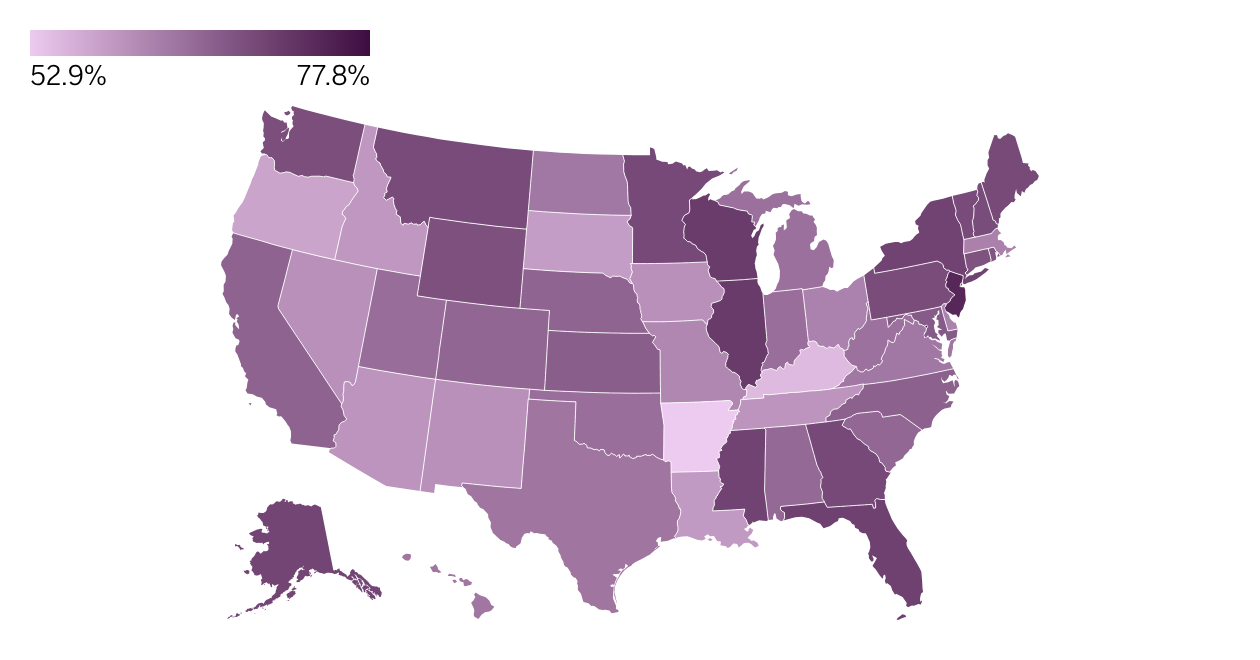
Click the box above to access an interactive graphic from The Associated Press showing state-by-state school readiness rates.
The state's two most populous counties had lower poverty rates, with Minnehaha at 8.8% and Pennington County at 12%. Stanley County, where Fort Pierre is the county seat, had the state's lowest poverty rate of 2.1% in 2023, according to the census.
Low-income children often have less access to experiences that boost school readiness, such as engagement with parents and other children and through high-quality early learning opportunities.
Helping parents and children on Pine Ridge
As the director of Head Start programming on the Pine Ridge Indian Reservation, Lislie Mesteth is responsible for helping more than 300 preschoolers get ready for kindergarten.
The federally funded program provides child care, education and meals to students from birth to age 5 at centers in 10 communities with the goal of providing children a path to educational success once they enter the K-12 system.
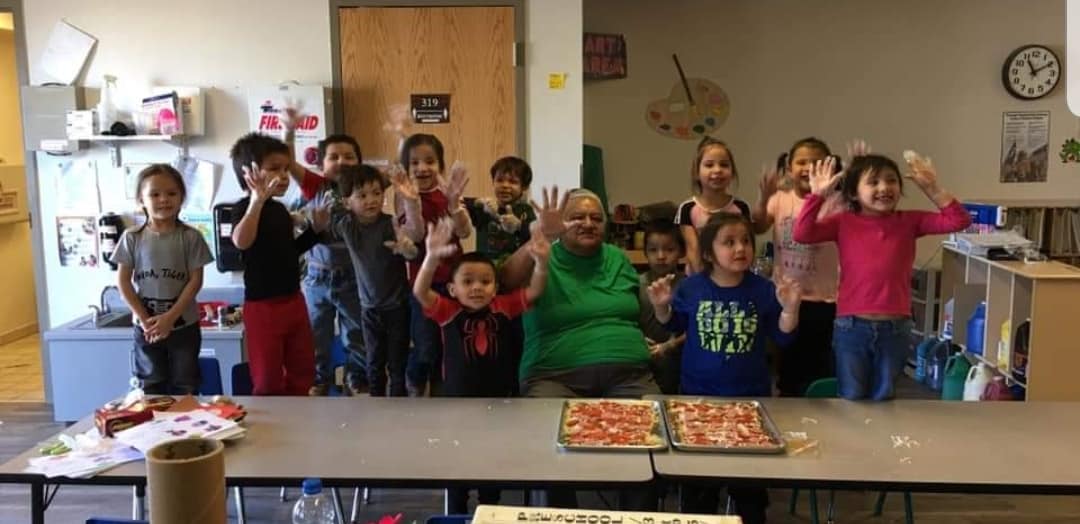
Mesteth said she sees many children on the reservation who are not prepared to start school, and she partly blames preschool child care programs that do not contain a sufficient educational component.
“A lot of preschools nowadays are just babysitting and they’re not teaching,” she said.
Mesteth also points to poor parenting for a lack of school readiness among children, even among parents who are unemployed and have the ability to spend quality time with their children.
“These kids don’t want to stay home and be bored, but for some parents, it’s not a big priority for them,” she said. “Some kids don’t have a firm schedule, so they come to school tired and disheveled. They need to get their kids ready for school, to spend time with them and make them look presentable.”
Support solutions-focused storytelling. Help South Dakota News Watch tell stories that identify and share solutions to the state's biggest challenges.
Mesteth, who runs Head Start from offices at Oglala Lakota College in Kyle, said she has taken steps to strengthen the program since becoming director two years ago.
For both the zero to 3 age group and those ages 4-5, Mesteth implemented new curriculums and provided more training for teachers. She also purchased new computer software called ReadyRosie, an educational program that parents can administer to children on their own at their homes.
“We want to help the parents get involved with the child’s learning, and this provides the parents an opportunity to get engaged,” she said.
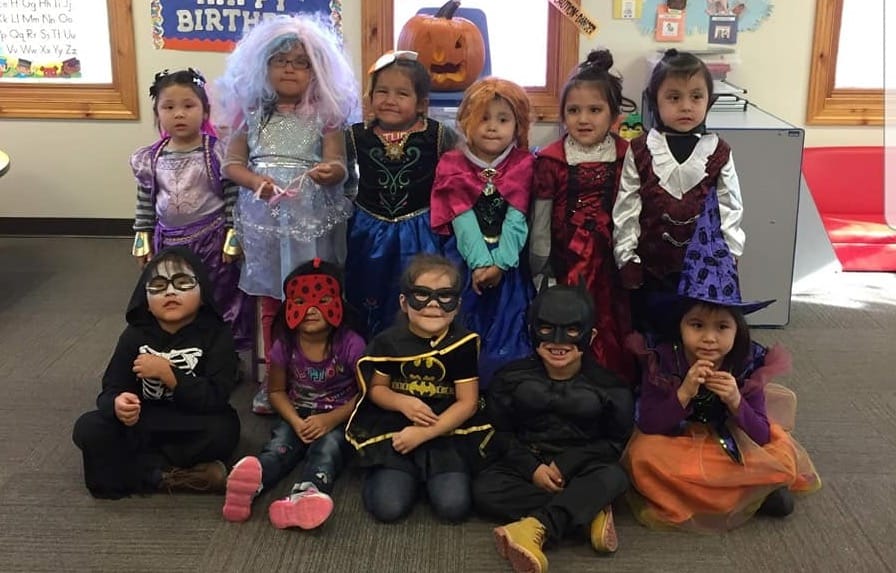
Mesteth said she and her team of educators are starting to see positive results from the improvements they have made. More children are learning to read and more are better prepared to start kindergarten, she said.
“If you put in the time and effort in, you’re going to see better outcomes," she said. "You can see it pay off, and it’s amazing to see the progress that kids are making.”
Improved readiness an obtainable goal
There isn’t a universal definition of kindergarten readiness, but many experts emphasize a child’s health and motor skills, social-emotional development, cognition, language development and general attitude toward learning.
Despite the challenges in South Dakota, Hunt said it is possible to improve student readiness and achieve better outcomes for children of all ages and family income levels.
Parents can take simple steps like providing their children with a structured routine that includes quality time spent together reading or even just talking. Parents can create a calm, stable environment and help children learn to process emotions to better prepare them for a busy classroom setting.
 Molly Wetsch
If parents need help, those whose income qualifies can enroll children in Head Start, or tap into community programs that help pay for child care, such as the Starting Strong program or the Tri-share program that provides assistance through the John T. Vucurevich Foundation in Rapid City.
Some South Dakota school districts, including the Harrisburg schools, offer pre-K screening programs to improve student readiness. A list of preschool resources for South Dakota parents can be found on the Starting Strong website.
“There’s a lot of things we can replicate from other states and there are things going on in South Dakota that are going really well for us,” Hunt said. “The question is, how do we make more people aware of those programs and how do we expand those ef?”
The Associated Press contributed to this report. South Dakota News Watch is an independent nonprofit. Read, donate and subscribe for free at sdnewswatch.org. Contact content director Bart Pfankuch: 605-937-9398/bart.pfankuch@sdnewswatch.org.