
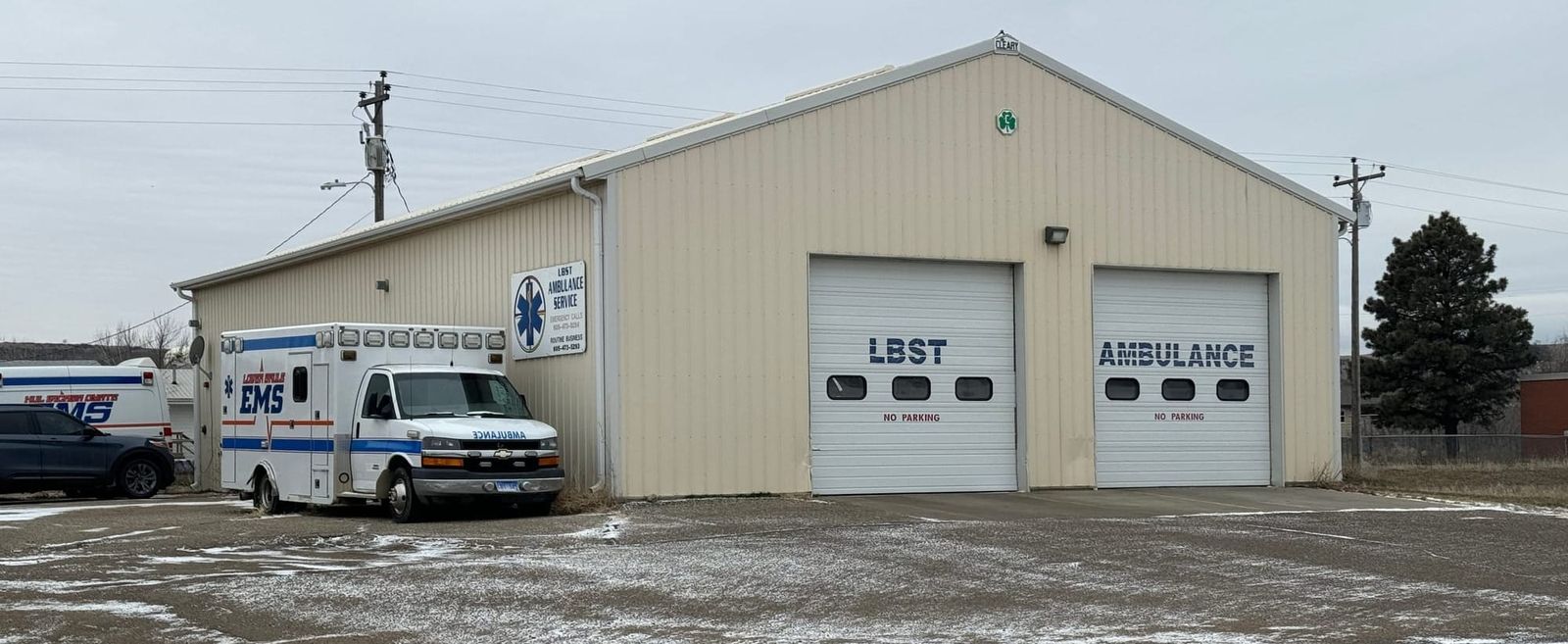
First responders across the state struggle with costs and staffing, prompting the work of the Emergency Medical Services Task Force.

The work of a task force created this year will take two bills to the state Legislature after four meetings that saw South Dakota Department of Health officials and workers in the field calling for a transformation of how emergency medical services (EMS) functions in the state.
The Emergency Medical Services Funding Task Force was created last legislative session from SB 89. Its task: "Examine funding mechanisms to support counties and municipalities in the provision of emergency medical services."
The task force’s last meeting took place on Oct. 26. Its conclusion comes as a further $187 million in federal dollars were allocated to the state last week as part of an ongoing rural health initiative, several million of which will directly support EMS.
DOH: EMS system 'must be redesigned' in state
In meetings with the EMS funding task force, the Department of Health (DOH) has called for the “regionalization” of emergency medical services in the state, citing challenges that have now become "systemwide."
An August report from the DOH found that 20% of ambulance providers surveyed thought their agencies were unsustainable and 30% were uncertain about the financial viability of their agencies.
"Rising labor, fuel, vehicle, insurance, equipment, and compliance costs, combined with modest Medicare and Medicaid reimbursement growth, create persistent financial gaps, especially for low-volume rural and public systems," the report said.
Marty Link, deputy director of DOH's health care access division, said in a June task force meeting that the current EMS system was introduced in the 1970s, allowing communities to establish EMS agencies locally without statewide planning or oversight.
"That occurred when there were more volunteers, that occurred when there was more local access to health care, and it occurred when there was a much lower service delivery model," Link said.
In an August meeting, DOH officials were quick to clarify that the regionalization would not constitute the creation of a statewide ambulance service and that local ambulance services would still exist. It would, however, work in tandem with the department's use of federal funds earmarked for "transformative" purposes.
The department has received millions in funding in the past two years as part of the federal Rural Health Transformation Program, which was passed as part of the One Big Beautiful Bill in 2025, providing $50 billion to all 50 states over five years. Last year, South Dakota received $189 million and last week received a further $187 million from the Centers for Medicare and Medicaid Services (CMS).
"The Rural Health Transformation work is examining system design and infrastructure needs, while the legislative task force has drafted legislation to develop an EMS Advisory Council to guide the development of regionalization," Tia Kafka, a spokesperson for DOH, told News Watch in a statement.
 Molly Wetsch
About $64 million of the funding over the five-year span is projected to go to the transformation of the EMS system in the state, Link said in the June task force meeting. Funds from the program can only be used for efforts specifically outlined by the state in their proposal to the federal government.
"Our focus is really on system redesign," Link said. "We want to use the one-time funding from Rural Health Transformation to really set up EMS to be successful long term moving forward."
Cost concerns mount as price, insurance woes continue
Brian Hambek, president of the South Dakota Ambulance Association and director of the Spearfish Ambulance Service, told News Watch that costs are by far the biggest challenges facing ambulance providers in the state.
Spearfish Ambulance is a 501(c)(3) nonprofit. But many other services across the state are either privately owned or operated by a city or county. That difference in structure can complicate how state legislation comes together, especially when considering the natural complexity of how ambulances make their money because insurance providers are usually the most crucial part, Hambek said.
"Our funding structure is kind of like a puzzle. To make that puzzle fit and make one big picture, you've got a certain portion of that puzzle which is a big piece, and that's Medicare. In most communities, especially in South Dakota, we have large retirement communities," Hambek said.
“How many times can you go to Perkins and at the end of the meal go up to the counter and say, ‘You know what, I'm only going to pay 55% of this?' That's what they're doing to EMS.” – Brian Hambek, president of SD Ambulance Association and Spearfish Ambulance Service director
The formula Medicare uses to determine payments to ambulance services, according to a report provided to Congress from the Center for Medicare and Medicaid Services (CMS) in June, doesn’t always cover the real cost of dispatching an ambulance, providing treatment and transporting a patient to the hospital. Hambek said that puts pressure on providers that can't bill patients for the extra costs and must eat the charges themselves.
Hambek said that 62% of his call volume is Medicare-aged patients, which exacerbates the problem.
“How many times can you go to Perkins and at the end of the meal go up to the counter and say, ‘You know what, I'm only going to pay 55% of this?' That's what they're doing to EMS,” Hambek said.
Concerns about Medicare payments are largely a federal issue and can't always be succinctly addressed by state legislators.
Get free, fact-based South Dakota news and information in a weekday email. No spam. Cancel any time.
But those billing concerns also extend to private insurers and Medicaid, the program that helps low-income residents that's administered by the state, Hambek said. Some private insurers in the state haven't changed their billing model in years, which doesn't account for the increase in prices that ambulance providers are seeing.
"We're going on year No. 6 of no increase in payments by Blue Cross (Blue Shield)," Hambek said. "You go back six years, that's all the way through COVID. My costs doubled as far as payroll and tripled as far as some of the supplies we were getting. And yet no increase by private insurers to help cover those costs."
Last legislative session's SB 211, called the Patient Protection Act, would have mandated private insurance companies to reimburse ambulance services either 325% – more than three times – of the Medicare rate for the service or the billing amount from the ambulance service, whichever is lower.
The bill was introduced by state Sen. Tim Reed, who now chairs the EMS funding task force, and failed in the state Senate.
Staffing issues persist, with lowest paramedic exam pass rates in nation
Another common concern for ambulance providers is a lack of adequate staffing. In June, SDPB reported that workforce shortages were threatening Lemmon’s ambulance service, which relies entirely on volunteers.
Data from the DOH indicates that there are 3,439 licensed EMS providers in the state, but only 1,958 are affiliated with a service provider, which means they are actively working. Other DOH reports also say that ambulance providers see staff recruitment and retention as the biggest challenge for ongoing viability.
According to the National Registry of Emergency Medical Technicians (NREMT), South Dakota had the lowest NREMT exam pass rate in the nation for paramedics in 2025, and the second-lowest for EMTs: 67% of those taking the paramedic exam had passed by their third attempt and 71% of those taking the EMT exam.
Nationally, 82% of paramedic exams were passed and 80% of EMT exams were passed.
Tia Kafka, a DOH spokesperson, told News Watch in a statement that lower exam pass rates had not yet affected EMS staffing.
"At this time, we have not identified a specific reason for the decrease in paramedic NREMT pass rates. We are continuing to monitor the data to determine whether this was a one-time anomaly or the start of a longer-term trend, and we have not seen evidence that it has impacted the EMS workforce," the statement said.
Hambek said that he believed those lower pass rates were partially due to changes with the NREMT requirements and more difficult curriculum. But there are also in-state issues that could contribute.
The NREMT requires students to take a proctored, in-person test at Pearson Professional Centers or Pearson Testing Centers to become licensed. There are only seven of those centers in South Dakota, and several communities where the nearest testing center are a multi-hour drive away.
Hambek's nearest testing location for EMT and paramedic hopefuls is in Rapid City. But he always recommends his students head to Gillette, Wyoming, to take their exam, where scheduling testing times are easier.
"It's 90 miles, but they can get in any time. Whereas Rapid City only opens up their (testing center) for EMT every Tuesday," Hambek said. "You know, if you're doing a class up in Lemmon, to have them drive all the way to Rapid City to take that two-hour test and go home, that's a challenge."
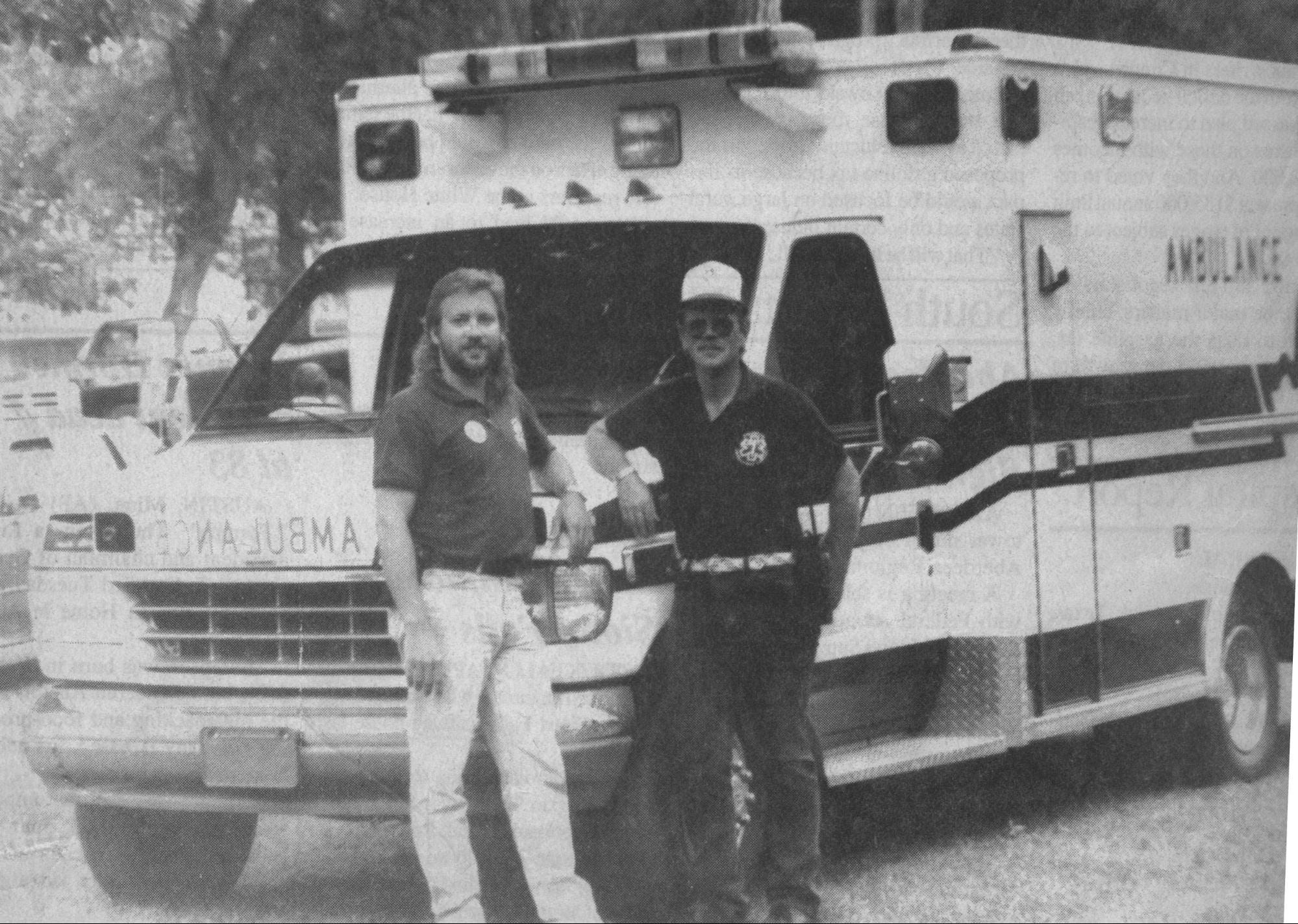
But part of the staffing issue also comes with the changing nature of the workforce in the state, many of whom don't have the time or ability to dedicate several hours a week to work or volunteer, often on a last-minute basis.
"It's trying to find people in these communities that are interested in doing this work. Not everyone is, and not everyone's cut out for this job. But it's trying to find those people that are going to be home, going to be in the community that can answer the call," Hambek said.
Bills include reimbursement for EMS, advisory council
The EMS funding task force came out of its four meetings with two bills to propose to the Legislature in the upcoming session.
Senate Bill 83 would allow the state to reimburse ambulance services that Medicaid currently doesn’t fully support. That includes basic life support (BLS) and advanced life support (ALS) calls that don’t result in a patient being transported to a hospital.
“I'm not really a big fan of forcing anybody to pay for things outside of their own purview, I guess, or their own rules," Sen. Kevin Jensen said in an Oct. 26 meeting. "But you know, this is a case where if we don't if have some kind of reimbursement rate, some of these services are going to go under."
A regionalized EMS plan could include prioritization of BLS and ALS services in rural areas to help relieve pressures of ambulance workers while still providing care, DOH representatives proposed in task force meetings.
The number of calls for service increased by 32% from 2020 to 2025, Link said in a June task force meeting. Many of those are “low-acuity” calls, he said, which do not often require transport to a hospital or immediate life-saving intervention.
Double your impact. One-time and recurring donations are matched through Dec. 31.
Hambek said that SB 83 has the potential to greatly supplement EMS providers in the state and provide them with much-needed financial relief.
"(SB) 83 will be a game-changer if Medicaid will start paying for treatment in place, both BLS and ALS," Hambek said. "Probably two or three times a day here we get lift assist calls, ground level falls. They're just not strong enough to get up on their own. We still have to send an ambulance. We still have to evaluate that patient, take their vital signs, assess to make sure there is no other injuries, and then we can help them up. And insurance won't pay it."
The second bill drafted by the task force wouldn't provide immediate relief for the pressured ambulance services but set the groundwork for long-term structural change.
Senate Bill 84 would create an Emergency Medical Services Advisory Council, which would establish at least eight EMS regions but no more than 14. Those regions would be formed with consideration to several factors, including population locations and density, emergency call volumes and response times, the number of licensed EMS personnel and where existing hospitals and health care facilities are located.
The council would be comprised of the following individuals:
- Four emergency medical services personnel, one of whom must serve on an ambulance service that operates within tribal boundaries
- One city manager or mayor
- One county commissioner or county auditor
- One medical director
- One representative of a critical access hospital in the state (critical access hospitals are located in rural areas, more than 35 miles from another hospital)
- One representative of an organization representing public safety communication officials
That advisory council would then provide recommendations as to how the regions should be monitored for compliance with standards like geographic coverage, response time, staffing and equipment, as well as other recommendations.
The advisory council, if the bill passes, would be required to submit its first report to the state on July 1, 2028, and present continuous reporting annually.
Support stories about rural South Dakota with a tax-deductible donation.
Members of the task force said that the bill would allow for continued study of complex EMS funding and provide longer-term solutions for issues.
"How can we cast a net in four meetings as a task force and effectively cover it? That's the importance of this bill," Rep. Nick Fosness said in an Oct. 26 meeting.
"If this is a funding mechanism – whether we're talking Rural Health Transformation dollars to go to regions to help fund something with EMS or we're talking about state allocations in the future, things we don't know yet. Those are things that could happen in the future. This is an ongoing commitment of state resources with a good diversified group, and I really like the work that's gone into this long term."
South Dakota News Watch is an independent nonprofit. Read, subscribe for free and donate at sdnewswatch.org. Contact reporter/Report for America corps member Molly Wetsch: 605-531-7382/molly.wetsch@sdnewswatch.org.