
It's a sentiment that's been iterated frequently at donor events, practices and conversations among riders and coaching staff: "Why shouldn't we have the best rodeo program in the United States?"
South Dakota State University is starting to take it seriously.
After all, rodeo is South Dakota's official sport, and the state has committed millions to making it a staple attraction for visitors and residents.
This season, SDSU Rodeo is kicking itself into high gear.
The team is in the midst of its spring season and preparing for its hometown rodeo in Brookings. Some team members also have their eye on an even bigger prize: the College National Finals Rodeo in June, called the "Super Bowl" of college rodeo. Behind the scenes, the coaching staff hopes to soon undertake a major indoor practice arena project.
Team reaches unique sect of student body
Coach Ron Skovly has been with the team since 2009 and competed for SDSU himself, qualifying for the College National Finals Rodeo in calf and team roping. He told News Watch that riders on the rodeo team look quite a bit different than the typical student-athlete.
The early mornings, late nights and travel days are familiar to other athletes. Skovly said when players qualify for the College National Finals Rodeo, they can see 12- to 14-hour-long days in the midst of preparation.
Not every student-athlete, though, has a thousand-pound teammate they care for, practice and share responsibility with.


Madison Rotenberger and her horse, Smooches, participating in the barrel racing event (left) at the Jackrabbit Stampede in Brookings, S.D. on Apr. 13, 2024, and Ellie Piper, Ms. Jackrabbit Stampede ambassador at the Jackrabbit Stampede in Brookings, S.D. on Apr. 1, 2023. (Photo: Branded Sorrel Photography)
Those unique circumstances and responsibilities, as well as a grueling schedule of both fall and spring seasons, create a bond between riders that means they have serious discipline and hold each other accountable, Skovly said.
"The kids have to do chores morning and night. They practice in the afternoons. Time management's got to be huge for them," Skovly said. "There's no other coach on campus that can travel 5,000 miles with their team of 50 and have no problems. They help each other out, between studying together, hauling together, practicing together."
While all of these students share a common dedication to the sport, their interests in the classroom are as varied as any other group on campus, Skovly said.
"We've got them in engineering, nursing and ag of course, but there's no one college on campus that (would say), 'Here's your funding for the rodeo team' because we're supporting everything," Skovly said.
Sign up for our free, daily newsletter, delivered to your inbox.
The nature of sport in general, too, means that you will occasionally see players who care more about it than anything else in their lives – including their college education, to a point. There are certainly a few of those in rodeo, as well, but Skovly said that means SDSU has the chance to connect with them early on and make them part of the university's fabric.
"I would say a few of these team members ... yeah, they came here to get an education, but if there wasn't a rodeo team, they'd find another four-year college to go to," Skovly said. "Once in a while, we have somebody say if it wasn't for us they wouldn't even go to college. But looking back when they get done, they're like, 'Man, I'm glad I did that. I got a degree now.' And rodeo kind of helped them make their decision to come to college."
Many of the team's riders are from South Dakota and surrounding states, as is expected from a region with such a long history of the sport. Some, though, have come from much farther destinations to participate in SDSU rodeo. This year, the team has players from as far as Michigan and Alberta, Canada, and the team's recently seen riders from California and Florida.
That former student from Florida recently moved back to South Dakota full-time, Skovly said, because of her experience at SDSU.
"They just love Brookings and everything it offers," Skovly said.
Boosters key to continued success
Skovly's salary is paid for by SDSU's Department of Animal Sciences, and the team gets some funding from the student association. But the vast majority of the rodeo team's extensive travel, lodging, facility and other expenses are covered by the team's booster club.
Dana Dykhouse, CEO of First PREMIER Bank and longtime Jackrabbit supporter, is a major booster of the team. He told News Watch that his financial support of the program reflects a desire to elevate the team and harness statewide support.
"South Dakota, for years, has produced great rodeo athletes, and it just makes sense that we should have (a championship rodeo program)," Dykhouse said. "The thing that was holding this back was simply resources."
As resources increase, the talent is also beginning to show even further.
The team has already made its way into the national conversation: Last year, the team sent six riders to the College National Finals Rodeo in Casper, Wyoming – the "Super Bowl" of college rodeo. This academic year, freshman Laney Hofer ended the fall 2025 season as the No. 1 breakaway roper in the Great Plains region.

Dykhouse said that seeing students succeed can bring an even larger base of interested donors to the sport, and to the university at large.
"The rodeo club is one of the largest, if not the largest, donor bases to One Day for State. It just shows the interest is out there," Dykhouse said.
There are more than 1,200 alumni of SDSU's rodeo team today. Dykhouse said that network is critical to ensuring long-term success of the program, and that inclusivity should remain central. Students with an interest in rodeo but who do not compete can join the SDSU rodeo club, a sect of the team that assists with rodeo stock chores, the annual Jackrabbit Stampede and other day-to-day tasks.
"That's what I buy into, is the approach of let's allow a lot of people to be involved. Let's be very inclusive in what we do, and have a large rodeo team and students that work behind the scenes," Dykhouse said. "A lot of people very active in SDSU Rodeo never compete in the arena. That to me is what really sets us apart and makes it a good program."
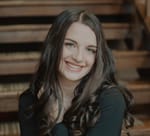
 Molly Wetsch
One of the team's biggest goals for the next several years is to begin constructing a dedicated indoor practice facility. Both Skovly and Dykhouse said that would be transformational, since the team sometimes struggles with practice due to weather conditions. But they acknowledge that it will take time.
Dykhouse cited his involvement in other facility constructions on SDSU's campus, including the $32 million Sanford-Jackrabbit Athletic Complex, as examples of the dedication required to get the job done.
"I have to plead for patience with people because it takes a long time," Dykhouse said. "We have to build the indoor practice facility first because you have to raise 100% of the money for that."
Hometown rodeo highlights community dedication
The Jackrabbit Stampede, which will take place on April 11 this year, is the team's only chance during the season to ride in front of a hometown crowd. On Saturday, the Dacotah Bank Center will be transformed for the 70th iteration of the event. Bull riding, saddle bronc, barrel racing and more can be expected from the team.
It is no small feat, either, considering the Professional Bull Riders tour is coming to Sioux Falls the very same day. Just 45 minutes south of Brookings, some of the best riders in the country will host a rodeo and see a crowd of around 10,000 people.


Riders at the South Dakota State University Jackrabbit Stampede in Brookings, S.D. on Apr. 12, 2024. (Photo: South Dakota State University)
The SDSU team probably doesn't need to worry about the competition, though: Last year, the event sold over 3,000 tickets, and the Brookings community has rallied around the riders for nearly as long as the club has existed, Skovly said.
Some of that comes from direct financial support, but some of it is less immediately visible.
Partner with South Dakota News Watch and support fact-based news and information.
All of the hay the team uses for its horses during the year is donated by local farmers. That can range anywhere from 40 to 50 large round bales for the fall and spring seasons, Skovly said, and saves the team thousands of dollars every year. The team has found places to practice, gather and board both on campus and in spaces in the wider Brookings community. That's significant, considering the team is more than 40 strong – nearly double that, if you include the horses.
Skovly said the generosity was almost unexpected, at first, and sometimes still is.
"The first year (I started asking for support), I asked two or three farmers if they could give us 10 bales here or 10 bales there," Skovly said. "We gathered up 48 round bales of hay. Between that, and the sponsors ... if they don't get called for the rodeo, they call us. They say, 'I haven't heard from anybody yet. We want to sponsor the rodeo.'"
Molly Wetsch is a Report for America corps member who writes about rural and Native American issues for South Dakota News Watch. Your donation to match our RFA grant helps keep her writing stories like this. Contact Molly: 605-531-7382/molly.wetsch@sdnewswatch.org.