


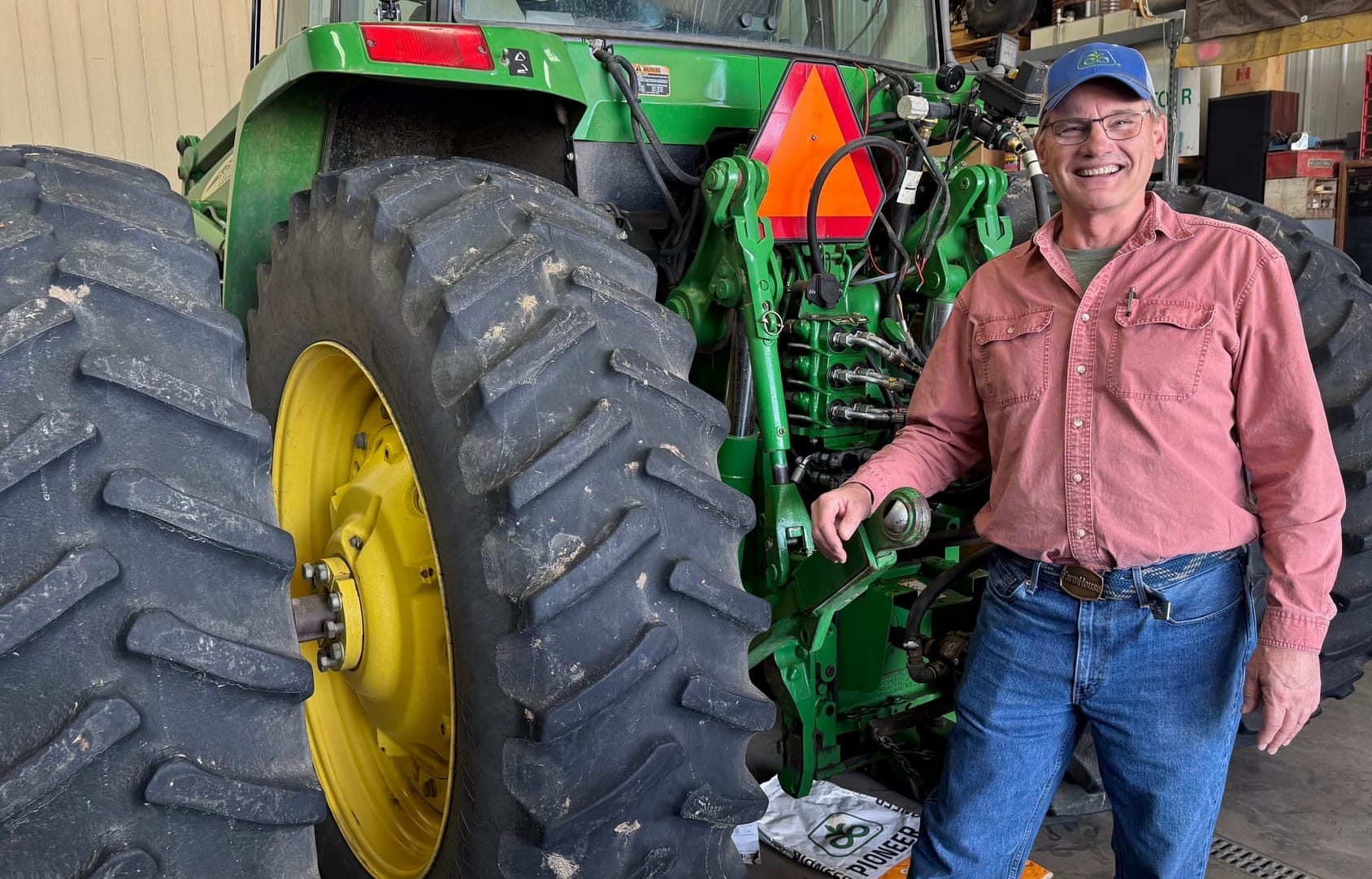
LYONS, S.D. – Farmer Jeff Thompson had waited months for soybean prices to rebound, and he was getting a little antsy.
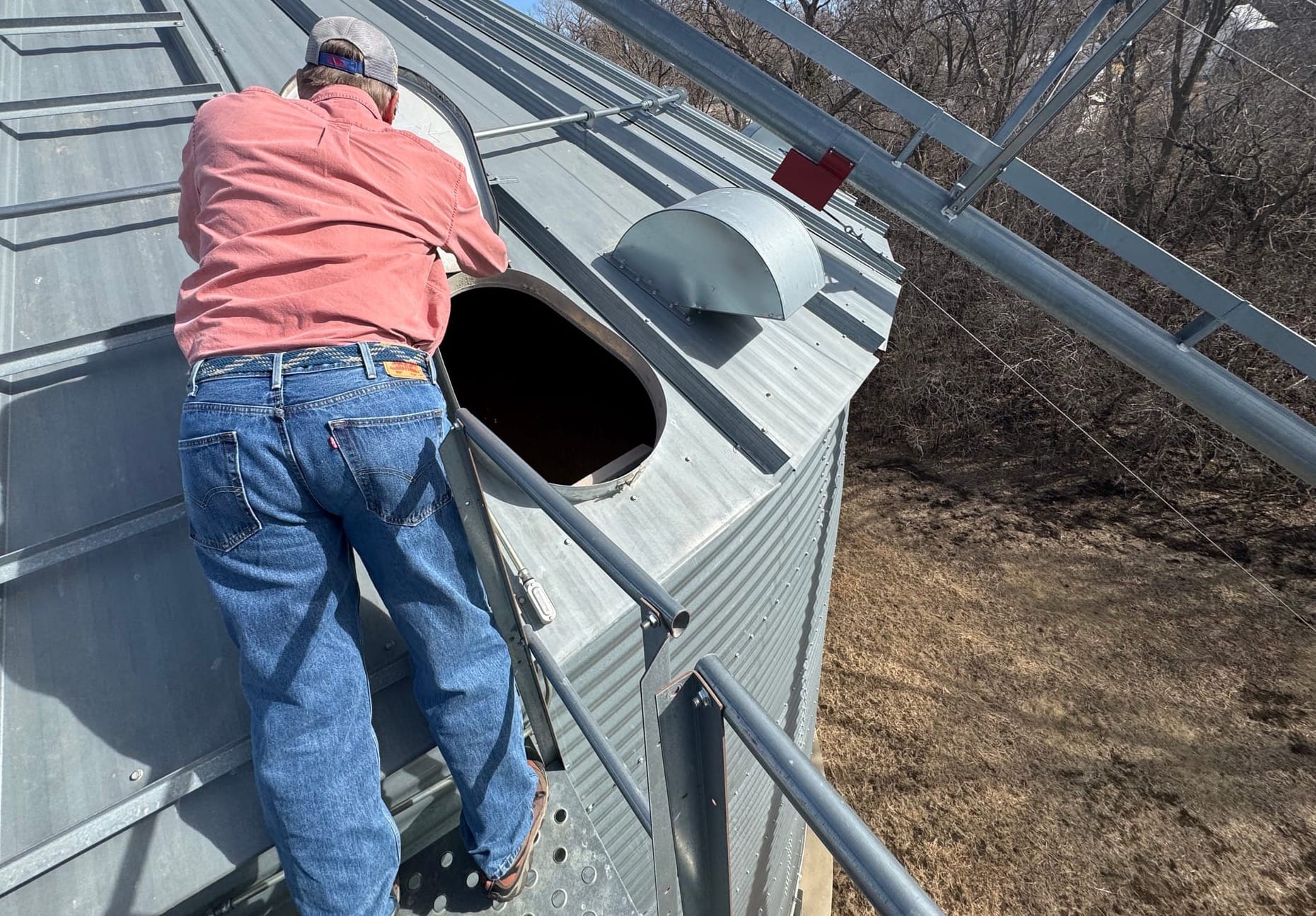
Like many of the roughly 18,000 other crop farmers in South Dakota, Thompson is storing corn and soybeans in giant grain bins on his farm because he can't sell at a profitable price due to a variety of unfavorable market conditions.
"The market right now is at a loss position and we’re about to plant the most expensive crop in history." – Scott VanderWal, president of the South Dakota Farm Bureau Federation and vice president of the American Farm Bureau Federation
After several months of waiting – and suddenly seeking an infusion of cash – Thompson made the decision in mid-March to sell off about 15,000 bushels of beans he had been storing since the fall 2025 harvest.
But the day he hoped to sell, a single social media post by President Donald Trump caused the soybean price to fall by 70 cents a bushel, a decline that would have caused Thompson to lose more than $10,000 on the sale.
Trump's post indicated he would delay scheduled trade talks with President Xi Jinping of China, the world's largest importer of soybeans and a country in which the U.S. is embroiled in a trade standoff that has hurt American soybean producers.
Thompson held onto his soybeans, and the wait for better prices began anew.
"The whole geopolitical thing keeps you awake at night and you don’t know what’s going to happen next," Thompson, 64, said on a recent day at his farm in Lyons, an unincorporated hamlet located about 25 miles northwest of Sioux Falls. "Farming is risky enough on its own, fighting Mother Nature and all that, so I’m hoping things will settle down."
A trifecta of terrible economic headwinds
The Trump tariffs and resulting trade wars that have devastated foreign export markets over the past year are not the only unsettling reality for South Dakota grain producers, who grew 1.1 billion bushels of corn and 238 million bushels of soybeans with a combined value of $6.4 billion in 2025, according to the U.S. Department of Agriculture.
The new U.S. war with Iran has led to the closure of a key global shipping route through the Strait of Hormuz, dramatically driving up prices for fuel and fertilizers. Farmers were already reeling from ongoing inflation that has raised prices for "inputs" required to grow crops, including seeds, water and electricity, rent or loan payments for land, and machinery and parts.
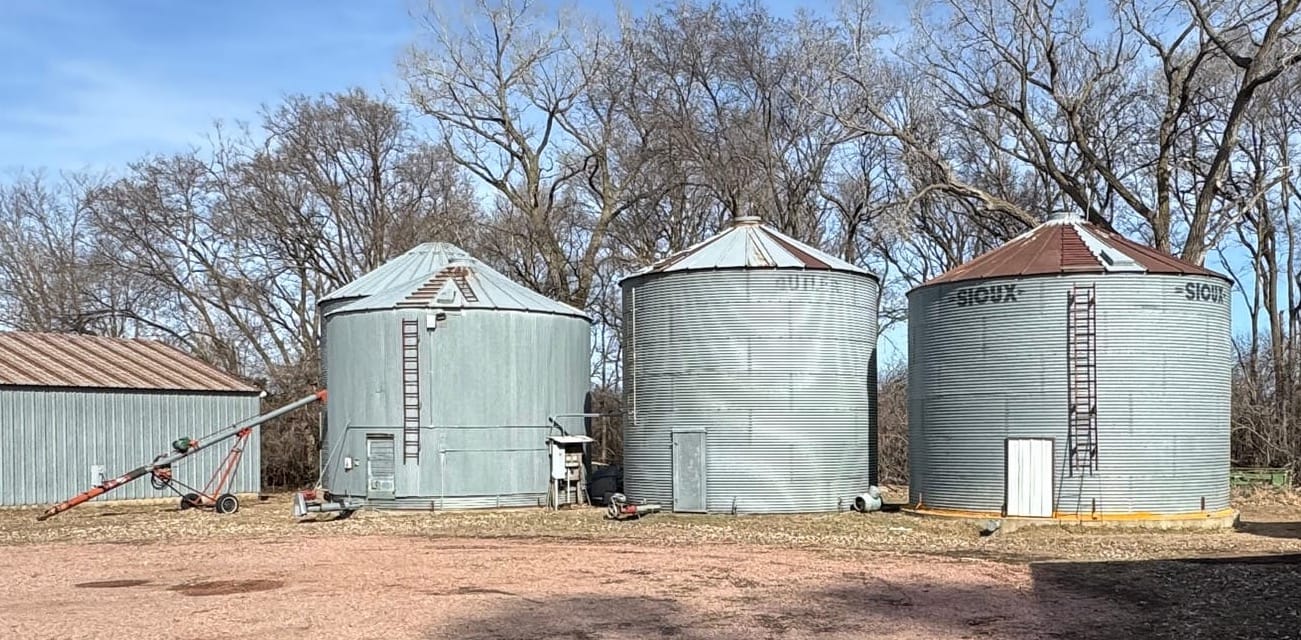
The trade war with China has led the Asian nation to forgo most orders for American soybeans and turn instead to South American producers. Prior to the trade war, about 30% of the soybeans grown annually in South Dakota were exported to China.
All that financial pain has been piled on top of stagnant low prices that have hurt revenues even as South Dakota grain farmers have produced record crops of corn and soybeans over the past couple years.
"The most difficult thing of all is that we’ve had three to four years of depressed prices," Thompson said. "You can handle one low price year decently. But when they begin to piggy back on each other, it gets tough."
Seeking new markets and uses
Since Trump took office and imposed tariffs on goods from other countries, cattle ranchers and other livestock producers have benefited from high sale prices and strong markets for their goods, as previously reported by News Watch.
 Bart Pfankuch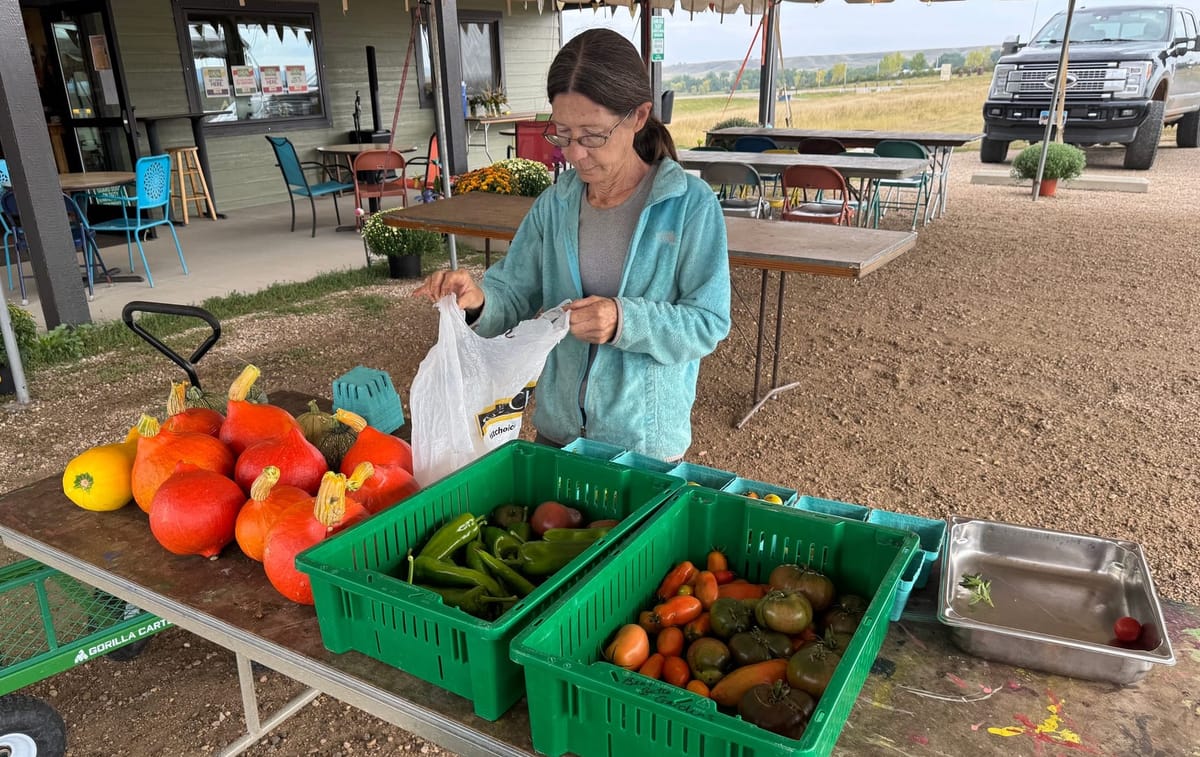
But almost all other farmers in South Dakota and across the country are feeling the financial pain and emotional stress of an unfavorable global market for agricultural goods, said Scott VanderWal, president of the South Dakota Farm Bureau Federation who also serves as vice president of the American Farm Bureau Federation.
"By nature, farmers are pretty optimistic, but economically it's pretty tough right now," said VanderWal, a grain farmer from Volga. "The market right now is at a loss position and we’re about to plant the most expensive crop in history."
National agricultural leaders are urging President Trump to find new international and domestic markets for agricultural products, VanderWal said. An ongoing hope is that Congress will approve national year-round use of E-15, the gasoline that contains more ethanol and could boost corn prices and markets.
Jerry Schmitz, executive director of the South Dakota Soybean Association, was one of a dozen South Dakota officials and agricultural leaders who spent eight days in March on a trade mission to expand export opportunities in Japan and South Korea.
Schmitz said those two Asian countries — relatively small buyers of South Dakota corn and soybeans compared to China — were welcoming and eager to maintain or expand imports of American grains and goods.
The majority of South Dakota grains sold as exports are used as hog and poultry feed while a smaller percentage is used for human consumption, he said.
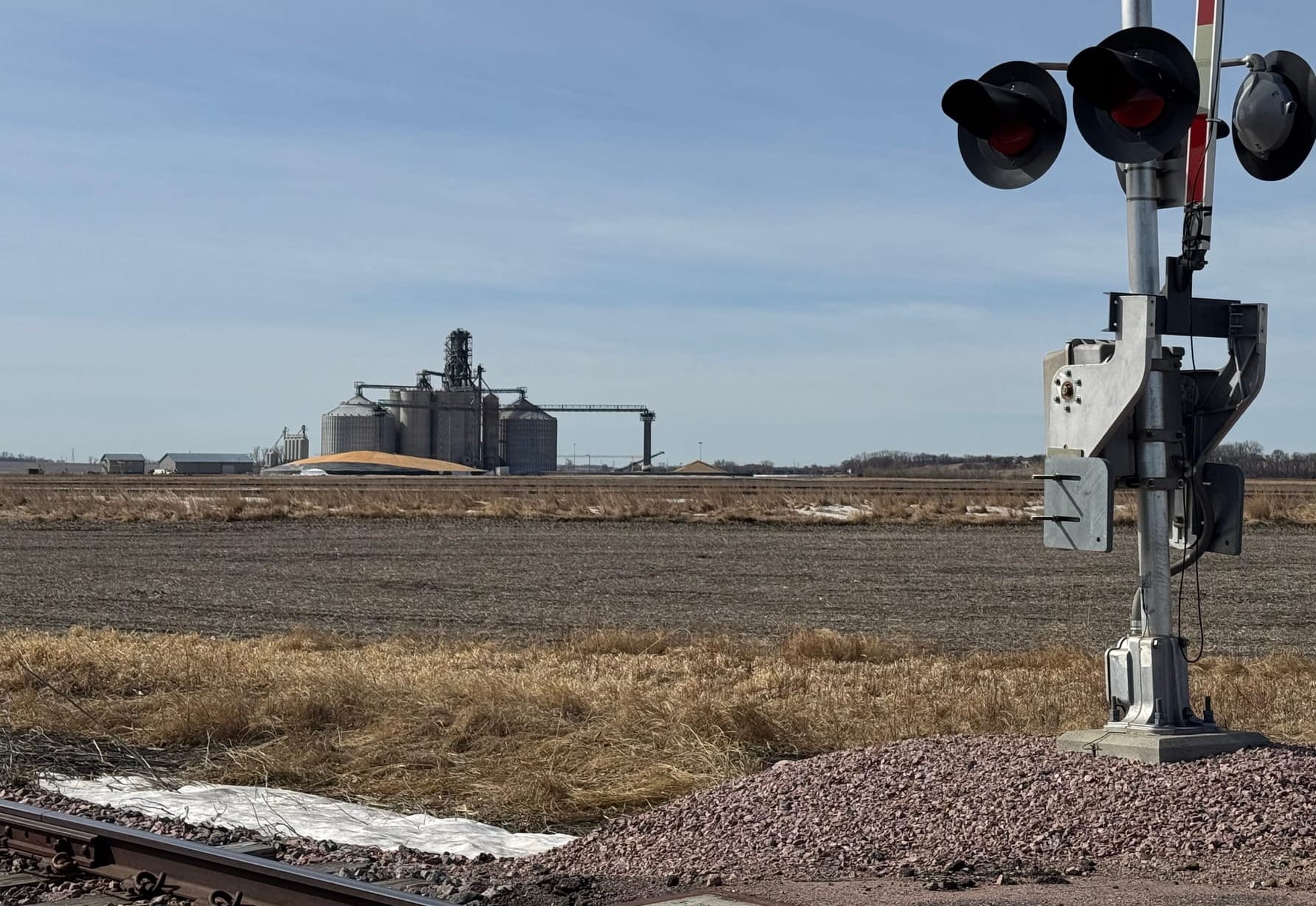
But even the most optimistic agricultural experts and producers are concerned the worst is not over yet for American farmers, Schmitz said.
"Things have been difficult, and possibly this could continue for another year or two," he said. "Farmers are pretty flexible, but when bad news happens three to five years in a row, and with all the things happening in the world, it gets concerning."
Fewer profitable farms possible this year
While it may be hard for South Dakota farmers to believe, the Rushmore State has fared better than most of the nation during the recent agricultural economic downturn, said Nate Franzen, president of agricultural lending at First Dakota National Bank in Yankton.
In 2025, the state had only one farm bankruptcy that Franzen was aware of, and about 80% of grain producers made a profit, a higher rate of performance than the 65% he predicted.
"There’s a lot of younger guys who love to farm, but it just doesn’t pay." – farmer Jeff Thompson
Franzen, who has worked in farm lending for three decades, said the best year for farm profitability in South Dakota over the past 20 years was in 2011, when the ethanol market was raging and about 93% of state farmers made money.
In 2025, record yields by producers and a high level of diversification on individual farms put South Dakota in a good position. But 2026 may be more challenging, he said.
“Looking forward, it is troubling,” Franzen said. “We’ve been experiencing inflation on the expense side for the last few years. And this Iran war is not helping because fertilizer is spiking and fuel is spiking.”
Financial and emotional stress the norm
Meanwhile, many farm families are enduring stressful kitchen-table meetings about money and the future of their operations, VanderWal said.
The challenging economic conditions are hardest on young farmers without strong equity or savings, those who recently took over from retiring parents or those who are heavily leveraged with loans for land or equipment.
"We are hearing more stories of bankruptcies increasing, and we’re hearing more incidents of farmer suicides again," he said. "Farmers and ranchers are very proud people and it's hard for them to ask for help, so we're encouraging people to pay attention to family members and neighbors and get help for them if they need it."
Schmitz said most South Dakota grain farmers are sticking to their planting plans for 2026 even amid great market uncertainty.
He said some farmers may plant more cover crops instead of corn and soybeans to build soil health, and a few may diversify their operations with cattle, hogs or poultry to create new revenue streams and generate manure as a source of low-cost fertilizer. Others may take on new jobs off the farm or expand the hours they spend working outside of agriculture.
Impacts felt beyond South Dakota farms
From a broader perspective, the weakening farm economy is hurting not only farmers but also the communities where they live, VanderWal said.
"Agriculture is what drives the economy of this state and very much so in the small communities," he said. "These issues could really come home to bite the small communities of South Dakota."
Ultimately, continued income challenges for American producers could lead to farm consolidation and greater corporate ownership, which could threaten not only American family farms but also the nation's ability to feed itself, VanderWal said.
"Food security is national security, and if we have to rely on other countries for our food supply, that’s a real problem," he said.
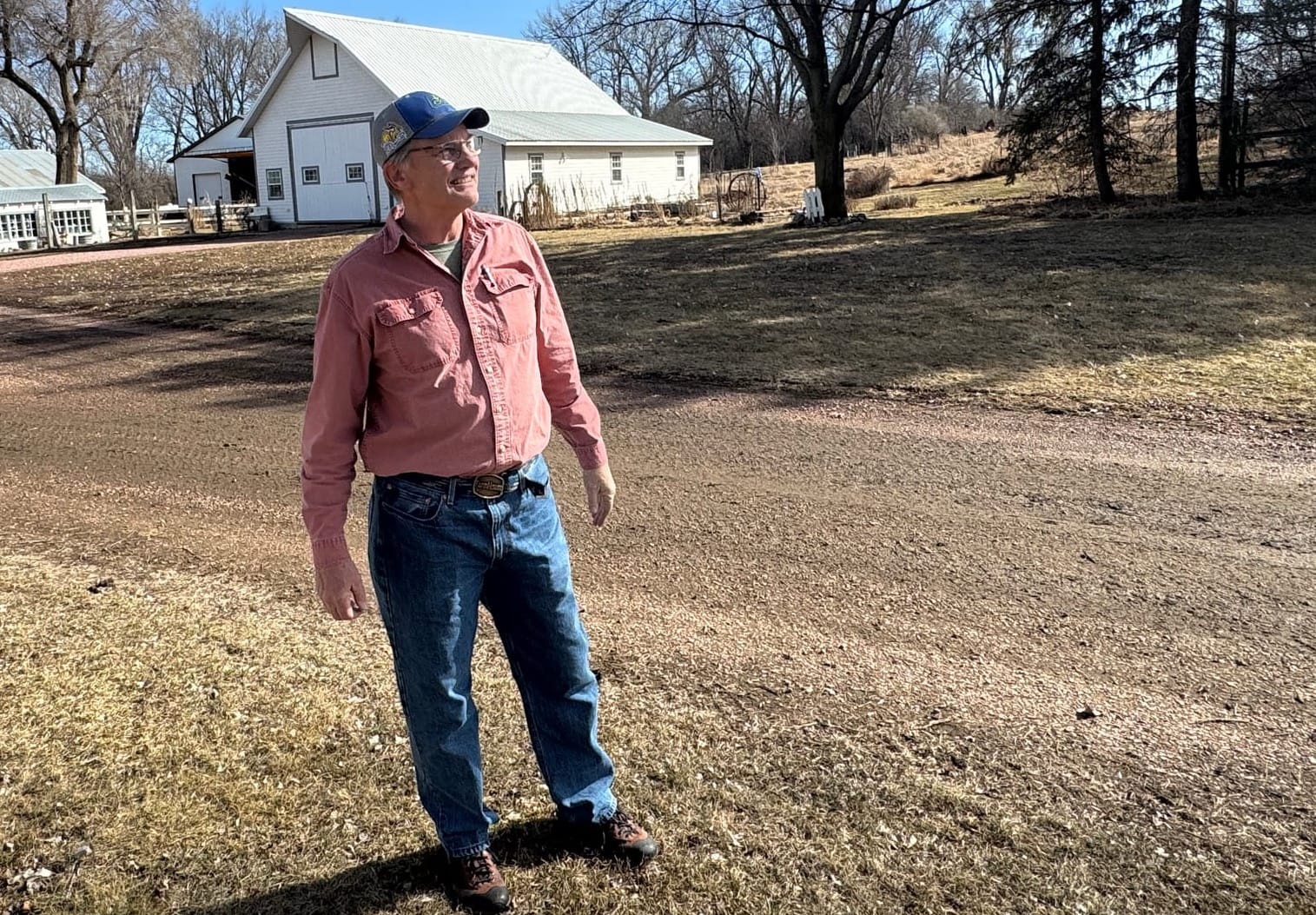
Thompson, the Minnehaha County grain farmer, said he is hopeful that new trade deals brokered by President Trump will hold up and remain favorable over the long term. He has applied for some of a recent $12 billion farm bailout approved by the president, though he considers that stop-gap program only a "small Band-Aid."
Thompson hopes that when he retires in a few years, the agricultural economy will be strong enough for someone local to buy his roughly 800 acres and continue to use it for farming.
But he's no longer sure that will happen.
"We love what we do and look forward to passing things down that we’ve built up over the years," he said. "There’s a lot of younger guys who love to farm, but it just doesn’t pay."
Support stories about rural South Dakota with a tax-deductible donation.
South Dakota News Watch is an independent nonprofit. Read, donate and subscribe for free at sdnewswatch.org. Contact content director Bart Pfankuch: 605-937-9398/bart.pfankuch@sdnewswatch.org.