
In rural and reservation areas across the state, communities are coming together to combat food insecurity in areas where food support can be few and far between.
According to a 2023 study from Feeding America, over half of food insecure people in South Dakota are above the income threshold to receive Supplemental Nutrition Assistance Program (SNAP) or Women, Infants and Children (WIC) benefits. Some of the largest proportions of food insecure people live in the state's most rural areas, including in the nine reservations in the state.
Todd County, Oglala Lakota County and Corson counties have the highest percentages of people who don't regularly get enough to eat, with an estimated more than 20% of the population experiencing food insecurity as of 2023.
Response: Community engagement leads the way for progress
Across the state, successes in food insecurity intervention often come when those who live in the community take stake to ensure that all of the area's residents can put food on the table.
Those smaller, often volunteer-led operations frequently take initiative to make sure people in the most remote corners of the state can feed their family.
The Cheyenne River Sioux Tribe Buffalo Authority Corp. received a U.S. Department of Agriculture Local Food Purchase Assistant (LFPA) grant last fall to distribute food items across the Cheyenne River Indian Reservation. The organization has the largest tribally owned buffalo herd in the country and regularly distributes bison meat across the reservation. The grant program also allows the group to purchase and distribute other food items, like fresh produce.
Irona Howe, who runs the organization's Farm to School program, said that food programs are for everyone, regardless of income status – an important marker, she said, especially considering that many who may need food in the short-term don't necessarily qualify for federal government benefits.
"There's no questions asked. We haven't turned anybody away for food," Howe said. "It doesn't matter what color you are, everybody is welcome. You're welcome to come to every distribution if you want to. People say, 'I don't qualify for that.' But it's really cool to say, 'Yeah, you do. Come, this food is for you.'"
Evidence: Community members see benefit in real time
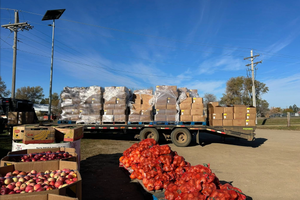
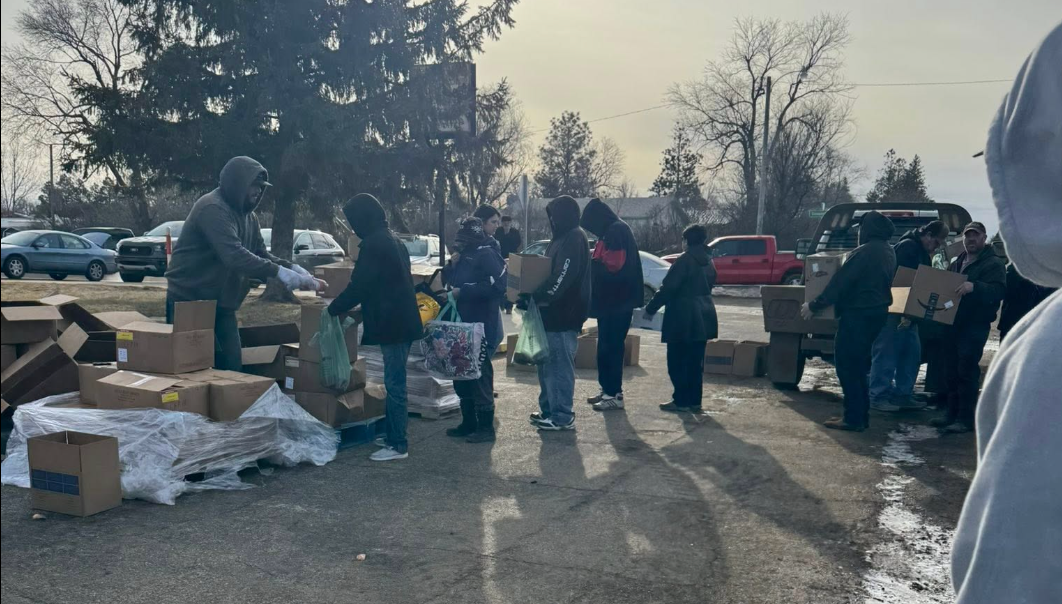
At a recent distribution in Eagle Butte, where the Cheyenne River Sioux Tribe's headquarters are located, the organization distributed more than 9,000 pounds of ground beef as well as local honey and other fresh produce. It was one of several food distributions the organization has been conducting across the reservation this winter.
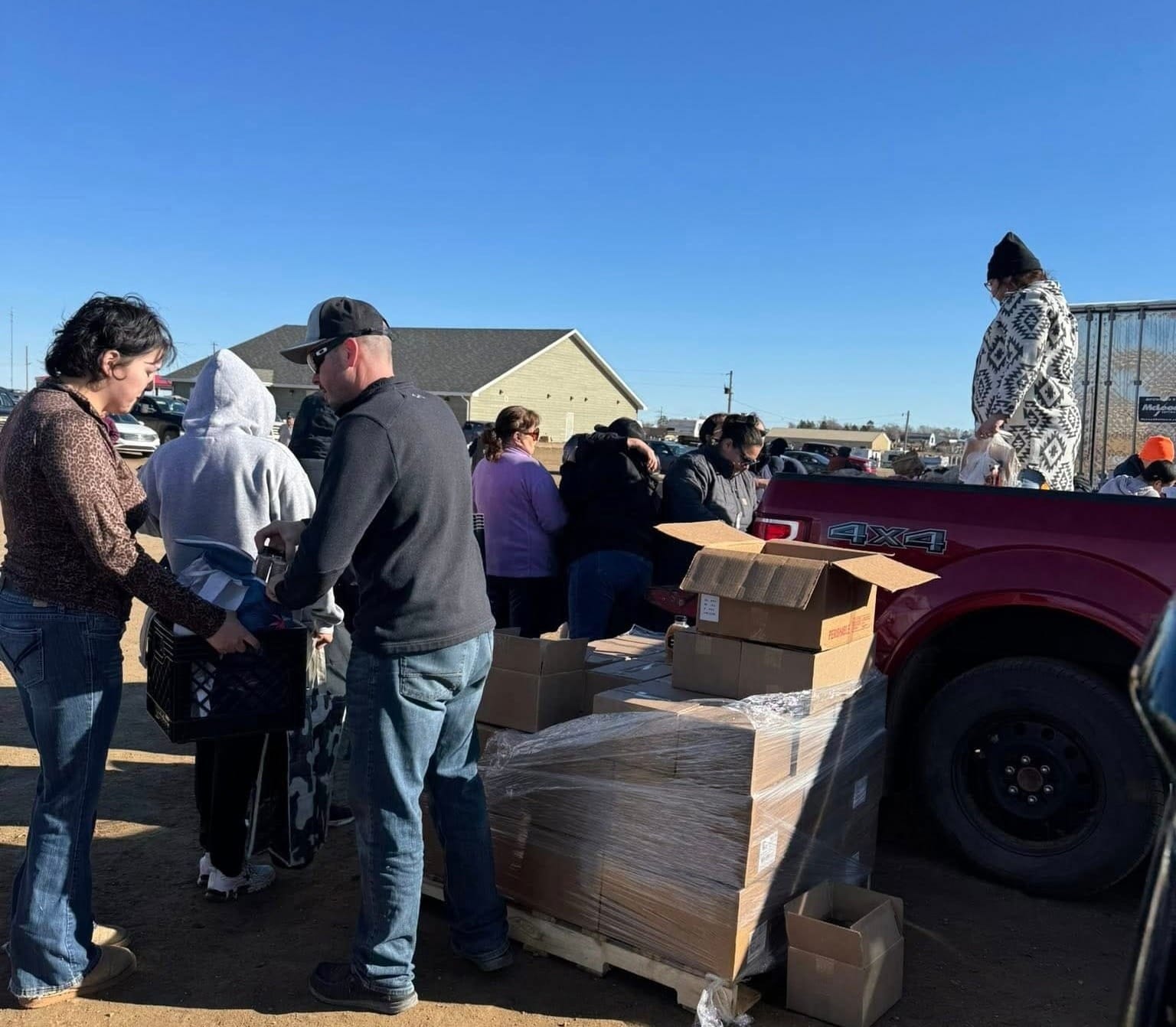
Food distribution can also be an exercise in community building, especially when those communities are smaller, with limited resources. Howe said that distribution days, which take place in towns across the nearly 1.6 million-acre reservation, are crucial to ongoing connection.
"I ordered a flatbed full of watermelon, and I was able to go to each and every single individual community and knock on their doors and give out watermelon," Howe said.
Across the state, in Centerville, where the population is 958, residents often go above and beyond to give to the food pantry, according to volunteer Jackie Hofer.
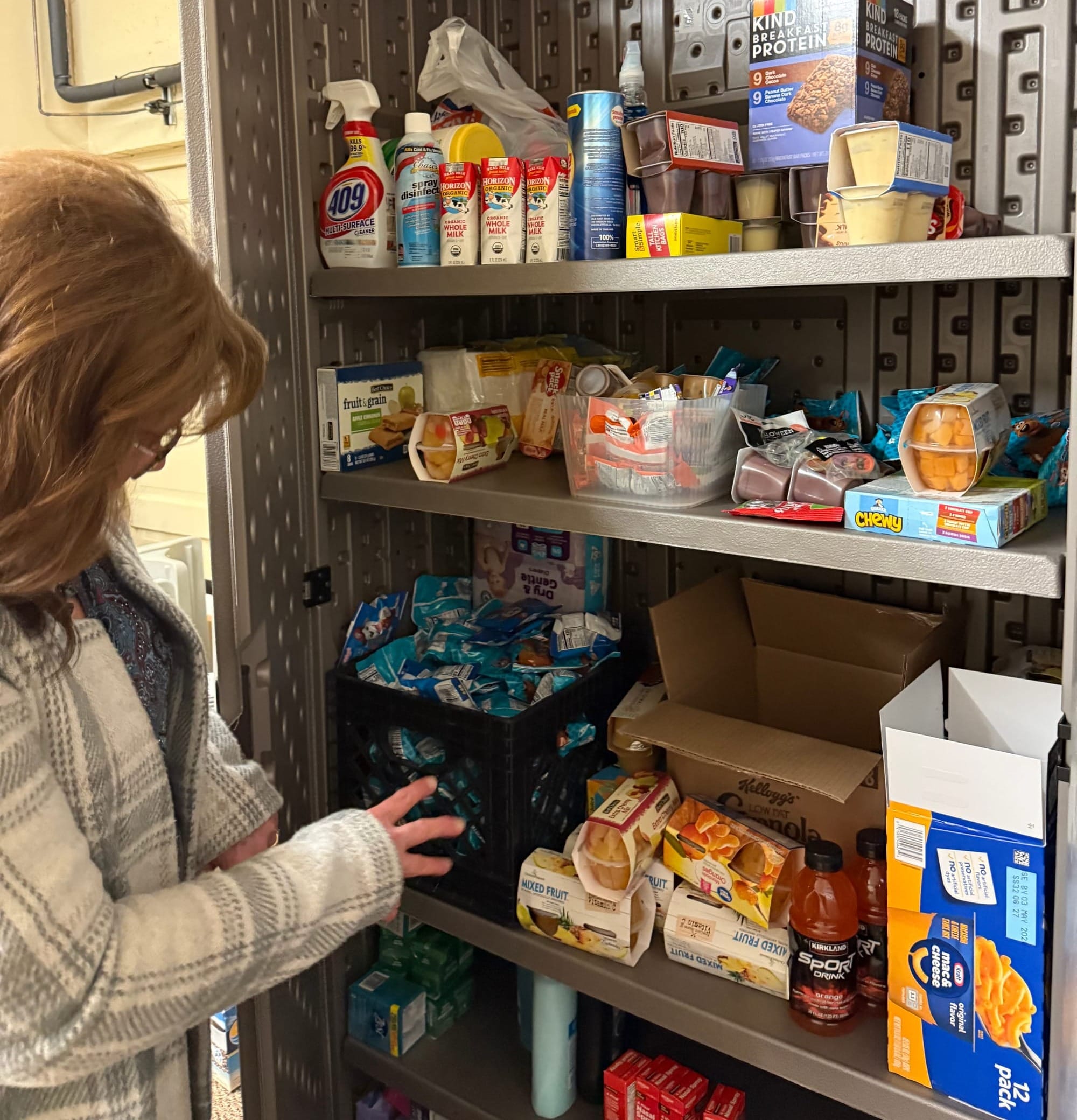
The town's Rotary Club runs the pantry, which gets distributions from Feeding South Dakota and the local grocery store. The pantry runs for an hour on Wednesday nights and usually sees about 40 visitors a month, Hofer said. Most members of the Rotary Club make efforts to volunteer.
"Even individuals (give to the pantry)," Hofer said. "We had one individual who, at one time, was giving $100 a week to the pantry because he said at one point he was down on his luck and he found a way to give back."
That level of involvement is not uncommon at small, rural food pantries, Hofer said. Local businesses regularly give to the pantry and coordinate drives to ensure it can remain up and running. On most Wednesday nights, the pantry is fully stocked with extras in the back.
"You can't do it by yourself," Hofer said. "That's kind of the big thing."
Future: Organizations look forward to youth involvement, future funding
On Cheyenne River, gathering people is an essential part of the food distribution process, and for Howe, children are the most important part. Through the farm-to-school program, the organization has been able to subsidize the cost of bison meat for schools across the state and as far away as Oregon. That engagement with the organization during the school day allows students to be more aware of the other programs it works on, Howe said.
"During this food distribution the kids always jump in and help out too. Every distribution they get a little bit better because our youth need guidance. They're hungry for that knowledge and they and I see them. They want to put action to things," Howe said.
Play a bigger role in our storytelling. Join us as a partner in telling stories that are important to all South Dakotans with a tax-deductible donation.
When SNAP benefits were temporarily paused last fall during a government shutdown, the Cheyenne River Buffalo Authority Corp. distributed over $40,000 worth of food and 20,000 pounds of buffalo meat to community members across the reservation. While lines were long, Howe said the community recognized the importance of the work and were understanding.
"Our people are patient. It's kind of wild to me how you can get over 900 people in a line and serve that many people," Howe said.
As people in the community get more familiar with food distributions, Howe said they come up with their own ways to give back and engage in solutions. Though the USDA LFPA funding will come to an end in April, Howe said that the organization hopes to keep distributing food in other ways.
Some legislative initiatives have also pushed forward to ensure greater access to food. HB 1147, which Sioux Falls Democratic Rep. Erik Muckey introduced on Jan. 27, would appropriate $5 million from the state's general fund toward a South Dakota-based nonprofit that distributes food across all 66 counties in the state. Of that funding, the entity would be required to use $1.5 million of it to purchase food from South Dakotan producers.
 Molly Wetsch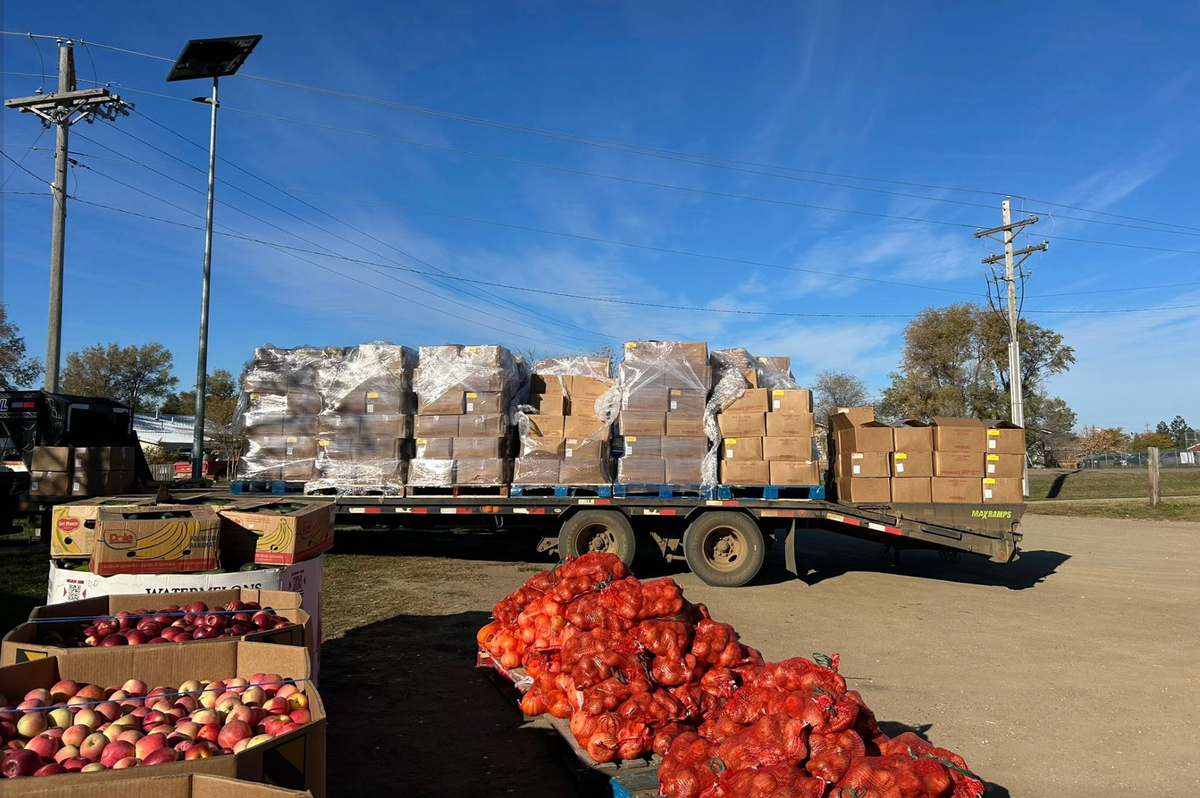
"When people are at food distributions, and say, 'Oh, I don't wanna take too much,' I always encourage them that this food is for you. Take as much as you can and pick it up for other people if they can't make it here," Howe said.
"It really empowers people because they'll come back and they'll say, 'Man, you know, that really felt good.' And I know it makes people feel good to be able to give in that manner."
South Dakota News Watch is an independent nonprofit. Read, donate and subscribe for free at sdnewswatch.org. Contact reporter and Report for America corps member Molly Wetsch: 605-531-7382/molly.wetsch@sdnewswatch.org.