
PIERRE, S.D. – Over the course of five months, the Comprehensive Property Tax Task Force met eight times across the state. The panel, which consists of 16 voting members and two non-voting members, heard from experts, officials and constituents about the impacts rising property taxes have on property owners across South Dakota.
In its final meeting on Oct. 22, the task force recommended 19 proposals for property tax reform. There is also a ballot question that’s collecting signatures for voters to consider in the 2026 general election that seeks to replace property taxes with increased sales taxes.
The number of proposals coming into the upcoming legislative session has some wondering if property tax reform will end up again in gridlock. In the 2025 legislative session, lawmakers considered 13 bills related to property taxes, not including joint resolutions. Two of those were signed into law, and the rest died at some point during the course of lengthy debates.
Now with 19 proposals for lawmakers to consider, the question remains if any real reform will be seen in 2026.
Rising delinquency rates
Bon Homme County Commissioner Duane Bachmann provided testimony during the task force’s May 30 meeting. He said that in the 10 years he’s served on the commission, the county evicted three families from their homes because they were delinquent on their property tax payments.
“That’s something I didn’t really sign up for when I got on the commission, and it’s something we shouldn’t have to do,” Bachmann said.
The increases in property taxes in the county are especially hard on retired people who have fixed incomes, Bachmann said in an interview. Every year, the treasurer produces a list of people who are behind on their taxes.
“It just seems in the last probably three years, I've seen more people behind on their property tax than prior to that,” Bachmann said.
At the May task force hearing, Bachmann proposed gradually replacing all property taxes with sales taxes.
“We’re going to be back here every so many years talking about the high property taxes. And the only way we can get rid of them is to replace them with something else,” Bachmann told the panel.
Custer County bidding war
The problem is also evident across the state in the Black Hills.
Lea Anne McWhorter lives in Custer County, where she’s the chair of the Custer County Republican Central Committee.
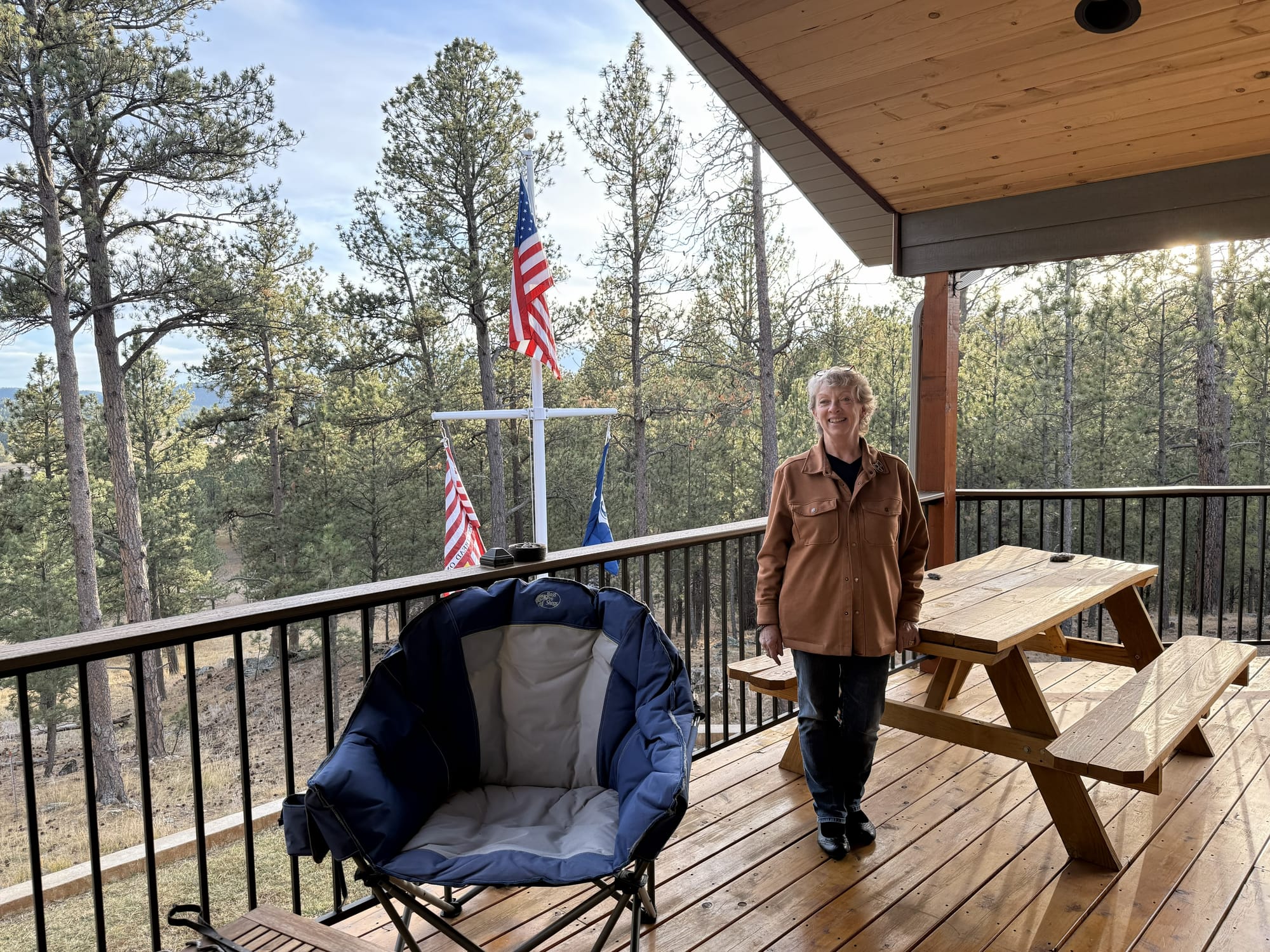
She is originally from Custer County, but she and her husband lived in Anchorage, Alaska, for 30 years. They retired and moved back to Custer County in 2018.
“We saved to buy the house of our dreams. And that’s what we did,” McWhorter said.
They paid around $550,000 for the property in 2018. In 2020, the strict pandemic health regulations had many residents of states like California, Washington and Colorado looking to relocate to states with less restrictive governments.
“We started to get an influx of these political refugees,” McWhorter said.
These residents moving from other states sold their houses for exorbitant sums and came out to South Dakota where the houses were cheaper. They didn’t need to finance their purchases, and the demand for houses in Custer County grew.
“They would have an open house on Saturday, and on Sunday, they’d have a bidding war,” McWhorter recalled.
As a result, home prices in Custer County have ballooned. Between July 2017 and October 2025, the Zillow Home Value Index for single-family homes in Custer County rose from $245,000 to $506,000. Much of that increase has been since January 2020, when the home index price of a home was $300,000
McWhorter said her last assessment put her home value at $1.2 million. Her first property tax bill was $6,200. It’s now $8,000 per year.
The young and the elderly hit hardest
She said she and her husband can absorb that hit financially, but these increases hurt elderly people who are on fixed incomes. This group of county residents has lived in the area their entire lives, and there’s nothing about the increases in their home values that goes into their pockets, McWhorter said.
Hank Whitney, another resident of Custer County, agrees this group is struggling with the problem.
“There are a lot of people in this area that it is bothering. People who were on fixed incomes. People with no nest eggs. That’s a really big issue,” Whitney said.
“Everybody is going to feel it at some point.”
– Lea Anne McWhorter, Custer County resident.
There are also young people who grow up in Custer County but can’t afford to stay, McWhorter said. If they can afford a home, they pay for their mortgages with tight budgets that can’t take property tax increases. The county also doesn’t have a lot of high-salary opportunities for young people. The problem is statewide, and if something isn’t done, it’s only going to get worse, she said.
“Everybody is going to feel it at some point,” McWhorter said.
State Sen. Red Dawn Foster, a Democrat from Pine Ridge, said that some elderly people in Martin have told her that property tax increases are especially hard because of the recent increases in the cost of living.
“I met with people who told me ‘I’ve worked all my life. I’ve lived modestly, and I have a modest savings.’ Now they’re having to struggle to meet their basic needs. So their quality of life has been drastically affected,” Foster said.
Difficult to appeal property taxes
Property taxes are collected on the county level, and they go to pay for many government services, including schools, jails, fire and ambulances.
A broader description of the assessment process is available on the Department of Revenue website. Put simply, assessment begins with a county’s department of equalization, which determines the value of all real property within the county. Agriculture is assessed based on the value of its productivity, and all other property is based on fair market value.
Assessment notices go to property owners before March 1, and they can appeal if they disagree with the assessed value of their property. They first appeal to the local board of equalization, and then they can appeal to the county board. They then can appeal to the Office of Hearing Examiners. Finally, they can appeal to the circuit court.
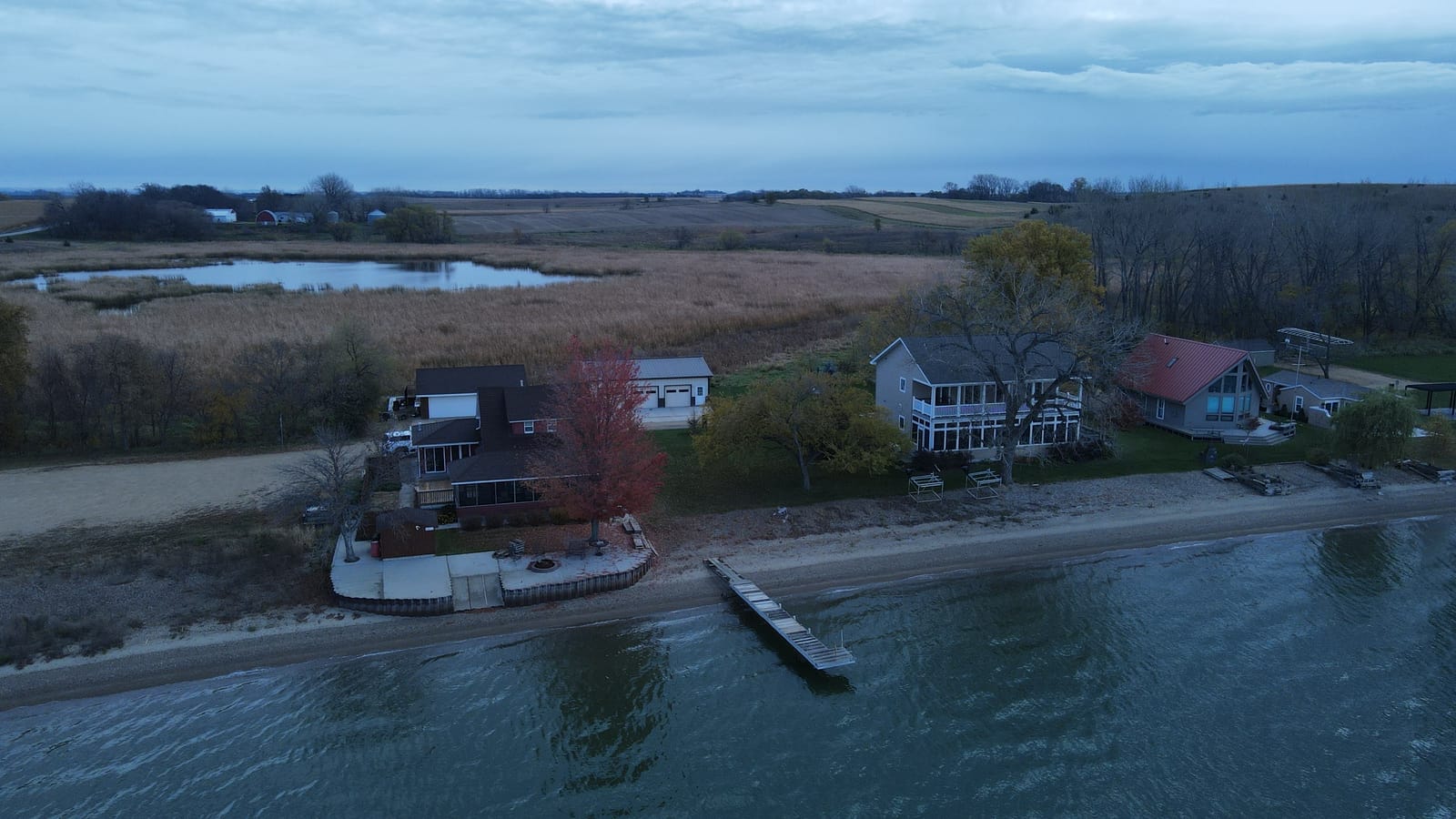
Appealing the assessments isn’t easy, however. David Chicoine, former president of South Dakota State University, said the assessment on a house he owns on Lake Poinsett jumped 30% in one year. His neighbors were hit with the same increases, he said.
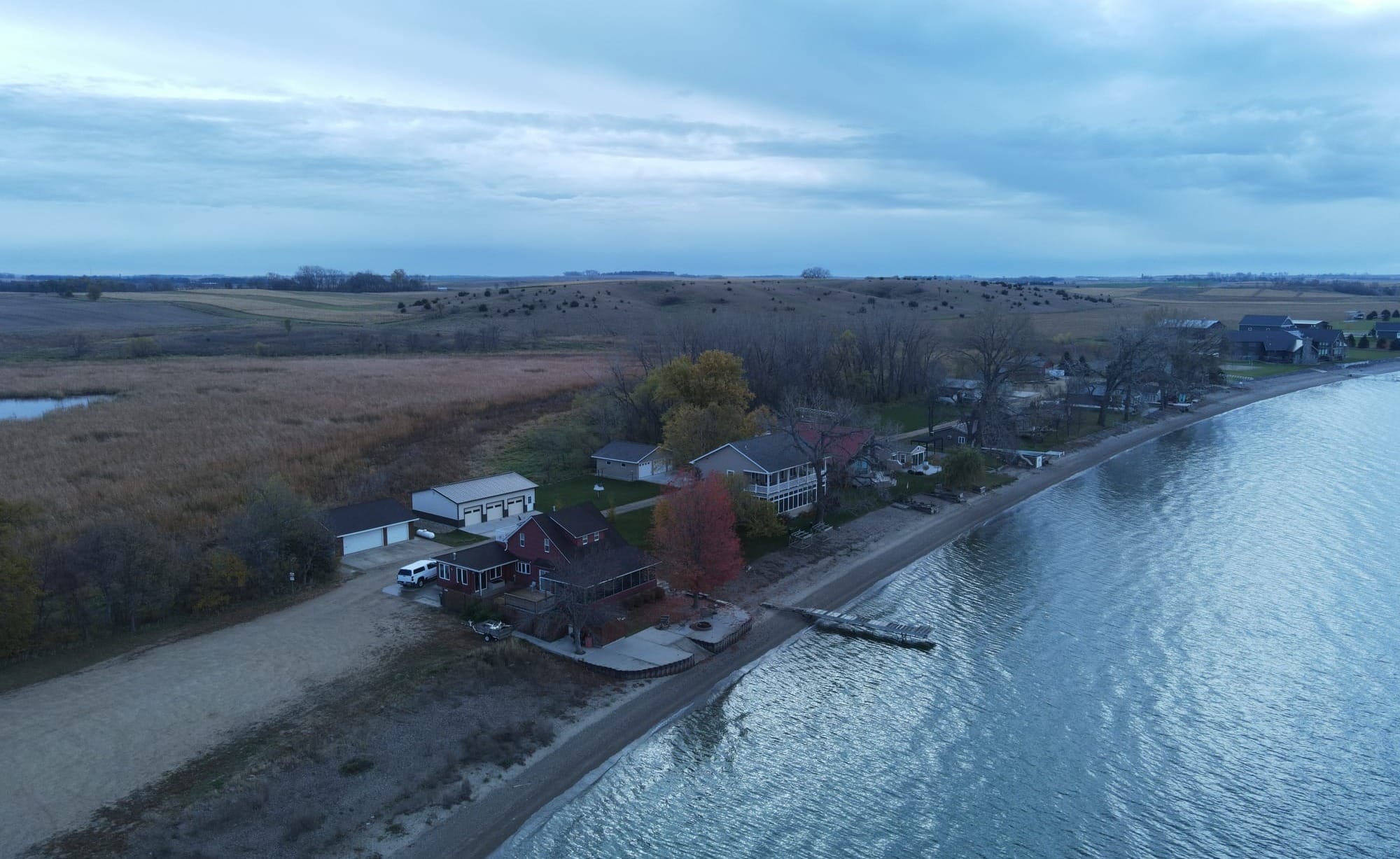
When he saw the sudden increase, he wanted to learn more about the methodology that led to the assessment and contacted his local assessor in Hamlin County.
“I asked her if she could just send me the manual that they used to assess property taxes with. And she says there isn't any,” Chicoine said.
He said the methodology they use to do the assessments limits the ability to appeal the process. There aren’t any comparables that would allow the property owners to look at records and compare them to other properties.
“The appeal process is just sort of moot, given the methodology they use to increment the assessments from one year to the next,” Chicoine said.
More than a dozen approaches
Each of the 19 proposals the task force advanced approaches the problem in a different way.
Many of them make adjustments — expanding eligibility or making applications easier — to various relief programs available in the state, which are available for the elderly, the disabled and veterans. Others make adjustments to the tax structures for school districts, which take up 57% of tax revenue, according to a Legislative Research Council report from 2024.
Joe Kirby, a Sioux Falls businessman and government reform advocate, proposes on his blog that having more than 150 school districts in South Dakota is inefficient. Consolidating some of these districts, he argues, would lower administrative costs and allow for more efficient capital planning.
“Property tax relief ... is so multifaceted that one bill is not going to solve it. It takes a comprehensive approach.”
– Sen. Chris Karr, Sioux Falls Republican
Another proposal the task force recommended for consideration asks the governor to provide a 5% cut to the general budget. Other proposals seek to replace some property taxes with sales taxes. In his budget address on Dec. 1, Rhoden proposed no increases, but his budget also doesn’t offer any major cuts.
South Dakota’s 4.2% sales tax rate is due to increase to 4.5% as a result of a sunset clause. Another proposal would take that increase and put it toward a fund to replace part of the money the state sends to school districts.
A ballot question that is currently collecting signatures would replace all property taxes with a $1.50 flat tax on retail purchases of $15 or more. On transactions of less than $15, consumers would pay 10% of the purchase price.
Multifaceted problem
These wide-ranging approaches have some questioning if another gridlock debate will prevent meaningful property tax reform in the coming session. McWhorter in Custard County has doubts.
“I think there will be some talk, and some things will get tweaked. I don’t see anything that will be long-term,” she said.
State Sen. Chris Karr, a Republican from Sioux Falls who chaired the task force, told News Watch that people shouldn’t get discouraged if multiple bills put forth approaches to addressing the problem.
“Property tax relief, the way we fund property taxes, or the way we fund schools and local government through property taxes, is so multifaceted that one bill is not going to solve it. It takes a comprehensive approach,” Karr said.
He also points out that only some of the 19 proposals deal directly with tax revenues. The rest provide “guardrails” and relief for high-need groups.
Sen. Foster, of Pine Ridge, said she’s not discouraged by the number of proposals because it shows there’s a lot of interest from legislators in solving the problem.
“The political will is there more than it’s ever been before, and the need is also there," she said. "It’s not going to be cut and dry. So I’m optimistic, but I’m also aware of the challenges that we’re going to be facing.”
She said one of those challenges is that the state’s dire funding outlook in the coming year might give lawmakers fewer options.
The 2026 legislative session starts at noon on Tuesday, Jan. 13, with Gov. Rhoden’s “State of the State” address. March 9 is the last day for a bill or joint resolution to pass both houses.
Correction: This story was corrected at 3:09 p.m. on Dec. 12, 2025, to state that the 30% increases impacting properties on Lake Poinsett were assessments and not taxes.
This story was produced by South Dakota News Watch, an independent, nonprofit organization. Read more stories and donate at sdnewswatch.org and sign up for an email to get stories when they're published. Contact Kevin Killough at kevin.killough@sdnewswatch.org.