
"Tȟabškátapi kiɳ wičhóni."
That means “ball is life” in Lakota, and for many people across South Dakota, that saying rings true now more than ever.
Basketball has been the only thing on many students’ minds for the past few months – as the season concluded, the Summit League tournament came to Sioux Falls at the beginning of the month and high school state tournaments were spread out across the state.
For some, though, the sport is more than just a winter pastime – it's their whole lives. Hence the saying.
Native players, coaches dominate
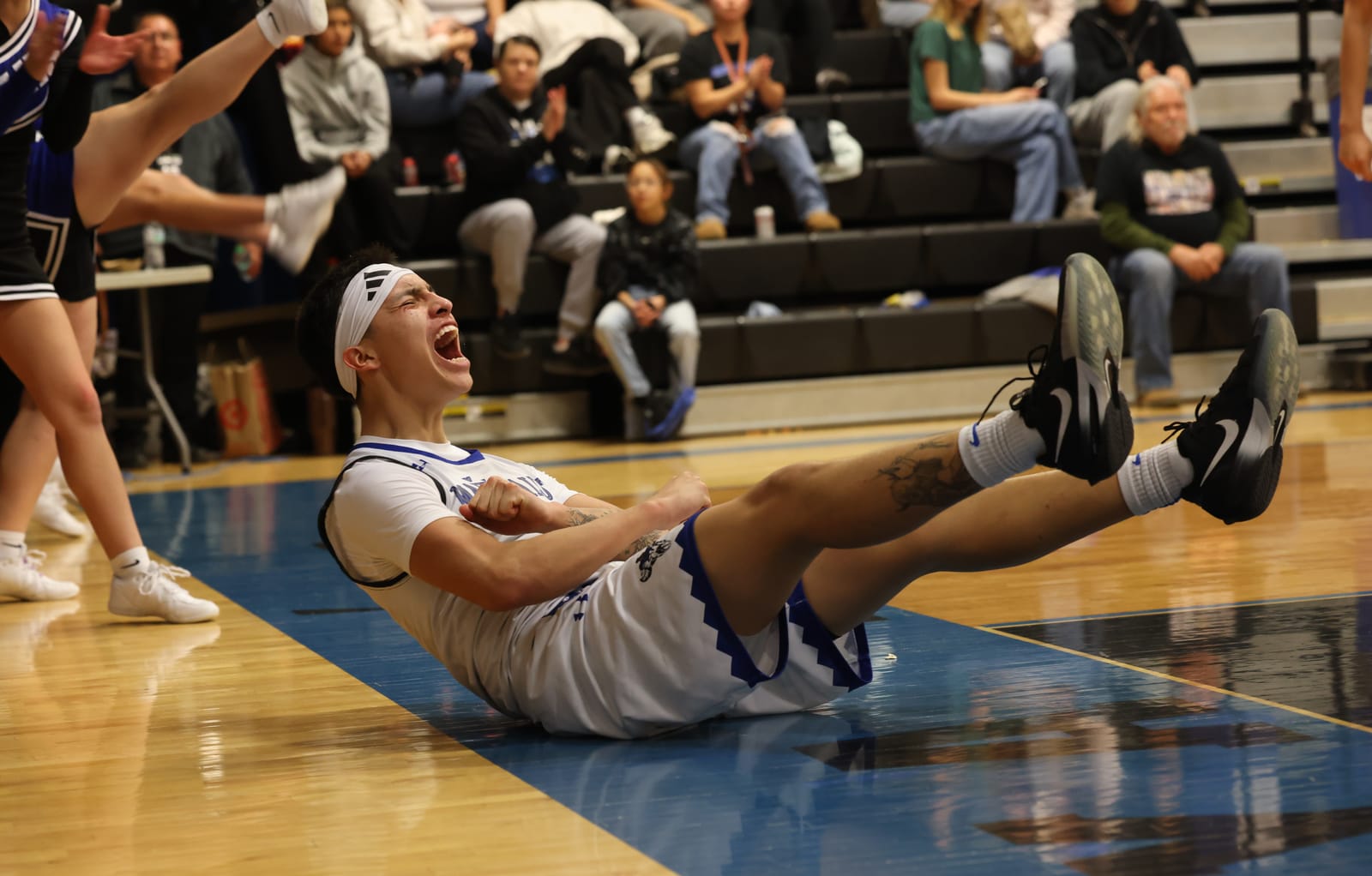
In Native communities across the state, basketball is the most well-loved sport by a country mile. Fans and families travel hours to watch their favorite high school teams compete. Those teams are often dominant, with high-scoring players and near-undefeated seasons a not-uncommon occurrence.
"I love giving (younger kids) a person who they can look up to as a basketball player.” – Marvin Richard III
A wealth of talented players have come out of rural and reservation areas, and this season is no exception.
Marvin Richard III
Marvin Richard III, a senior at Pine Ridge School, has emerged as one of the most dominant players in state history.
Richard, who plays at a towering 6-foot-3-inches for the Thorpes, recently had a record-breaking run at a game against Lakota Tech, where he scored 73 points. That, ironically, broke the 73-year-old record for most points in a single game in the state.
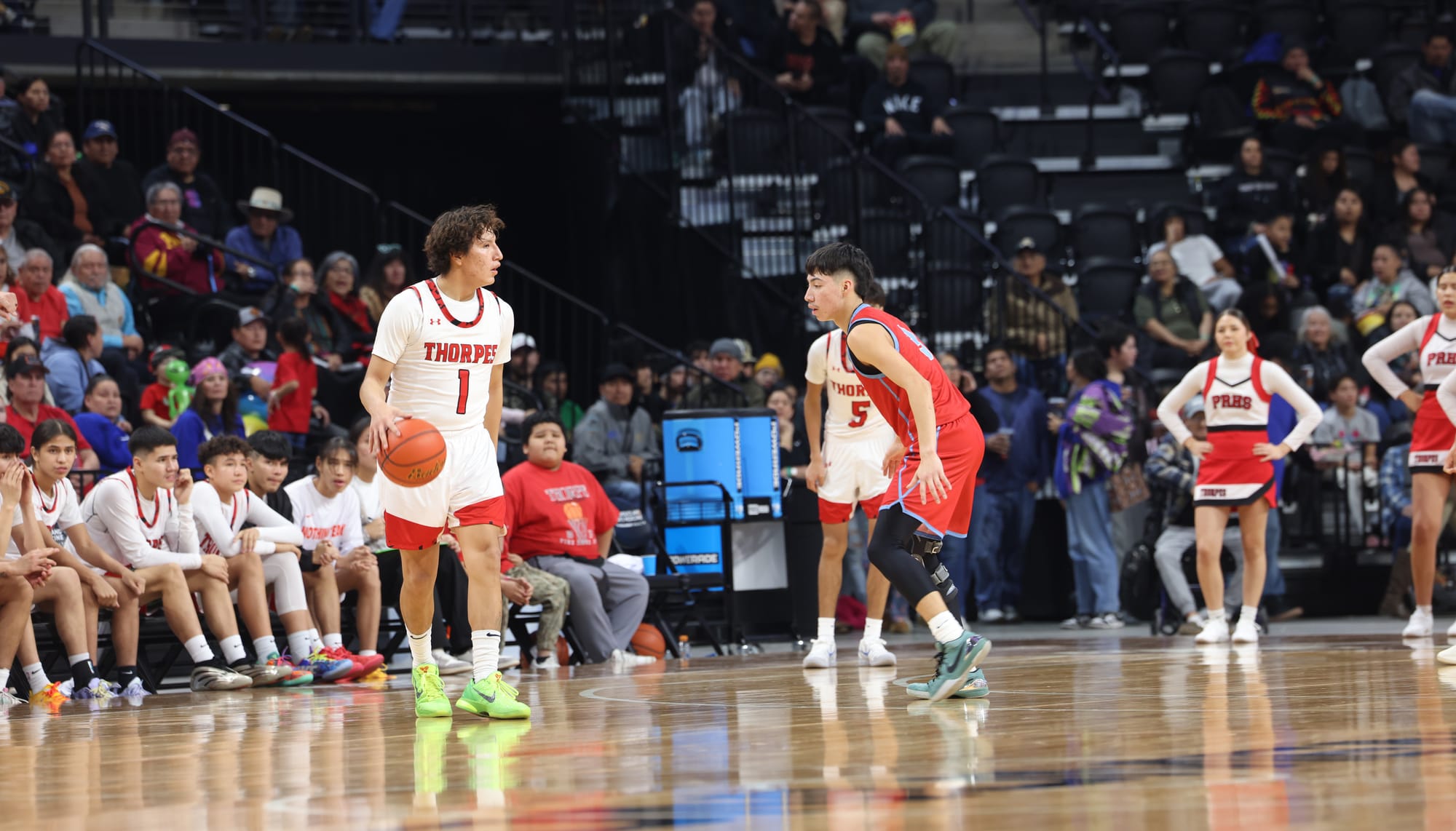
He was named the best player in the state by MaxPreps and has garnered himself a fanbase of young, ambitious players across the state and at Pine Ridge who hope to see and learn from the best.
"I love giving (younger kids) a person who they can look up to as a basketball player,” Richard told the Rapid City Journal in 2025. “I think a lot of people knew I was going to be something great. It was just a good feeling.”
Ashlan Carlow-Blount
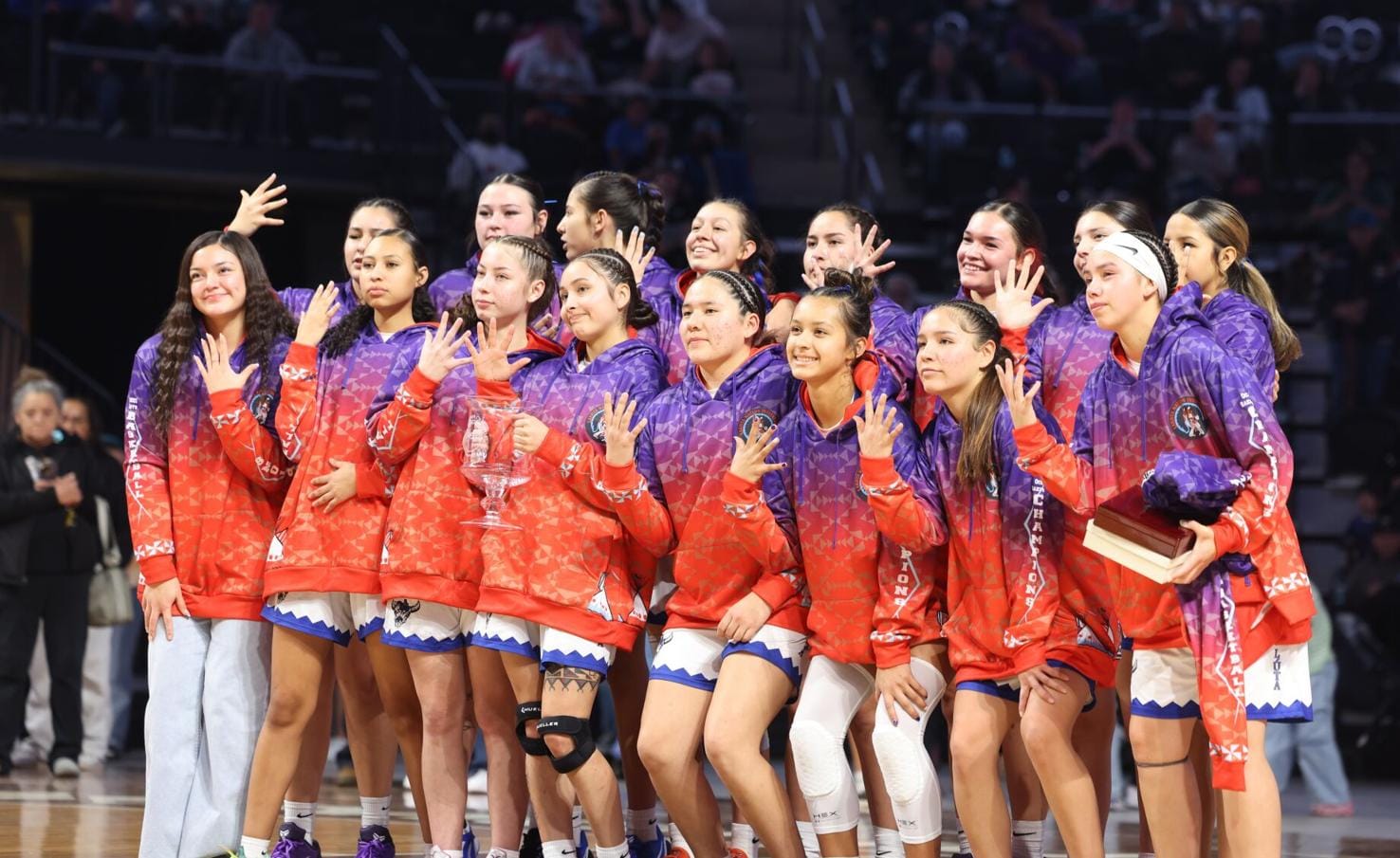
Ashlan Carlow-Blount, from Maȟpíya Lúta (Red Cloud School) on Pine Ridge, was awarded the Spirit of Su at the girls' state championship this year.
That award honors Su Anne Big Crow, an Oglala Lakota player who led the Pine Ridge High School basketball team to a championship in 1989. It recognizes a player with outstanding character, leadership, athletic ability and grade point average.
In January, Carlow-Blount passed the 1,500-point threshold in her career and in December led her team to its fifth championship win at the Lakota Nation Invitational in Rapid City.
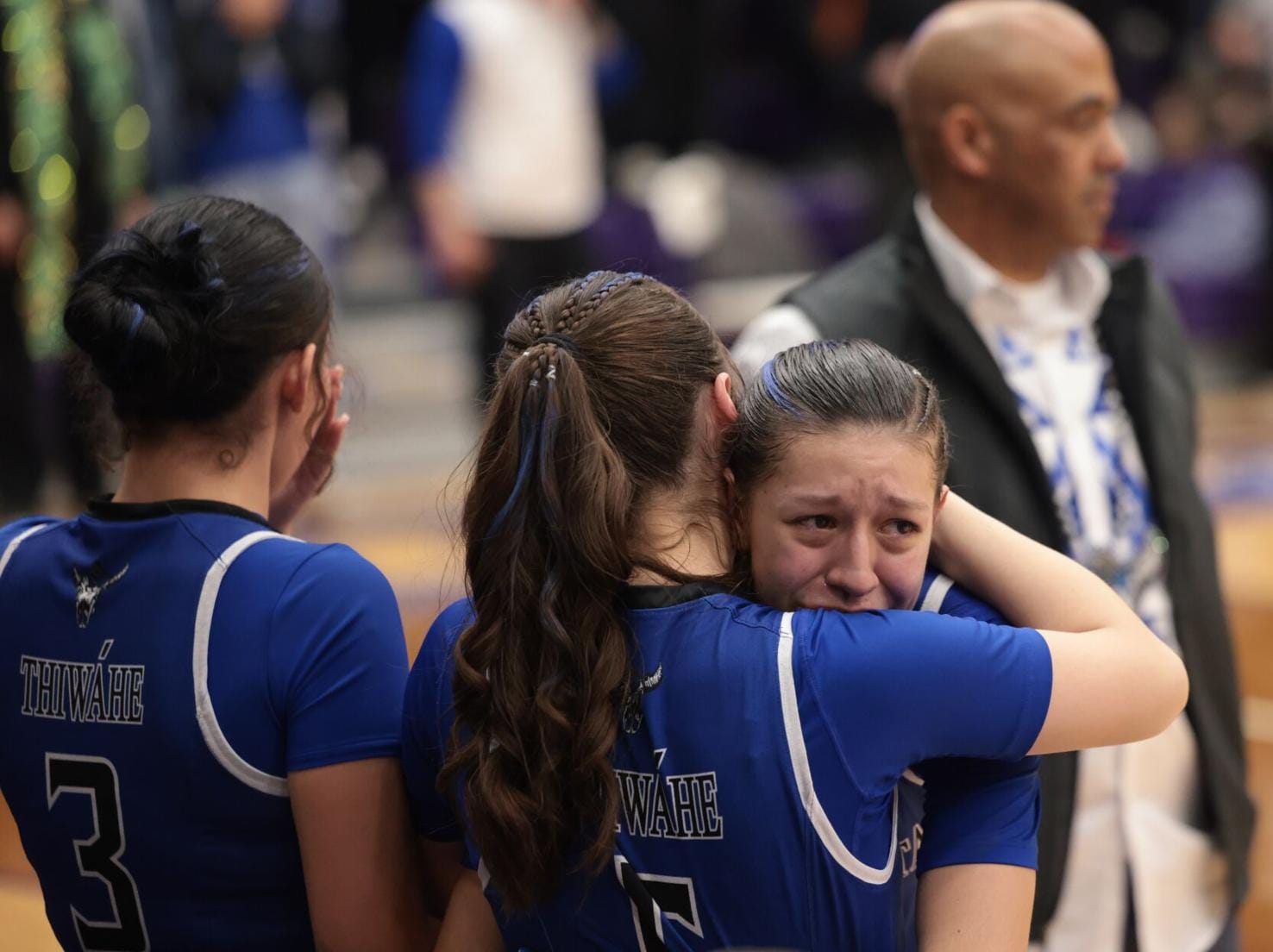
Both Carlow-Blount and Richard III have committed to the University of South Dakota in Vermillion.
Eldon Marshall
Just a bit farther east from Maȟpíya Lúta and Pine Ridge is White River. The town sits on off-reservation trust land for the Rosebud Sioux Tribe and has a population of just over 500. There, Eldon Marshall has been coaching the White River boys’ basketball team since 2003.
He has led the team to qualification for the state tournament 20 years in a row, and two years ago was awarded the Larry Luitjens Coach of Influence Award.
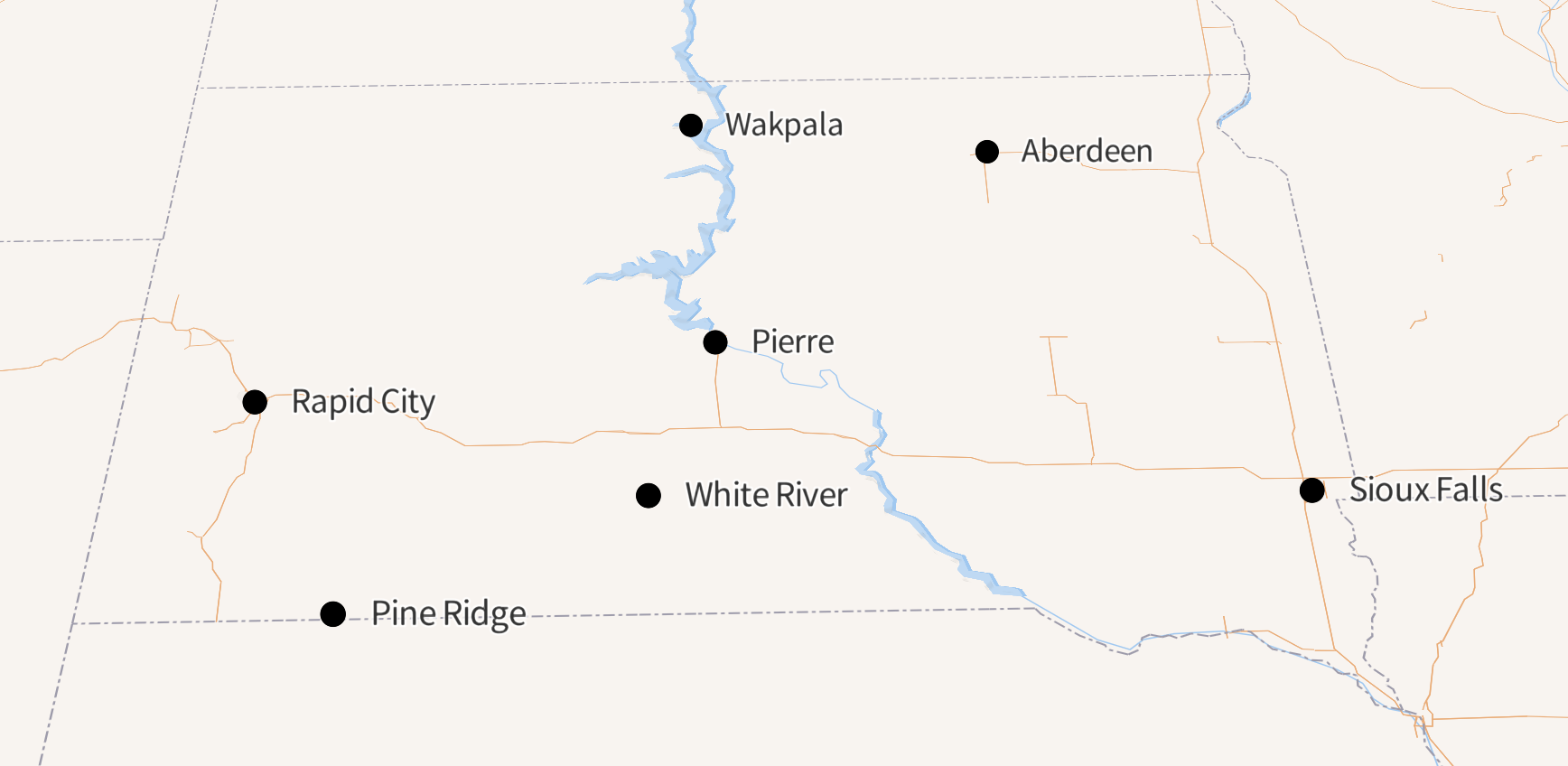
Marshall told News Watch that his own experience with the sport growing up and the mentors he gained along the way are crucial to his coaching success. He credits his own high school basketball coach, Bud Keller, to getting him thinking about his future.
“He was someone that, you know, kind of had an impact on me,” Marshall said. “He was like one of the first people that asked, ‘What are you going to do after high school?’”
“... (Native basketball players) could be victorious at a time when society didn't allow you many opportunities to be the victor." – Wade Davies, author of "Native Hoops"
Marshall was raised on the Rosebud Indian Reservation and played basketball his entire life – from elementary school to college, where he played at Black Hills State University in Spearfish. He told News Watch that in small communities like White River, people get to know what success feels like and are motivated to keep chasing it.
"I feel like in a smaller community you just have this bond, you know? We started something, we had a lot of success early going on, and ever since, you just want to keep it going," Marshall said. "It's not the same-same, but it's the same families. The same people that were here 20 years ago that you worked with are somewhat the same people that you are working with now."
Difficult origins lead to new way to play the game
Wade Davies is the author of "Native Hoops," a book that spans 75 years of history of the sport on reservations. Davies, a professor of history at the University of Montana, told News Watch that the origins of basketball in Native communities aren’t necessarily happy ones, though it now sees fans packing stands.
Students at Native boarding schools across the country were introduced to basketball during the sport’s inception and rise to popularity in the 1890s. It was an easy sport to play in close quarters – with no extraneous equipment or wide-open space required.
For many students, Davies said, basketball was an escape from the grim conditions of boarding schools.
“At a time when you could get very little positive recognition as a Native person, in South Dakota or in Arizona or wherever you are, they could be successful. And they could be victorious at a time when society didn't allow you many opportunities to be the victor," Davies said.
Native players developed their own style of play informed by endurance, speed and "non-stop" play, Davies said.
This would define the sport on reservations in the 20th century, when boarding school students came home with a basketball in hand.
"Relative to non-Native athletes, they were noted in the press for being more up-tempo," Davies said. "In the schools, they developed this style that initially in the press was just called Indian basketball. But later on, people started to know it as Rez ball."
All-Native tournaments prove crucial training ground
While the state tournament is the culmination of the basketball season for South Dakota high school players, there are a few other critical tests throughout the season that also serve as major community events.
The Lakota Nation Invitational (LNI) and the Dakota Oyate Challenge (DOC) take place in Rapid City and Mitchell, respectively, inviting Native teams from Class A and Class B schools in South Dakota and Nebraska to compete.
While these tournaments are born from basketball – and the fans' desire to watch – new traditions come from the gatherings, DOC founder Silas Blaine told News Watch.
Since LNI's inception in 1976, it has expanded to a major annual community gathering at The Monument arena in Rapid City. In addition to sitting in the often-packed stands of basketball games, spectators can also watch traditional hand games, the Lakota language bowl and more than a dozen other activities.
"Basketball's so popular, but then through these events, the coordinators want to start having their own events," Blaine said. "There's so much going on, all from basketball."
Blaine is still the director of DOC and serves on the board of LNI. He told News Watch that bringing together smaller schools at DOC – like Wakpala School on the Standing Rock Indian Reservation, where he is the superintendent and boys' basketball coach – allows for a different style of community gathering than the massive, thousands-strong LNI.
"The kids, you know, they get to know each other throughout the tournament," Blaine said. "I see, in a small school environment, kids get to know each other and then when they know who they are, they compete and have fun. It's a pleasant atmosphere."
Community and coaching
There is perhaps no better way to demonstrate what this sport means than to look at the players. They get involved in the community – one Maȟpíya Lúta player, Cody Two Bulls, recently received a National Citizens Honor Award for his charity work on the Pine Ridge Reservation.
They stop to take photos with younger kids who look up to them, especially all-time players like Richard.
Support Native American storytelling. Help South Dakota News Watch tell stories from Indian Country that don't just focus on the problems but on the solutions and rich Indigenous culture.
And sometimes, they become coaches themselves, passing on skills to the next generation – like Marshall and Blaine.
Stretched across the back of every Maȟpíya Lúta basketball player, where one would usually see a last name on a professional jersey, is one word: Thiwáhe. It means family in Lakota, and represents the way this game has stretched across generations, from hardwood gym floors to outdoor pavements, and built communities in some of the state's most remote areas.
"It's not just about basketball. It's about life, and that's the most meaningful thing to me," Marshall said.
 Molly Wetsch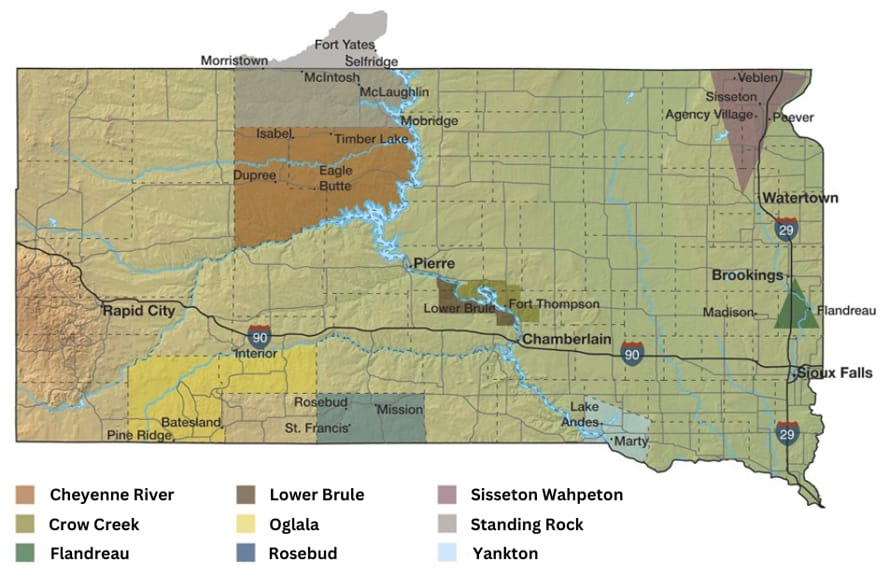
South Dakota News Watch is an independent nonprofit. Read, donate and subscribe for free at sdnewswatch.org. Contact reporter/Report for America corps member Molly Wetsch: 605-531-7382/molly.wetsch@sdnewswatch.org.