Part 2 of a 2-part series. Read part 1.
DEADWOOD, S.D. – While the city of Deadwood gets about $7 million a year in gaming taxes for historic preservation, the entire rest of the state gets just $200,000 annually.
Two separate $100,000 grant programs are funded through Deadwood gaming tax revenues to help pay for historic preservation projects outside the city of Deadwood. One program caps grant amounts at $25,000 per project and the other maxes out at $10,000 per project.
"You can't even replace a single window on a historic building for $10,000."
– Carl Hall, president of the Hot Springs Historic Preservation Commission in the southern Black Hills
That level of per-project funding and the small overall pool of available funds are "laughable" when considering the cost of historic preservation and the great need for preservation in communities across the state, said Carl Hall, president of the Hot Springs Historic Preservation Commission in the southern Black Hills.
"You can't even replace a single window on a historic building for $10,000," Hall told News Watch. "It's just not a tenable financial situation."
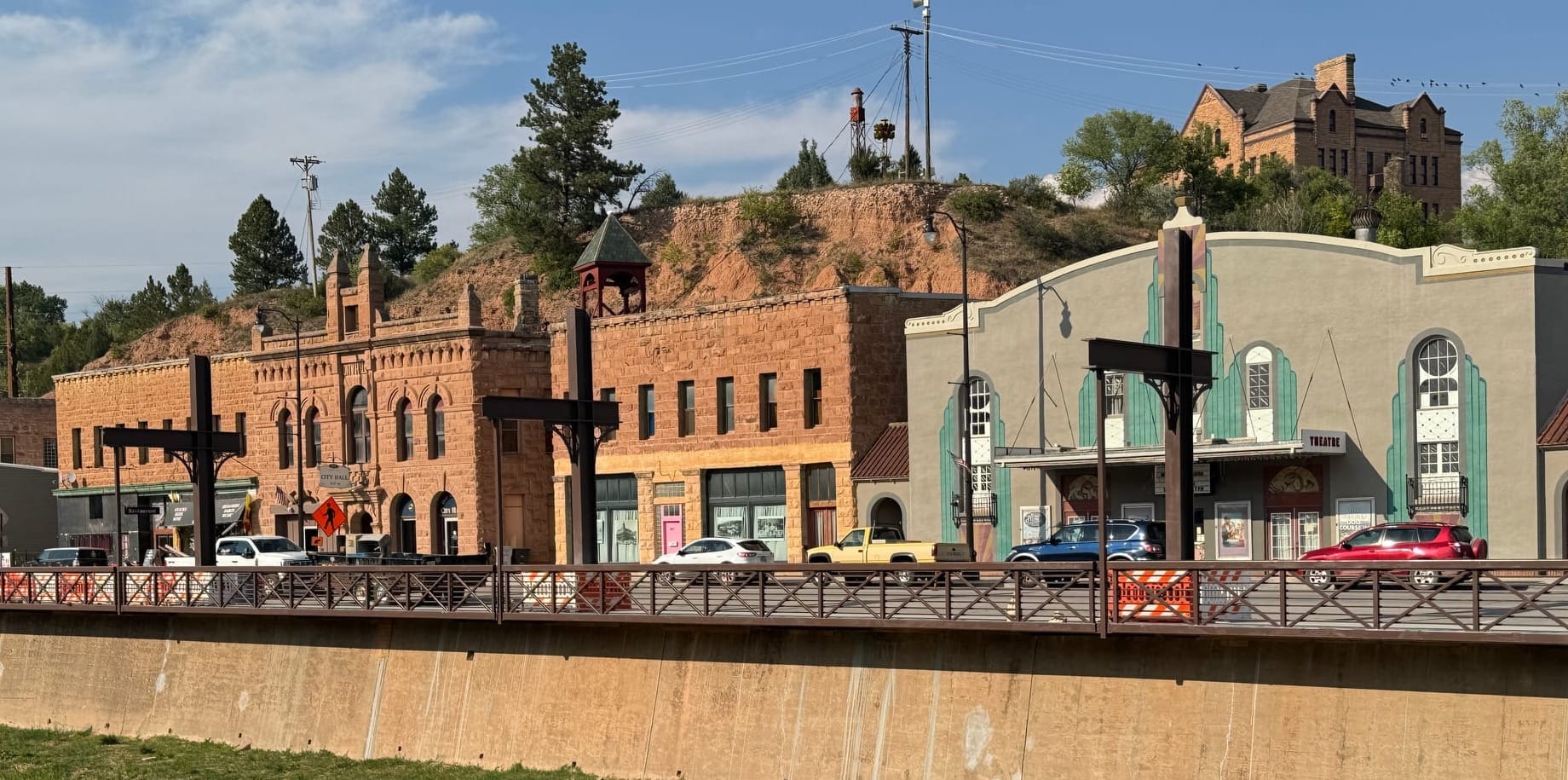
Since legalized gambling began in 1989, Deadwood has received more than $237 million for local historic preservation projects. During that time, only about $8 million in gaming revenues have been provided for preservation projects outside the city.
Hall said that South Dakota communities, Deadwood included, should have seen more historic preservation money from gambling but aren't because the state takes so much gaming tax revenues for tourism promotion and its general fund operations each year.
In 2024, tax revenues from Deadwood gambling totaled $19.3 million, according to state data. The city of Deadwood received about $7 million for historic preservation, about $4.5 million went to the state tourism fund and the state general fund received about $3.5 million. Distribution of funds is dictated by state statute.
The constitutional amendment passed by voters in 1988 to legalize gambling stated that "the entire net municipal proceeds (of Deadwood gambling) shall be devoted to the historic restoration and preservation of Deadwood."
"We as a state got hoodwinked because all that revenue that went to the state general fund should have been for historical preservation," Hall said. "We need a bigger piece of the pie for the rest of the state."
2 programs, both capped at $100K
The two programs that offer funding for historic preservation beyond the borders of Deadwood largely operate in the same ways. In both, recipients must be able to match the grant amount. Both programs review applicants and give grants twice a year through a competitive process.
Neither program is set to receive an increase in funding as part of Senate Bill 102, a bill passed by the 2026 Legislature that would tweak the existing gaming tax allocation formula to provide more money for historic preservation in Deadwood.
The Outside of Deadwood Grant Program is funded with Deadwood gaming money and administered by the Deadwood Historic Preservation Commission.
Grants generally max out at $10,000 per application and recipients must match the grant amounts, said Kevin Kuchenbecker, historic preservation officer for the city of Deadwood.
Voluntarily launched by the city in 2001, the Outside of Deadwood grant pool was initially $250,000 a year. But after costs of historic preservation in Deadwood began to rise, the city cut the grant pool to $150,000 in 2018 and then to $100,000 a year in 2019, Kuchenbecker said.
The program has provided $4.4 million in grants since inception. Last year, the program made 14 grants totaling $93,500.
Grants of $10,000 were awarded in 2025 to Vale High School for painting, to the Plankinton Preservation Society for painting of the Sweep Hotel, to the St. Francis Mission near Rosebud for grave markers and to St. Luke's Episcopal Church in Hot Springs for stained glass restoration.
Kuchenbecker told News Watch that he hopes the annual allocation to the Outside of Deadwood grant program will increase in the future as gaming tax revenues rise.
The state Deadwood Fund grant program is allocated $100,000 a year in gaming tax revenues for historic preservation projects outside the Black Hills town. Grants are administered by the South Dakota State Historic Preservation Office and top out at $25,000 per application.
In the state-run grant program, which launched in 1995, owners or administrators of historic properties across the state can apply for up to $25,000 for preservation or restoration projects, said Garry Guan, state historic preservation officer within the South Dakota State Historical Society.
"Without adjustment, the current structure unintentionally concentrates preservation success in arguably the wealthiest second-class municipality, while historic assets elsewhere continue to disappear."
– Letter to South Dakota lawmakers from Hot Springs leaders
A competitive grant review process is conducted twice a year by the historical society, said Guan, who was appointed to his position in December 2024 by former Gov. Kristi Noem.
“Any property owner who owns historic properties, especially those on the national register or state register of historic places, when they need some upkeep work they can present their project and then we review those,” said Guan.
Some annual distributions rise above the $100,000 level if there are unused funds and projects are deemed worthy.
In all, 76 communities have benefited from $3.6 million in grants for 253 projects, state records show. In 2023, the state program distributed $124,000 in grants for eight projects.
The two highest grants of $20,000 were awarded for the repainting and window repair on the Vale School in Butte County and window restoration at the Volin School in Yankton County.
Other grants included $16,000 for window replacement at Fort Sisseton in Marshall County and $10,000 for masonry repairs at the St. Augustine Church in Gregory County.
Big need for funding in Hot Springs
In February 2025, Hall and Hot Springs City Council member Debra Johnston traveled to Deadwood to attend a meeting of the Deadwood Historic Preservation Commission.
The pair expressed both a desire to learn more about how to obtain funding and community support for historic preservation projects but also to air frustrations at the low funding levels provided to communities under the gaming grant programs.
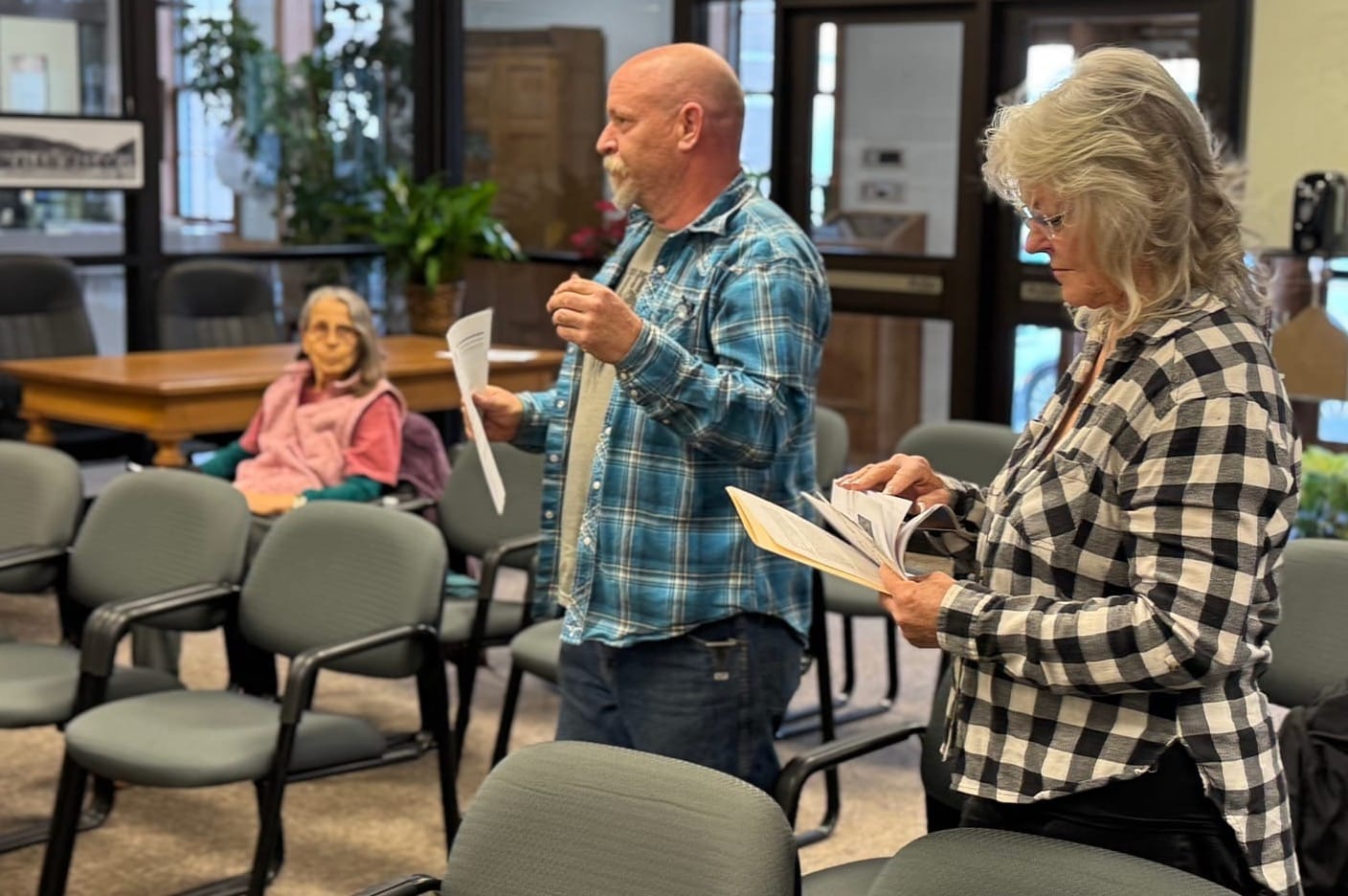
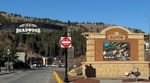
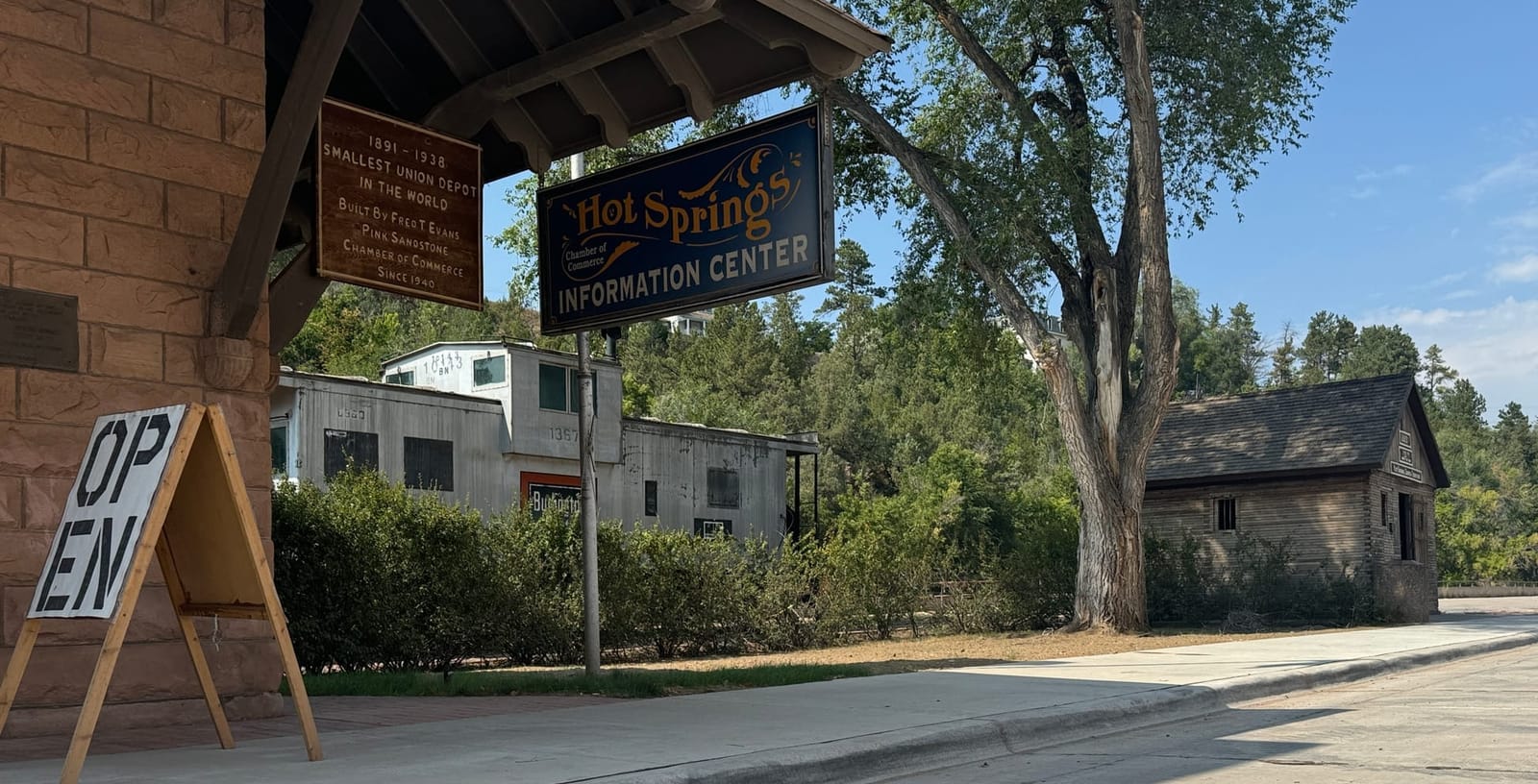
Hall wondered aloud how a city like Hot Springs, which needs expensive rehabilitation of historic sandstone structures and vertical walkways, could even begin to afford to fix up its downtown.
"We need to be able to focus on community-wide projects," Hall said. "With projects like that, you're talking six figures just to get a plan."
Johnston presented the commission with photos of historic buildings in Hot Springs that are in need of repair, including some damaged by a fire in 2023.
"The grants aren't enough to help us out," Johnston said. "We're just as important as Deadwood because we're the southern bookend to the Black Hills."
At the meeting, Kuchenbecker said he sympathized with the Hot Springs officials and acknowledged that obtaining funding is the greatest barrier to community-wide historic preservation and restoration.
"I can tell you that without the gaming revenue, we'd be looking like you are," he said then. "It can feel like a losing battle because there's only a few tools out there."
Your donation supports trusted, balanced storytelling that's delivered for free to all South Dakotans.
In an interview on March 4, Hall told News Watch he has seen other cities across the state struggle to maintain historic structures.
"I want to put it in plain words: If you don't do something, you're not going to have downtowns left in South Dakota," he said. "We need some big projects done to save these buildings because Mother Nature will win out in the end."
Hall said the private investment helping Deadwood preservation efforts is unlikely in Hot Springs . "We don't have any corporations coming into Hot Springs to save us," he said. "It's just not going to happen."
Letter to lawmakers outlines goals
The Hot Springs preservation group and other local officials sent a letter to all legislators prior to the session urging them to allocate more gaming revenue to communities outside Deadwood.
"As the Legislature considers requests to expand Deadwood’s historic preservation allocation beyond its long-standing level, we respectfully urge that this moment also be used to evaluate preservation needs statewide," the letter said.
In particular, the letter requested that lawmakers increase the annual allocation to the state grant program and reduce the requirement that grants be matched at 100% by recipients.
"Hot Springs is not seeking a handout, but a partnership, financially and administratively, to preserve the shared history of South Dakota’s communities," the letter said.
The Hot Springs officials said they did not want to slow or diminish the importance of historic preservation in Deadwood.
"(But) without adjustment, the current structure unintentionally concentrates preservation success in arguably the wealthiest second-class municipality, while historic assets elsewhere continue to disappear," the letter said.
Small grants provide big help at historic mission
Two state grants from Deadwood gaming funds and one from Outside of Deadwood have been awarded to the historic St. Francis Mission on the Rosebud Indian Reservation in Todd County.
According to state records, the mission received $18,000 in 2023 to help pay for renovation of the steeple at the St. Charles Borromeo Church, which had fallen into disrepair. The wooden louvers in the century old steeple had become rotted and needed to be replaced.
In 2025, the mission received a $10,000 Deadwood Fund payment and another $10,000 from Outside of Deadwood for restoration of St. Charles Cemetery.
The oldest graves in the cemetery has wooden markers and worn crosses that are being replaced by metal markers with names, said Rodney Bordeaux, director of the mission.
"We have to take care of the church and the ancestors that are buried up there and the Jesuits buried up there because that’s all a part of our history," he said.
The grants have been a big help in maintaining the quality of the historic resources at the mission, said Bordeaux, a former chairman of the Rosebud Sioux Tribe.
"They’re helping us out, so we're grateful for the grants," Bordeaux said.
Read part 1:
 Bart Pfankuch
South Dakota News Watch is an independent nonprofit. Read, donate and subscribe for free at sdnewswatch.org. Contact content director Bart Pfankuch: 605-937-9398/bart.pfankuch@sdnewswatch.org.