

PIERRE, S.D. – On a Tuesday night in October, the Pierre Players Community Theater held a kickoff event for its 2026 season lineup. Supporters and volunteers filled the Grand Opera House in downtown Pierre, the theater group’s home, to see the show.
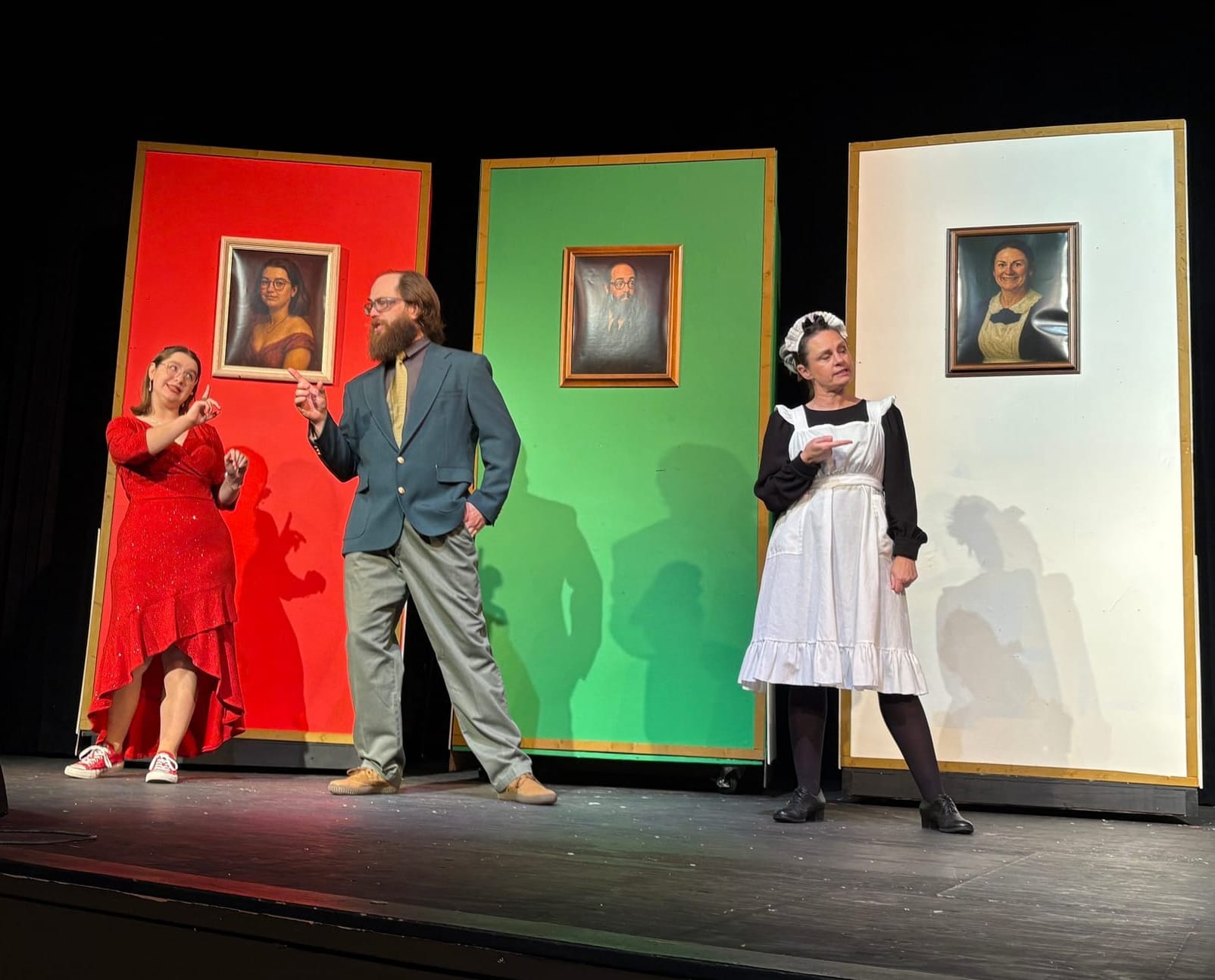
In the spirit of fun and creativity that are characteristic of community theater, Pierre Players held a mock awards ceremony to announce the plays the group has planned for the season. Presenters dressed in suits and gowns covered in glittering sequins, got the audience laughing with their jokes and handed the “winners” plastic gold statues resembling Academy Awards.
The “winners” were the directors, co-directors and assistant directors of the upcoming shows. After receiving their mock awards, the presenters interviewed them about why the play was chosen for the season, their hopes for the project and what challenges they face in bringing it to the stage.

There are more than a dozen local theater groups active in South Dakota. While the staff and volunteers find much joy in their work, it’s a challenge to keep community theater alive. And some of those troubles are mounting.
In a world where entertainment is digital and on-demand, it’s difficult to keep audiences engaged with live performances. Productions can require hundreds of volunteers who have full-time jobs and kids to raise, and community volunteering isn’t as ingrained in culture as it once was. On top of all that, the cost of the productions and the need to keep ticket prices low stretch budgets thin.
Despite these difficulties, the people participating in community theater also speak of immense rewards for themselves and the communities they live in, and that keeps them coming back season after season for more.
Season 20 of Pierre Players Community Theater
Besides promoting the upcoming season, the Pierre Players’ season kickoff event was aimed at selling tickets and soliciting donations. It turned out to be a successful evening for the group, and by the end of the night, they’d received thousands in donations and sold a lot of season passes.
The Pierre Players Season 20 performances include “Dr. Jekyll and Mr. Hyde,” a play adapted from the Robert Louis Stevenson novella. In May, the group will perform “Sylvia,” a comedy about a couple that adopts a dog, which is played by a human. And in July, they will perform “1776,” a musical about the events leading up to the signing of the Declaration of Independence.

This December the group is performing “The Thanksgiving Play,” written by Larissa FastHorse, who’s a member of the Sicangu Lakota Nation. She grew up in Pierre and worked the concession stand for Pierre Players shows in high school. She’s also the first female Native American playwright to produce a play on Broadway.
“The Thanksgiving Play” is about well-meaning but culturally insensitive white theater artists who attempt to create a politically correct elementary school play about the first Thanksgiving while struggling with their own biases and the lack of Native representation.
Performances trigger a sense of awe
Putting on these productions in the coming year will demand a lot of hours from a lot of volunteers. From that donated time, the volunteers said, comes a lot of personal rewards and benefits to the community.
Ashley Boone, president of the Pierre Players Board of Governors, said theater has a positive psychological impact on audiences. She points to the research of Dacher Keltner, a psychology professor at the University of California, Berkeley. Whereas much of psychology studies unpleasant emotions, Keltner’s work in positive psychology studies why people experience pleasant emotions.
His research looked into the emotion of awe and found that there are several triggers that produce this emotion, such as being moved by kindness and bravery, being swept up in a group event and marveling at visual designs and music.
“Theater touches on all of them. I can point to probably at least five or six of them that are probably present in every experience people have going to the theater. And being able to provide that in a small town in South Dakota is kind of unparalleled,” Boone said.
Performances for the community, by the community
Brian Schultz, artistic/managing director of the Aberdeen Community Theater, said one of the most rewarding aspects of local theater is its ability to bring the community together.
“You’re taking a pile of people — anywhere from two people to 100 people — and just endeavoring to all get to the same place at the same time. When you have a wide variety of ages and a wide variety of experience trying to get them all to end up in the same place, and then when you see the finished product, there's … there's nothing that compares,” Schultz said.
Linda Anderson, executive director of Theatre 605 Black Hills Playhouse, a professional theater group, participated in Pierre Players when she was in high school around 1980. She said she knows a lot of professionals that got their start in community theater, but even for those who don’t seek careers in the craft, it creates social connections in the community.
“It's that sense of belonging. People want to be a part of something. And there's that special dynamic that happens when ensembles come together. People get to exchange talents and stretch themselves in a way that they don't in their everyday life,” Anderson said.
“It’s so individual. Every community theater is kind of the same all around the country, yet all of them are different.” – James Walker, artistic director emeritus for the Aberdeen Community Theater
James Walker, artistic director emeritus for the Aberdeen Community Theater, has been involved with community theater for over four decades. He served on the American Association of Community Theater for 16 years. Part of that time, he served on the international committee of the association, so he’s seen community theater nationally and internationally.
While all theater groups have a lot in common, each one is unique because they’re a product of the community and they’re tailored to the community the groups are performing for, Walker said.
“It’s so individual. Every community theater is kind of the same all around the country, yet all of them are different,” he said.
Passionate volunteers
While some community theater groups are able to hire some staff, the bulk of the effort is done by volunteers.
Boone, with Pierre Players, said that the culture of volunteering has changed considerably from what it was for previous generations. Groups like the Kiwanis and Rotary Club struggle to find volunteers today, which used to be a common outlet for the community.
“It seems like our society has just really gone away from that idea that we can make our community better by volunteering our time,” Boone said.
Jesse Stroud, who is interim office manager for the Mitchell Area Community Theater, said it is hard to find those people willing to donate their time to these performances, but those who do are exceptional people.
"When you're not paying people, it's hard. But when you do get good people, you get passionate people. You get people that are going to stick with you and do a really good job,” Stroud said.
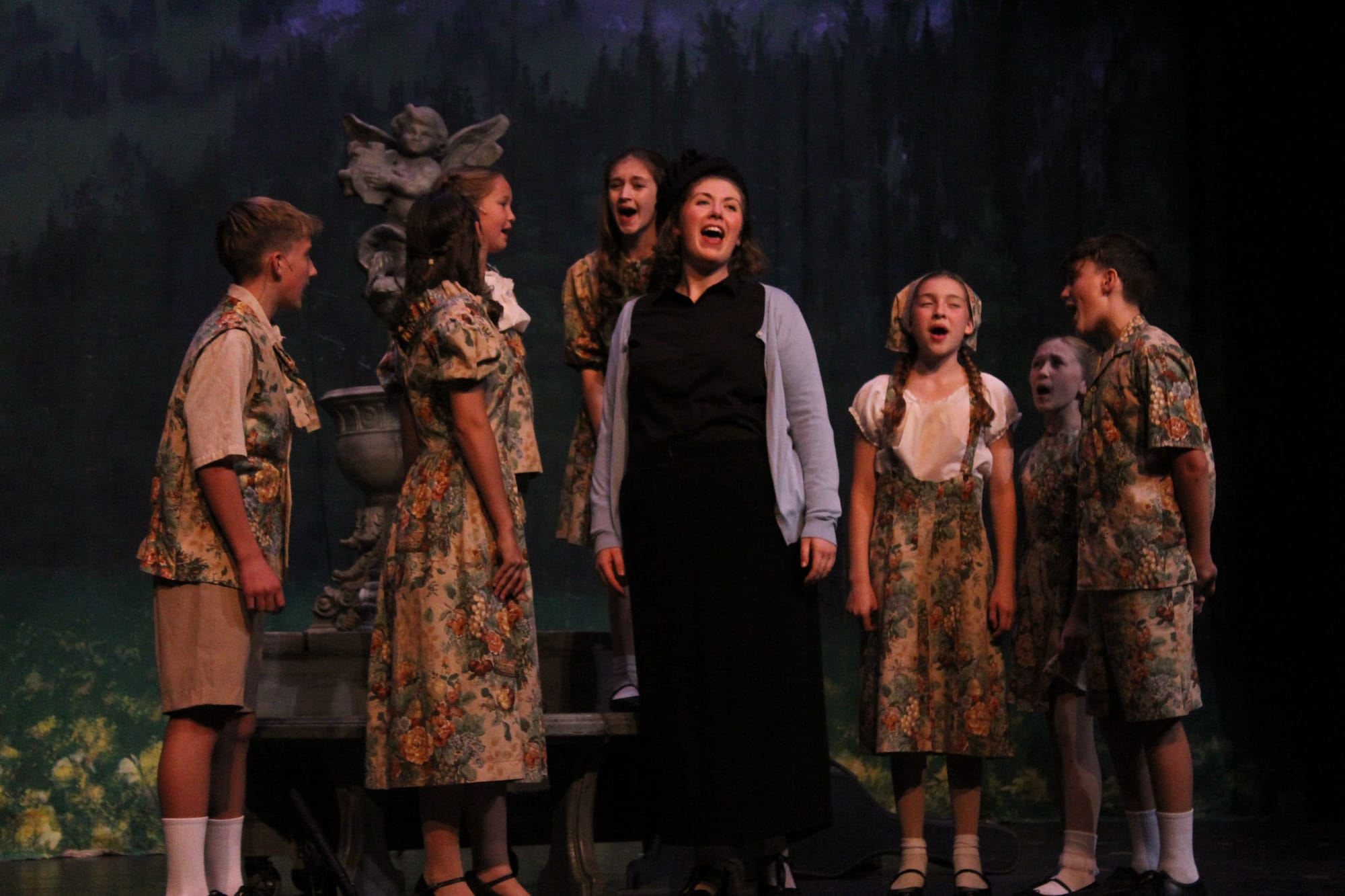
The Aberdeen Community Theater just finished its run of the “Sound of Music,” which Schultz called a “massive endeavor.” Despite the difficulty in bringing the musical to the Aberdeen stage, they had no trouble finding the people with the voice training to fill the show’s roles, he said.
More than 80 people auditioned, and there was so much talent they could have used them all. It was a challenge to whittle those 80 down to 35, he said.
Small budgets meet mounting expenses
These local productions also don’t come cheap.
Expenses include utilities, set materials, costumes, projectors, microphones and lighting equipment, and sometimes venue rentals. As a community performance, these costs have to be balanced with the needs to keep ticket prices low.
“The big challenge is simply bringing the money in and to continue to be able to provide value to the people that come and see our shows. When they're paying a $35 ticket, you want to give them $35 worth of value. You don't want to give them a $10 show,” Stroud said.
The rights and royalties, though they come at a discount for local nonprofits, are another major expense. The rights to an off-Broadway play can cost $4,000 or more. For something like the "Wizard of Oz" or "Frozen," it can be $10,000 to $15,000.
Then, there can be additional costs, like buying the music tracks and materials – the scripts, books and sheet music. And like everything else, the costs for rights and royalties have gone up in recent years.
"We could probably afford ‘Frozen’ if we charge $90 a ticket. But in our mission, we do not charge above $35,” Stroud said, adding that due to various discounts, the average ticket price is lower than that.

The Mitchell Area Community Theater’s home is the Pepsi-Cola Theatre for the Performing Arts, which needs upgrades to bring it into compliance with the American with Disabilities Act, as well as repairs to the roof. After an estimate for a new roof came in at $126,000, the group did some repairs in order to prevent more deterioration of the roof or interior, the Mitchell Republic reported.
To close the gap between ticket sales and costs, these theater groups rely on donations from individuals and businesses in the community.
Theater in a digital world
Theater today also comes up against the changes of a modern, digital world. Boone said that there was a time that promoting a community play was just a matter of printing up fliers and hanging them around town.
“Whether being an actor on stage with a small role to being a stage hand, we always have a need,” – Ashley Boone, president of the Pierre Players Board of Governors
Now promotions need fancier designs and require marketing strategies. Social media has to be utilized, and demographics have to be considered to get the message to the right people.
In previous generations, community theater wasn’t competing with a deluge of on-demand entertainment. Now, people feel more in control of their own fulfillment without connecting with others, Boone said.
“That not only affects people that we wish would come out and volunteer, but also people that would come out and see the shows,” Boone said.
The show must go on
While there are challenges, community theaters across South Dakota continue to put on regular performances, and communities that have the resources for it are fortunate, Stroud said.
“Not everybody has that opportunity to have a good community theater, especially when you're talking about rural communities where you know they can't necessarily support it,” he said.
For those who want to get involved with community theater, there’s always some way to contribute, said Boone with Pierre Players. People can help with set building, sewing costumes, running concession stands, operating sound and lighting tech, ushering and promotions.
“Whether being an actor on stage with a small role to being a stage hand, we always have a need,” she said.
This story was produced by South Dakota News Watch, an independent, nonprofit organization. Read more stories and donate at sdnewswatch.org and sign up for an email to get stories when they're published. Contact statehouse investigative reporter Kevin Killough at kevin.killough@sdnewswatch.org.