
Title: Content Director
Contact: 605-937-9398 / bart.pfankuch@sdnewswatch.org
Language spoken: English
Demographic expertise: South Dakota, including the Rapid City area, the Black Hills, rural towns and reservations
Topic expertise: agriculture, state government, education, rural issues, Indigenous people, poverty
Potential conflict of interest: Pfankuch serves on the board of the Oyate Prevention Coalition in Rapid City, which works to prevent substance abuse among Native American youth. He will recuse himself from reporting on the organization.
Biography: Pfankuch (pronounced FAN-cook) is Wisconsin native and former editor of the Rapid City Journal. He has worked for more than 30 years as a reporter and editor at newspapers in Wisconsin, Florida and South Dakota, including as reporter or editor at the Eau Claire Leader-Telegram and Capital Times in Wisconsin, and at the Florida Times-Union and Sarasota Herald-Tribune in Florida. He also is a syndicated writing coach who has presented at newspaper conferences across the country. Pfankuch has won more than four dozen state, regional and national journalism awards, including, while at News Watch, agricultural writer of the year from the North American Agricultural Journalists association in 2020, 2021 and 2023 as well as first-place reporting awards in the Great Plains Journalism Awards sponsored by the Tulsa Press Club and South Dakota NewsMedia Association. Pfankuch lives in Black Hawk.
Professional memberships: Investigative Reporters and Editors, North American Agricultural Journalists, South Dakota NewsMedia Association First Amendment Committee
Archive of work: South Dakota News Watch

Bart Pfankuch
Total 353 Posts
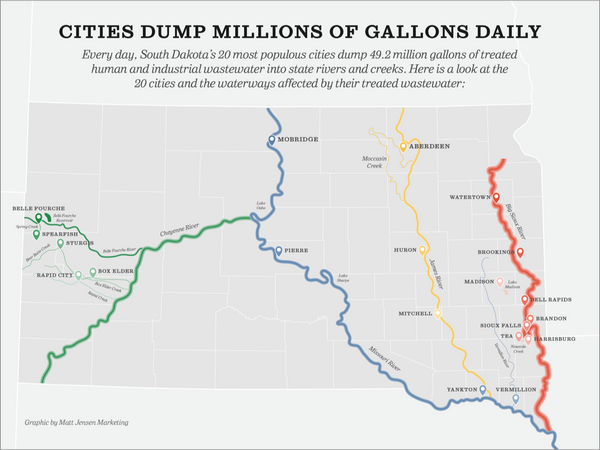
Rivers at risk: Read about your city’s water pollution concerns
Every day, South Dakota’s 20 most populous cities dump 49.2 million gallons of treated human and industrial wastewater into state rivers and creeks. Here is a look at those 20 cities and how they process wastewater, what it costs, recent inspection results, and how much is dumped where.

Rivers at risk: Pollution problems persist as state oversight lags
Part of a series of stories examining river quality in South Dakota.
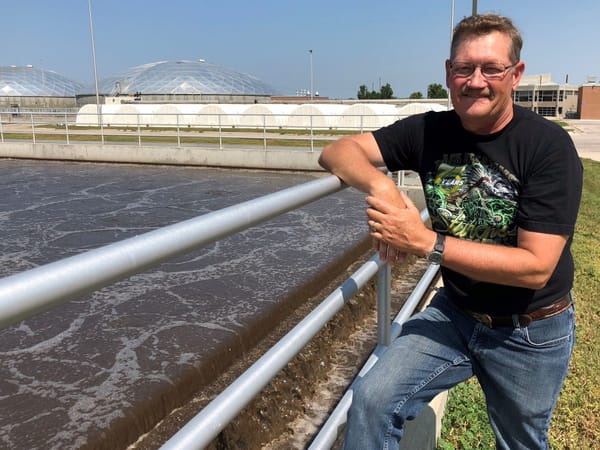
Russian woman and South Dakotan connected by mysterious business
For reasons known only to him, embattled political operative Paul Erickson started a new business in South Dakota in June.
By spending just $150 and filling out some online paperwork, Erickson formed Medora Consulting LLC, a company with no stated purpose or partners.
The LLC, or limited liability company, was
Cyanide devices remain part of predator control efforts in SD
Despite growing national pressure to end their use, small devices that issue a deadly dose of cyanide into the mouths of animals such as coyotes and foxes remain in use in South Dakota.
The devices, known officially as M-44s but referred to as “cyanide bombs” by opponents, are part of
New public-private plan could aid polluted Black Hills gold mine
LEAD, S.D. – A Canadian gold mining company has agreed to help clean up South Dakota’s most contaminated industrial site. The agreement is part of a trend of public-private partnerships that could expedite remediation of America’s polluted lands and waterways.
Agnico Eagle Mines of Toronto has entered into
Gap between low wages and high rents growing in South Dakota
RAPID CITY, S.D. – Like thousands of South Dakotans, Jade War Bonnett of Rapid City lives in constant fear of not having stable housing for her and her two children.
In a state where rents are rising far faster than incomes, the only way War Bonnett and many other low-wage