
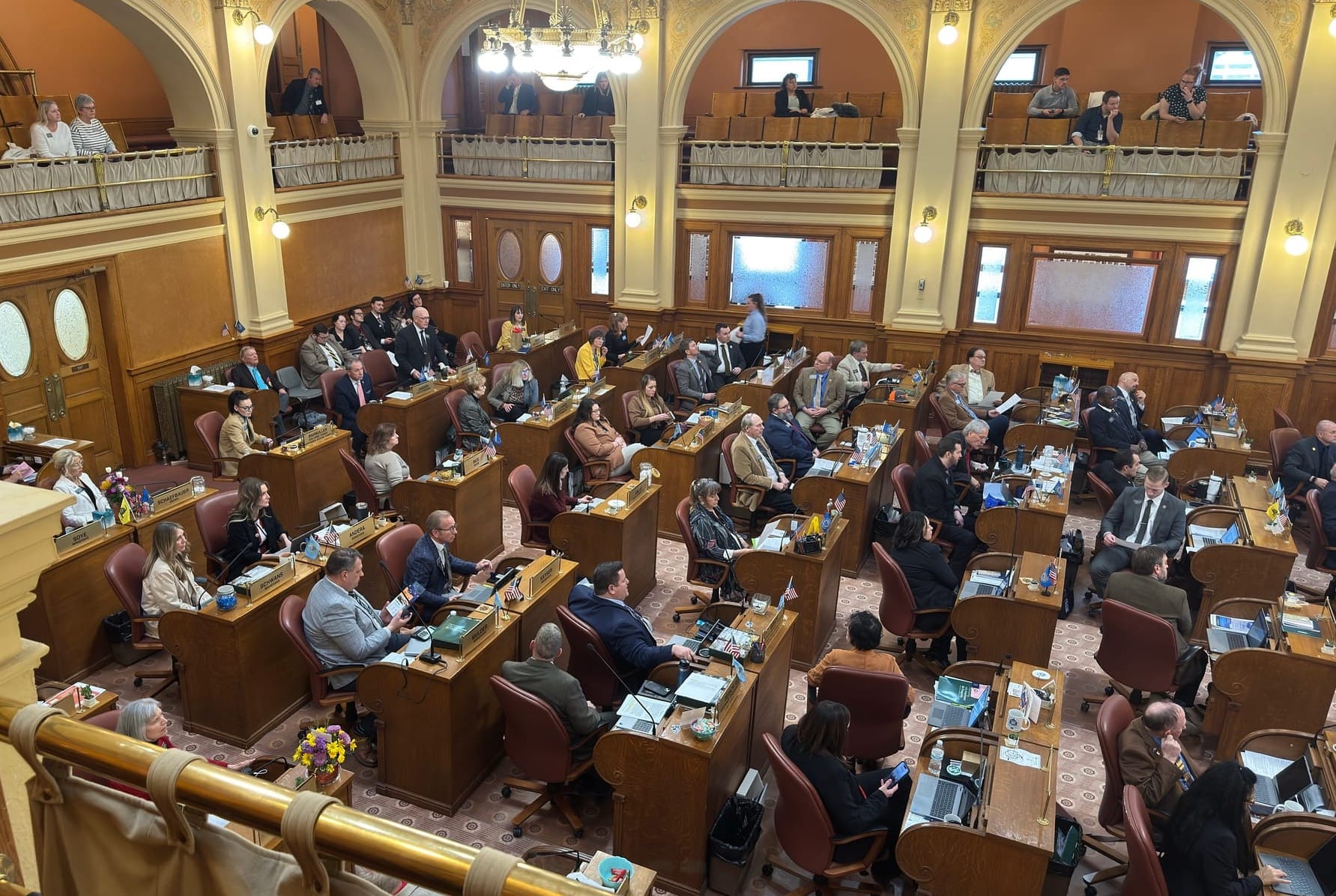
With a slate of hot-button policy issues on the table and limited funding to work with, state Sen. Jim Mehlhaff of Pierre said it is difficult to predict how the 2026 legislative session will play out in the South Dakota Capitol this year.
"A legislative session is just like the rest of my life – it usually goes just the way I didn't plan," the Republican Senate majority leader said of the roughly two-month session that convenes Tuesday. "Maybe we can have respectful discussions and find good compromises, but it could also become a rodeo-and-a-half, too."

All joking aside, South Dakota lawmakers are expected to tackle a roster of topics that could have long-lasting impact on the state and its roughly 925,000 residents.
"Maybe we can have respectful discussions and find good compromises, but it could also become a rodeo-and-a-half, too."
-- Sen. Jim Mehlhaff, South Dakota state Republican majority leader
Mehlhaff said that in addition to the annual battle over how to spend state money, legislators are also sure to dive headlong this session into property tax reform and legislation regarding data centers.
Rep. Mike Derby, a Republican from Rapid City, said other major policy issues on the 2026 agenda include efforts to change the state's electoral process, possible regulation of tax increment financing districts and refining how economic development tools are used in the state.
Hovering over any policy debates, however, will be the difficult task of developing and passing an annual state spending plan following a year when overall tax revenues fell by 1.4%. In response, Republican Gov. Larry Rhoden has proposed no funding increases for schools, state employees and government-funded health programs.
"That’s what we’re going to spend all session talking about," said Derby, who will lead budget discussions as chairman of the Joint Appropriations Committee. "We have a long list of ideas people want to discuss."
South Dakota's annual budget
Passing a spending plan for the upcoming fiscal year is the Legislature's only required action each year. After several years of receiving a total of roughly $1.3 billion in federal funds related to the COVID-19 pandemic, lawmakers are back into what Derby describes as budget "normalization" mode.
In his budget address in December, Rhoden proposed a lean budget but did include $14 million in discretionary funds lawmakers could possibly use to advance one-time local, regional or statewide projects.
 Bart Pfankuch
Derby noted that the governor's budget recommendation is subject to review and alteration. For instance, some lawmakers might try to use the discretionary money to give one-time bumps to state employees, schools and Medicaid providers, he said.
Other ideas that could rise up during budget negotiations include funding of airport expansions, finding ways to tap into funds from unclaimed property and using money Rhoden targeted toward boosting state reserves to fund new or ongoing projects instead.
Property tax relief
Lawmakers tried and failed in 2025 to reform the property tax system, which largely funds local schools and county governments.
The push to reform the property taxes comes as many South Dakota homeowners have seen sharp increases in property valuations that have correspondingly caused their tax bills to jump. Most state government operations are funded through the state sales and use taxes.
A summer task force made 19 recommendations on how to reduce the burden on homeowners, and those ideas are still on the table.
Rhoden has offered a plan to allow counties to vote in a local sales tax to offset a reduction in property taxes, and gubernatorial candidate U.S. Rep. Dusty Johnson has floated a plan to give homeowners a $400 annual property tax credit.
Mehlhaff told News Watch he will offer a plan this session to increase the statewide sales tax by 2% and use that money to remove the burden of funding schools from local taxpayers.
Pros and cons of data centers
The decision on whether to allow construction of data centers that use extensive electricity and water to store huge amounts of computer data is perhaps the hottest topic in South Dakota right now.
The issue drew a large crowd and high emotions at a Sioux Falls City Council meeting Jan. 6.
"There’s going to be a robust debate about whether we should incentive data centers to come to South Dakota or put up barriers to them," Mehlhaff said.
Play a bigger role in our storytelling. Join us as a partner in telling stories that are important to all South Dakotans with a tax-deductible donation.
A bill has already been filed to provide tax exemptions for data centers in an attempt to encourage their development in the state.
Mehlhaff, who is a co-sponsor of that bill, said he would rather see data centers built in the United States, including South Dakota, instead of in foreign countries such as China.
Democrats to push prison reform
The recent large expenditures related to building new prisons for men and women in South Dakota will translate into efforts in the upcoming session to reform elements of the state judicial system and current criminal sentencing laws, said Rep. Erin Healy, a Sioux Falls Democrat who is the House minority leader.
In the past two years, lawmakers have approved construction of a $650 million men’s prison for a site in eastern Sioux Falls and an $87 million women’s prison now being built in Rapid City.
 Molly Wetsch
Healy said she expects to see legislation filed to keep low-level offenders out of prison and to provide better prison programs to reduce recidivism.
“I think people are realizing that incarcerating people is a very expensive endeavor and that if we take care of people after arrest or before re-entry (into society) that we can avoid some of those costs,” Healy said. “We can help people before they enter the system because it costs us less money but also because it’s the right thing to do.”
Healy expects to file a bill to provide some criminal immunity from drug charges to anyone who witnesses someone else suffering an overdose.
Amid a tight budget year, Democrats will be looking for new revenue streams in 2026 to counter the funding freezes Gov. Rhoden has proposed for schools, state employees and Medicaid-funded health programs, Healy said.
She also said the rhetoric in the Capitol might be heightened due to the upcoming 2026 gubernatorial election as candidates and their supporters seek to drive home messaging they believe will resonate with voters.
 Kevin Killough
Rhoden, one of those candidates, faces primary challengers from within and outside of the state Legislature.
“There are going to be some interesting developments and potentially we’re going to see some new priorities coming out from different camps aligned with gubernatorial candidates,” Healy said.
Five bills worth a look before South Dakota's legislative session
- House Bill 1010 would further restrict the use of cellphones while driving, making it illegal to look up, choose or enter a telephone number while behind the wheel.
- House Bill 1017 would allow school districts to send unruly students to be taught in an alternative setting if their behavior disrupts the classroom learning environment.
- House Bill 1037 would waive the fee for a fishing license for active-duty military members and for military veterans who were honorably discharged.
- Senate Bill 16 would require anyone intending to work as a hunting or fishing guide to obtain state certification before taking on clients.
- Senate Bill 47 would make it more difficult for government entities to go into executive session to discuss topics outside the purview of the press and public.
This story was produced by South Dakota News Watch, an independent, nonprofit organization. Read more stories and donate at sdnewswatch.org and sign up for an email to get stories when they're published. Contact content director Bart Pfankuch at bart.pfankuch@sdnewswatch.org.